
Key Takeaways
* The OTT ad market is projected to cross $30 billion globally in 2026; capturing this revenue requires accessible tech tailored specifically for non-enterprise, independent publishers.
* Server-Side Ad Insertion (SSAI) is essential for bypassing ad blockers and providing a seamless, TV-like viewing experience without the lag associated with Client-Side Ad Insertion (CSAI).
* Entry-level ad networks like Ezoic, Sovrn, and Google AdSense for Video offer small publishers premium programmatic demand without the massive traffic thresholds of enterprise platforms.
* Differentiating your foundational technology stack (video hosting like Mux or Brightcove) from your monetization partners (networks like Teads or Raptive) is crucial to minimizing operational costs while maximizing ad yield.
Over the past few years, we have witnessed a monumental shift in how video content is consumed and monetized across the internet. If you operate an independent media site or a boutique streaming app, finding the best dynamic ad insertion OTT platforms for small publishers is no longer just a technical upgrade; it is a financial necessity. In our experience working with independent creators, the biggest hurdle isn’t producing great content—it’s navigating a complex programmatic advertising ecosystem built almost exclusively for giants like Netflix and Disney. With the OTT advertising market surging past $30 billion globally in 2026 and capturing 45% of total video ad spend, independent publishers deserve a lucrative slice of the pie. We will walk you through the exact tools, networks, and infrastructure required to monetize your video inventory efficiently, bypassing heavy development costs.
Understanding server-side ad insertion for boutique broadcasters
Mastering video monetization starts with grasping the fundamental technology that delivers commercials to your audience, which is why understanding server-side ad insertion for boutique broadcasters is absolutely critical. Server-Side Ad Insertion (SSAI) is the sophisticated process of stitching video commercials directly into the primary content stream at the Content Management System (CMS) or Content Delivery Network (CDN) level. Unlike traditional methods, this unified stream makes the ad and the video indistinguishable to the end-user’s device or browser. For independent creators, this means your advertisements become highly resistant to ad blockers, ensuring that every monetizable impression is successfully served and accurately counted by your monetization partners.
We must contrast this modern approach with Client-Side Ad Insertion (CSAI), a legacy method that forces the viewer’s browser or app to request, load, and play the advertisement separately from the main video file. CSAI is notorious for causing extreme latency, infinite buffering loops, and jarring transitions that ruin the viewer experience. Connected TV (CTV) ad revenue is currently growing at a rapid pace of 25% year-over-year, and capturing that revenue requires a flawless, TV-like experience. When small publishers rely on CSAI, they suffer notoriously high abandonment rates. By moving to SSAI, you eliminate the spinning wheel of death, ensuring your content plays seamlessly across CTV, mobile devices, and desktop environments.
Consider the operational reality of an independent indie-film streaming site we recently analyzed. They initially used basic CSAI to serve preroll video ads, resulting in a staggering 40% drop-off rate before the main feature even began due to browser-based ad blockers and mobile network latency. After migrating to an SSAI architecture, they replicated the flawless commercial breaks seen on major broadcast networks. Furthermore, they utilized standard IAB protocols like VAST (Video Ad Serving Template) and VPAID to seamlessly connect their unified video player to programmatic Demand Side Platforms (DSPs). This standardization allowed their boutique inventory to compete in automated auctions without technical errors, instantly lifting their fill rates and rescuing thousands of dollars in lost revenue.
OTT ad insertion solutions for independent publishers: Top Networks
When building your monetization strategy, it is vital to distinguish between your core technology infrastructure and your demand sources. The market is flooded with OTT ad insertion solutions for independent publishers that act primarily as video ad networks, bringing lucrative brand campaigns directly to your player. Unlike enterprise behemoths such as FreeWheel or Magnite—which routinely demand millions of monthly impressions and charge hefty integration fees—these accessible networks cater specifically to the operational realities of smaller sites. They democratize access to premium video yields, allowing boutique content creators to plug into vast programmatic ecosystems without needing an expensive, dedicated ad operations team.
The data surrounding ad-supported streaming cannot be ignored by anyone in the publishing space: today, 68% of US streaming subscribers are on an ad-supported plan, and a staggering 71% of new subscriber growth over the past two years came via ad tiers. To capture this surging audience, publishers are turning to automated platforms like Ezoic. Ezoic’s Humix network represents a phenomenal entry point for small operators, offering a remarkably low $20 minimum payout threshold. Through proprietary machine-learning algorithms, Humix automates ad frequency and player positioning, continuously optimizing the yield without manual intervention. This removes the guesswork from ad load management, allowing small publishers to focus entirely on content creation and audience acquisition.
We regularly see specialized gaming and niche entertainment sites thrive by deploying these tailored networks rather than attempting to build demand direct-sales teams from scratch. For example, Playwire’s Revenue Amplification Engine (RAMP) offers a complimentary video player and robust cloud hosting for publishers generating over 100,000 pageviews, uniquely packaging sticky video sliders and rewarded video formats that resonate with highly engaged audiences. Alternatively, tools like VDO.AI and Sovrn provide seamless plug-and-play placements for independent bloggers. VDO.AI offers contextual floating HTML5 players that don’t even require the publisher to host their own video assets, while Sovrn leverages Prebid.js video header bidding modules to eliminate enterprise technical barriers completely.
Affordable dynamic ad insertion software for streaming Ecosystems
Separating your ad network from your foundational technology is a defining characteristic of a mature, scalable media business. To actually execute SSAI properly, you must invest in affordable dynamic ad insertion software for streaming rather than assuming your ad network will magically handle the backend encoding. This specialized software handles the heavy backend lifting: high-speed video hosting, live transcoding, Digital Rights Management (DRM) protection, and the intricate server-side ad stitching required to unify the final stream. Choosing the right tech stack dictates whether you spend your monthly budget on aggressive content marketing or waste it on fixing broken video feeds and managing server crashes.
A common pitfall we observe in the industry is small publishers confusing media buying platforms with dedicated OTT infrastructure. Building a standalone streaming service requires robust, dedicated architecture. Tech providers like Brightcove, JW Player, Kaltura, Vimeo OTT, and Mux currently represent the gold standard for independent streaming operations. They offer scalable, usage-based pricing models that allow you to pay based on actual bandwidth and storage consumed, carefully avoiding the exorbitant fixed licensing fees of tier-one broadcast software. By leveraging these versatile platforms, a boutique VOD service can stitch targeted commercials into their content at a mere fraction of enterprise costs, maintaining broadcast-quality 4K resolution even during unexpected traffic spikes.
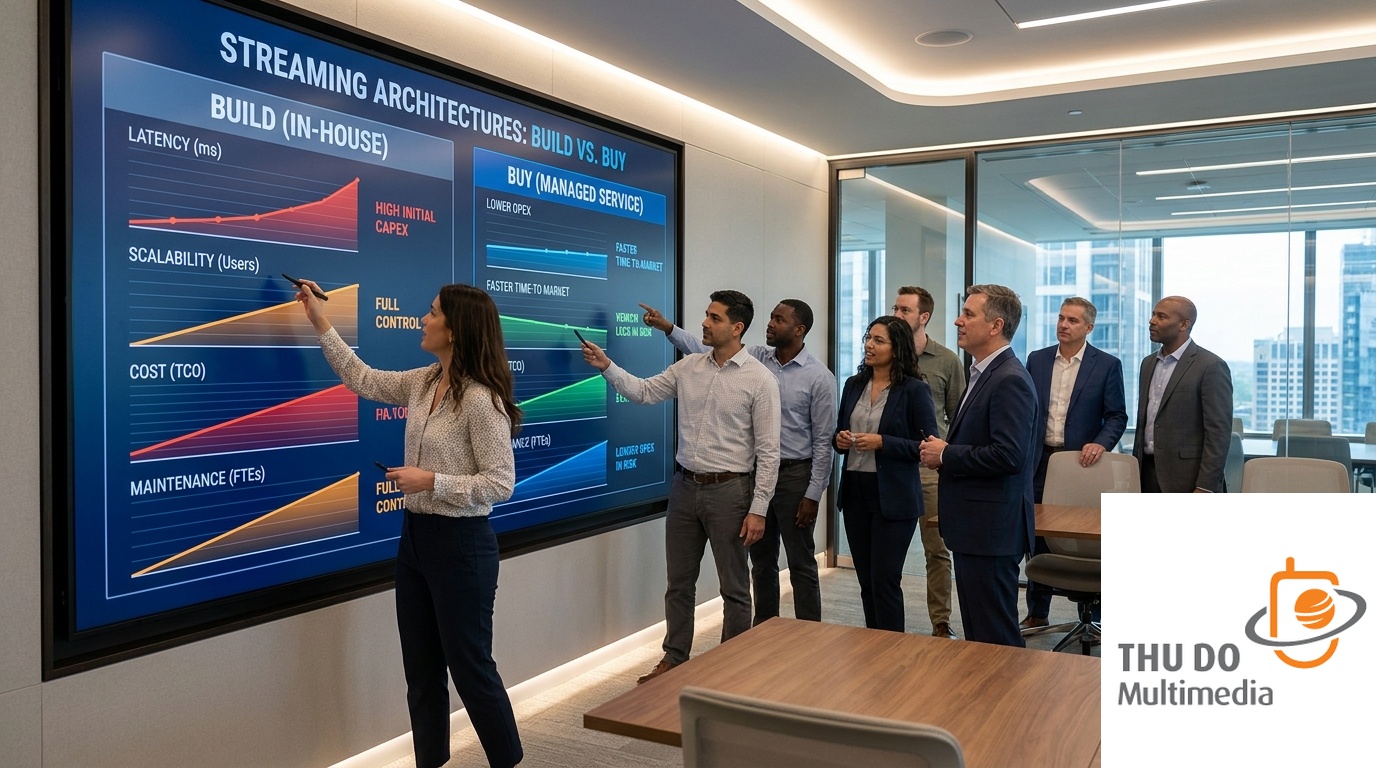
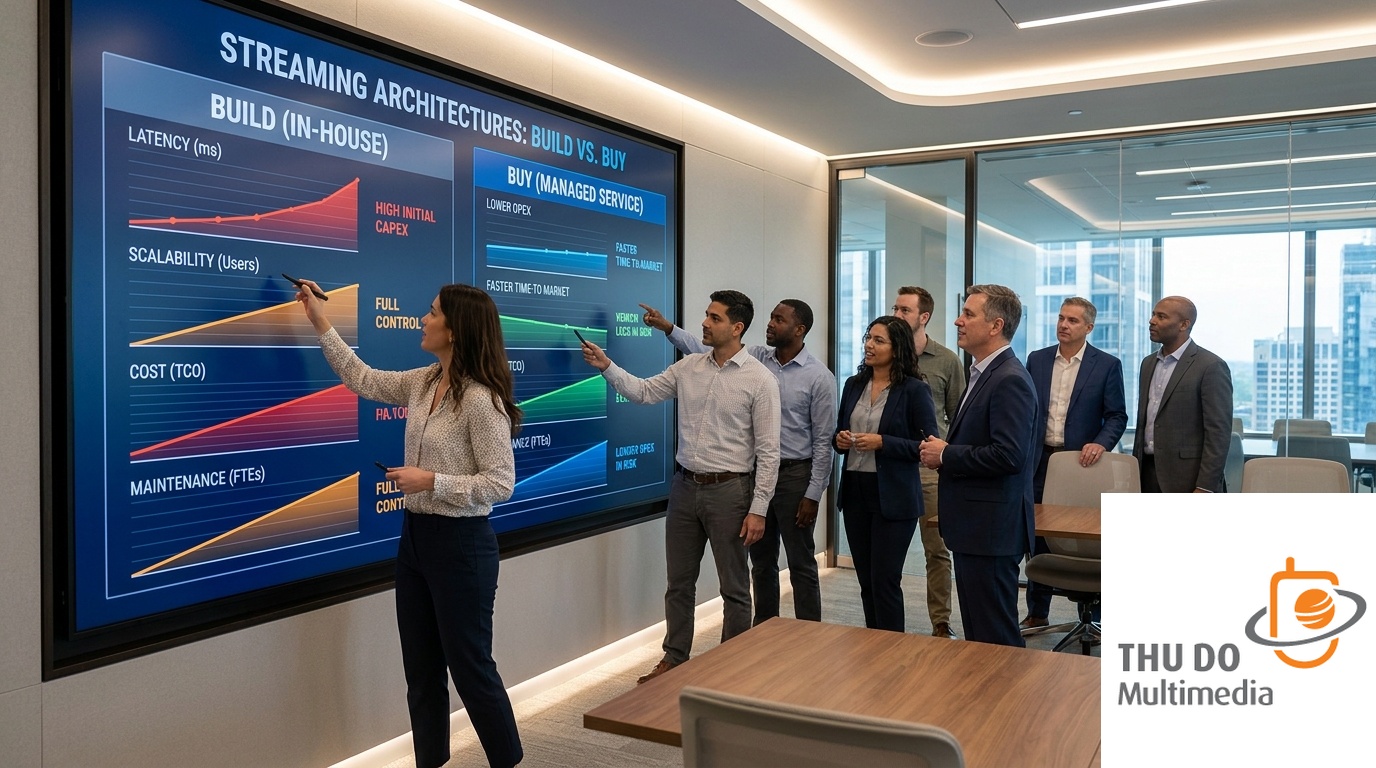
Take the case of a mid-sized regional sports broadcaster attempting to launch a direct-to-consumer app for their passionate local fanbase. Initially, they tried to build custom stitching logic from scratch on AWS, which quickly drained their entire quarterly development budget and resulted in buggy ad loads. We advised them to pivot immediately to Mux for raw video delivery combined with JW Player’s native ad integration wrapper. This strategic “buy instead of build” mentality allowed them to deploy broadcast-grade DAI within three weeks. They securely managed their DRM while effortlessly stitching in local, direct-sold sponsorship spots, proving that enterprise-grade streaming ecosystems are entirely accessible to independent operators when they leverage the right software partners.
Cost-effective DAI tools for linear OTT and VOD
Balancing maximum monetization with long-term viewer retention is the most delicate dance any independent streaming operator will perform. Utilizing cost-effective DAI tools for linear OTT and Advertising-Based Video on Demand (AVOD) empowers publishers to maximize their ad revenue without alienating their hard-earned audience. These modern tools allow publishers to intelligently manage ad pods, dynamically inserting commercials based on real-time user engagement metrics and contextual breakpoints rather than arbitrary timecodes. This dynamic flexibility ensures that a viewer is served an ad only when they are most receptive—like a natural scene transition—preserving the overarching viewing experience while satisfying rigorous advertiser demands.
The industry benchmarks for acceptable commercial loads have shifted dramatically in favor of the publisher. Ad breaks on streaming platforms are quickly normalizing; roughly a third of ad pods can now reach 2–3 minutes, completely comparable to traditional linear TV breaks. Viewers have demonstrated a strong willingness to accept these longer breaks—provided the ad delivery is flawless and doesn’t cause frustrating buffering or app crashes. Unified auction-based bidding and intelligent server-side logic are critical to achieving this balance. By consolidating multiple demand paths, these cost-effective tools prevent duplicated supply requests, drastically reducing latency and maximizing the yield of every available ad slot without requiring publishers to inflate their technical overhead.
We closely monitored a small Free Ad-Supported Streaming TV (FAST) channel focused strictly on classic, public-domain cinema. They utilized affordable DAI logic to structure their commercial breaks highly dynamically. During a two-hour classic film, their system mapped out 3-minute ad pods that triggered exclusively during natural scene fades. By employing unified bidding directly within their DAI tool, they accessed multiple programmatic demand sources simultaneously in a single auction. This strategy successfully filled 100% of their ad breaks at premium CPMs, completely avoiding the repetitive, revenue-draining “we’ll be right back” slates that plague so many poorly monetized independent FAST channels.
Best video monetization platforms for small streaming sites
For publishers who already have their hosting infrastructure securely in place, securing high-paying advertisers is the ultimate final piece of the puzzle. Identifying the best video monetization platforms for small streaming sites requires looking for transparent partners that offer massive global reach and highly favorable revenue shares. These platforms act as the vital bridge between your localized video content and massive global brand budgets. For independent creators, the ideal monetization platform requires minimal ongoing technical integration while opening the floodgates to vast, diverse pools of programmatic buyers that would otherwise be completely inaccessible to a boutique operation.
Google AdSense for Video remains an absolute, undisputed powerhouse in this specific space. By integrating the widely supported Google IMA SDK, publishers instantly unlock the immense demand generated by the Google Display Network and Google Ads buyers. What truly sets Google apart for smaller sites scaling internationally is its total transparency: it offers a standard, publicly stated 68% publisher revenue share. When you consider that YouTube accounts for around 12.5% of all US television viewing, aligning your independent site with Google’s robust video demand infrastructure guarantees industry-leading fill rates, regardless of where your niche audience is geographically located.
Text-heavy editorial platforms also desperately need video monetization, even if they don’t operate a traditional streaming app or produce original films. Teads is a phenomenal, elegant solution for these publishers, allowing them to monetize via In-Read outstream video. Teads provides both the high-quality video content and the accompanying ads, delivering massive CPMs without requiring the publisher to produce a single video file. Similarly, Raptive (formerly AdThrive) offers specialized yield optimization for lifestyle publishers generating over 100,000 pageviews, frequently delivering phenomenal 75%+ revenue shares. We’ve seen independent recipe and travel blogs double their overall ad revenue simply by implementing Raptive’s bespoke outstream video players alongside their traditional, standard display banner units.
Programmatic ad insertion for small video platforms: Maximizing Yield
Shifting away from manual, time-consuming direct ad sales to a fully automated ecosystem is exactly how independent creators successfully scale their media operations. Implementing programmatic ad insertion for small video platforms connects your valuable video inventory to a multitude of automated auctions occurring in mere milliseconds. This programmatic approach ensures that every single ad impression is sold to the absolute highest bidder in real-time, completely maximizing your yield. By utilizing advanced header bidding technologies and connecting to top-tier Supply-Side Platforms (SSPs), boutique publishers can force advertisers to compete fiercely for their audience, driving up the average CPM exponentially.
Navigating the complexities of header bidding requires strategic, precise execution. Small platforms can seamlessly utilize open-source wrappers like Prebid.js or Prebid OpenWrap (facilitated via PubMatic) to unify demand from multiple sources into a single, low-latency auction environment. It is imperative to connect your inventory to premium SSPs such as Magnite or OpenX to access high-end brand budgets previously reserved exclusively for major broadcast networks. Simultaneously, ensuring brand safety is entirely non-negotiable. Advertisers will not buy your inventory if they suspect ad fraud. Maintaining meticulously updated ads.txt and sellers.json records is absolutely mandatory to attract programmatic buyers, alongside automated fraud detection to prevent revenue leakage and maintain a pristine, trustworthy domain reputation.
I recall consulting with an independent documentary streaming service that was severely struggling to sell its inventory directly to agencies. They integrated a Prebid video wrapper and connected their proprietary player to three major SSPs. Almost overnight, their overall programmatic yield increased by 65%. Premium buyers from the automotive and financial sectors began aggressively bidding on their inventory because the publisher took the time to validate their domain with a perfectly clean ads.txt file. This robust programmatic infrastructure allowed a small, dedicated team of three people to generate enterprise-level advertising revenues without ever hiring a single dedicated sales representative.
Setting Up Targeted advertising for small OTT publishers
The ultimate, undisputed value of digital video over traditional linear broadcast lies in the extreme precision of its audience targeting. Deploying targeted advertising for small OTT publishers is the great digital equalizer, allowing agile indie apps to compete directly with massive walled gardens. Advertisers are highly willing to pay massive CPM premiums when they know with absolute certainty that their commercial is hitting the exact right demographic. By leveraging deep audience data and sophisticated targeting tools, independent platforms can transition from selling cheap run-of-network impressions to commanding premium rates for highly specific, intent-driven audience segments.
To achieve this level of sophistication, small publishers must aggressively leverage their first-party data. Granular information regarding viewing behavior, device type, time of day, and precise geographic location is incredibly valuable to modern media buyers. As third-party cookies inevitably phase out across the web, your proprietary data becomes your absolute strongest asset. Furthermore, platforms utilizing predictive algorithms and machine learning to match ads with viewer intent are seeing extraordinary click-through rate (CTR) boosts of up to 40%. Contextual AI—which meticulously analyzes the actual scene-level content of a video to serve a highly relevant ad—ensures strict privacy compliance while simultaneously delivering the astonishing engagement metrics that brand advertisers deeply crave.
Consider exactly how top-tier platforms operate; Netflix’s highly publicized ad tier reached over 250 million global monthly active viewers by May 2026, a milestone driven heavily by their ability to offer hyper-targeted advertising safely. Small publishers can actively emulate this success by utilizing advanced contextual AI tools. We partnered with a boutique streaming app dedicated exclusively to outdoor and extreme sports. By implementing AI-driven contextual targeting, they were able to automatically serve ads for premium camping gear exclusively during rock-climbing documentaries, and surfboard advertisements during ocean sports content. This incredible relevance drove their overall CTR up by almost 40%, allowing them to charge a massive premium CPM to niche sports brands who intensely valued the hyper-specific, brand-safe alignment.
Evaluating and Choosing the best dynamic ad insertion OTT platforms for small publishers
After breaking down the intricate layers of ad networks, technical software, and programmatic infrastructure, the final, crucial step is strategic consolidation. Evaluating and choosing the best dynamic ad insertion OTT platforms for small publishers requires a deeply holistic view of your specific business model and content strategy. There is absolutely no one-size-fits-all answer; a text-heavy editorial blog requires a vastly different technological stack than a 24/7 FAST channel streaming vintage movies. The secret to long-term success lies in conducting a rigorous, honest audit of your monthly traffic, your internal technical capabilities, and your ultimate user experience goals before signing any long-term vendor contracts.
You must ruthlessly assess the minimum traffic requirements and exact revenue share agreements of all potential partners. A platform might offer groundbreaking AI targeting and beautiful reporting dashboards, but if they strictly demand 5 million monthly impressions and take a greedy 50% cut of your hard-earned revenue, they are entirely useless to a boutique publisher. Contrast this with highly accessible giants like Google AdSense for Video, which boldly offers an equitable 68% share, or Raptive’s 75%+ share for mid-sized lifestyle publishers. Your entire profitability hinges on this exact math. Never commit to a complex enterprise tool like FreeWheel if an agile, lightweight setup with Ezoic, Sovrn, and Mux will ultimately yield a higher net profit with significantly less operational friction.
The most successful independent media companies we consult for treat their ad-tech stack like a living, breathing ecosystem. They might smartly start with a tool like VDO.AI to capture immediate outstream revenue while they meticulously build their original video library. As their audience heavily scales, they systematically migrate their core hosting to Brightcove, successfully implementing SSAI to launch their own highly polished Roku and Apple TV apps. By constantly iterating and intentionally leaning on platforms explicitly built for their specific growth stage, they maintain high viewer retention and stellar programmatic ad yields, definitively proving that with the right knowledge, small publishers can absolutely dominate in the modern OTT landscape.
Frequently Asked Questions (FAQs)
Q: What is the difference between SSAI and CSAI in OTT advertising?
A: Server-Side Ad Insertion (SSAI) stitches video ads directly into the main content stream at the server level before it ever reaches the viewer. This process creates a seamless, high-quality TV-like experience that successfully bypasses most traditional ad blockers. Client-Side Ad Insertion (CSAI), conversely, relies entirely on the user’s browser or app to request and load the ad separately, which frequently results in endless buffering, high latency, and extreme susceptibility to ad-blocking software.
Q: Can small independent publishers access programmatic video demand?
A: Absolutely. While enterprise ad platforms like FreeWheel have extremely high traffic minimums that lock out indie creators, smaller publishers can access premium programmatic demand through accessible, publisher-friendly networks like Ezoic, Sovrn, and Google AdSense for Video. Additionally, implementing open-source header bidding wrappers like Prebid.js enables independent sites to participate directly in real-time programmatic auctions alongside top-tier advertisers.
Q: How do text-heavy publishers monetize with video ads if they don’t produce videos?
A: Publishers without original video content can seamlessly utilize outstream video networks such as Teads, VDO.AI, or Taboola Video. These innovative platforms provide proprietary HTML5 floating or in-read players that automatically serve contextually relevant, highly engaging third-party video content paired with high-paying video commercials. This allows editorial-focused publishers to earn lucrative video-level CPMs without producing a single piece of video media.
Q: What is a good revenue share for a video ad network?
A: A standard, highly fair publisher revenue share for video ad networks typically ranges from 68% (offered by fully transparent platforms like Google AdSense for Video) up to 85% (from premium, invite-only optimization partners like Raptive). The exact percentage often depends on the platform’s exclusivity requirements, the underlying technology or video hosting provided, and the publisher’s overall monthly traffic volume.
The radical transformation of the digital video landscape presents an unprecedented, lucrative opportunity for independent media creators worldwide. By deeply understanding the critical differences in ad delivery technology and strategically partnering with accessible, high-yield monetization networks, you can build a highly profitable media business without requiring enterprise-level venture funding. Whether you are leveraging outstream players for a bustling editorial blog or seamlessly deploying server-side stitching for a boutique FAST channel, taking complete control of your technical infrastructure is paramount to your success. Empower yourself with the right programmatic tools, fiercely protect your viewer experience, and confidently integrate the best dynamic ad insertion OTT platforms for small publishers into your overarching digital media strategy.
Recent Comments