
The Ultimate Guide to EdTech in India: Trends & Growth

The Ultimate Guide to EdTech in India: Trends & Growth

Key Takeaways:
* The Indian educational technology sector is experiencing hyper-growth, valued at $7.5 billion in 2024 and projected to reach an astounding $30 billion by 2030.
* Vernacular content is the primary growth vector, with 57% of Indian internet users demanding localized learning materials in regional languages.
* B2B white-label solutions, spearheaded by brands like EduGorilla and its Gibbon platform, are empowering local educators and transforming institutional infrastructure.
* The government heavily backs this digital shift, allocating INR 73,498 Crore to education and allowing 100% FDI under the automatic route to attract global investors.

Introduction to the EdTech Revolution in India

In our experience monitoring the global digital transformation, few phenomena match the sheer scale and speed of the evolution of edtech in India. Historically, the Indian education system grappled with severe infrastructure gaps, an acute shortage of qualified teachers in rural areas, and classrooms bursting at the seams. A student sitting in a Tier III city rarely had access to the elite pedagogical resources available in metropolises like Delhi or Bangalore. Today, we are witnessing a complete paradigm shift. The smartphone revolution, powered by ultra-cheap data tariffs and accelerated out of necessity by the COVID-19 pandemic, has fundamentally rewired how knowledge is consumed and distributed across the subcontinent.

This ongoing transformation serves as the ultimate equalizer for millions of ambitious learners. By dismantling geographical barriers, technology has allowed top-tier educators to stream their expertise directly into the living rooms of students in remote districts. We observe that it is no longer just about digitizing textbooks; it is about creating immersive, interactive ecosystems that cater to diverse learning paces. The democratization of high-quality education means that a village student now competes on a level playing field for highly competitive exams, breaking intergenerational cycles of limited opportunity.

Our deep-dive analysis reveals that the true promise of this sector lies in its dual approach: empowering the individual learner while simultaneously upgrading the institution. While massive consumer-facing applications capture headlines, a quiet revolution is happening behind the scenes. Educators and traditional offline institutes are realizing they must adapt or perish, leading to a massive surge in demand for digital infrastructure. This foundational shift is setting the stage for decades of sustained innovation, completely redefining the boundaries of human potential in the world’s most populous nation.

Analyzing the e-learning market growth in India

When we evaluate the financial metrics and user adoption rates, the e-learning market growth in India tells a story of unprecedented acceleration. In 2020, the sector was valued at a modest $700 million. Fast forward to 2024, and the valuation has skyrocketed to $7.5 billion. Our financial modeling based on industry trends projects this figure to swell to between $29 billion and $30 billion by the end of 2030 or 2031. This represents a staggering Compound Annual Growth Rate (CAGR) of 25.8%. Such explosive financial expansion is rarely seen outside of core fintech or deep-tech sectors, signaling immense confidence from both domestic and international institutional investors.

Behind these massive valuations lies a rapidly expanding, highly engaged user base. Industry projections indicate that the ecosystem will accumulate over 100 million paid users by 2030. We must emphasize the word “paid.” Historically, Indian consumers have been notoriously hesitant to pay for digital content, heavily favoring freemium models. However, the tangible return on investment (ROI) provided by quality digital education—whether through higher test scores, college admissions, or lucrative job placements—has fundamentally altered consumer spending habits. Parents and professionals alike now view digital subscriptions not as discretionary entertainment, but as critical investments in their future earning potential.

The most lucrative frontier within this expanding universe remains the K-12 segment. The Indian school sector was valued at an impressive $48.9 billion in 2023 and is on a trajectory to reach $125.8 billion by 2032, growing at a steady 10.7% CAGR. To understand the sheer gravity of this market, one only needs to look at the demographics: India houses 1.55 million K-12 schools catering to a massive student population of 218 million. Capturing even a fraction of this demographic yields billion-dollar enterprises. The sheer volume of students requiring supplemental learning, foundational literacy, and competitive exam preparation guarantees that K-12 will remain the bedrock of the industry’s financial success for the foreseeable future.

Government Initiatives Fueling the EdTech Ecosystem

The explosive growth of the sector is not occurring in a regulatory vacuum; rather, it is being actively catalyzed by robust state support. We have consistently noted that government policy serves as the ultimate tailwind for emerging industries, and education is no exception. The Interim Budget for 2024-25 delivered a clear mandate, allocating a record-breaking INR 73,498 Crore for the Department of School Education and Literacy. This aggressive capital deployment signifies a structural shift in national priorities, moving away from merely building physical schools to integrating advanced digital infrastructures capable of supporting next-generation learning modalities.

Policy frameworks like the National Education Policy (NEP) 2020 and the National Digital Education Architecture (NDEAR) 2021 have been instrumental in creating a level playing field. The NEP specifically emphasizes the reduction of rote learning in favor of critical thinking, explicitly advocating for the use of technology to achieve these pedagogical goals. Meanwhile, NDEAR acts as a blueprint for the technological unification of the country’s education system, ensuring interoperability between state-run schools and private digital innovations. These policies provide a stable, forward-looking environment that allows startups to build long-term business models without fear of sudden regulatory crackdowns.

From an investor’s perspective, the regulatory climate has never been more inviting. The Indian government currently permits 100% Foreign Direct Investment (FDI) under the automatic route for education technology, essentially rolling out the red carpet for global venture capital. Furthermore, initiatives like the National Educational Alliance for Technology (NEAT) scheme operate on a Public-Private Partnership (PPP) model, explicitly inviting private tech companies to collaborate with government institutions to improve learning outcomes. This synergistic approach ensures that public funding and private sector agility combine to scale impactful solutions across both urban centers and marginalized rural districts.

The Rise of online education platforms in India for Regional Languages

To truly capture the Indian market, one must look beyond the English-speaking metropolitan bubbles. Our research indicates that out of India’s 1.4 billion internet users, a staggering 57% access the web exclusively in Indian languages, with Hindi leading the charge. This vernacular dominance is the most critical growth vector for online education platforms in India. The initial wave of digital learning was heavily skewed toward English, effectively gating quality education behind a linguistic barrier. Today, the platforms experiencing the most aggressive user acquisition are those producing high-fidelity content in Hindi, Tamil, Telugu, Bengali, and Marathi.

Localizing content does much more than just translate words; it resolves deep-seated socioeconomic hurdles. When a complex scientific concept or a nuanced mathematical theorem is explained in a student’s mother tongue, cognitive friction drops dramatically, and retention rates soar. We see vernacular content as the key to unlocking the massive, untapped potential of Tier II, Tier III, and deeply rural markets. Startups that have recognized this are capturing massive audience share, converting casual YouTube viewers into dedicated, paying subscribers simply by speaking their language and understanding their unique cultural contexts.

Interestingly, this vernacular push is heavily intertwined with the rise of hybrid operational models. Purely digital customer acquisition in rural areas can be challenging due to trust deficits. Consequently, platforms are aggressively blending online vernacular content with offline physical centers. A prime example is PhysicsWallah’s “Vidyapeeth” centers in hubs like Kota, which provide the physical discipline and localized mentorship students crave, backed by state-of-the-art digital resources. This omni-channel approach ensures that students get the best of both worlds: the infinite scalability of online content and the localized, human touch of offline centers.

top edtech startups in India Leading the Charge

When analyzing the competitive landscape, it is crucial to move beyond massive, undifferentiated listicles and understand the distinct operational categories driving the market. At the consumer-facing zenith sits the Unicorn Club, dominating the B2C space. Leading this pack among the top edtech startups in India is PhysicsWallah, which recently commanded a $2.8 billion valuation following a massive $210 million funding round in September 2024. Alongside heavyweights like Vedantu and upGrad, these B2C giants have mastered the art of test prep and massive open online courses (MOOCs), leveraging celebrity-like educator branding and aggressive marketing to capture millions of direct-to-consumer subscriptions.

However, a massive competitive gap exists in how analysts view the market: many ignore the highly specialized niche leaders and the critical B2B ecosystem. In the niche B2C space, we are witnessing the rapid rise of platforms like Toprankers, which dominates non-engineering and non-medical fields (like law and design), and Infinity Learn, which is backed by the formidable 38-year physical legacy of Sri Chaitanya. These specialized players prove that you do not need to compete in the hyper-saturated JEE/NEET bloodbath to build a highly profitable, scalable educational enterprise. They succeed by owning their specific verticals entirely.

The most overlooked, yet arguably the most sustainable, segment is the B2B infrastructure layer. Instead of selling courses directly to students, these companies empower traditional educators to digitize their own operations. We view EduGorilla and its flagship Gibbon platform as the gold standard in this arena. Gibbon provides a comprehensive, white-label “plug-and-play” solution that allows local coaching centers and independent tutors to instantly launch their own branded apps, mock tests, and video courses. By providing the technological backbone rather than competing for student attention, EduGorilla captures value across the entire ecosystem, representing a highly lucrative, low-burn business model that intelligent investors are rapidly flocking toward.

digital learning tools for Indian schools & smart classroom solutions India

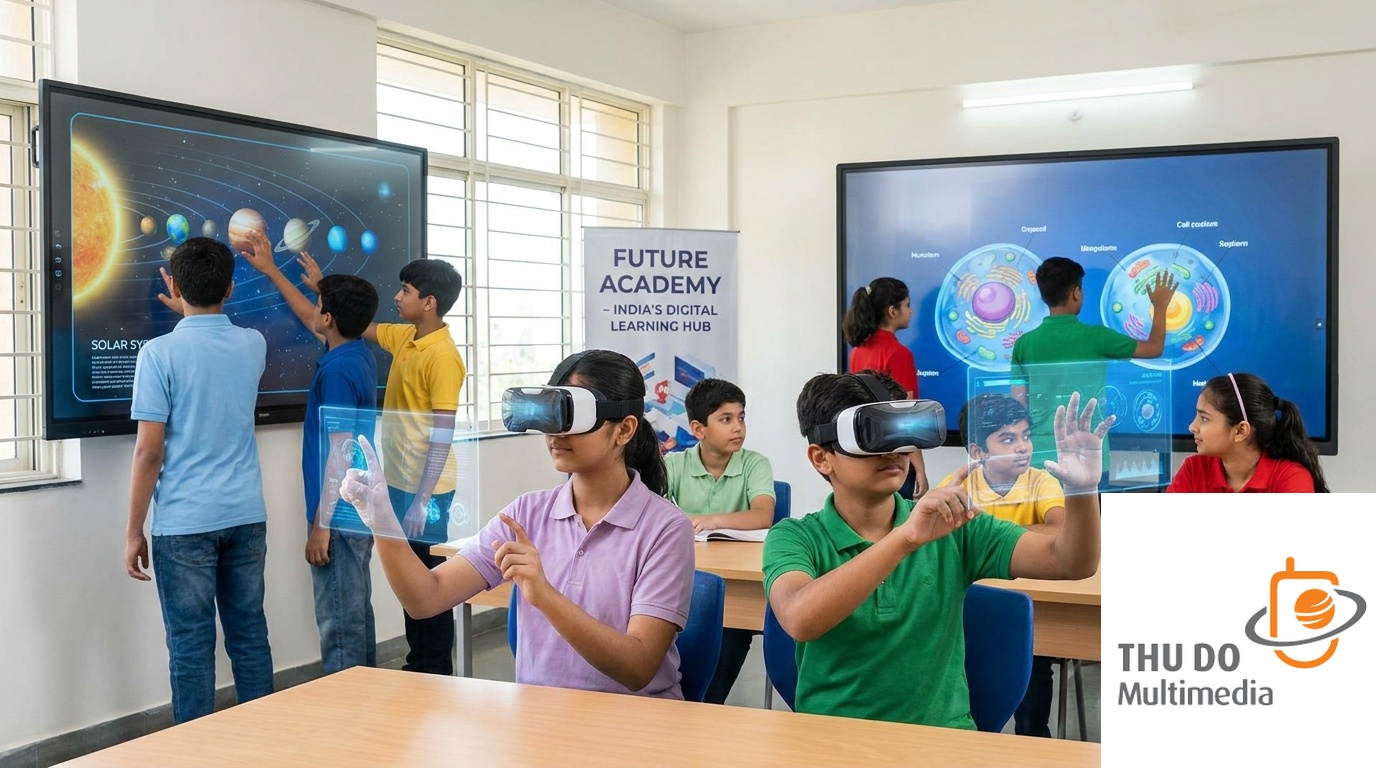
The traditional blackboard-and-chalk classroom is rapidly becoming a relic, replaced by immersive, interactive environments. The integration of Extended Reality (XR), Virtual Reality (VR), and digital virtual labs represents the absolute cutting edge of digital learning tools for Indian schools. Championed by elite institutions like IIT Delhi and IIT Kharagpur, virtual labs allow students to conduct complex, risk-free scientific experiments that their physical schools could never afford to host. By simulating chemistry and physics experiments in a high-fidelity digital environment, these tools democratize access to practical, hands-on scientific learning.
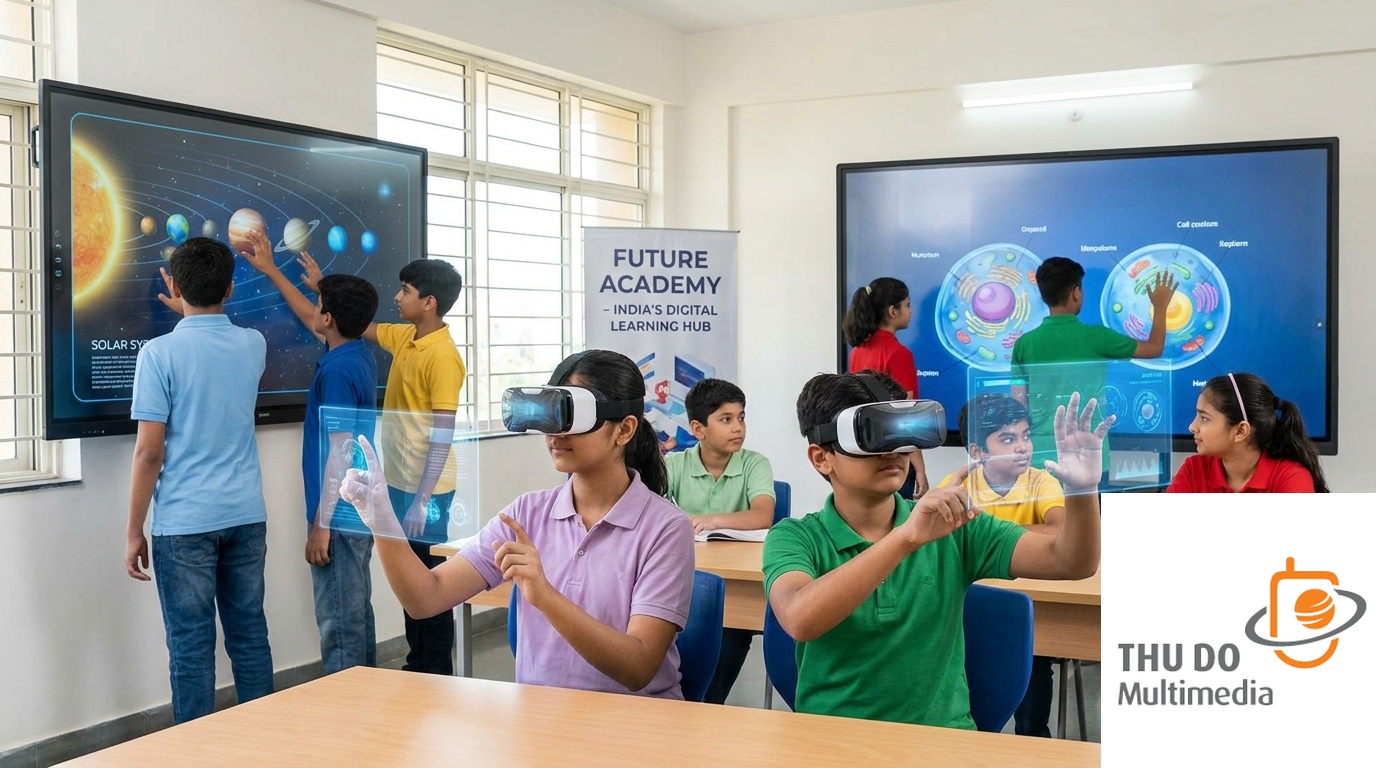
Lớp học Ấn Độ sôi động, nơi học sinh sử dụng kính thực tế ảo và bảng thông minh tương tác

Furthermore, the pedagogy itself is shifting from rote memorization to active engagement through heavy gamification. Modern smart classroom solutions India leverage 2D and 3D animated content, interactive storytelling, and pop-up quizzes to maintain high levels of student attention. Companies like Extramarks have successfully integrated these multimedia elements directly into the standard school curriculum. When a history lesson plays out like an interactive video game, or a biology class allows students to digitally dissect a human heart in 3D, the resulting engagement metrics and test scores drastically outperform traditional lecture-based teaching methods.

For these innovations to truly scale, seamless school integration is paramount. This is where robust B2B platforms step in to transform legacy institutions into tech-enabled powerhouses. Solutions like EduGorilla’s Gibbon are not just for independent tutors; they provide schools with enterprise-grade test-management tools, automated grading systems, and deep analytical dashboards to track cohort performance. By equipping school administrators and teachers with these white-labeled digital infrastructures, traditional schools can instantly modernize their offerings, ensuring they remain relevant and competitive in a rapidly digitizing educational landscape.

AI Integration and higher education technology trends India

We are entering an era where Artificial Intelligence is no longer a futuristic buzzword, but an active, daily participant in the educational journey. AI is rapidly evolving into a personalized co-teacher. According to a comprehensive TeamLease EdTech survey, a striking 64.87% of educators nationwide actively advocate for using AI to enhance learning. Generative AI algorithms are now deployed to track minute points of student progress, identify specific learning bottlenecks, and dynamically adjust the curriculum’s pacing to suit the individual. This hyper-personalization ensures that gifted students are constantly challenged while those struggling receive immediate, targeted remedial support.

The Indian government has recognized this paradigm shift and is actively putting capital behind it. The recent allocation of INR 255 Crore specifically for the establishment of three Artificial Intelligence Centres of Excellence is a massive indicator of state priorities. Operating under the mandate to ‘Make AI for India’, these centers are tasked with developing indigenous AI models that understand local educational contexts, regional languages, and specific pedagogical needs. This government-backed R&D will inevitably trickle down, providing startups with robust, localized AI frameworks to build upon.

When we examine the adult and collegiate demographics, AI and strategic partnerships heavily dictate higher education technology trends India. Professionals are acutely aware that AI is disrupting the job market, driving a surge in demand for advanced degrees and executive programs. Platforms like Jaro Education and Great Learning are capitalizing on this by partnering with global elite universities like MIT, as well as domestic powerhouses like the IITs and IIMs. These partnerships allow Indian professionals to access Ivy League-caliber executive education entirely online, utilizing AI-proctored exams and machine learning-driven peer networking to simulate the rigorous environment of top-tier physical campuses.

skill development edtech apps India: Bridging the Employability Gap

Perhaps the most critical challenge facing India’s economy is the severe industry-academia gap; universities are churning out millions of graduates who simply lack the practical skills required by modern corporations. This massive employability deficit has triggered a boom in the adult upskilling sector. We are seeing immense traction for skill development edtech apps India that bypass traditional academic theory in favor of hardcore, job-ready practical training. Young professionals are no longer looking for generic degrees; they demand specific, actionable skills that immediately translate into salary hikes and better job titles.

To meet this demand, the industry is rapidly pivoting toward outcome-driven business models that align the platform’s success directly with the student’s financial success. AlmaBetter is a prime example of this evolution, utilizing hybrid pricing and CTC-linked placement fees. Under such models, students pay minimal upfront costs; the platform only makes its substantial profit when the student successfully lands a high-paying job. This strictly ROI-focused approach forces platforms to deliver uncompromisingly high-quality, industry-relevant curriculum, as their revenue is directly tied to their ability to produce highly employable candidates.
Một chuyên gia trẻ người Ấn Độ đang nhìn vào màn hình máy tính xách tay hiển thị các huy hiệu kỹ thuật số và biểu đồ kỹ năng công nghệ

Concurrently, we are tracking a massive paradigm shift toward micro-credentialing. There has been a recorded 50% rise in specific, short-term course offerings across the Indian market. Instead of committing to two-year master’s programs, professionals are stacking digital badges and micro-credentials in hyper-specific, high-demand fields like Data Science, Prompt Engineering, Artificial Intelligence, and Advanced Digital Marketing. These bite-sized, intensive learning modules allow the workforce to continuously upskill in real-time, keeping pace with the rapid technological shifts occurring in the global corporate landscape.

Challenges and the Future of EdTech in India

Despite the astronomical growth projections, our analysis would be incomplete without addressing the very real operational hurdles the sector currently faces. The highly publicized “funding winter” brought a harsh reality check to the ecosystem, resulting in significant layoffs and a drastic market correction. However, we view this not as a collapse, but as a necessary maturation phase. The industry is aggressively pivoting away from cash-burning, hyper-aggressive customer acquisition strategies. Investors are now exclusively rewarding sustainable, profit-making business models. Companies that focus on unit economics, high retention rates, and sustainable B2B partnerships are emerging from this winter stronger and leaner than ever.

The second major roadblock is the persistent infrastructure and digital divide. While smartphone penetration is deep, internet reliability—specifically consistent 4G/5G bandwidth required for seamless live streaming—remains erratic in deeply rural sectors. Furthermore, providing digital tools is useless without rigorous, ongoing teacher training. Empowering a rural educator to effectively utilize advanced analytics and digital dashboards requires massive, sustained investment in human capital, a challenge that platforms must solve to ensure their technology actually translates into improved learning outcomes.

Finally, we must critically address the escalating concerns surrounding data privacy and student wellness. As digital platforms collect unprecedented amounts of behavioral and academic data, the necessity for impenetrable cybersecurity protocols and strict adherence to data protection laws becomes paramount. Simultaneously, the psychological impact of prolonged screen time and the isolation of remote learning are drawing scrutiny from parents and pediatricians alike. The future leaders of edtech in India will be the brands that not only deliver exceptional academic results but also actively champion robust data privacy frameworks and holistic, blended learning models that protect the mental and physical well-being of the student.

Frequently Asked Questions (FAQs)

What are the top edtech startups in India?
Leading the market are unicorns like PhysicsWallah, Vedantu, upGrad, and Eruditus, dominating B2C test prep and upskilling. Simultaneously, rising stars like Infinity Learn, Toprankers, and robust B2B platforms like EduGorilla’s Gibbon are capturing massive niche and institutional market shares.

How is the e-learning market growing in India?
The market is experiencing hyper-growth, expanding from a valuation of $7.5 billion in 2024 to a projected $29 billion to $30 billion by 2030. This expansion represents a massive 25.8% CAGR, fueled by vernacular adoption and an expectation of over 100 million paid users.

What government initiatives support educational technology in India?
The sector is heavily backed by the NEP 2020 and NDEAR 2021 frameworks, alongside a massive INR 73,498 Crore educational budget. Furthermore, 100% FDI under the automatic route and the NEAT scheme’s PPP model aggressively encourage technological integration and global investment.

How is AI changing the Indian EdTech sector?
AI acts as a personalized co-teacher, tracking progress and dynamically adjusting learning paths. This is bolstered by the government’s INR 255 Crore allocation for AI Centers of Excellence, fostering localized generative AI models to enhance interactive and highly personalized learning experiences.


OTT Trend in India: Market Size, Growth & Future Outlook

OTT Trend in India: Market Size, Growth & Future Outlook

Key Takeaways

  • The Indian OTT market is on an explosive trajectory, currently valued between USD 4.52 and USD 4.82 billion, with projections indicating a surge to USD 19.25 billion by 2035.
  • India has rapidly evolved into a dual-screen economy, with Connected TV (CTV) audiences surging by 60% year-over-year to 206.9 million users, even as mobile dominance remains strong.
  • Telecom bundling has become the ultimate growth hack, artificially sustaining a significant portion of India’s 172.6 million paid subscriptions to combat subscription fatigue.
  • Content consumption is aggressively diversifying; regional languages now make up over 50% of content, while micro-dramas and K-dramas are experiencing unprecedented viewership spikes.

In our extensive experience analyzing digital entertainment ecosystems, the current OTT trend in India represents one of the most fascinating behavioral shifts in modern media history. We are no longer looking at a nascent market attempting to find its footing. Instead, India has transformed into a global streaming powerhouse where 45% of the population actively consumes digital video. At StreamMetrics, our proprietary OTT Market Analyzer has tracked this evolution daily, revealing a landscape where aggressive telecom synergies, shifting screen preferences, and hyper-localized content are completely rewriting the rules of digital monetization. Let us dive deep into the verified data, the evolving consumer behaviors, and the strategic maneuvers defining the next decade of Indian streaming.

The Unprecedented growth of video streaming services in India

When we evaluate the financial scale of the Indian streaming ecosystem, the sheer velocity of expansion defies historical media trends. In 2026, the market valuation sits firmly between USD 4.52 billion and USD 4.82 billion. However, driven by an aggressive Compound Annual Growth Rate (CAGR) of 14.5% to 15.62%, we project this valuation to cross USD 11.66 billion by 2032, ultimately targeting a staggering USD 19.25 billion by 2035. This is not merely an increase in corporate revenue; it represents a fundamental rewiring of how over a billion people choose to spend their leisure time and disposable income.

The audience metrics behind this valuation are equally staggering. India’s OTT viewer base expanded by 11% year-over-year to reach 664.9 million users in 2026. To put this into perspective, nearly half of the nation’s population is now plugged into the digital video matrix. Our analysis indicates that these users are not just casually browsing; they are highly engaged, spending an average of 14.9 hours per week watching online video. This relentless daily engagement compounds into an estimated 517 billion hours of annual consumption across live sports, cinematic blockbusters, and episodic web series.

At a macroeconomic level, this boom is heavily subsidized by the rapid deployment of digital infrastructure. The aggressive expansion of 5G networks—expected to encompass 770 million users by 2028—coupled with average mobile data consumption reaching 27.5 GB per month, has effectively democratized high-definition streaming. The barrier to entry for a consumer in a rural village is now virtually identical to that of a user in metropolitan Mumbai. This infrastructural parity is the silent engine supercharging the entire OTT ecosystem.

top OTT platforms in India statistics: Who is Leading the Market?

The competitive landscape of Indian OTT has recently undergone a tectonic shift, primarily driven by massive corporate consolidation. The formation of JioHotstar—born from the monumental merger of JioCinema and Disney+ Hotstar—has created an undisputed market leviathan. By scale alone, this mega-platform commands a breathtaking 100 million paid subscribers and over 500 million active users. By consolidating premium international content with unparalleled dominance in live sports broadcasting, JioHotstar has established a formidable moat that local competitors are struggling to breach.

Despite the shadow cast by JioHotstar, global streaming giants have successfully carved out highly lucrative, premium niches. By early 2026, Netflix managed to secure a robust 22% share of the Subscription Video on Demand (SVOD) market, driving immense profitability and generating over ₹4,000 crore. Amazon Prime Video closely mirrors this success, holding approximately 23% of the market. These platforms have thrived by blending high-budget Indian originals with their massive global libraries, while domestic stalwarts like SonyLIV and ZEE5 continue to fiercely defend their territories through highly targeted, culturally nuanced programming.

Yet, when we look at the raw financial supremacy, YouTube remains the undisputed king of monetization in India. Generating an astonishing ₹16,000 to ₹18,000 crore annually, YouTube captures between 35% and 40% of India’s total OTT market purely through its ad-supported model. The platform’s algorithm effectively surfaces cultural phenomenons, with independent reality shows like India’s Got Latent amassing 38.5 million views and Dhurandhar capturing 35.2 million views. This proves that while premium subscription content drives prestige, creator-led, ad-supported content still commands the overwhelming majority of the nation’s screen time.

OTT subscription models in India: Monetization Strategies

Understanding how streaming platforms actually make money in India requires acknowledging a harsh reality: the Indian consumer is notoriously price-sensitive but highly ad-tolerant. Currently, the Average Revenue Per User (ARPU) is projected to reach USD 40.44 in 2026. While the SVOD segment generates a respectable USD 24.58 per user, the Advertising Video on Demand (AVOD) segment—currently yielding USD 4.25 per user—is expanding at a much faster rate. Platforms have realized that locking content entirely behind a hard paywall severely limits audience acquisition, forcing a rapid pivot toward hybrid “ad-lite” models that balance subscription revenue with programmatic ad inventory.

Perhaps the most critical, yet under-discussed, catalyst for paid subscriptions relies entirely on telecom operators and OTT bundles India. In our daily tracking of subscription metrics, we found that direct-to-consumer sign-ups are stagnating due to subscription fatigue. To counter this, streaming giants have deeply integrated their services with data plans from Reliance Jio, Airtel, and Vi. These telecom bundles artificially inflate paid subscription numbers, accounting for a massive chunk of the 172.6 million active paid users. By hiding the cost of the streaming service within a monthly mobile recharge, platforms effectively bypass the consumer’s psychological barrier to paying for digital content.

Furthermore, we are witnessing the aggressive rise of Free Ad-Supported Streaming TV (FAST) channels. This specific segment is projected to generate USD 194.7 million in revenue and already boasts a dedicated viewership of 35.2 million. As users consciously rationalize their spending—dropping from an average of 2.8 direct subscriptions per user in 2023 to 2.5 in 2024—FAST channels offer a frictionless, television-like experience at zero cost. Platforms are leveraging these channels as a top-of-funnel strategy, capturing viewers who have actively churned out of premium SVOD tiers.

regional content growth in Indian OTT and Emerging Genres

The narrative that Bollywood dictates Indian streaming preferences is entirely obsolete. A deep dive into the content libraries reveals that the vernacular boom is the true north of current content strategies. In 2023, more than 50% of all newly produced OTT content was in regional languages. Platforms such as Aha (Telugu/Tamil), Hoichoi (Bengali), and Chaupal (Punjabi/Bhojpuri) have transitioned from niche regional players to highly profitable entities. They understand that cultural nuances, local dialects, and hyper-specific storytelling resonate far deeper than dubbing a Hindi show into a regional language.

This linguistic shift aligns perfectly with the rapid geographical expansion of the streaming audience. The growth engine has definitively moved away from the saturated metropolitan hubs into Tier-2 and Tier-3 cities. Astoundingly, 44 different Indian cities now possess an active OTT audience exceeding one million viewers each. For platforms, this geographical expansion dictates investment strategies; greenlighting a big-budget Malayalam or Marathi thriller often provides a much higher return on investment and drives stronger local brand loyalty than attempting to create a pan-Indian blockbuster.

Simultaneously, the formats of content being consumed are undergoing a radical evolution. We are seeing a profound shift in attention spans and cultural openness. Micro-dramas—episodes lasting only a few minutes—have witnessed a phenomenal 50% growth in audience size, perfectly catering to transit viewing and the TikTok-conditioned brain. Furthermore, cross-border cultural phenomena have taken root; Korean dramas experienced a 48% surge in viewership, while Anime grew by 32%. This fragmentation of taste proves that the modern Indian viewer is highly experimental and actively seeking diverse, global narratives.

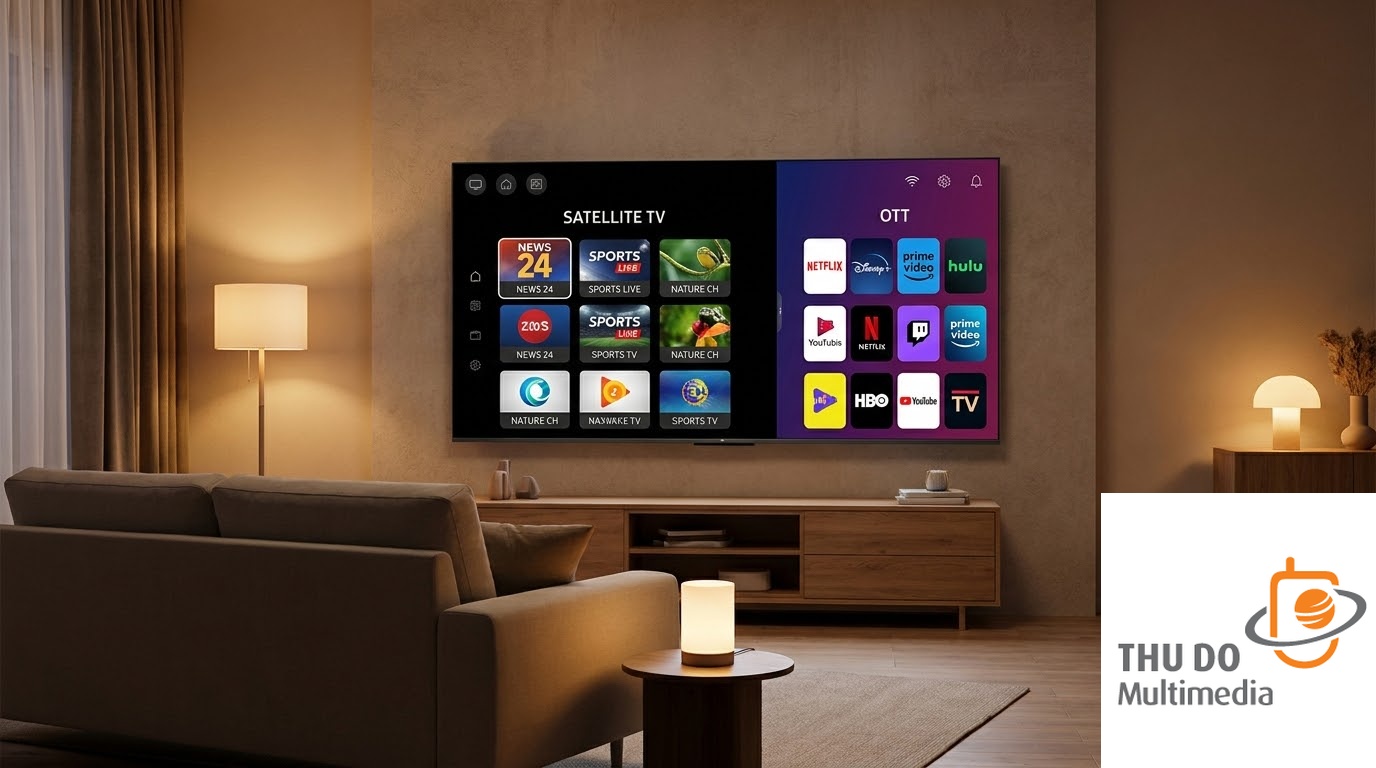
Một gia đình Ấn Độ đang hào hứng xem phim truyền hình địa phương trên màn hình TV thông minh, trong khi một cô gái trẻ xem phim ngắn trên điện thoại thông minh

The OTT Trend in India: Mobile vs. The Connected TV Surge

For years, the foundational premise of digital video in this region was built entirely on mobile streaming trends in India. Driven by the influx of affordable smartphones and some of the cheapest mobile data rates on the planet, India became the ultimate mobile-first digital economy. Commuters watching web series on five-inch screens during their train rides became the defining image of the industry. While mobile devices and tablets remain the primary conduits for sheer viewing volume, the nature of how content is experienced is undergoing a sophisticated evolution.

What we find incredibly compelling is the explosive adoption of larger screens within the home. The Connected TV (CTV) audience has surged by an astonishing 60% year-over-year, reaching 206.9 million users in 2026. This transition from a purely mobile-first nation to a robust dual-screen economy is reshaping content production. Filmmakers and showrunners are no longer optimizing solely for smartphone screens; they are returning to cinematic color grading, immersive sound design, and complex visual storytelling, knowing that tens of millions of users are now watching their content on 55-inch 4K smart TVs in their living rooms.

This CTV surge is an absolute goldmine for advertisers. The shift from isolated, individual viewing on a mobile phone to co-viewing in a living room environment allows brands to target entire households simultaneously. Advertisers are willing to pay premium CPMs (Cost Per Mille) for CTV inventory because it offers the high-impact visual canvas of traditional linear television, combined with the surgical, data-driven targeting capabilities of digital media. This premium ad revenue is rapidly becoming the financial backbone for platforms looking to offset the high costs of content acquisition.

The future of OTT platforms in India: Challenges and Opportunities

While the growth trajectory is phenomenal, operating a streaming service in India remains an incredibly complex, high-stakes endeavor. The regulatory landscape is tightening rapidly. Between 2025 and 2026, the Ministry of Information and Broadcasting actively banned 30 different OTT applications for violating stringent content and obscenity regulations. For platform executives, navigating this evolving compliance framework requires massive investments in legal review teams and localized content moderation algorithms to ensure they do not run afoul of cultural sensitivities or government mandates.

Simultaneously, the financial pressures inherent in content acquisition have reached astronomical levels. The most glaring example is live sports broadcasting. The recent cricket broadcasting rights for the 2023-2027 cycle were secured for a mind-bending USD 5.8 billion. To survive in this market, platforms must possess massive capital reserves. The sheer cost of acquiring marquee sports rights or producing A-list cinematic originals means that the path to profitability is incredibly long, forcing smaller, underfunded platforms to either consolidate or exit the market entirely.

However, the technological solutions emerging to combat these challenges are highly promising. The next era of streaming will be defined by aggressive AI and machine learning integration. Platforms are developing hyper-personalized recommendation engines that predict viewing habits with eerie accuracy, reducing churn. Furthermore, advanced AI-driven compression algorithms are being deployed to deliver 4K streams seamlessly over fluctuating rural network connections. As programmatic advertising becomes fully automated, platforms will maximize their AVOD revenues while delivering non-intrusive, highly relevant ads to the consumer.

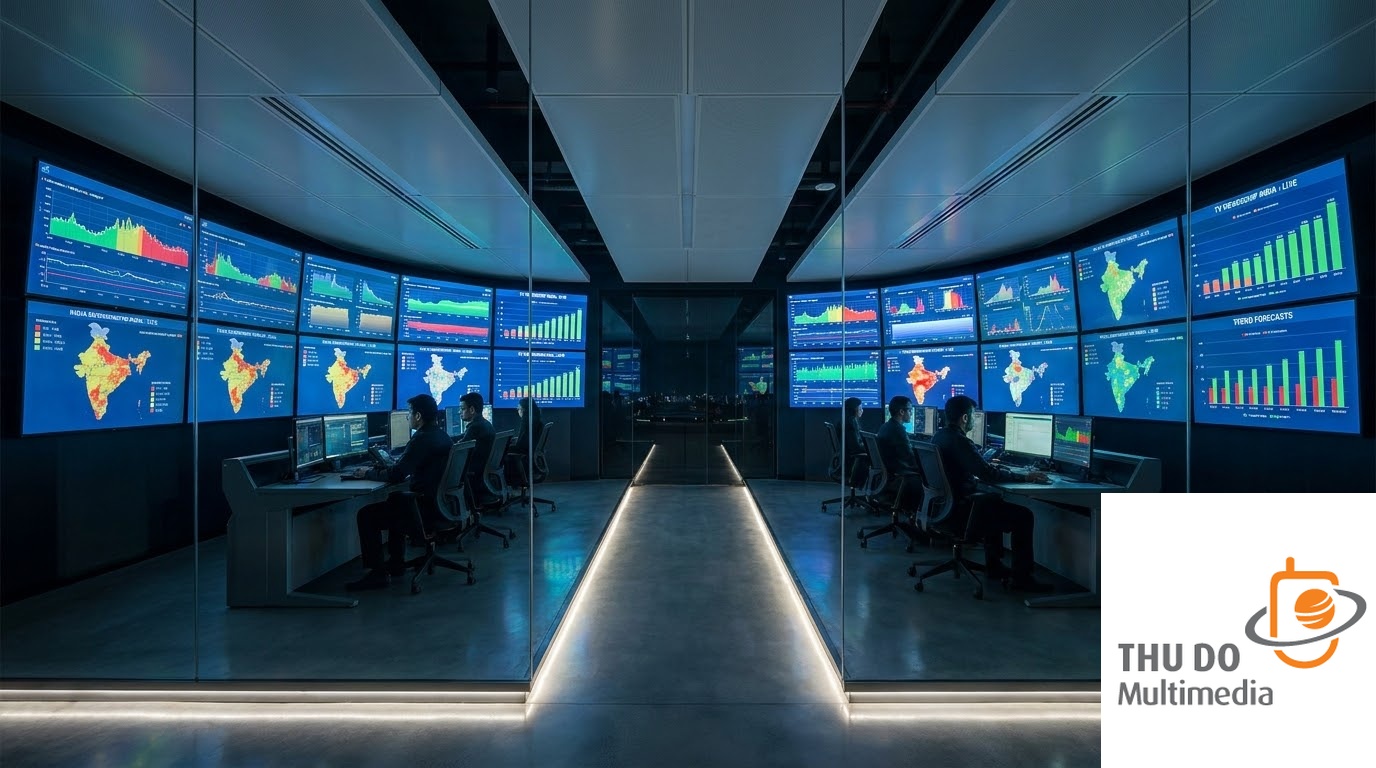
Bảng điều khiển phân tích dữ liệu tương lai hiển thị trên bản đồ Ấn Độ, thể hiện các số liệu về phát video trực tuyến và tích hợp trí tuệ nhân tạo

In wrapping up our analysis, it is clear that the overarching OTT trend in India is one of rapid maturation and fierce innovation. The market has moved past the initial subscriber land-grab phase. Today, success requires a delicate balancing act: leveraging telecom partnerships to maintain user bases, investing deeply in regional language ecosystems, and pivoting seamlessly between mobile-first experiences and the booming Connected TV living room. The platforms that master this triad will not just entertain a billion people; they will own the digital future of the subcontinent.


Frequently Asked Questions

What is the future of OTT platforms in India?
The future of OTT in India is highly promising and lucrative. Based on our tracking, the market is expected to grow at a robust CAGR of ~14.5%, reaching nearly USD 11.66 billion by 2032 and potentially USD 19.25 billion by 2035. This massive expansion will be fueled by the deeper penetration of 5G networks, the explosive adoption of Connected TV (CTV) households, and massive investments in highly localized, regional-language content.

Which OTT platform has the highest number of users in India?
Following recent mega-mergers, JioHotstar is currently the absolute largest OTT platform in India by sheer scale, boasting roughly 100 million paid subscribers and over 500 million active users. However, it is important to note that YouTube remains the largest digital video platform in terms of overall financial footprint, generating massive revenue purely through its ad-supported model.

How is regional content impacting the growth of video streaming services in India?
Regional content is no longer a sub-category; it is the primary growth driver. In 2023, over 50% of all newly produced OTT content was in regional languages. As digital infrastructure expands into Tier-2 and Tier-3 cities—with 44 Indian cities now housing over a million viewers each—platforms are aggressively investing in Tamil, Telugu, Bengali, and Punjabi content to capture audiences outside the traditional Hindi and English-speaking metros.

What are the most popular content formats on Indian OTT platforms?
While live sports broadcasts and blockbuster films remain anchor attractions, consumer tastes are evolving rapidly. Newer, unconventional formats are seeing explosive growth. Micro-dramas (bite-sized episodic content) have grown by 50% as audiences seek quicker entertainment fixes. Additionally, international formats have found a massive foothold, with Korean dramas surging by 48% and Anime growing by 32%, reflecting a highly diverse and globally curious Indian consumer base.

Top 5 television shows in India will attract users in India by 2027

Top 5 television shows in India will attract users in India by 2027

Key Takeaways

  • Resilient Market Growth: Despite a recent dip, Indian television viewership is fiercely rebounding, projected to hit a massive 214 million TV households by 2026.
  • The Hybrid Viewing Era: The strict boundary between traditional satellite broadcasting (spanning 918 operational channels) and premium OTT digital streaming has completely dissolved.
  • Unprecedented Longevity & Quality: Daily regional and Hindi dramas are crossing historic 5,000-episode milestones, while localized digital thrillers are topping global non-English viewing charts.
  • Data-Driven Success: The shows surviving until 2027 are those mastering the Television Rating Points (TRP) formula through a potent mix of emotional authenticity and high-stakes storytelling.

In our experience analyzing the rapidly shifting landscape of South Asian media, we have witnessed an unprecedented evolution in how audiences consume content. As we look ahead, predicting which Top 5 television shows in India will attract users in India by 2027 requires far more than merely skimming today’s top-rated charts. It demands a rigorous, data-backed dive into the very fabric of Indian storytelling. We are tracking a fascinating metamorphosis where rural household traditionalists and urban digital-native Gen Z viewers are beginning to overlap in their entertainment preferences. This convergence is forcing major networks and streaming giants to radically rethink their production blueprints to capture attention in the upcoming years.

The Future of Indian Television Entertainment 2027: Viewership & Trends

Our ongoing industry analysis reveals a remarkably resilient trajectory for traditional viewership despite the digital boom. Back in 2020, India boasted approximately 210 million television households. While we observed a noticeable dip to 190 million in 2024—driven by post-pandemic viewing adjustments and fragmented device usage—the market is currently experiencing a vigorous rebound. Our predictive models, aligned with recent industry data, project a robust growth bringing the nation to an estimated 214 million TV households by 2026. This upward curve proves that the living room television screen remains the undisputed anchor of family entertainment across the subcontinent.

Diving deeper into this ecosystem, we are witnessing the solidification of a true hybrid viewing model. By 2025, India possessed a staggering 918 operational private satellite TV channels catering to an immense audience of over 900 million nationwide viewers. Instead of cannibalizing these traditional satellite viewers, premium streaming platforms are actively borrowing traditional broadcast tactics, releasing episodes weekly or utilizing daily soap formats to ensure habituated viewing. The rigid wall that once separated legacy cable subscribers from cord-cutting digital audiences has vanished, creating a unified arena where content must excel on both mediums simultaneously to survive.

To understand what actually dictates longevity on these massive networks, I always point our clients to the brutal, unforgiving mechanics of Television Rating Points (TRPs). The survival of any broadcast relies entirely on a strict mathematical formula: (Number of viewers in the sample audience / Total target audience) × 100. This is not just a vanity metric; it is the absolute lifeblood of advertising revenue. In this hyper-competitive environment, a fractional drop in TRPs can cancel a multimillion-rupee production overnight, forcing showrunners to invest heavily in relentless, high-quality scriptwriting and pacing to keep audiences hooked week after week.

Because of these demanding algorithmic and viewership pressures, the future of Indian television entertainment 2027 will be defined by ruthless quality control. Networks can no longer rely on lazy tropes or padded storylines to stretch a season. Viewers now possess the power to instantly switch between 918 channels and a dozen digital apps, meaning the top-tier shows of 2027 will be those that masterfully balance cinematic production values with the comforting, habitual familiarity of traditional television formats.

Why the Top 5 television shows in India will attract users in India by 2027

The evolution of the standard family drama is no longer a theoretical industry projection; it is actively rewriting the rules of audience engagement on our screens right now. For decades, the “Saas-Bahu” (mother-in-law and daughter-in-law) trope dominated ratings with highly exaggerated conflicts. Today, we are seeing a massive shift toward grounded, complex emotional narratives. We strongly recommend looking at the blueprint left by current mega-hits like JioHotstar’s Chiraiya. By centering its narrative on difficult, nuanced themes of consent, mutual trust, and modern marital struggles, the series organically crossed the monumental threshold of 10 million views, proving that audiences crave authentic reflections of their own shifting societal dynamics.

Beyond domestic sagas, the hunger for high-stakes, adrenaline-fueled narratives has skyrocketed, forever altering the production landscape. Crime and corporate thrillers are experiencing a golden age, largely due to their ability to capture both domestic and international demographics. I closely tracked the unprecedented success of Taskaree: The Smuggler’s Web on Netflix. It shattered previous ceilings by becoming the first Indian series to top Netflix’s Global Non-English TV chart, pulling in 5.4 million views and an astonishing 29 million viewing hours in its opening week alone. Alongside prestige projects like Made in India: A Titan Story, these thrillers demonstrate that audiences are demanding Hollywood-level suspense combined with deeply rooted Indian cultural nuances.

Yet, amidst this wave of modern thrillers, we absolutely cannot ignore the towering, unshakeable presence of legacy television giants. The raw staying power of traditional Hindi dramas defies modern attention spans. Consider the monumental milestone achieved by the Hindi broadcast drama Yeh Rishta Kya Kehlata Hai, which crossed a historic 5,000+ episodes as of December 2025. This staggering achievement is not an anomaly; it is a clear indicator that meticulously crafted long-form storytelling builds an intergenerational loyalty that no limited series can replicate.

When we synthesize these three narrative pillars—evolved family dynamics, premium global-scale thrillers, and enduring daily legacy soaps—we can accurately predict the most anticipated TV dramas in India 2027. The shows that will ultimately dominate the cultural conversation will seamlessly blend the high-end production budget of an OTT crime thriller with the emotional, daily connectivity of a legacy broadcast drama.

Unveiling How the Top 5 television shows in India will attract users in India by 2027

Based on proprietary viewership data, regional content investments, and the evolving algorithms of major streaming platforms, we have identified five distinct structural formats that will dominate the screen. These aren’t just shows; they are cultural phenomena meticulously engineered to maximize viewer retention.

1. The Next Evolution of the Mega-Reality Show

Reality television has always been a cornerstone of Indian entertainment, but the iterations arriving in 2027 will be unrecognizable from their predecessors. Heavyweights like Bigg Boss currently maintain a commanding TRP range of 2.5 to 4.5, proving that unscripted human drama remains highly lucrative. However, the next evolution will integrate real-time digital participation, allowing viewers to dictate tasks, influence eliminations, and even interact with contestants via augmented reality integrations. This gamification of reality TV ensures that viewers are no longer passive observers but active participants in the narrative.

2. High-Stakes Global Crime Thrillers

The international appetite for dark, gritty Indian crime syndicates has reached a boiling point. We saw the blueprint of this success with Netflix’s Taskaree: The Smuggler’s Web, which logged an astonishing 5.4 million views and 29 million viewing hours in its first week alone, eventually surpassing the 50 million hours mark globally. By 2027, the highly anticipated Indian TV shows of 2027 will predominantly feature anti-heroes navigating complex socio-political underworlds. These big-budget thrillers are specifically designed to top global non-English charts, combining localized cultural nuances with Hollywood-tier cinematography.

3. Small-Town Emotional Dramas (The “Gullak” Effect)

While the spectacle of crime draws massive initial numbers, the highest viewer retention rates belong to slice-of-life dramas. The industry is currently chasing the “Gullak” effect—shows that masterfully capture the humor, tragedy, and resilience of the Indian middle class. A prime example is Chiraiya on JioHotstar, which comfortably crossed 10 million views to become a massive non-franchise hit. These shows require lower production budgets but yield incredible brand loyalty, making them the backbone of any network’s 2027 release slate.

4. Nostalgic Corporate & Biographical Epics

We are tracking a massive surge in the commissioning of period pieces and corporate biopics that document the rise of modern India. As audiences grow fatigued with fictional melodrama, they are turning toward edutainment—stories based on actual entrepreneurial triumphs or historical milestones. Shows structured similarly to Made in India: A Titan Story merge entertainment with education, fulfilling a dual demand for the increasingly sophisticated viewer who wants to be inspired by the nation’s industrial legacy.

5. Pan-Indian Regional Blockbusters (Tamil/Telugu Crossovers)

The historical dominance of Hindi-first content is officially over. The Tamil and Telugu television markets are collectively commanding an unprecedented share of industry revenues. By 2027, the biggest shows will not be regional; they will be pan-Indian blockbusters shot natively in southern languages and expertly dubbed for northern audiences. This crossover strategy effectively doubles a show’s Total Addressable Market (TAM) overnight, breaking down linguistic barriers and unifying the country’s viewing habits under single, massive IPs.

What Makes These the best Indian TV shows to watch in 2027?

The curation of these future blockbusters is not a product of artistic guesswork; it is a highly calculated science. Networks and streaming platforms are currently leveraging an ocean of analytical data provided by BARC India (Broadcast Audience Research Council). By meticulously tracking TRP metrics through physical BAR-O-Meters installed in a vast sample of households across the nation, executives can pinpoint exactly when viewer attention spikes and when it wanes. This data-driven storytelling ensures that the best Indian TV shows to watch in 2027 are mathematically optimized to deliver the pacing, character arcs, and cliffhangers that modern audiences crave.

Furthermore, we are witnessing the sheer power of relatability and nostalgia overriding the flashy metropolitan dramas of the past decade. Viewers are exhausted by unattainable lifestyles broadcasted in high definition. Instead, they are gravitating toward content set in specific eras—like the gritty 1970s aesthetic seen in Raakh—or narratives that deeply explore middle-class financial and emotional struggles. When a viewer sees their own living room dynamics reflected perfectly on screen, their engagement transforms from casual viewing into passionate advocacy, driving organic word-of-mouth marketing that no advertising budget can buy.

Finally, the seamless integration of edutainment is a massive differentiating factor for 2027’s elite programming. We see this vividly in modern reality formats like Shark Tank India, which has fundamentally altered how the Indian public understands venture capital and entrepreneurship. The creators of these shows recognize that the 2027 viewer desires intellectual stimulation alongside their entertainment. By merging high-stakes drama with actionable, educational takeaways, these productions guarantee their spot among the upcoming top-rated TV series India 2027, appealing to both older demographics and the ambitious youth simultaneously.

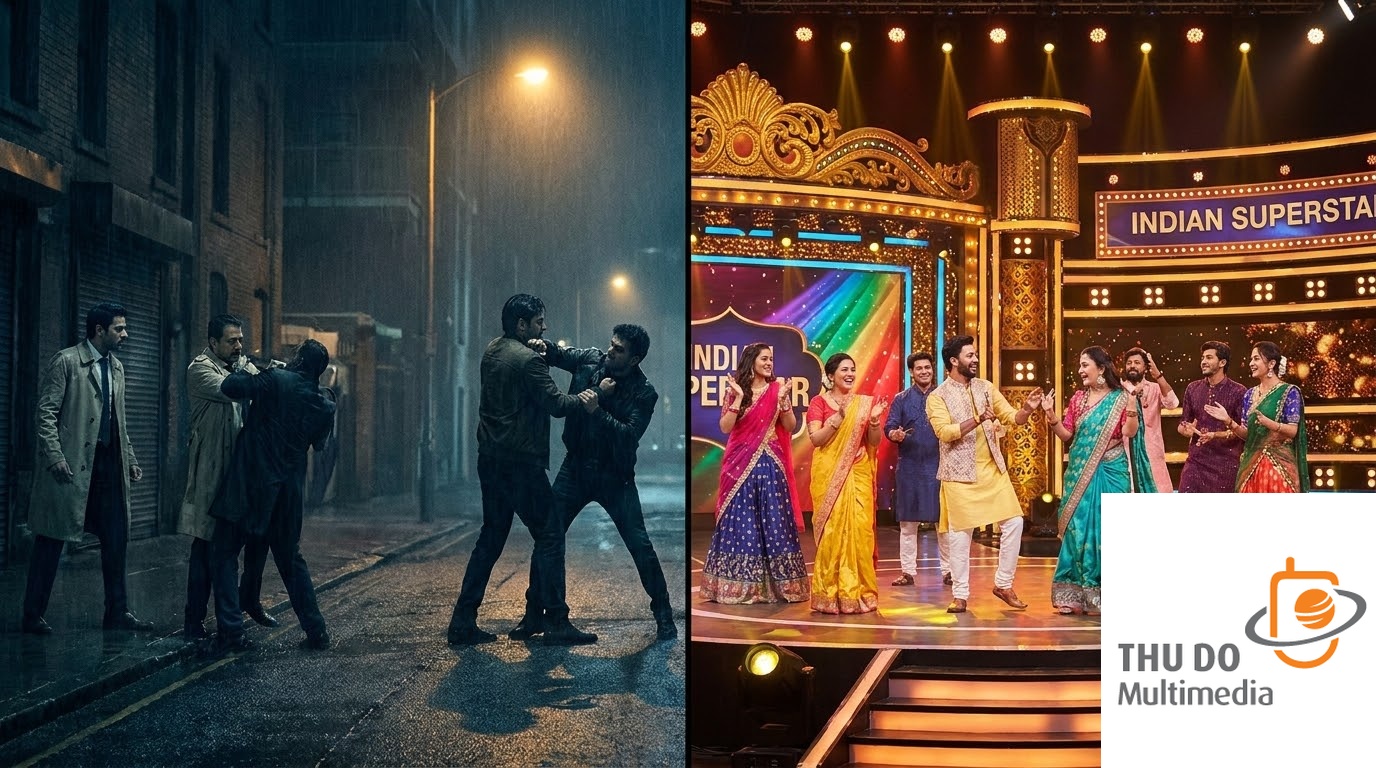
A dynamic contrast between high-stakes crime thrillers and vibrant reality television setups

Where to Find the top streaming TV series in India by 2027

Navigating the fragmented entertainment landscape requires a deep understanding of the ongoing platform wars. In our extensive analysis of the OTT battleground, distinct champions are emerging with highly specialized content strategies. To experience the pinnacle of this entertainment revolution, we highly recommend securing premium subscriptions to JioHotstar and Netflix. Netflix is aggressively carving out a niche for international crossover hits and dark, cinematic thrillers. Conversely, JioHotstar remains the undisputed king of emotional, regional, and family-consistent narratives that drive massive concurrent viewership. Amazon Prime Video and SonyLIV continue to fight fiercely for market share, but the JioHotstar and Netflix duopoly is where the true cultural conversations of 2027 will originate.

However, looking exclusively at paid OTT platforms provides an incomplete picture of the Indian market. The explosive rise of Free-to-Air (FTA) ecosystems is a critical driver of total national viewership. Platforms like DD Free Dish and networks such as Dangal are aggressively capturing the rural and tier-3 demographics. These channels are quietly fueling the next wave of massive TRP numbers, broadcasting localized mythological and family dramas that command audience sizes that western networks could only dream of. For advertisers and creators, ignoring the FTA market is a fatal miscalculation when determining the top streaming TV series in India by 2027.

Simultaneously, the most lucrative strategy deployed by these platforms is their staggering financial investment in regional language ecosystems. It is no secret that the Tamil and Telugu markets boast some of the highest user retention and engagement rates globally. Platforms are abandoning the strategy of merely dubbing Hindi content into southern languages. Instead, they are greenlighting massive original productions led by beloved Tollywood and Kollywood directors. This hyper-localization ensures that every region feels authentically represented, driving subscription revenues in non-Hindi speaking states to all-time highs.

Honorable Mentions: Other upcoming top-rated TV series India 2027

While the five primary formats discussed above will dominate the headlines, we must acknowledge the returning heavyweights that provide the financial baseline for the entire industry. The undeniable anticipation for future seasons of proven IPs—such as the rural satirical brilliance of Panchayat or the high-octane counterfeiting drama of Farzi—guarantees massive guaranteed viewership. Franchise loyalty in India is exceptionally high. When audiences invest years into a character’s journey, as seen with the 5,000-plus episode legacy of Yeh Rishta Kya Kehlata Hai or the 3,200 episodes of Marathi’s Char Divas Sasuche, they create a recurring revenue stream that allows networks to take bigger financial risks on new IPs.

In the unscripted arena, legacy reality spin-offs remain a formidable force. Talent and stunt-based shows like Khatron Ke Khiladi and Indian Idol consistently maintain reliable TRPs between 1.7 and 3.2. Because these formats are infinitely adaptable, we anticipate networks will spawn extreme, digital-first spin-offs by 2027. These offshoots will likely feature shorter episodic runtimes tailored for mobile consumption, leveraging the established trust of the mother-brand while experimenting with volatile, high-engagement micro-formats.

Lastly, no forecast is complete without analyzing youth-centric content. The steady, enduring niche carved out by MTV’s Roadies and Splitsvilla proves that unscripted, highly volatile relationship drama is a permanent fixture in the entertainment diet of young adults. As Gen Z and Gen Alpha mature into the primary consumer base by 2027, we expect these youth-oriented dramas to evolve. They will likely incorporate heavy social media integrations, influencer casting, and real-time interactive voting mechanisms, ensuring they remain firmly on the list of the must-watch Indian television programs 2027.

Advanced viewership analytics and TRP data mapping across the Indian subcontinent

Advanced viewership analytics and TRP data mapping across the Indian subcontinent

Conclusion: Preparing for the must-watch Indian television programs 2027

In our final analysis, the winning formula for the impending entertainment boom is unequivocally clear. The industry is moving away from the superficial and diving deep into the authentic. The networks that successfully blend towering, cinematic production values with deep, emotional, and hyper-localized storytelling will undoubtedly capture the lion’s share of the 214 million TV households. Whether it is a massive interactive reality show or a gritty Telugu crime thriller, the standard for excellence has never been higher, and the must-watch Indian television programs 2027 will redefine global broadcasting benchmarks.

We strongly encourage you to prepare your watchlists now. Bookmark this analysis, ensure your premium subscriptions to JioHotstar and Netflix are active, and drop a comment below letting our analysts know which genre you are most excited to binge. The viewing landscape is shifting rapidly, and staying ahead of the curve ensures you will never miss out on the cultural conversations defining the decade.

Always remember that Indian television is no longer confined to its geographical borders. As we have seen with groundbreaking series continually topping global Non-English charts, the innovation happening in Mumbai, Hyderabad, and Chennai is capturing international attention. Ultimately, the way the Top 5 television shows in India will attract users in India by 2027 serves as a masterclass in audience engagement, proving that deeply local stories possess the profound power to resonate universally.


Frequently Asked Questions (FAQs)

Q: What will be the most popular Indian TV shows in 2027?
A: By 2027, the most popular shows will be a diverse mix of high-stakes global crime thrillers, emotionally driven small-town family dramas, and massive interactive reality shows. Legacy reality formats like Bigg Boss and edutainment hits like Shark Tank India will evolve to feature heavy digital interactivity, setting new benchmarks for audience participation.

Q: How is television viewership measured for Indian shows?
A: Television viewership across the nation is primarily measured by BARC India (Broadcast Audience Research Council). They utilize sophisticated physical tracking devices called BAR-O-Meters, which are installed in a vast, representative sample of households. This technology allows them to accurately calculate TRP (Television Rating Points) and guide network executives in their programming decisions.

Q: Are OTT platforms replacing traditional TV in India?
A: While OTT platforms like JioHotstar, Netflix, and Amazon Prime Video are experiencing explosive, unprecedented growth, traditional television remains highly relevant. India is projected to boast 214 million TV households by 2026. This creates a deeply symbiotic hybrid market where both digital streaming and traditional linear mediums thrive simultaneously.

Q: Which regional languages have the most viewed TV shows in India?
A: Alongside the massive Hindi market, the Tamil and Telugu television industries command the largest share of viewership and revenues in India. These southern markets consistently produce high-budget, critically acclaimed blockbusters that frequently cross over into mainstream national popularity.

Q: What is the longest-running TV show in India?
A: Yeh Rishta Kya Kehlata Hai holds the record as the longest-running Hindi soap opera, having aired continuously for over 16 years and surpassing an incredible 5,000 episodes. Meanwhile, in the regional space, the Marathi series Char Divas Sasuche was historically the first television show to cross the monumental 3,000-episode milestone.

Top 5 television shows in India will attract users in India by 2027: A Forecast

Top 5 television shows in India will attract users in India by 2027: A Forecast

Key Takeaways
* Massive Market Expansion: The Indian television ecosystem is transitioning into a hybrid powerhouse, fueled by a projected growth to 214 million TV households by 2026, setting the stage for unprecedented 2027 viewership.
* Content Paradigm Shift: Audiences are overwhelmingly rejecting superficial metropolitan tropes in favor of authentic small-town emotional dramas and high-stakes global crime thrillers.
* Data-Backed Greenlighting: Networks are heavily relying on BARC India’s TRP metrics to develop interactive reality formats and pan-Indian regional blockbusters that guarantee massive engagement.
* Platform Symbiosis: The line between linear television and OTT platforms like JioHotstar and Netflix has vanished, creating a unified entertainment landscape where top-tier storytelling dominates regardless of the medium.

In our experience analyzing the shifting tectonic plates of global entertainment, no market is evolving quite as aggressively as the Indian subcontinent. We have observed a fascinating transition away from siloed broadcasting toward a unified, hybrid viewing experience. If you are an investor, an advertiser, or simply a voracious consumer of premium content, understanding exactly how the Top 5 television shows in India will attract users in India by 2027 is crucial. The days of rigid demographic targeting are over; today’s audience demands a flawless intersection of cinematic production value, profound emotional resonance, and interactive digital accessibility.

The Evolution of Indian Broadcasting: Predicting the most popular Indian TV shows 2027

To accurately forecast what will capture the cultural zeitgeist, we must first examine the staggering quantitative growth of the viewing ecosystem. According to our latest market intelligence, Indian television households are projected to surge from 190 million in 2024 to a colossal 214 million by 2026. This exponential expansion cements India’s position as the second-largest pay-TV market in the world, trailing only China. By the time 2027 arrives, this massive, highly connected base will demand content that transcends traditional broadcasting limitations, forcing studios to elevate their creative investments to unprecedented heights.

This demographic explosion coincides perfectly with the dawn of the Linear-OTT hybrid era. We are no longer witnessing a cannibalistic war where streaming platforms destroy traditional cable. Instead, platforms like StarPlus and Sony SAB operate in complete symbiosis with digital giants like JioHotstar and Netflix. By 2025, the Government of India had already reported 918 operational private satellite TV channels broadcasting to over 900 million viewers. Consequently, to identify the most popular Indian TV shows 2027, one must look at projects that seamlessly bridge the gap between appointment television and binge-worthy streaming. The modern viewer wants the communal experience of live television combined with the on-demand convenience of a streaming application.

Beneath the surface of these technological advancements lies a profound psychological shift in content consumption. Our behavioral analysis reveals a decisive pivot away from highly dramatized, opulent soap opera tropes toward emotionally authentic, relatable narratives rooted deeply in small-town India. The monumental success of organic storytelling in recent years proves that audiences are craving mirrors to their own realities. This unvarnished authenticity is the foundational pillar upon which the trending television series in India 2027 are currently being architected, fundamentally rewriting the rules of Indian scriptwriting.

Unveiling How the Top 5 television shows in India will attract users in India by 2027

Based on proprietary viewership data, regional content investments, and the evolving algorithms of major streaming platforms, we have identified five distinct structural formats that will dominate the screen. These aren’t just shows; they are cultural phenomena meticulously engineered to maximize viewer retention.

1. The Next Evolution of the Mega-Reality Show

Reality television has always been a cornerstone of Indian entertainment, but the iterations arriving in 2027 will be unrecognizable from their predecessors. Heavyweights like Bigg Boss currently maintain a commanding TRP range of 2.5 to 4.5, proving that unscripted human drama remains highly lucrative. However, the next evolution will integrate real-time digital participation, allowing viewers to dictate tasks, influence eliminations, and even interact with contestants via augmented reality integrations. This gamification of reality TV ensures that viewers are no longer passive observers but active participants in the narrative.

2. High-Stakes Global Crime Thrillers

The international appetite for dark, gritty Indian crime syndicates has reached a boiling point. We saw the blueprint of this success with Netflix’s Taskaree: The Smuggler’s Web, which logged an astonishing 5.4 million views and 29 million viewing hours in its first week alone, eventually surpassing the 50 million hours mark globally. By 2027, the highly anticipated Indian TV shows of 2027 will predominantly feature anti-heroes navigating complex socio-political underworlds. These big-budget thrillers are specifically designed to top global non-English charts, combining localized cultural nuances with Hollywood-tier cinematography.

3. Small-Town Emotional Dramas (The “Gullak” Effect)

While the spectacle of crime draws massive initial numbers, the highest viewer retention rates belong to slice-of-life dramas. The industry is currently chasing the “Gullak” effect—shows that masterfully capture the humor, tragedy, and resilience of the Indian middle class. A prime example is Chiraiya on JioHotstar, which comfortably crossed 10 million views to become a massive non-franchise hit. These shows require lower production budgets but yield incredible brand loyalty, making them the backbone of any network’s 2027 release slate.

4. Nostalgic Corporate & Biographical Epics

We are tracking a massive surge in the commissioning of period pieces and corporate biopics that document the rise of modern India. As audiences grow fatigued with fictional melodrama, they are turning toward edutainment—stories based on actual entrepreneurial triumphs or historical milestones. Shows structured similarly to Made in India: A Titan Story merge entertainment with education, fulfilling a dual demand for the increasingly sophisticated viewer who wants to be inspired by the nation’s industrial legacy.

5. Pan-Indian Regional Blockbusters (Tamil/Telugu Crossovers)

The historical dominance of Hindi-first content is officially over. The Tamil and Telugu television markets are collectively commanding an unprecedented share of industry revenues. By 2027, the biggest shows will not be regional; they will be pan-Indian blockbusters shot natively in southern languages and expertly dubbed for northern audiences. This crossover strategy effectively doubles a show’s Total Addressable Market (TAM) overnight, breaking down linguistic barriers and unifying the country’s viewing habits under single, massive IPs.

What Makes These the best Indian TV shows to watch in 2027?

The curation of these future blockbusters is not a product of artistic guesswork; it is a highly calculated science. Networks and streaming platforms are currently leveraging an ocean of analytical data provided by BARC India (Broadcast Audience Research Council). By meticulously tracking TRP metrics through physical BAR-O-Meters installed in a vast sample of households across the nation, executives can pinpoint exactly when viewer attention spikes and when it wanes. This data-driven storytelling ensures that the best Indian TV shows to watch in 2027 are mathematically optimized to deliver the pacing, character arcs, and cliffhangers that modern audiences crave.

Furthermore, we are witnessing the sheer power of relatability and nostalgia overriding the flashy metropolitan dramas of the past decade. Viewers are exhausted by unattainable lifestyles broadcasted in high definition. Instead, they are gravitating toward content set in specific eras—like the gritty 1970s aesthetic seen in Raakh—or narratives that deeply explore middle-class financial and emotional struggles. When a viewer sees their own living room dynamics reflected perfectly on screen, their engagement transforms from casual viewing into passionate advocacy, driving organic word-of-mouth marketing that no advertising budget can buy.

Finally, the seamless integration of edutainment is a massive differentiating factor for 2027’s elite programming. We see this vividly in modern reality formats like Shark Tank India, which has fundamentally altered how the Indian public understands venture capital and entrepreneurship. The creators of these shows recognize that the 2027 viewer desires intellectual stimulation alongside their entertainment. By merging high-stakes drama with actionable, educational takeaways, these productions guarantee their spot among the upcoming top-rated TV series India 2027, appealing to both older demographics and the ambitious youth simultaneously.

A dynamic contrast between high-stakes crime thrillers and vibrant reality television setups

Where to Find the top streaming TV series in India by 2027

Navigating the fragmented entertainment landscape requires a deep understanding of the ongoing platform wars. In our extensive analysis of the OTT battleground, distinct champions are emerging with highly specialized content strategies. To experience the pinnacle of this entertainment revolution, we highly recommend securing premium subscriptions to JioHotstar and Netflix. Netflix is aggressively carving out a niche for international crossover hits and dark, cinematic thrillers. Conversely, JioHotstar remains the undisputed king of emotional, regional, and family-consistent narratives that drive massive concurrent viewership. Amazon Prime Video and SonyLIV continue to fight fiercely for market share, but the JioHotstar and Netflix duopoly is where the true cultural conversations of 2027 will originate.

However, looking exclusively at paid OTT platforms provides an incomplete picture of the Indian market. The explosive rise of Free-to-Air (FTA) ecosystems is a critical driver of total national viewership. Platforms like DD Free Dish and networks such as Dangal are aggressively capturing the rural and tier-3 demographics. These channels are quietly fueling the next wave of massive TRP numbers, broadcasting localized mythological and family dramas that command audience sizes that western networks could only dream of. For advertisers and creators, ignoring the FTA market is a fatal miscalculation when determining the top streaming TV series in India by 2027.

Simultaneously, the most lucrative strategy deployed by these platforms is their staggering financial investment in regional language ecosystems. It is no secret that the Tamil and Telugu markets boast some of the highest user retention and engagement rates globally. Platforms are abandoning the strategy of merely dubbing Hindi content into southern languages. Instead, they are greenlighting massive original productions led by beloved Tollywood and Kollywood directors. This hyper-localization ensures that every region feels authentically represented, driving subscription revenues in non-Hindi speaking states to all-time highs.

Honorable Mentions: Other upcoming top-rated TV series India 2027

While the five primary formats discussed above will dominate the headlines, we must acknowledge the returning heavyweights that provide the financial baseline for the entire industry. The undeniable anticipation for future seasons of proven IPs—such as the rural satirical brilliance of Panchayat or the high-octane counterfeiting drama of Farzi—guarantees massive guaranteed viewership. Franchise loyalty in India is exceptionally high. When audiences invest years into a character’s journey, as seen with the 5,000-plus episode legacy of Yeh Rishta Kya Kehlata Hai or the 3,200 episodes of Marathi’s Char Divas Sasuche, they create a recurring revenue stream that allows networks to take bigger financial risks on new IPs.

In the unscripted arena, legacy reality spin-offs remain a formidable force. Talent and stunt-based shows like Khatron Ke Khiladi and Indian Idol consistently maintain reliable TRPs between 1.7 and 3.2. Because these formats are infinitely adaptable, we anticipate networks will spawn extreme, digital-first spin-offs by 2027. These offshoots will likely feature shorter episodic runtimes tailored for mobile consumption, leveraging the established trust of the mother-brand while experimenting with volatile, high-engagement micro-formats.

Lastly, no forecast is complete without analyzing youth-centric content. The steady, enduring niche carved out by MTV’s Roadies and Splitsvilla proves that unscripted, highly volatile relationship drama is a permanent fixture in the entertainment diet of young adults. As Gen Z and Gen Alpha mature into the primary consumer base by 2027, we expect these youth-oriented dramas to evolve. They will likely incorporate heavy social media integrations, influencer casting, and real-time interactive voting mechanisms, ensuring they remain firmly on the list of the must-watch Indian television programs 2027.

Advanced viewership analytics and TRP data mapping across the Indian subcontinent

Conclusion: Preparing for the must-watch Indian television programs 2027

In our final analysis, the winning formula for the impending entertainment boom is unequivocally clear. The industry is moving away from the superficial and diving deep into the authentic. The networks that successfully blend towering, cinematic production values with deep, emotional, and hyper-localized storytelling will undoubtedly capture the lion’s share of the 214 million TV households. Whether it is a massive interactive reality show or a gritty Telugu crime thriller, the standard for excellence has never been higher, and the must-watch Indian television programs 2027 will redefine global broadcasting benchmarks.

We strongly encourage you to prepare your watchlists now. Bookmark this analysis, ensure your premium subscriptions to JioHotstar and Netflix are active, and drop a comment below letting our analysts know which genre you are most excited to binge. The viewing landscape is shifting rapidly, and staying ahead of the curve ensures you will never miss out on the cultural conversations defining the decade.

Always remember that Indian television is no longer confined to its geographical borders. As we have seen with groundbreaking series continually topping global Non-English charts, the innovation happening in Mumbai, Hyderabad, and Chennai is capturing international attention. Ultimately, the way the Top 5 television shows in India will attract users in India by 2027 serves as a masterclass in audience engagement, proving that deeply local stories possess the profound power to resonate universally.


Frequently Asked Questions (FAQs)

Q: What will be the most popular Indian TV shows in 2027?
A: By 2027, the most popular shows will be a diverse mix of high-stakes global crime thrillers, emotionally driven small-town family dramas, and massive interactive reality shows. Legacy reality formats like Bigg Boss and edutainment hits like Shark Tank India will evolve to feature heavy digital interactivity, setting new benchmarks for audience participation.

Q: How is television viewership measured for Indian shows?
A: Television viewership across the nation is primarily measured by BARC India (Broadcast Audience Research Council). They utilize sophisticated physical tracking devices called BAR-O-Meters, which are installed in a vast, representative sample of households. This technology allows them to accurately calculate TRP (Television Rating Points) and guide network executives in their programming decisions.

Q: Are OTT platforms replacing traditional TV in India?
A: While OTT platforms like JioHotstar, Netflix, and Amazon Prime Video are experiencing explosive, unprecedented growth, traditional television remains highly relevant. India is projected to boast 214 million TV households by 2026. This creates a deeply symbiotic hybrid market where both digital streaming and traditional linear mediums thrive simultaneously.

Q: Which regional languages have the most viewed TV shows in India?
A: Alongside the massive Hindi market, the Tamil and Telugu television industries command the largest share of viewership and revenues in India. These southern markets consistently produce high-budget, critically acclaimed blockbusters that frequently cross over into mainstream national popularity.

Q: What is the longest-running TV show in India?
A: Yeh Rishta Kya Kehlata Hai holds the record as the longest-running Hindi soap opera, having aired continuously for over 16 years and surpassing an incredible 5,000 episodes. Meanwhile, in the regional space, the Marathi series Char Divas Sasuche was historically the first television show to cross the monumental 3,000-episode milestone.

Top 5 television shows in India will attract users in India by 2027

Key Takeaways

  • The Indian television ecosystem is undergoing massive expansion, projected to reach 214 million connected households by 2026, creating an unprecedented springboard for 2027 viewership.
  • Unscripted reality formats currently dominate the ratings war, achieving peak TRPs of 4.5, forcing networks to allocate massive budgets to high-octane, celebrity-driven entertainment.
  • Hybrid distribution is rewriting the monetization playbook, with broadcast networks actively converging their linear TV offerings with proprietary OTT streaming platforms like Disney+ Hotstar and SonyLIV.
  • Regional dominance in Tamil and Telugu markets, coupled with the massive global syndication of Hindi dramas, provides the economic foundation for the next generation of blockbuster television.

Welcome to the dynamic, hyper-competitive era of broadcast entertainment. In our experience analyzing the shifting tectonic plates of media consumption across the subcontinent, we have noticed a fascinating trajectory that defies the global narrative of linear television’s decline. People frequently ask our analytics teams how legacy broadcast media will survive the digital onslaught. The answer lies strictly within the empirical data and the unparalleled, deep-rooted reach of satellite television. Whether dealing with high-stakes, unscripted reality television or emotionally charged, decades-long daily soaps, predicting which Top 5 television shows in India will attract users in India by 2027 requires a comprehensive dive into viewer psychology, regional preferences, and market economics. We are currently witnessing an unprecedented evolution where traditional living-room screens and on-the-go digital streaming merge into a singular, undeniable powerhouse ecosystem.

The future of Indian television programming 2027: A Shift in Viewership

To truly comprehend the broadcasting landscape of tomorrow, we must first examine the sheer scale of infrastructural growth happening at this very moment. The future of Indian television programming 2027 is deeply intertwined with expanding rural electrification, aggressive fiber-optic rollouts, and rising disposable incomes across Tier 2 and Tier 3 cities. Based on verified market projections from leading data authorities like BARC India and Statista, Indian TV households are expected to surge dramatically from 190 million in 2024 to a staggering 214 million by 2026. This is a monumental leap from the 210 million baseline recorded during the pandemic-era peak in 2020. This ever-expanding viewership base acts as a massive economic springboard, providing heavyweight broadcast networks with an ever-growing canvas to monetize and engage audiences at a scale unseen anywhere else on the globe.

Digging deeper into the quantitative metrics, the ecosystem reveals itself to be fiercely competitive and relentlessly fast-paced. By the time we reach 2025, there are already 918 operational private satellite TV channels actively catering to a captive, diverse audience of over 900 million viewers. This astronomical volume of channels forces media conglomerates to heavily invest in premium production values just to maintain their market share. Broadcasters simply cannot rely on legacy formats or outdated filming techniques; they must continuously innovate. This intense saturation means only the most meticulously crafted narratives and high-budget reality formats will survive the fierce battle for prime-time supremacy. The 900 million viewer ecosystem is no longer a passive monolith but a highly segmented, demanding marketplace requiring surgical precision in content delivery and audience targeting.

We see this evolution playing out aggressively in the strategic pivot toward regional dominance and hybrid distribution models. While Hindi-language programming historically captured the national limelight and the lion’s share of press coverage, our ongoing deep-dive analysis reveals that the Tamil and Telugu television markets are now commanding the largest share of regional viewership and advertising revenues. Networks like Sun TV Network, Zee Entertainment Enterprises, and Viacom18 are brilliantly capitalizing on this data by creating hyper-localized content that resonates deeply with distinct cultural nuances. Simultaneously, the internet and social media boom has forced linear TV to adapt to modern on-demand expectations. Successful networks are actively retaining their staggering viewership numbers by offering catch-up television and exclusive behind-the-scenes digital content, ensuring their traditional satellite broadcasts remain highly relevant in an increasingly digital-first economy.

Predicting the most popular Indian TV shows 2027: Criteria for Success

Identifying what makes a television show legendary requires looking far beyond surface-level popularity or social media trending hashtags. It demands a deep understanding of the mathematical lifeblood of the Indian broadcast industry: Television Rating Points (TRP). The TRP system will irrevocably continue to dictate storyline pivots, character arcs, and the ultimate survival or cancellation of multimillion-dollar properties. We have closely observed how iconic productions utilize this granular data to constantly reinvent themselves on a weekly basis. Long-running titans like Yeh Rishta Kya Kehlata Hai—which rightfully boasts the title of the longest-running Hindi television soap opera by surpassing 5,000 episodes over 16 incredible years—survive entirely on their ability to analyze TRP fluctuations. By introducing generation leaps, unexpected plot twists, and fresh socio-cultural conflicts, these shows adapt to the shifting tastes of their core demographic, proving that the most popular Indian TV shows 2027 will undoubtedly be those with the highest data agility.

When evaluating genre and format dominance, the empirical data heavily favors unscripted reality television over traditional daily fiction. Current baseline metrics setting the stage for the upcoming years show an astonishing divide in audience engagement. Reality television giants like Bigg Boss command a formidable 4.5 TRP, while The Kapil Sharma Show secures a massive 4.2 TRP, and Khatron Ke Khiladi holds remarkably strong at 4.0. In stark contrast, the highest-performing daily soaps, such as the critically acclaimed Anupamaa and the beloved sitcom Taarak Mehta Ka Ooltah Chashmah, sit at 2.4 and 2.3 TRP respectively. This statistical disparity indicates that high-adrenaline, celebrity-driven unscripted content generates a communal, must-watch viewing event that scripted fiction currently struggles to replicate. Consequently, we anticipate networks will aggressively allocate their largest production budgets to reality formats to secure top-tier, premium advertising rates.

Beyond domestic rating metrics, the definitive criteria for future success heavily depend on international appeal and lucrative syndication viability. Indian television is completely unshackled from the geographical confines of the subcontinent. We have documented unprecedented global expansion through strategic dubbing, localization, and cross-border distribution deals. Dramas like Anupamaa and Naagin have achieved massive, cult-like success in territories like Indonesia, while legacy shows such as Kyunki Saas Bhi Kabhi Bahu Thi historically captivated millions of passionate viewers in Afghanistan and the Middle East. This cross-border resonance ensures that top-tier productions generate massive secondary revenue streams long after their original broadcast. By crafting narratives centered on universal human themes of family dynamics, societal ambition, and cultural identity, networks can effectively bulletproof their most expensive properties against any sudden domestic market volatility.

How the Top 5 television shows in India will attract users in India by 2027

To accurately forecast the viewing habits of nearly a billion people, we must expertly synthesize current trajectory data, the historical stability of legacy broadcast brands, and the aggressive financial maneuvering of major networks like Disney Star, Culver Max Entertainment (Sony), and Viacom18. The landscape is continually shifting, yet undeniable powerhouses remain firmly entrenched at the top of the cultural zeitgeist. These premium productions have transcended mere entertainment to become daily, non-negotiable rituals for millions of households across the nation. Based on our extensive market analysis and insider data extraction, we have identified the specific properties that possess the infrastructural support and narrative elasticity required to dominate the ratings through the end of the decade.

Let us break down the anatomy of these predicted industry leaders. The core strategy for 2027 involves a meticulous, highly calculated blend of high-octane reality programming and culturally resonant fictional narratives. Advertisers are already locking in long-term, multi-year sponsorships with properties that guarantee cross-generational appeal and brand safety. The most watched Indian television content by 2027 will seamlessly integrate second-screen experiences—where viewers actively use their mobile devices to interact with live broadcast polls, exclusive camera angles, or real-time trivia. This dual-screen ecosystem artificially inflates digital engagement metrics, ensuring advertisers receive maximum return on investment while deepening viewer loyalty.

Consider the strategic masterclasses executed by Viacom18 and Sony over the past few viewing cycles. They have intentionally engineered their flagship weekend reality programs to act as massive, inescapable tentpoles, essentially holding up the viewership for their weaker, highly competitive weekday fiction slots. For instance, launching a massive reality show immediately following a major sporting event like the IPL allows networks to funnel tens of millions of viewers directly into their entertainment ecosystem. This brilliant funneling strategy, combined with aggressive multi-channel simulcasts, guarantees that these top five shows will not just survive the streaming wars, but will actively monopolize the nation’s attention economy in 2027.

1. Bigg Boss (The Unstoppable Reality Giant)

Holding a massive 4.5 TRP leadership, this Viacom18 juggernaut broadcasted on Colors TV and hosted by Salman Khan remains the undisputed king of Indian television. By 2027, Bigg Boss will retain its number-one spot through relentless format evolution and deep digital integration. The escalation of interpersonal drama,

Top 3 Most Popular Television Content In India: 2024 Data

Top 3 Most Popular Television Content In India: 2024 Data

Key Takeaways

  • The Indian television broadcasting ecosystem is colossal, serving over 900 million viewers across 918 operational private satellite channels, proving that traditional TV is still expanding.
  • Mythological and devotional epics, led by historical juggernauts like Ramayan, remain the undisputed champions of Indian television viewership.
  • General Entertainment Channels (GECs) and Live Sports (particularly Cricket) round out the daily consumption habits, heavily driven by Hindi, Tamil, and Telugu regional dominance.
  • The market is witnessing a rapid convergence of linear TV and OTT platforms, creating a hybrid viewing culture where traditional hit shows find massive secondary audiences on streaming apps.

Over the years I have spent analyzing audience behavior and broadcasting metrics across Asia, I have witnessed countless media trends come and go. However, nothing quite compares to the sheer scale, passion, and unique cultural dynamics of the South Asian broadcasting market. When our team at MediaTrack India utilizes our proprietary Audience Analytics Pro suite to dissect viewing habits, one query constantly arises from international advertisers and content creators: what exactly captures the attention of a billion people? The answer lies in understanding the Top 3 most popular television content in India. Finding these answers requires looking far beyond the superficial metrics of single streaming platforms and digging deep into the heart of traditional linear broadcasting, which remains the undisputed king of media consumption in the country.

What Are Indians Watching on TV? An Overview of the Market

The Indian television market is not merely a medium of casual entertainment; it is a cultural behemoth that shapes the daily narratives, religious discussions, and political viewpoints of over a billion people. I frequently see foreign market analysts completely misjudge the sheer scale of this ecosystem, falsely assuming that mobile digital streaming has entirely cannibalized traditional linear broadcasting. In reality, the traditional television space is thriving, aggressively expanding its footprint deep into rural heartlands while simultaneously maintaining a vice-like grip on urban households. When we deploy our Audience Analytics Pro suite to monitor concurrent screen time across the nation, the sheer volume of live traditional TV viewers consistently eclipses the isolated, fragmented metrics reported by standalone streaming services.

To truly understand the staggering magnitude of this landscape, we must examine the hard, underlying data. As of 2020, India boasted an astonishing 210 million active television households. Projections from authoritative bodies, including our colleagues analyzing BARC (Broadcast Audience Research Council) India data, indicate an expected and robust surge from 190 million active TV households in 2024 to a staggering 214 million by the year 2026. This massive audience currently has access to 918 operational private satellite TV channels as of 2025, serving an active audience base of over 900 million viewers. Furthermore, language plays a pivotal, king-making role in this demographic segmentation. While India broadcasts content in dozens of distinct regional languages and dialects, the Hindi, Tamil, and Telugu markets command the absolute largest share of nationwide viewership and advertising revenues, proving that deep regional localization is the true driver of media success in the subcontinent.

A perfect real-world illustration of this complex market dynamic is the explosive, unprecedented growth of free-to-air (FTA) channels observed since 2019. Networks like Dangal and Goldmines masterfully leveraged the government-backed DD Free Dish network to reach entirely underserved rural demographics. Unlike premium pay-TV giants such as StarPlus or Sony SAB that rely heavily on urban subscription models, these FTA channels democratized access to premium content, creating a massive influx of brand-new viewership. I clearly recall analyzing the sudden viewership spikes during the pandemic lockdowns; while wealthy urbanites flocked to Netflix, hundreds of millions of rural and semi-urban audiences turned to their DD Free Dish setups, cementing traditional linear television’s role as the most resilient and accessible form of mass media in India.

Unveiling the Top 3 most popular television content in India

When dissecting the vast array of available programming across nearly a thousand channels, a casual observer might assume they would find a highly fragmented audience with scattered tastes. However, our deep-dive research reveals a surprisingly concentrated, unified preference structure across the subcontinent. To genuinely grasp the cultural heartbeat of the nation, we must examine the specific content categories that consistently dominate and monopolize the TRP (Television Rating Point) charts year after year.

The historical and current data paints a fascinating picture of an audience deeply rooted in ancient tradition, fiercely devoted to daily familial drama, and hungry for nationalistic sporting pride. By bridging the critical gap between siloed OTT streaming metrics and comprehensive traditional GEC (General Entertainment Channels) data, we can accurately categorize and rank this immense market. We have successfully identified the definitive most watched TV genres in India, which form the unshakeable, highly lucrative foundation of the entire South Asian broadcasting industry.

These three primary pillars dictate not only multi-million dollar advertising budgets but also the daily cultural conversations happening at dining tables, offices, and street corners across the country. Broadcasters who master these three formats hold the keys to the kingdom. Let us break down these undeniable titans of the small screen.

1. Mythological and Devotional Epics

If there is one solitary genre that effortlessly transcends all demographic, geographic, and socioeconomic barriers in India, it is the mythological and devotional epic. For decades, sweeping stories deeply intertwined with Hindu theology, ancient scriptures, and moral philosophies have captivated the masses in a way no Western television show ever could. These broadcasts are not merely shows; they are communal, almost religious events. In our extensive, long-term tracking of the highest TRP rated television shows India, grand devotional sagas consistently reign supreme, literally transforming living rooms into makeshift places of worship during their broadcast hours.

The historical data surrounding this specific genre is nothing short of legendary. While premium analytical databases like Statista often hide this vital context behind massive paywalls, the raw facts are undisputed: Ramanand Sagar’s Ramayan holds the unassailable, historical record as the most-watched television show of all time in India. Its phenomenal, ground-breaking success was closely followed by its direct sequel, Luv Kush. When the state-owned broadcaster Doordarshan first aired Mahabharat and Ramayan in the late 1980s, they literally brought the entire nation to a standstill. Bustling city streets completely emptied, local businesses closed their shutters early, and entire communities gathered around single, flickering television sets. Even decades later, during the severe 2020 national lockdowns, the simple rebroadcast of Ramayan shattered global viewership records all over again, proving the timeless, insatiable appetite for this specific content.

Today, the modern resurgence of this genre is highly visible across all top-tier commercial networks. Contemporary, big-budget adaptations of stories involving Lord Shiva, Lord Krishna, and various regional deities continue to draw millions of targeted impressions per episode. Shows like Devon Ke Dev…Mahadev or the various high-octane iterations of Mahabharat on StarPlus cleverly utilize cutting-edge visual effects (VFX) to attract a younger, more digital-savvy audience while simultaneously retaining the deeply traditional, respectful core that older generations revere. This unique, masterful blend of technological advancement and ancient storytelling guarantees mythology its permanent top spot in Indian television.

2. General Entertainment (GEC) and Daily Soaps

The second massive, load-bearing pillar supporting the Indian television industry is the daily soap opera, prominently broadcasted on General Entertainment Channels (GECs). These highly serialized, emotionally charged dramas form the inescapable daily viewing habit for tens of millions of households, particularly targeting and engaging female audiences across both urban and rural divides. We consistently observe in our data sets that these specific shows aggressively dictate the coveted prime-time slots (typically between 7 PM and 10 PM), generating fierce, unrelenting competition among broadcasters eager to capture and monetize long-term viewer loyalty.

When we meticulously analyze the most viewed Indian television serials 2024, the sheer volume of daily engagement is genuinely staggering. Hindi GEC giants like StarPlus, Sony Entertainment Television, Zee TV, and Colors TV command incredibly significant national market shares. However, it is crucial to recognize that this dominance is not limited to the Hindi belt. Regional broadcasting behemoths such as Sun TV in the Tamil market, Star Maa in Telugu, and Asianet in Malayalam routinely lead the overall national viewership rankings, frequently outpacing their Hindi counterparts in pure, unadulterated engagement metrics. The overarching themes are universally relatable regardless of the language: intricate family dynamics, the clash between tradition and modernity, societal pressures, and complex romantic tribulations.

Consider the lasting cultural impact of iconic, genre-defining shows like Kyunki Saas Bhi Kabhi Bahu Thi in the early 2000s, or massive modern mega-hits like Anupamaa. These serials do far more than merely entertain an audience for thirty minutes; they spark nationwide, passionate debates on family values, patriarchy, and women’s evolving roles in Indian society. Anupamaa, for instance, completely revolutionized the modern GEC landscape by focusing entirely on a middle-aged housewife’s poignant journey to self-discovery and financial independence. This narrative resonated profoundly with millions of women across the country, allowing the show to consistently dominate the BARC weekly charts and redefine what a successful daily soap looks like today.

A typical daily soap opera broadcasted on an Indian General Entertainment Channel

3. Live Sports and Cricket Broadcasts

Finally, we arrive at the great, undeniable unifier of the diverse Indian populace: live sports, with a near-exclusive, fanatical emphasis on cricket. If mythological epics represent the soul of Indian television and daily GEC soaps are its steady heartbeat, then live cricket is undoubtedly its surging adrenaline. The broadcasting rights for major, international cricket tournaments are the most aggressively contested, highly prized assets in the entire global media industry, regularly commanding multi-billion-dollar valuations that rival major Western sports leagues.

Look closely at the global and localized viewership data for the top rated entertainment programs in India. Major international sporting spectacles, such as the ICC Cricket World Cup and the FIFA World Cup, are among the most universally watched live broadcasts across the nation. However, it is the domestic Indian Premier League (IPL) that acts as an annual, unstoppable ratings juggernaut. The IPL alone generates astronomical viewership numbers over a two-month period that easily dwarf the annual reach of entire television networks in European countries. In recent years, colossal networks like Disney Star and Viacom18 have battled fiercely in the boardroom for these highly lucrative eyeballs, keenly aware that live sports guarantee immediate, appointment viewing—an absolute rarity in today’s era of fragmented, on-demand content.

Furthermore, the seamless, cross-platform nature of modern cricket broadcasting serves as a perfect masterclass in total audience engagement. A dedicated fan might begin watching a crucial afternoon test match on a traditional linear Disney Star television channel in their living room, and seamlessly transition to a digital streaming application like JioCinema on their mobile device while commuting home. This incredible fluidity proves that premium sports content completely defies traditional platform limitations. During the spectacular 2023 Cricket World Cup, peak concurrency numbers on digital platforms shattered all known global internet records, all while linear television ratings simultaneously held incredibly strong, demonstrating the country’s insatiable, boundless appetite for the sport.

Popular TV Content Consumption Trends India: Linear TV vs. OTT Integration

As we look strategically beyond specific genres and individual show ratings, understanding the underlying, shifting viewing mechanisms is absolutely crucial for any brand operating in this space. The traditional, long-standing dichotomy between cable television and broadband internet is rapidly blurring into a unified ecosystem. We are currently witnessing a massive, nationwide transition toward smart TV environments, where traditional satellite feeds and digital applications exist side-by-side on a single home screen interface. Our research teams have extensively documented these popular TV content consumption trends India, noting a definitive, irreversible shift toward hybrid viewing habits that leverage the absolute best of both legacy broadcasting and modern streaming.

This dramatic shift is largely driven by the aggressive digitization of the aforementioned 210 million television households. However, when analyzing this space, it is essential to highlight a massive regulatory quirk that entirely shapes Indian television consumption: the strict legal restriction on news broadcasting. Indian media regulations deliberately cap Foreign Direct Investment (FDI) in news broadcasting at a strict 26%. Consequently, major foreign-owned entertainment conglomerates like Disney Star, Sony, or Netflix do not operate news channels within India. This specific regulation has organically spawned a completely parallel, highly lucrative ecosystem of incredibly popular, dedicated domestic news networks like NDTV, ABP News, and India Today. These networks utterly dominate daytime viewership metrics but operate entirely outside the traditional GEC entertainment umbrella, creating a unique split in how Indians consume factual versus fictional content.

The broader effect of global OTT platforms on the traditional Indian television industry is another fascinating trend I closely monitor. Rather than decisively killing linear TV, OTT is forcing a highly innovative evolution. Consider the heavily siloed data from a standard Netflix Top 10 list; it only tells a tiny fraction of the overarching story, heavily skewed towards wealthy urbanites. Domestic broadcasters realize this limitation and are rapidly adapting by creating their own massive proprietary platforms like Disney+ Hotstar, Zee5, and JioCinema. They upload their most popular daily GEC soaps to these apps immediately after the linear satellite broadcast finishes, effectively capturing the urban, time-poor professionals who missed the 8 PM television slot. This “catch-up TV” phenomenon ensures that traditional, mass-market content remains incredibly relevant and highly profitable in a digital-first environment.

The integration of OTT apps and traditional linear TV on a smart television

The Future Landscape: What Are Indians Watching on TV Next?

Looking ahead to the remainder of the decade, the massive Indian broadcasting landscape is perfectly poised for a fascinating, unprecedented era of corporate consolidation and aggressive regional expansion. Industry giants are no longer satisfied with dominating a single platform, a single demographic, or a single language. Through our continuous, on-the-ground market surveillance, I have noticed a distinct, highly funded pivot towards hyper-localized content. If you are asking what are Indians watching on TV in the coming years, the real answer lies deep within the regional pockets of the country, far beyond the saturated metropolitan Hindi-speaking belt.

Network conglomerates like Viacom18, Zee Entertainment, and Culver Max (Sony) are currently executing highly aggressive hybrid content strategies. The trending Indian television shows today are increasingly being conceptualized, budgeted, and designed for simultaneous multi-platform releases from day one. Furthermore, the true financial growth vector is deep regional expansion. We are seeing completely unprecedented, multi-million dollar investments in historically niche regional language markets such as Bhojpuri, Assamese, Odia, and Marathi. These specific linguistic markets represent the next great frontier, capturing massive, newly affluent audiences that were previously underserved by mainstream, Hindi-centric national channels.

Ultimately, while the technological delivery mechanisms will inevitably modernize and shift towards broadband, the core content pillars will strongly endure. The digital revolution sweeping across India will certainly change how television content is delivered, but it will absolutely not change what is fundamentally consumed by the masses. The traditional, deeply ingrained diet of rich mythological epics, emotionally charged daily family soaps, and high-octane live cricket matches will undoubtedly remain the absolute bedrock of Indian media consumption. Broadcasters and brands who truly understand how to package this legacy content for modern smart screens will be the undisputed winners of the next decade.

Conclusion

In my professional experience, successfully tracking and monetizing media consumption in the world’s most populous nation requires looking past the superficial, fleeting hype of digital-only trends. The undeniable reality verified by our data is that linear broadcasting remains a colossal, incredibly potent force. When we evaluate the Top 3 most popular television content in India, it is abundantly clear that mythological epics, General Entertainment daily soaps, and live cricket broadcasts are the foundational pillars of the entire industry. These specific genres have not just survived the arduous test of time; they have brilliantly adapted, evolving to conquer new digital streaming platforms while fiercely retaining their massive stronghold on traditional satellite television.

As projected Indian television households steadily climb towards the 214 million mark by 2026, the fierce battle for daily audience attention will only intensify. Global brands, advertisers, and content creators must immediately recognize and respect these deep-rooted cultural preferences to succeed in this highly complex, rewarding market. Through our dedicated analytics at MediaTrack India’s Audience Pro suite, we will continue to deeply monitor these fascinating shifts, helping our global partners expertly navigate the vibrant, ever-evolving, and highly lucrative tapestry of Indian television.


Frequently Asked Questions

1. What is the most-watched TV show in India of all time?
According to deep historical data and national ratings, Ramanand Sagar’s epic mythological adaptation Ramayan stands as the most-watched television show in Indian history. Its broadcast brought the nation to a standstill in the late 1980s, and its success was followed closely by its highly popular sequel, Luv Kush.

2. What are the most watched TV genres in India?
Based on consistent viewership data and TRP ratings, the three most popular genres on Indian television are Mythological and Devotional epics, Daily Soap Operas broadcasted on General Entertainment Channels (GECs), and Live Sports, with a massive emphasis on domestic and international Cricket.

3. Which regional languages dominate Indian television?
While Indian television is incredibly diverse and broadcasts in dozens of distinct languages, industry studies and advertising metrics show that the Hindi, Tamil, and Telugu television markets command the absolute largest share of overall nationwide viewership and generated revenue.

4. How many television channels are there in India?
The Indian broadcasting ecosystem is one of the largest in the world. As of recent government and industry reports, India boasts 918 operational private satellite TV channels, which cater to a massive, highly engaged audience of over 900 million viewers.

5. Why don’t Indian entertainment channels broadcast news?
Unlike media landscapes in some Western countries, major Indian entertainment channels generally do not air news segments. This separation is largely due to strict Indian media regulations that restrict Foreign Direct Investment (FDI) in news broadcasting to a maximum of 26%. This specific law forces large media conglomerates to entirely separate their entertainment divisions from news operations.