
Beyond Streaming: Why FAST Channels and Hybrid Models Will Dominate OTT by 2027
By 2027, pure subscription models will no longer sustain growth due to viewer fatigue. Instead, the industry will pivot to hybrid ecosystems combining Free Ad-Supported Streaming TV (FAST) and premium tiers. Beyond Streaming: Why FAST Channels and Hybrid Models Will Dominate OTT by 2027 comes down to maximizing reach, combating churn, and unlocking advanced CTV ad revenues.
Key Takeaways
- Market Dominance: Streaming reached a record 47.5% share of total U.S. TV viewing by the end of 2025.
- CTV Explosion: Connected TV is projected to reach over 121 million U.S. households by 2027.
- Monetization Shift: 54% of SVOD subscribers now actively use at least one ad-supported tier.
- Ad Spend Allocation: CTV advertising now represents roughly 28–30% of all programmatic advertising budgets.
What is the future of over-the-top media services?
In our experience navigating the turbulent waters of digital broadcasting, the transition from the “streaming wars” to the “efficiency era” has been nothing short of whiplash-inducing. Contextualizing this shift requires looking at the raw data: by the end of 2025, streaming reached a staggering record share of total U.S. TV viewing, clocking in at 47.5%. This milestone effectively cemented Over-The-Top (OTT) delivery not just as an alternative to traditional cable, but as the absolute default medium for global entertainment. However, this massive audience capture masked an underlying fragility in the business models of major media conglomerates. The days of burning billions of dollars on user acquisition without a clear path to profitability are over.
The death of the pure SVOD (Subscription Video on Demand) model is unfolding right before our eyes. Subscription fatigue and market saturation have hit a boiling point. Consumers are simply exhausted from managing five to seven different $15/month subscriptions just to watch their favorite shows. According to recent industry reports, this fatigue has made pure subscription models entirely unsustainable for long-term growth. Viewers are pushing back, leading to skyrocketing churn rates that force platforms into a relentless, expensive cycle of re-acquiring the exact same customers they lost a month prior.
This brings us to the core promise of this comprehensive guide. If you are a media executive or enterprise broadcaster, understanding the future of over-the-top media services is critical to your survival. In this article, we will dissect exactly how FAST networks, hybrid monetization frameworks, and aggressive CTV advertising are converging to create the ultimate, unbreakable OTT ecosystem. By leveraging our OmniStream platform solutions, we have helped dozens of broadcasters navigate this exact pivot, proving that the future belongs to those who embrace flexibility over rigid paywalls.
The Rise of FAST channels future 2027: From Reruns to Premium Networks
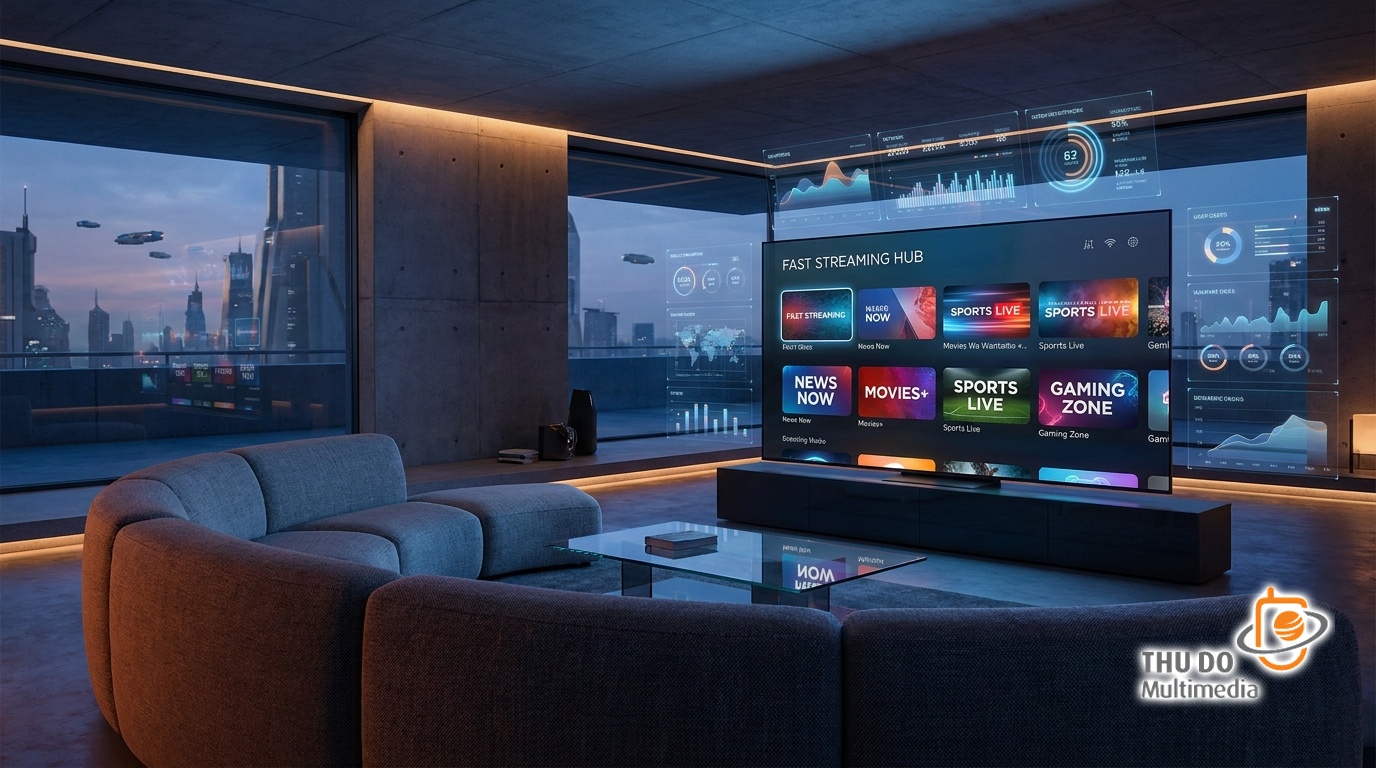
When FAST (Free Ad-Supported Streaming TV) first entered the industry lexicon, it was largely dismissed as a dumping ground for low-tier library reruns and syndicated reality shows. Fast forward to today, and the evolution of FAST content strategy is the most exciting development in media. Broadcasters are transitioning from simply monetizing dusty back-catalogs to launching highly curated, premium, and branded channels. The FAST channels future 2027 landscape is defined by exclusivity. We are seeing original premieres, live news broadcasts, and high-budget productions debuting specifically on free channels to capture maximum top-of-funnel reach before being paywalled.
Nowhere is this shift more evident than in the realm of sports broadcasting. Premium live sports, once the exclusive domain of expensive cable packages and premium SVODs, are migrating to FAST. Take, for example, the strategic move of FIFA+ consolidating into DAZN, or RidePass operating solely as a highly successful FAST channel. These platforms use free, ad-supported live events as a massive discovery tool. They hook the viewer with free content, combatting subscription fatigue, and then upsell them on premium, ad-free, or interactive add-ons once brand loyalty is established.
Furthermore, enterprise adoption of FAST networks is transforming corporate communication and brand marketing. Non-traditional media brands, such as the Charles Schwab Network and Red Bull, are launching their own 24/7 FAST channels. Why? Because the death of the third-party cookie has made building owned audiences a critical first-party data strategy. Launching a FAST channel no longer requires archaic FCC broadcast licensing, entirely removing regulatory barriers for modern enterprises. When clients integrate with our OmniStream platform, they realize that owning a FAST channel is no longer just a media play—it is the ultimate, data-rich digital marketing engine.
Why hybrid OTT monetization models Are the New Industry Standard
Building the ultimate value ladder is the secret to surviving the media landscape of 2027. The winning hybrid tier structure is meticulously designed to capture every possible demographic: it starts with a Free tier (FAST/AVOD) for maximum reach, steps up to an Entry Ad-Tier for budget-conscious subscribers, moves to a Premium Ad-Free tier for core fans, and tops off with Add-ons (TVOD/PPV) for exclusive events. The data unequivocally supports this structure: currently, 54% of SVOD subscribers use at least one ad-supported tier. This proves a massive shift in consumer psychology; viewers are highly willing to trade their attention to advertisers in exchange for lower monthly costs.
To manage these hybrid OTT monetization models, platforms are increasingly relying on sophisticated internal performance metrics. Content is no longer just thrown onto a platform; it is strategically placed based on “cost-per-hour” and “audience retention” metrics. If a high-budget drama drives initial subscriptions but has low re-watch value, it sits behind the SVOD paywall. Conversely, if a sitcom has a low cost-per-hour but massive long-tail retention, it is pushed to the FAST tier to generate perpetual ad revenue. This calculated tiering maximizes the Average Revenue Per User (ARPU) across the entire content lifecycle.
The financial reality of the industry makes this hybrid approach mandatory. Overall streaming production volume is currently operating at roughly 70% of pre-COVID peak levels, and “ginormous” scale, blank-check projects have declined by approximately 50%. Hybrid models offset these severe budget squeezes by protecting against single-revenue-stream failure. Furthermore, the infrastructure cost savings are staggering. Traditional satellite distribution can cost hundreds of thousands of euros, whereas OTT IP delivery costs can be driven down to under €40,000 annually.
“The era of hyper-growth at all costs is definitively over. Major studios are executing structural cost reductions over a 1.5- to 2-year timeframe, proving that hybrid monetization is no longer an alternative—it is the survival baseline.” — Global Media Financial Outlook Report
Subscription video on demand vs FAST: Finding the Sweet Spot
The debate between subscription video on demand vs FAST is no longer a battle of opposing forces; it is a delicate dance of synergy. Combating churn is the number one priority for streaming executives today. We have witnessed a massive shift away from the “binge models” that defined the early 2020s. Bingeing leads to subscribers consuming a month’s worth of content in a weekend and immediately canceling. Today, retention is community-powered. Platforms are utilizing creator-led premieres, live chats, and highlight clips to keep users engaged daily. More importantly, FAST channels act as a strategic “save play.” When a user attempts to cancel their SVOD subscription, they aren’t lost to the void—they are seamlessly downgraded to the brand’s free FAST ecosystem, keeping them monetizable via ads.
This dynamic is playing out against a backdrop of aggressive market consolidation. The sheer volume of standalone apps was unsustainable. In Q2 2026 alone, 10 US streaming service profiles were phased out entirely. We saw niche platforms swallowed by larger ecosystems, such as BET+ consolidating into Paramount+. Currently, there are 370 streaming service profiles tracked in the US and 234 in Canada, but that number is shrinking rapidly. Mid-tier SVODs that lack the multibillion-dollar content budgets of Netflix or Disney are realizing they cannot compete on subscriptions alone.
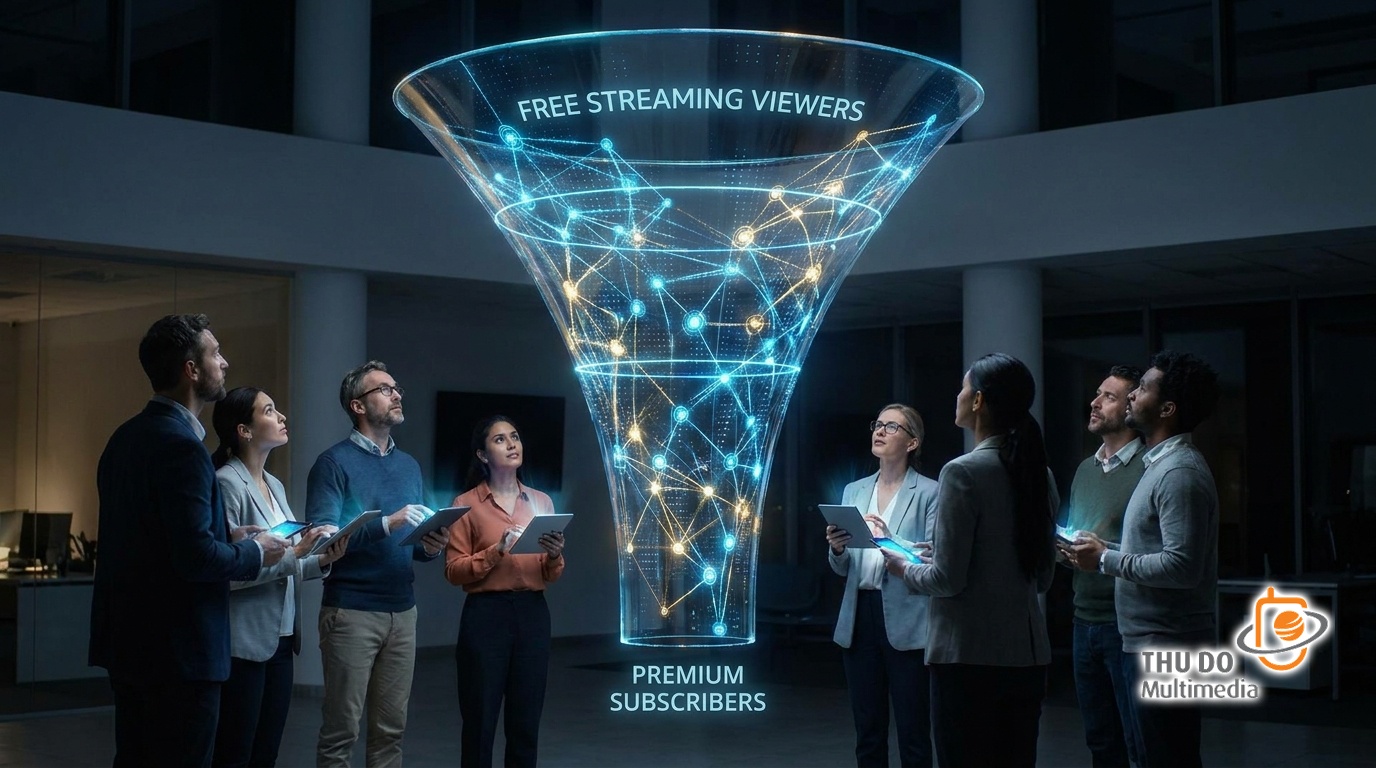
To survive this battle for critical scale, these mid-tier platforms are pivoting heavily to FAST. Instead of trying to convince consumers to pay $8 a month for a limited library, they are licensing their content to aggregators like Roku Channel, Tubi, and Pluto TV, or spinning up their own O&O (Owned and Operated) FAST channels. The sweet spot in the SVOD vs FAST debate is using FAST as the ultimate marketing funnel: cast the widest net possible with free content, build brand affinity, and convert the top 10% of highly engaged viewers into paying SVOD subscribers.
How Are connected TV advertising strategies Fueling Free Ad-supported Streaming TV trends?
You cannot discuss the explosion of FAST without analyzing the hardware that makes it possible. The dominance of the Smart TV experience is the engine driving this revolution. Smart TVs (CTV) now account for roughly 69% of all VOD engagement in North America. The living room has been reclaimed, making the CTV User Experience (UX) the absolute number one conversion lever for broadcasters. By 2027, Connected TV is projected to reach over 121 million U.S. households. This makes the television screen the primary, undisputed battleground for global advertisers looking to capture high-intent audiences.
To capitalize on this, connected TV advertising strategies have evolved at breakneck speed, directly fueling Free Ad-supported Streaming TV trends. CTV ad spend now represents an astonishing 28–30% of total programmatic advertising budgets. Advertisers are demanding better ROI and a flawless Quality of Experience (QoE). This is where Server-Side Ad Insertion (SSAI) becomes the hero of the story. Unlike clunky client-side ads that cause the video to buffer or crash, SSAI stitches the commercial directly into the video stream in the cloud. This results in broadcast-grade, seamless ad delivery that completely bypasses ad-blockers and dramatically improves viewer retention.
The economics of this ad-tech are highly lucrative for content owners. The typical Ad Revenue Share model for FAST and free-to-air channels usually gives channel owners a 30% to 70% split of the generated ad revenue, depending on the distribution platform. When you combine the massive reach of 121 million CTV households with seamless SSAI technology and favorable revenue splits, it becomes blindingly obvious why every major studio and enterprise is rushing to launch FAST channels. It is a highly automated, high-margin cash machine.
Enterprise Broadcasting & next-generation streaming platforms
As we look toward 2027, the technology powering OTT is undergoing a radical transformation. Next-generation streaming platforms are leveraging AI-driven programming and sophisticated cloud workflows to do more with less. “AI Personalization” (recommending a movie) has evolved into full-blown “AI Programming.” Artificial intelligence now dynamically optimizes home screens, auto-generates FAST channel scheduling based on real-time viewership data, and deploys predictive retention offers to users at high risk of churn. Furthermore, the shift to Cloud-Native Encoding and REMI (Remote Integration Model) is rendering physical master control rooms obsolete.
A prime example of this efficiency is the UBS enterprise broadcasting case study. By implementing hybrid cloud production systems, UBS was able to reduce on-site production staffing by an incredible 40% while simultaneously increasing their overall content output. This level of operational efficiency is what makes running a 24/7 global broadcast network feasible for non-media enterprises. Through platforms like our OmniStream solutions, corporate entities can spin up broadcast-grade networks in a matter of days, not months.
Beyond operational efficiency, the viewer experience is being supercharged by low-latency and interactive features. Historically, live streaming lagged behind traditional cable by 30 to 60 seconds—a death knell for live sports or financial news. Today, protocols like Low-Latency HLS (LL-HLS) and WebRTC are bringing live streaming latency down to a mere 2–5 seconds. This real-time delivery unlocks the true potential of interactive TV. Time-synced overlays, live audience polls, and instantly shoppable video are shifting from experimental novelties to standard, expected features for the 2027 viewer.
Actionable Roadmap: How to Transition to Hybrid OTT by 2027?
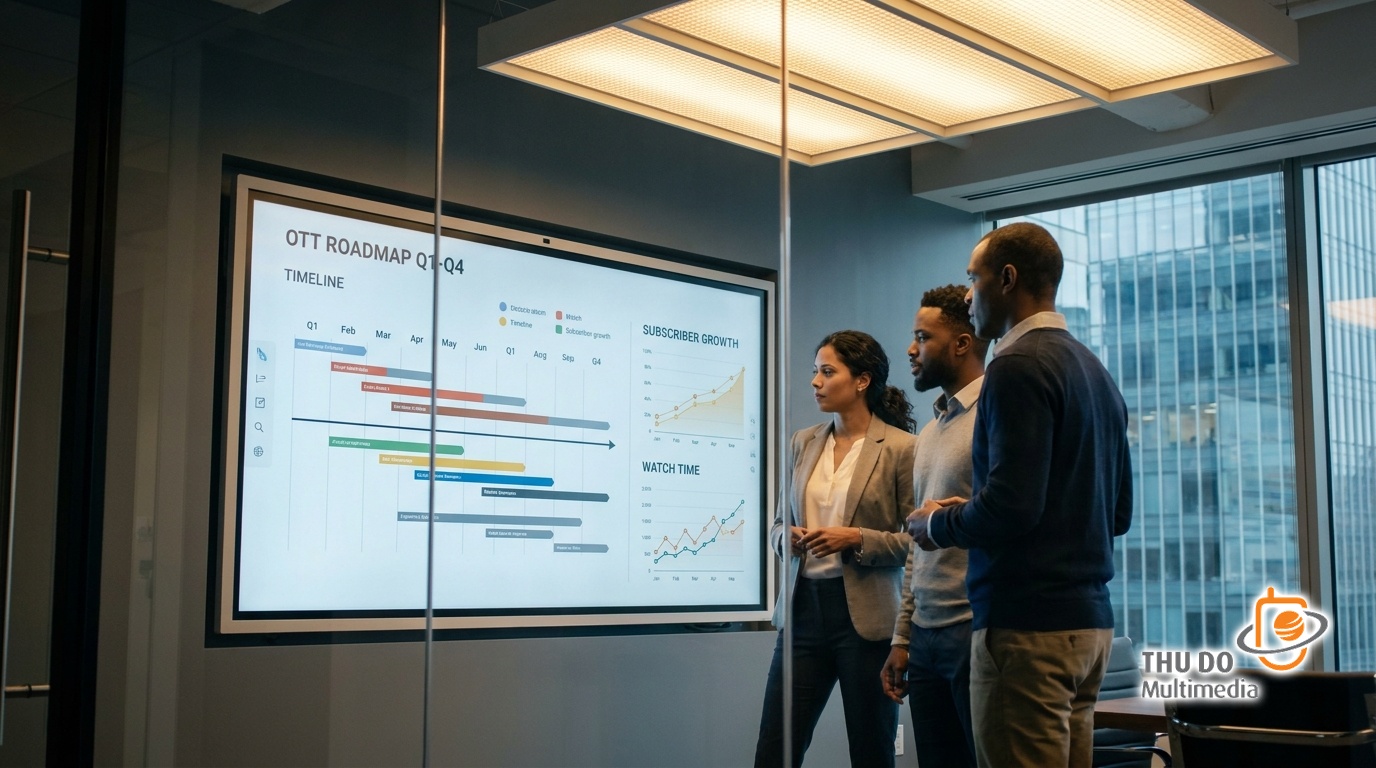
Understanding the trends is only half the battle; execution is where media companies succeed or fail. If you want to future-proof your broadcasting strategy, here is the step-by-step actionable roadmap to transition your operations by 2027:
Step 1: Content Auditing & Tiering
You must ruthlessly audit your existing media libraries. Separate your deep, evergreen catalogs (perfect for FAST channels) from your highly anticipated, premium exclusives (reserved for SVOD/TVOD). FAST channels thrive on volume and familiarity, so utilize your back-catalog to create niche, 24/7 linear channels that cost nothing to produce but generate constant ad revenue.
Step 2: Upgrading the Tech Stack
Legacy hardware cannot support a hybrid ecosystem. You need to implement cloud playout automation using industry-leading partners like Amagi, Wurl, or Harmonic. Integrate robust Media Asset Management (MAM) systems to organize your metadata, and ensure your platform utilizes SSAI (Server-Side Ad Insertion) to deliver broadcast-quality commercial breaks without buffering.
Step 3: Security & Rights Management
As you introduce premium tiers alongside free content, protecting your IP becomes paramount. Enforce tokenized access and strict geo-restrictions to comply with complex licensing agreements. More importantly, deploy AI-powered account-sharing detection to protect your SVOD revenue streams from unauthorized access, ensuring that premium content remains truly premium.
Step 4: Global Localization
Hybrid models scale best when they cross borders. Leverage AI-driven localization tools to generate instant multilingual captions, dubbing, and localized metadata. A FAST channel that succeeds in North America can be effortlessly duplicated and localized for the European or Asian markets, instantly multiplying your ad inventory and global footprint.
Beyond Streaming: Why FAST Channels and Hybrid Models Will Dominate OTT by 2027
To summarize the trajectory of the media industry, we must accept that the era of the walled garden is crumbling. Consumers demand flexibility, advertisers demand targeted CTV inventory, and broadcasters demand sustainable profitability. The convergence of these three needs has created the perfect storm for hybrid ecosystems to thrive. Beyond Streaming: Why FAST Channels and Hybrid Models Will Dominate OTT by 2027 is ultimately a story about adaptation. By leveraging free ad-supported funnels to build audiences and utilizing premium tiers to monetize super-fans, media brands can create a resilient, diversified revenue engine that will withstand the ultimate test of time.
Frequently Asked Questions (FAQs)
What is the difference between FAST and AVOD?
AVOD (Advertising Video on Demand) allows users to actively choose specific content from a library to watch on-demand, which is interrupted by ads (similar to the YouTube model). FAST (Free Ad-Supported Streaming TV), on the other hand, mimics traditional linear television. It provides scheduled, always-on channels that viewers passively tune into, entirely funded by commercial breaks.
Why are streaming services shifting to hybrid OTT monetization models?
Due to severe subscription fatigue and market saturation, consumers are pushing back against paying for multiple premium SVOD services. Hybrid models combine SVOD, AVOD, FAST, and TVOD into one ecosystem. This allows platforms to capture budget-conscious viewers with ad-supported tiers while upselling premium, ad-free experiences to core fans, thereby maximizing overall ARPU (Average Revenue Per User).
What is the future of FAST channels by 2027?
By 2027, FAST channels will transition away from featuring older, syndicated “rerun” libraries. Instead, they will offer highly premium, niche, and live content—including live sports and exclusive enterprise broadcasting. They will serve as massive top-of-funnel acquisition tools designed to funnel engaged viewers into paid streaming tiers.
Are SVOD (Subscription Video on Demand) platforms dying out?
No, SVOD is not dying, but the pure SVOD model is evolving rapidly. Major players are consolidating (for example, 10 US streaming services shut down in a single quarter in 2026) and adopting ad-supported tiers to survive. With 54% of SVOD subscribers now using at least one ad-tier, it is clear that subscriptions will persist, but they will exist alongside ad-supported options.
How do you launch a successful FAST channel?
Launching a successful FAST channel requires four key elements: a deep content library (often utilizing existing evergreen assets), a cloud-based playout automation partner (like Amagi or Harmonic), a robust Server-Side Ad Insertion (SSAI) strategy for seamless commercial breaks, and strategic distribution agreements with major CTV aggregators like Roku Channel, Tubi, or Pluto TV.