
Next-Gen DRM: Anticipating Revenue Protection Challenges for Premium OTT Content in 2027
Next-Gen DRM: Anticipating Revenue Protection Challenges for Premium OTT Content in 2027 requires moving beyond legacy encryption to adopt a unified, AI-powered security stack. By integrating multi-DRM frameworks, forensic watermarking, and zero-trust architectures, streaming platforms can actively detect anomalies, prevent credential sharing, and secure highly lucrative ad-supported and live-streaming revenues against sophisticated piracy threats.
Key Takeaways
- Explosive Market Growth: The global DRM market is estimated at $5.53 billion in 2025 and is projected to surge to $15.2 billion by 2027, driven by a massive 22.5% CAGR.
- The Cost of Inaction: The US film and television sector alone loses an estimated $29 billion annually to piracy, making advanced revenue protection a critical business imperative.
- AI-Driven Efficiency: Current artificial intelligence innovations have successfully improved unauthorized access detection by 37% by scrutinizing network origins and device integrity in real-time.
- Advertiser Demands: 73% of major brand advertisers consider content security and fraud prevention “critical” or “very important” when selecting CTV/OTT partnerships.
How is the Landscape of Premium OTT Monetization Evolving by 2027?
In our experience navigating the digital broadcasting sector, the sheer scale of the streaming economy has fundamentally altered how we approach content security. The global Over-The-Top (OTT) industry is currently on a hyper-growth trajectory, projected to exceed a staggering $450 billion in revenue by 2026. This financial explosion has transformed OTT platforms from alternative distribution channels into the primary engines of global media monetization. However, where massive revenue flows, sophisticated piracy inevitably follows. We are no longer dealing with amateur hackers sharing files in obscure forums; today’s piracy operations are highly organized, well-funded syndicates that siphon billions from legitimate creators and distributors.
The economic devastation caused by these illicit operations cannot be overstated. Recent data indicates that the US film and TV sector alone bleeds an estimated $29 billion annually due to piracy. This staggering figure frames anticipating revenue protection challenges media companies face not merely as a routine IT housekeeping issue, but as a severe existential threat to profitability. When premium content is leaked or streams are hijacked, the damage extends far beyond lost subscription fees. It aggressively devalues the intellectual property, breaches licensing agreements, and irreparably damages the trust between content creators and distribution platforms.
Furthermore, the ripple effects of piracy heavily impact the advertising ecosystem, which is increasingly becoming the lifeblood of hybrid SVOD/AVOD (Subscription/Advertising Video on Demand) models. Today, 73% of major brand advertisers consider content security and fraud prevention “critical” or “very important” when selecting Connected TV (CTV) and OTT partnerships. Advertisers are acutely aware that without ironclad protection, premium CPMs (Cost Per Mille) drop, and ad inventory is compromised by ad-stripping software and bot-driven fraud. If a platform cannot guarantee a secure, verified viewing environment, advertisers will simply take their massive budgets elsewhere.
Looking toward the 2027 horizon, the industry is bracing for a paradigm shift. The global DRM market, currently valued around $5.53 billion, is projected to surge to $15.2 billion by 2027, growing at a massive 22.5% CAGR. This aggressive market expansion signals a collective realization that legacy encryption methods are entirely insufficient for modern threats. At StreamSec, we have observed that platforms relying on outdated, fragmented security measures are already losing ground. The future belongs to those who adopt comprehensive, multi-layered security frameworks that protect both the content and the complex monetization strategies tied to it.

What Are the Core Pillars of Next-Generation Digital Rights Management OTT?
To understand the future of content protection, we must first delineate the difference between basic encryption and true Digital Rights Management. Basic encryption, such as the industry-standard AES-128, acts as the foundational lock on the door; it scrambles the video file so that it cannot be read in transit by unauthorized interceptors. However, encryption alone is blind. It does not know who is unlocking the door. DRM is the intelligent rulebook that dictates exactly who gets the decryption key, on what specific devices, and under what strict business conditions (such as geographic location, time limits, or offline viewing windows).
Because the modern streaming ecosystem is heavily fragmented across different hardware and software giants, next-generation digital rights management OTT relies on a mandatory multi-DRM strategy. Premium content distribution requires a seamless combination of Google Widevine (for Chrome, Android, and most Smart TVs), Apple FairPlay (for Safari, iOS, and Apple TV), and Microsoft PlayReady (for Windows and Xbox). To unify this complex web, industry leaders utilize Common Encryption (CENC). CENC allows platforms to encrypt a media file once and associate it with multiple DRM systems, drastically reducing storage costs and simplifying the encoding workflow while ensuring 100% device coverage.
A critical gap we frequently observe in competitor solutions is the treatment of security features as disconnected silos. Many vendors offer DRM, tokenization, and watermarking as separate products that do not communicate. At StreamSec, our StreamSec Multi-DRM Suite introduces a cohesive, multi-layered security stack. For example, we fuse DRM directly with Server-Side Ad Insertion (SSAI). By stitching advertisements into the video stream on the server side rather than the client side, we create a single, continuous, encrypted stream. This unified approach completely neutralizes ad blockers and protects lucrative AVOD and FAST (Free Ad-supported Streaming TV) channel revenue without sacrificing the granular attribution data that advertisers demand.
Finally, the delivery mechanism itself must be fortified through tokenized delivery. Even with robust DRM, if the CDN (Content Delivery Network) layer is left exposed, pirates can easily engage in manifest theft or hotlinking—stealing the direct video URL and embedding it on their own illicit websites. By implementing secure, short-lived signed URLs, the system ensures that a playback request is only valid for a specific user, on a specific IP address, for a limited window of time. This cohesive workflow—where CENC multi-DRM, SSAI, and tokenization operate as a single automated engine—is the gold standard for 2027.
Implementing a Zero-Trust Security Architecture for Video Streaming
The cybersecurity landscape has fundamentally shifted away from the outdated “castle-and-moat” perimeter defense model. In the past, once a user logged in with a valid password, they were trusted implicitly. Today, that assumption is a critical vulnerability. The industry is rapidly adopting a zero-trust security architecture for video streaming, operating on the principle of “never trust, always verify.” In a zero-trust framework, every single playback request, API call, and license acquisition is treated as potentially hostile, regardless of whether it originates from a known user account or an internal network.
As we look toward 2027, this zero-trust philosophy is driving a major evolution toward identity-based decryption. We are moving away from broad concurrency limits as the sole fix for credential abuse. Instead, decryption keys are becoming strictly bound to a user’s verified digital identity and specific device hardware. For ultra-premium, high-stakes assets—such as global live pay-per-view sporting events or early-access theatrical releases—we are already engineering workflows that incorporate biometric authentication layers. Soon, providing a fingerprint or facial scan on a mobile companion app will act as the final, unforgeable key to unlock a living room stream.
Beyond the initial authentication, a true zero-trust architecture requires relentless session-level monitoring. It is not enough to verify a user at the start of a movie; the system must constantly evaluate the context of the playback in real-time. This involves continuously checking device integrity (ensuring the device hasn’t been jailbroken or rooted mid-stream), monitoring IP reputation to detect sudden shifts to known VPN or proxy servers, and analyzing user context. If a session suddenly exhibits anomalous behavior, the zero-trust engine can instantly revoke the DRM license, terminating the stream without manual intervention.
In our practical deployments with StreamSec, implementing this architecture has proven transformative for our clients. By continuously evaluating the risk score of every active session, platforms can apply dynamic security policies. A user watching on a secure, uncompromised Smart TV on their home network might receive the 4K HDR stream, while a user attempting to watch on an older, rooted Android device via a public proxy might be dynamically downgraded to a lower resolution or blocked entirely. This granular, context-aware control is the essence of zero-trust video security.
AI-Driven Content Protection for Premium Video
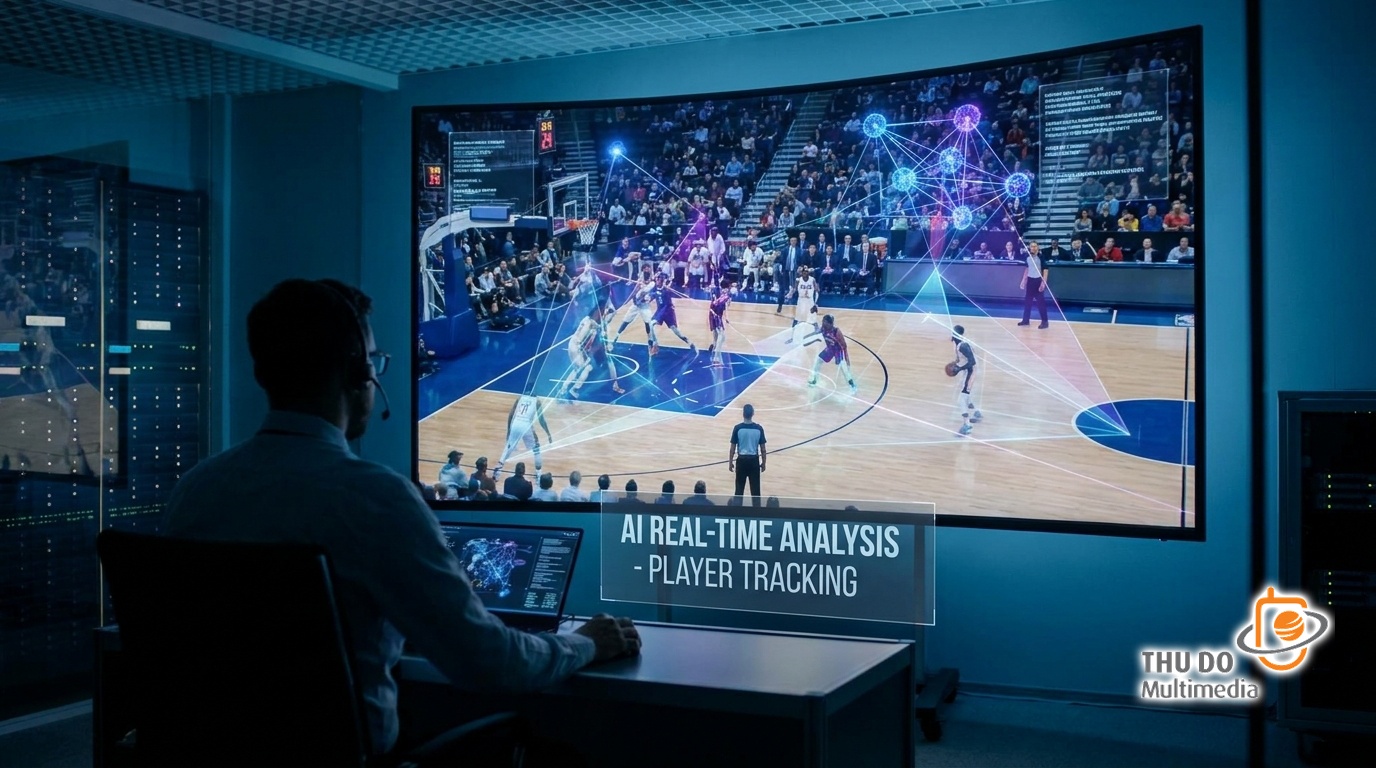
The integration of Artificial Intelligence and Machine Learning into the DRM ecosystem is arguably the most significant technological leap in recent years. Legacy DRM systems are inherently static; they rely on pre-programmed rules that pirates eventually learn to bypass. AI-driven content protection for premium video changes the paradigm from static defense to proactive, dynamic enforcement. By analyzing massive datasets of global streaming behavior, AI models can identify the subtle, invisible patterns that indicate a piracy attempt long before the content is actually compromised.
The efficiency of these AI systems is already backed by compelling data. Current AI innovations have successfully improved unauthorized access detection by a staggering 37%. But how exactly does this actionable AI implementation work? It goes far beyond simple IP blocking. Machine learning algorithms continuously scrutinize network origins, evaluating the “hop count” and latency to detect sophisticated residential proxies that pirates use to mask their locations. The AI evaluates dynamic threat vectors in real-time, instantly identifying anomaly patterns such as “impossible travel”—for instance, a user account logging in from New York and then requesting a DRM license from Eastern Europe three minutes later.
Furthermore, AI is revolutionizing the speed and scale of automated takedowns. In the past, combatting piracy required human analysts to scour the web, identify illegal streams, and manually issue DMCA notices—a process that often took hours, by which time a live sports match was already over. Today, AI-driven security stacks integrate directly with web scrapers, social media monitoring tools, and global piracy databases. When an illicit stream is detected, the AI can instantly isolate the compromised account, revoke the DRM keys, and issue automated legal takedowns across hosting providers within seconds.
“The transition from static rule-based DRM to dynamic, AI-driven behavioral analysis is the most significant leap in content protection we will see this decade. Platforms that fail to integrate machine learning into their security stacks will simply be outmaneuvered by automated piracy syndicates.” — Global Streaming Security Report, 2024.
Defeating Screen Ripping: Forensic Watermarking Live Sports Streaming
Despite the robust encryption provided by multi-DRM systems, there remains a glaring blindspot in digital content protection: the “analog hole.” DRM can perfectly secure the delivery of the video from the server to the screen, but once the video is decrypted and displayed on the user’s monitor, DRM has done its job. It cannot stop a user from pointing a high-definition camera at their television, using an HDMI capture card, or employing sophisticated screen-recording software. This is where the security stack must evolve beyond encryption.
To combat this, the industry relies on dynamic serialization, specifically forensic watermarking live sports streaming. Forensic watermarking works by embedding an invisible, unique, and robust payload of data directly into the video frames. Unlike traditional visible watermarks (like a channel logo), forensic watermarks are imperceptible to the human eye but easily readable by specialized extraction software. Every single user receives a uniquely watermarked stream. If a pirate uses a screen recorder to capture a live Premier League match and restream it on an illegal site, the video itself carries the exact identity of the pirate’s account.
The workflow for tracing the leak is a marvel of modern engineering, particularly critical for high-value, real-time broadcasts where every second counts. When an illegal restream is discovered by automated web scrapers, the video feed is routed to an extraction engine. Within minutes—often seconds—the engine reads the invisible watermark, decodes the unique payload, and cross-references it with the platform’s subscriber database. The platform can then instantly terminate the offending account’s session, cutting off the pirate’s source feed while the live event is still happening.
Looking ahead to 2027, the challenge for forensic watermarking will be scale and quality. As consumer expectations shift toward ultra-high-definition, watermarking technologies must seamlessly support 8K content across unified multi-device frameworks without introducing latency or degrading the pristine picture quality. At StreamSec, our edge-based watermarking solutions are engineered to inject these payloads at the CDN edge, ensuring that even during peak concurrent viewership—such as the Super Bowl or the World Cup—the watermarking process remains frictionless, invisible, and devastatingly effective against screen ripping.
Combating Credential Sharing in OTT Platforms
For years, many streaming giants turned a blind eye to password sharing, viewing it as a quirky byproduct of user growth or even a form of organic marketing. Today, that sentiment has vanished. Credential sharing is now recognized as a massive, silent revenue leak that severely caps Average Revenue Per User (ARPU) in SVOD models. When three households share a single $15 subscription, the platform is effectively subsidizing the bandwidth and licensing costs for non-paying viewers, eroding profit margins and stifling the ability to invest in new, premium content.
Tactical business rule enforcement is the primary weapon in combating credential sharing in OTT platforms. This involves implementing strict, unyielding concurrent stream limits and rigid device registration caps. By tightly integrating the DRM license server with the platform’s subscriber management system, operators can enforce rules that physically prevent a fourth device from acquiring a decryption key if the account is only authorized for three simultaneous streams. Additionally, modern systems track the primary household’s IP address and Wi-Fi network, requiring devices outside that network to periodically verify their authorization via two-factor authentication (2FA).
However, the true art of combating credential sharing lies in balancing friction and security. If a security protocol is too aggressive, it risks frustrating legitimate, paying families. For example, a poorly configured concurrency limit might lock a parent out of the living room Smart TV just because their children are watching cartoons on tablets in the backseat of a car. The goal is to stop commercial pirates and casual abusers without degrading the user experience for loyal customers.
Through our deployment of StreamSec’s intelligent concurrency manager, we utilize AI to understand normal household viewing behaviors. By analyzing device types, location data, and historical viewing patterns, the system can accurately distinguish between a legitimate family traveling on vacation and a single account being sold on the dark web to fifty different users across the globe. This nuanced, data-driven approach allows platforms to gently nudge casual sharers toward creating their own paid accounts—transforming a revenue leak into a powerful acquisition channel.
Infrastructure Upgrades: Cloud-Based DRM Scalability for Broadcasters
As live streaming increasingly replaces traditional linear television, the infrastructure supporting content protection must scale to unprecedented heights. The technical demands of broadcasting a massive live event—such as the Olympics or a global eSports tournament—are staggering. When millions of viewers attempt to tune in at the exact same second, the DRM license servers are hit with a tsunami of simultaneous requests. If the DRM infrastructure bottlenecks, viewers are met with endless buffering or error screens, resulting in catastrophic brand damage and immediate subscriber churn.
To handle this extreme peak demand, cloud-based DRM scalability for broadcasters is absolutely essential. Legacy on-premise hardware simply cannot provision resources fast enough to handle these massive spikes. Cloud-native DRM solutions leverage auto-scaling containerized microservices (such as Kubernetes) that can instantly spin up thousands of virtual license servers across multiple availability zones the moment demand surges, and then spin them back down when the event concludes. This elasticity ensures 100% uptime during critical broadcasts while optimizing operational expenditures.
“Scalability in DRM is no longer a luxury; it is the fundamental backbone of live sports broadcasting. A failure at the DRM layer during a peak event is a catastrophic brand failure that advertisers and subscribers will not forgive.” — OTT Infrastructure Insights, 2025.
Furthermore, the 2027 roadmap for cloud DRM heavily emphasizes energy-efficient workflows. As the streaming industry faces increasing scrutiny over its carbon footprint, green cloud-native DRM solutions are being engineered to reduce compute overhead. By optimizing cryptographic algorithms and utilizing edge computing, platforms can maintain military-grade security while significantly lowering the energy required to generate and distribute millions of DRM keys.
Finally, true global scalability requires multi-region delivery integration. Cloud DRM must work seamlessly with Edge Points of Presence (PoPs) and multi-CDN strategies. By caching DRM policies and issuing licenses as close to the end-user as possible, platforms can ensure ultra-low-latency playback globally. Crucially, this edge-based approach also allows platforms to rigorously enforce regional geo-blocking laws, ensuring that a user in a restricted territory cannot bypass broadcast rights by manipulating DNS or VPN settings.

Preparing for the Future: Next-Gen DRM: Anticipating Revenue Protection Challenges for Premium OTT Content in 2027
As we look toward the end of the decade, the concept of content protection is expanding beyond the video file itself to encompass the entire digital supply chain. One of the most exciting frontiers is the integration of blockchain technology and smart contracts into the DRM ecosystem. In the near future, blockchain will act as an immutable ledger for content ownership and digital rights. When a user streams a movie, a smart contract could instantly and transparently distribute micro-royalties to the studio, the actors, and the platform, cutting out administrative middlemen and ensuring absolute financial accuracy.
Simultaneously, anti-piracy technology for 2027 streaming will expand to protect physical infrastructure through the Internet of Things (IoT) and Digital Twins. Broadcasters are increasingly creating digital twins—exact virtual replicas of their physical broadcasting equipment and server farms. By applying DRM and zero-trust security protocols to these digital twins, media companies can simulate cyber-attacks, identify infrastructural vulnerabilities, and secure the raw camera feeds before they even reach the encoding servers, effectively neutralizing piracy at the absolute source of creation.
In conclusion, the era of treating content security as a mere technical afterthought is over. Next-Gen DRM: Anticipating Revenue Protection Challenges for Premium OTT Content in 2027 demands a proactive, strategic approach. Platforms that view advanced DRM, AI anomaly detection, and forensic watermarking as strategic revenue enablers will secure the trust of advertisers, maximize their ARPU, and dominate the market. Conversely, those who cling to legacy systems will find their content commoditized and their revenues pillaged by an increasingly sophisticated piracy underground.
Frequently Asked Questions
What is the difference between AES encryption and DRM in OTT?
AES encryption simply scrambles the video file so it cannot be read or intercepted in transit. It acts as a basic lock. DRM (Digital Rights Management) acts as the intelligent gatekeeper. It holds the key and controls exactly who gets to decrypt the video, on what specific devices, and under what strict business rules (such as geographic restrictions or offline viewing time limits).
How does forensic watermarking stop live sports piracy?
Forensic watermarking embeds an invisible, unique identifier (a payload of data) into the video stream for every individual user. If a user screen-records and illegally restreams a live game, the platform can use extraction software to read the invisible watermark, identify the specific pirate’s account in real-time, and instantly shut off their access before the game ends.
Why do OTT platforms need multiple DRM systems?
Different technology giants control different hardware and software ecosystems, and each has its own proprietary security system. To reach all potential viewers, platforms must use Google Widevine for Android and Chrome, Apple FairPlay for iOS and Safari, and Microsoft PlayReady for Windows and Xbox. These are typically unified through a standard called Common Encryption (CENC).
How will AI change digital rights management by 2027?
AI is shifting DRM from static, predictable rules to dynamic, real-time enforcement. Machine learning algorithms continuously analyze user behavior, device integrity, and network routing patterns to detect anomalies (like impossible travel between logins or VPN abuse). This AI-driven approach has already improved unauthorized access detection rates by up to 37%.
How does DRM protect AVOD and FAST channel revenue?
In ad-supported models, pirates often use software to strip advertisements out of the video player. By combining DRM with Server-Side Ad Insertion (SSAI), platforms stitch the ads directly into the encrypted video stream at the server level. This prevents pirates from bypassing the ads, ensuring advertisers receive verified impressions and platforms protect their ad revenue.