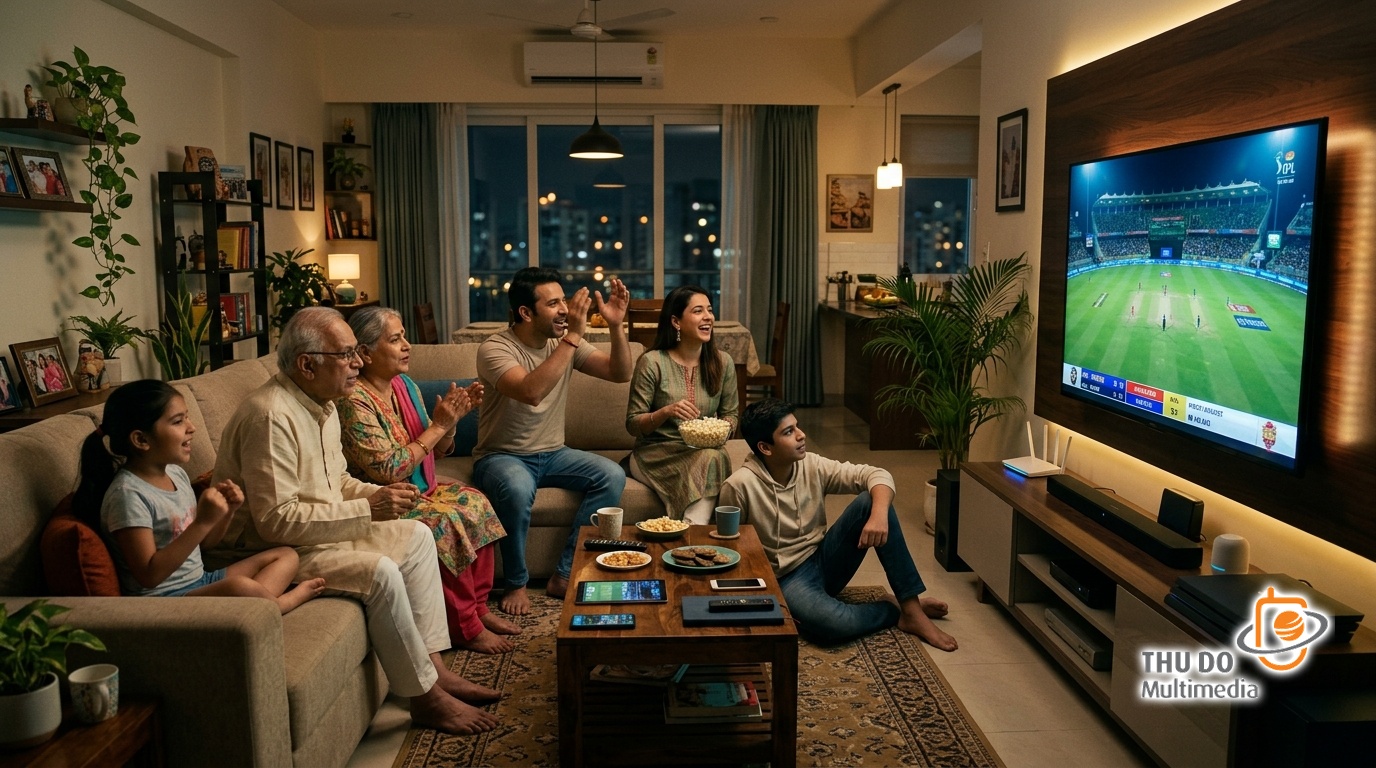
The Connected TV (CTV) boom in India is fueled by affordable smart TVs, widespread 5G and JioFiber broadband penetration, and the explosion of regional digital content. The living room has transformed into the ultimate OTT battleground, shifting audiences from individual mobile viewing back to premium, co-viewing big-screen experiences that offer unparalleled programmatic advertising opportunities.
Key Takeaways
- India’s smart TV shipments have seen a massive 38% year-over-year growth, largely driven by budget-friendly brands and accessible streaming dongles.
- Programmatic CTV ad spend in the region is projected to reach a staggering $395 million by 2027, according to recent GroupM estimates.
- Live sports broadcasting, particularly properties like the IPL streaming for free on platforms like JioCinema, acts as the primary catalyst for mass household CTV adoption.
- Regional language content (Tamil, Telugu, Bengali) is pushing Tier 2 and Tier 3 cities to leapfrog traditional cable, driving a massive surge in connected screen viewership.
In our experience as industry leaders navigating the shifting sands of digital media, there is no phenomenon quite as disruptive right now as The Connected TV (CTV) Boom in India: Why the Living Room is the New OTT Battleground. Just a few years ago, the narrative was entirely dominated by mobile-first consumption. Thanks to the “cheap data” revolution initiated by telecom giants, millions of Indians experienced the internet—and video streaming—for the first time on a 6-inch screen. However, we are now witnessing a massive pendulum swing. The living room is reclaiming its throne, but this time, it is powered by high-speed fiber internet and dynamic, on-demand content.
What is Driving The Connected TV (CTV) Boom in India: Why the Living Room is the New OTT Battleground?
To truly grasp this shift, we must first understand the fundamental technical and behavioral differences between traditional OTT viewing and the CTV experience. While OTT (Over-The-Top) refers to the method of delivering video content over the internet rather than through a traditional cable provider, CTV (Connected TV) refers specifically to the device—a television set connected to the internet. In our extensive work with digital publishers, we’ve noticed that mobile OTT viewing is inherently isolating; it is a solitary, lean-forward experience often consumed during commutes or in private. CTV, conversely, resurrects the traditional “family viewing” dynamic. It is a lean-back, co-viewing experience on a massive, high-definition canvas, which radically changes how content is consumed and how ads are perceived.
The historical context of the Indian television landscape makes this transition even more fascinating. For decades, the Indian living room was dominated by single-TV households tethered to linear cable or Direct-to-Home (DTH) satellite dishes. Viewers were slaves to scheduled programming, waiting for prime-time soap operas or weekend movie premieres. Today, the influx of high-speed broadband packages—such as JioFiber and Airtel Xstream—has fundamentally rewired this infrastructure. Families are no longer restricted by broadcast schedules. They are dictating their own prime time, utilizing smart TVs to stream exactly what they want, when they want it.
At OmniCast Solutions, our proprietary CTV Ad-Suite has tracked this migration closely, and the real-world implications for brands are staggering. We are seeing a rapid transition from the individual “cheap data” boom back to the communal big screen. For example, during the recent Indian Premier League (IPL) season, millions of households bypassed their DTH sports channels entirely, choosing instead to stream the matches in 4K resolution via smart TV apps. This single behavioral shift has signaled to the entire industry that the living room is no longer just for linear broadcasting; it is the ultimate premium battleground for digital streaming giants, ad-tech platforms, and forward-thinking advertisers.
Analyzing smart TV penetration and video streaming trends: How are Households Adapting?
The foundation of this digital renaissance lies in the hardware revolution that has democratized big-screen internet access across the subcontinent. When analyzing smart TV penetration and video streaming trends, we must acknowledge the influx of budget-friendly smart TV brands like Xiaomi, TCL, and Vu. These manufacturers have aggressively priced their 32-inch and 43-inch models, making them accessible to the growing middle class. Furthermore, for households reluctant to discard their legacy flat-screens, streaming sticks like the Amazon Fire TV and Google Chromecast have served as affordable bridges, instantly converting “dumb” TVs into powerful connected hubs.
This hardware accessibility has accelerated the phenomenon of Indian households shifting to Connected TV. We are witnessing a cultural shift back to family co-viewing, but with a modern twist. Instead of gathering for a scheduled broadcast, families are collaboratively navigating algorithmic, personalized content discovery. What is particularly striking is the demographic breakdown. Tier 2 and Tier 3 cities are practically leapfrogging traditional broadband infrastructure, connecting their new smart TVs directly to 5G mobile hotspots or newly laid local fiber networks. The digital divide is shrinking rapidly, and the living room screen is the primary beneficiary.
“The transition from mobile-first to living-room-first is the most significant behavioral shift in Indian content consumption this decade, driven unequivocally by sports and regional storytelling.” — Industry Insights, EY-FICCI Media Report
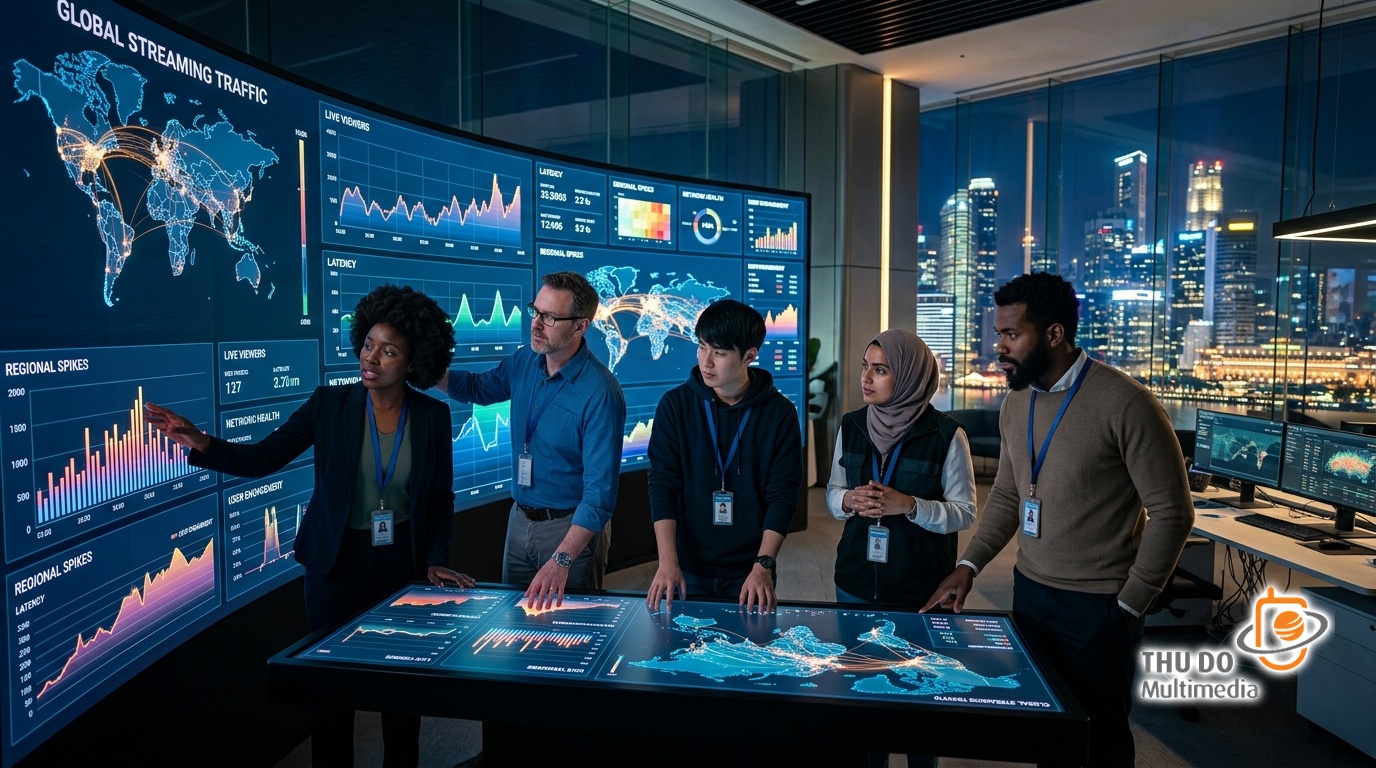
Real-world examples of this shift are abundant, especially when looking at live sports and blockbuster movie premieres. When JioCinema offered the FIFA World Cup and the IPL for free, it acted as a massive catalyst for household CTV adoption. Families realized that the best viewing experience wasn’t on their smartphones, but on the large screens in their living rooms. We’ve seen hardware sales spike directly in tandem with major sporting events. At OmniCast Solutions, our analytics dashboards lit up during these tournaments, showing unprecedented concurrent viewership numbers originating specifically from smart TV operating systems rather than mobile browsers.
How Does CTV vs traditional television viewership in India Compare?
When comparing CTV vs traditional television viewership in India, we must address the unique dynamics of cord-cutting in this specific market. Unlike the West, where consumers aggressively cancel their cable subscriptions (full cord-cutting), the Indian market is currently experiencing “cord-shaving.” Many households still maintain a hybrid model. Because basic DTH packs remain relatively cheap (often under Rs 200 per month), families keep them for live news or regional channels while dedicating the majority of their viewing hours to OTT apps on their smart TVs. However, the momentum is undeniably shifting. The user experience of linear, scheduled programming simply cannot compete with the algorithmic, on-demand content discovery offered by connected platforms.
From an ad-tech perspective, the difference in engagement and attention metrics is profound. Traditional television relies on broad, un-targeted advertising where brands pay for estimated reach. CTV, on the other hand, marries the high-impact visual canvas of traditional TV with the precision targeting of digital marketing. In our experience, completion rates and ad viewability are significantly higher on CTV compared to mobile or desktop. Viewers on a smartphone are easily distracted by notifications, leading to high skip rates. On a CTV, the “lean-back” premium viewing experience commands absolute attention, generating vastly superior brand recall for advertisers.
This shift in attention is inevitably causing a decline in traditional broadcast ad revenues as eyeballs migrate to connected screens. Brands are realizing that paying premium rates for prime-time television slots yields diminishing returns when their target audience is busy binge-watching a Netflix original or a local Aha series. For example, a major FMCG brand recently reallocated 30% of its traditional TV budget to CTV campaigns using our OmniCast Solutions platform. The result was a 40% increase in measurable brand lift, simply because they were able to target ads to specific household IPs rather than broadcasting into the void.
The Unprecedented growth of OTT platforms on smart TVs
The explosive growth of OTT platforms on smart TVs cannot be discussed without highlighting the true engine of this expansion: regional content. While early OTT adoption in India was driven by English and Hindi content, the current wave of smart TV sales in Tier 2 and Tier 3 geographies is fueled by hyper-local storytelling. Platforms like Aha (Telugu and Tamil), Hoichoi (Bengali), and Sun NXT (South Indian languages) are creating content that resonates deeply with local cultures. Major international players like Netflix, Amazon Prime, and Disney+ Hotstar have recognized this and are heavily investing in local language dubs and massive regional originals to capture this living room audience.
Simultaneously, we are observing a crucial evolution in subscription models. The Indian market is notoriously price-sensitive, and subscription fatigue is setting in as consumers balk at paying for five different SVOD (Subscription Video on Demand) services. To adapt, platforms are shifting toward freemium and FAST (Free Ad-supported Streaming TV) models. FAST channels are natively integrated into smart TV operating systems—such as Samsung TV Plus or Xiaomi’s PatchWall—offering a linear TV-like experience but delivered over the internet for free, supported entirely by advertising.
This evolution is fundamentally changing how content is monetized. For instance, a viewer might turn on their smart TV and immediately start watching a 24/7 comedy channel on a FAST platform without ever logging in or paying a rupee. This seamless integration removes the friction of subscription paywalls while providing advertisers with highly engaged audiences. We have integrated OmniCast Solutions directly with several leading FAST platforms in India, and the data clearly shows that users are more than willing to trade a few minutes of highly targeted ads for hours of premium, high-definition content on their big screens.
Unlocking the Connected TV advertising market in India
The sheer potential of the Connected TV advertising market in India is drawing brands like moths to a flame. Why are brands flocking to the big screen? Because CTV offers a unique value proposition that was previously impossible: it combines the emotional, cinematic impact of traditional television commercials with the surgical precision of digital tracking. Advertisers can now target specific households based on IP addresses, viewing behaviors, geographic locations, and even device types. If a luxury car brand wants to show its ad only to households in affluent neighborhoods of Mumbai and Bangalore that own premium 65-inch 4K smart TVs, CTV makes that a reality.
The backbone of this targeting capability is the rise of programmatic advertising on Connected TV India. Programmatic bidding automates the buying and selling of ad inventory in real-time. Through Demand Side Platforms (DSPs) and Private Marketplaces (PMPs), advertisers can bid on ad slots the millisecond a user clicks “play” on an app. However, executing this flawlessly requires deep technical expertise. One of the most critical components we champion at OmniCast Solutions is Server-Side Ad Insertion (SSAI). Unlike Client-Side Ad Insertion (CSAI), which can be blocked by ad-blockers and often causes buffering, SSAI stitches the ad directly into the content stream at the server level. This ensures a seamless, buffer-free, broadcast-quality ad delivery that cannot be skipped or blocked.
“For advertisers, the big screen is no longer a broad-stroke branding tool; with server-side ad insertion and programmatic bidding, CTV is now a high-precision performance channel.” — Digital Ad Spend Forecast, GroupM
Despite its rapid growth, navigating this space comes with challenges that require expert ad-tech partnerships. Frequency capping—ensuring a user doesn’t see the same ad ten times across different OTT apps—and fragmented measurement standards remain hurdles. However, by utilizing unified identity graphs and robust programmatic infrastructure, brands are overcoming these obstacles. We recently helped a leading e-commerce brand execute a cross-device campaign where a user saw a high-impact branding ad on their CTV, followed by a direct-response retargeting ad on their mobile device, leading to a massive spike in conversion rates.
What are the Best monetization strategies for CTV publishers India?
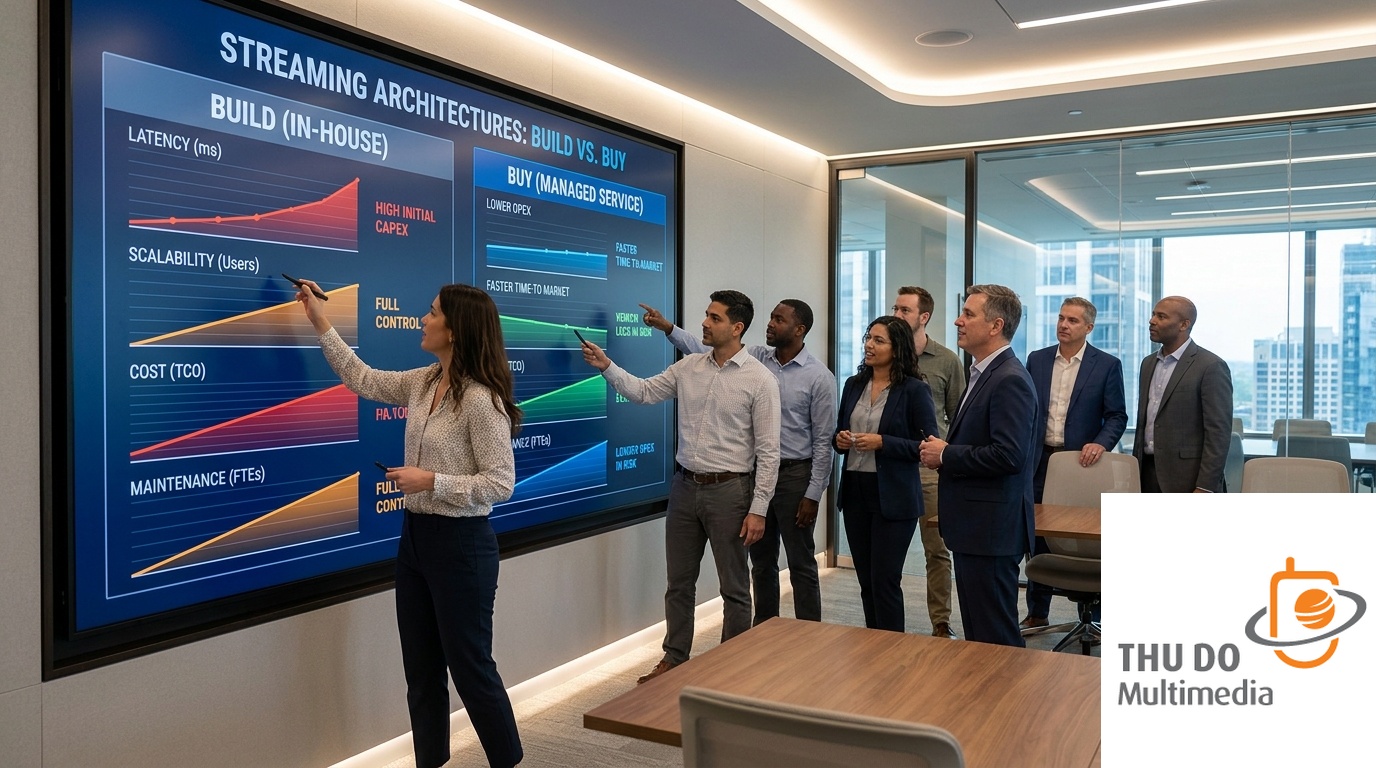
For content creators and network owners, understanding the optimal monetization strategies for CTV publishers India is a matter of survival in a hyper-competitive landscape. Given the diverse economic realities of the Indian consumer base, relying solely on an SVOD (Subscription) model is a recipe for stalled growth. Publishers must diversify their revenue streams by embracing hybrid models that balance SVOD with AVOD (Advertising Video on Demand). The “freemium” model—where basic content is free and ad-supported, while premium or ad-free viewing sits behind a paywall—has proven to be the most viable strategy for scaling user bases rapidly across the subcontinent.
To maximize the revenue generated from the AVOD side of this hybrid model, publishers must leverage first-party data to command premium ad yields. In a privacy-first world where third-party cookies are depreciating, a publisher’s direct relationship with its audience is its most valuable asset. By encouraging user logins and tracking granular viewing histories, publishers can build robust audience cohorts. When a publisher can guarantee an advertiser that their ad will be shown to “urban millennials interested in financial planning,” the CPM (Cost Per Mille) they can charge skyrockets.
At OmniCast Solutions, we empower publishers to build these first-party data architectures and seamlessly connect them to premium programmatic exchanges. A prime example is a regional news publisher we partnered with who was struggling to monetize their smart TV app. By implementing our server-side ad insertion and segmenting their audience based on viewing times and geographic data, they transitioned from selling cheap, remnant inventory to commanding premium programmatic rates. Launching their own dedicated FAST channels within major smart TV ecosystems further doubled their ad inventory, proving that a diversified, tech-forward monetization strategy is the key to dominating the CTV space.
Conclusion: Embracing The Connected TV (CTV) Boom in India: Why the Living Room is the New OTT Battleground
The trajectory of the living room screen in India over the next three to five years is unmistakably clear. We are moving toward a fully connected, highly measurable, and deeply engaging ecosystem. As 5G penetration deepens and smart TV hardware becomes even more affordable, the final remnants of traditional linear broadcast will inevitably give way to digital, on-demand dominance. The convergence of premium regional content, sophisticated programmatic ad-tech, and the cultural resurgence of family co-viewing has created a perfect storm for digital growth.
For brands and publishers alike, the time for hesitation has passed. Advertisers must urgently carve out dedicated CTV budgets, treating the big screen not as an experimental channel, but as a core pillar of their performance and branding strategies. Publishers, on the other hand, must prioritize optimizing their apps for smart TV operating systems, ensuring seamless user experiences and robust ad-tech integrations. If you want to capture the attention of the modern Indian consumer, you must be where they are looking. And right now, all eyes are locked onto The Connected TV (CTV) Boom in India: Why the Living Room is the New OTT Battleground.
Frequently Asked Questions
What is driving the growth of OTT platforms on smart TVs in India?
The explosive growth is driven by a combination of affordable smart TV hardware, the aggressive rollout of high-speed fiber internet and 5G networks, and the vast availability of hyper-local regional content. Furthermore, major live sporting events like the IPL streaming for free on digital platforms have acted as massive catalysts, forcing households to upgrade their living room viewing experience.
How is CTV vs traditional television viewership in India different?
Traditional television relies on scheduled, linear broadcasting delivered via DTH or cable, offering broad, un-targeted advertising. In stark contrast, CTV offers on-demand streaming via the internet. This allows for algorithmic, personalized content recommendations and empowers advertisers to deliver highly targeted, measurable, and programmatic video ads directly to specific households.
How does programmatic advertising on Connected TV India work?
Programmatic advertising on CTV automates the buying and selling of ad inventory on smart TVs in real-time. Advertisers utilize Demand Side Platforms (DSPs) to bid on ad slots based on rich first-party data, household IP addresses, and viewing habits. Using technologies like Server-Side Ad Insertion (SSAI), these targeted video ads are seamlessly stitched into the streaming content without buffering.
What are the best monetization strategies for CTV publishers in India?
Given the highly price-sensitive nature of the Indian market, relying solely on subscriptions is difficult. The most effective strategy is a hybrid model that combines AVOD (Ad-supported) and SVOD (Subscription). Additionally, launching FAST (Free Ad-supported Streaming TV) channels natively within smart TV interfaces is rapidly becoming a highly lucrative strategy for publishers to maximize ad yields using first-party data.
Recent Comments