
Direct Answer: Sub-Second CMAF Ultra-Low Latency refers to the breakthrough ability of the Common Media Application Format to deliver live video streams from the encoder to the glass-in-hand in under one second. By leveraging micro-chunking and HTTP chunked transfer encoding, it bridges traditional broadcast reliability with interactive speed.
Key Takeaways
- Glass-to-Glass Speed: Modern optimizations achieve latency brackets between 0.8s and 1.2s, closing the gap with traditional broadcast models.
- Economic Scalability: Unlike WebRTC, LL-CMAF scales effortlessly to millions of concurrent users by utilizing standard HTTP Content Delivery Networks (CDNs).
- Core Mechanisms: Relies on fragmented MP4 (fMP4) file structures split into micro-chunks delivered via HTTP/1.1 or HTTP/2 multiplexing.
1. Introduction to Sub-Second CMAF and the Evolution of Live Broadcast Architecture
In our experience engineering high-scale video pipelines, the demand for instant feedback loops has never been more intense. Traditional HTTP streaming formats like HLS and DASH historically bound broadcasters to a 5-to-30-second latency buffer. While acceptable for standard linear television, this delay is catastrophic for modern digital verticals such as real-time sports betting, interactive live auctions, and synchronized social watch parties. The evolution of Live Broadcast Architecture has fundamentally shifted to solve this exact problem, driving the development of Sub-Second CMAF Ultra-Low Latency solutions that eliminate dead air and lag.
Historically, streaming protocols forced a compromise between scale and speed. Broadcasters either accepted astronomical CDN egress costs for WebRTC deployments or suffered through painful buffering delays with standard HTTP packets. Common Media Application Format (CMAF) emerged as the industry’s great equalizer. By standardizing a single container format (fragmented MP4) for both HLS and DASH, CMAF laid the groundwork for modern low-latency architectures. It allows origin servers and packagers to slice media assets into bite-sized fragments without fracturing the underlying delivery tree.
From a business perspective, closing the latency gap translates directly to user retention and revenue generation. When a viewer places a live wager or bids on an item during a flash auction, every millisecond of delay introduces financial friction and drop-off. In our architectural assessments, moving to an ultra-low latency framework transforms passive video feeds into engaging, transactional experiences. We find that engineering teams must balance encoder pacing, manifest generation, and edge caching to achieve true sub-second performance without destabilizing client players.
2. Core Mechanics of low latency CMAF live streaming
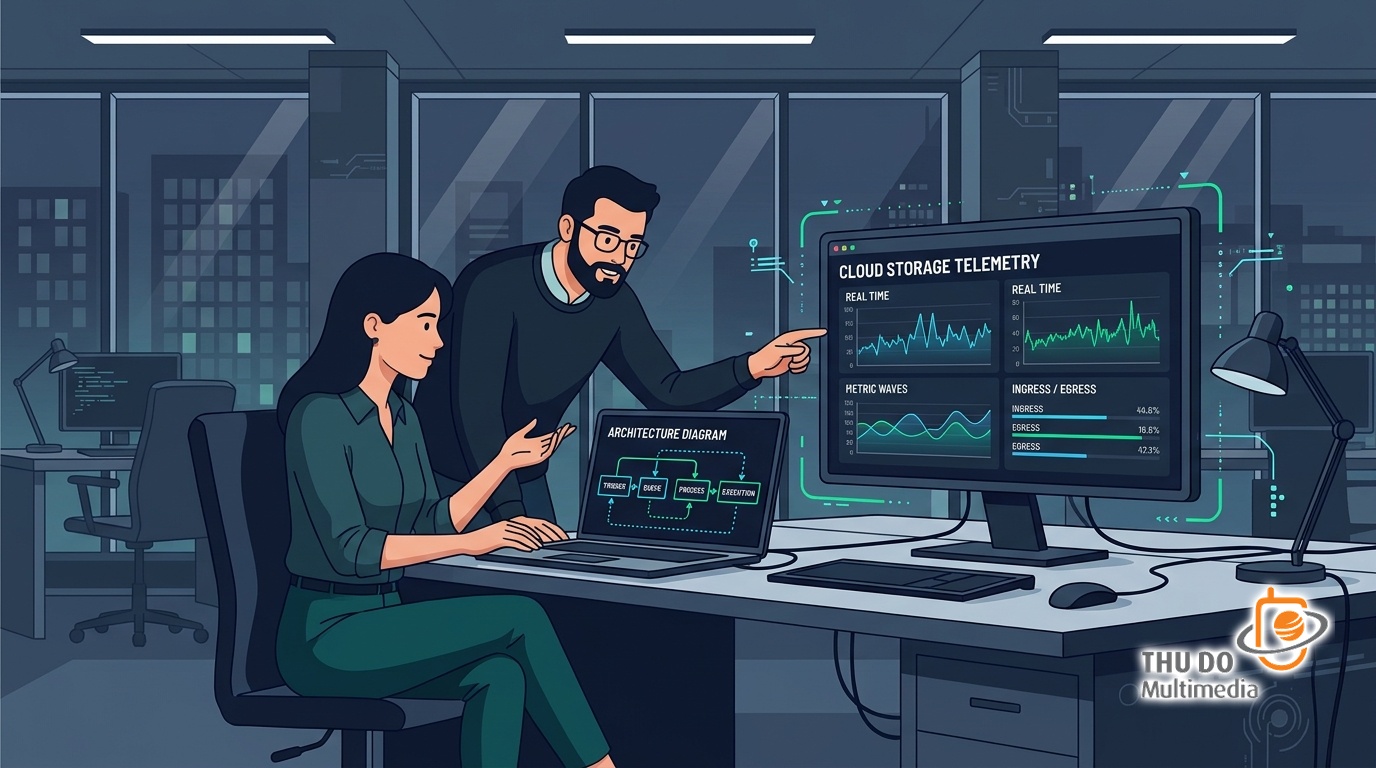
To understand how low latency CMAF live streaming achieves near-instantaneous playback, one must look deep inside the container structure. Traditional streaming packages wait until an entire media segment—typically 2 to 6 seconds long—is completely encoded and written to disk before advertising it in the manifest file. LL-CMAF shatters this paradigm by breaking individual segments into independently deliverable micro-chunks, often referred to as parts. These micro-chunks are made available instantly as soon as the encoder finishes rendering them.
This micro-chunking mechanism relies heavily on HTTP/1.1 Chunked Transfer Encoding or HTTP/2 multiplexing. Instead of waiting for a full moof (movie fragment) and mdat (media data) box combination to close, web servers push media data down the pipe immediately. Client-side players equipped with Media Source Extensions (MSE) dynamically ingest these micro-chunks, decoding and rendering video frames on the fly. This requires sophisticated client-side adaptive bitrate (ABR) logic; if a player’s pacing algorithm is poorly tuned, the aggressive ingestion of micro-chunks can trigger sudden rebuffering events during network micro-jitters.
Industry standards organizations and streaming veterans have continuously refined these mechanics. As noted in recent whitepapers by leading video infrastructure consortiums, “The decoupling of segment duration from transfer chunk size is the single most important breakthrough in modern HTTP video delivery.” When implemented correctly, these core mechanics allow client players to start rendering frames long before the parent segment is finalized, effectively collapsing the temporal distance between capture and display.
3. Accelerating Delivery via chunked transfer encoding video delivery
The underlying transport mechanism dictates the success of any low-latency pipeline. Optimizing chunked transfer encoding video delivery requires fine-tuned coordination between origin servers, edge proxies, and client players. When web servers—whether Nginx, Apache, or customized Go-based origin servers—receive incoming encoded streams, they must be configured to flush chunks instantly rather than buffering responses in memory. This continuous stream of HTTP chunks ensures that edge servers can begin forwarding data to downstream clients immediately upon receipt.
Modern Content Delivery Networks play a pivotal role in handling these high-frequency chunk requests without breaking standard HTTP cache trees. Edge servers must support cache-control headers and request collapsing techniques to prevent origin server overload. When thousands of viewers request the same micro-chunk simultaneously, an intelligent CDN edge node collapses those requests into a single upstream fetch, distributing the payload efficiently. However, network jitter remains an ever-present adversary; player pacing algorithms must dynamically adjust buffer depths to compensate for fluctuating last-mile connections without letting latency creep upward.
“Implementing chunked transfer encoding at scale requires a complete re-evaluation of origin-to-edge timeouts and proxy buffering rules. Without proper tuning, standard load balancers will cache or throttle micro-chunks, inadvertently reintroducing multi-second delays into the workflow.” — Senior Streaming Infrastructure Architect
4. Optimizing the Pipeline for a sub-second live video broadcast
Achieving a true sub-second live video broadcast—often defined as glass-to-glass latency under one second—requires an uncompromising, end-to-end optimization strategy across the entire software and hardware stack. Every component, from the glass of the camera lens to the display buffer of the end-user’s device, must be meticulously tuned. The journey begins at the video encoder, where parameters like GoP (Group of Pictures) length, keyframe intervals (enforcing strict 1-second or sub-second IDR frames), and constant bitrate (CBR) tuning prevent encoder-side buffering bottlenecks.
Packaging requirements are equally rigorous. The packager must generate chunked manifests (playlists) in real-time alongside media chunks, updating the EXT-X-PRELOAD-HINT or equivalent DASH attributes dynamically. On the client side, integration relies on modern JavaScript players leveraging MSE and custom heuristics designed specifically for LL-CMAF. In our deployment practice, we frequently recommend pairing these pipelines with comprehensive transcoding suites like Vualto or enterprise packaging tools to ensure seamless multi-bitrate manifest generation without CPU spikes.
To maintain sub-second performance under load, monitoring tools must track end-to-end latency metrics continuously. If encoders drop frames or origin servers experience I/O latency, the entire pipeline can slip back into legacy latency brackets. Engineers must establish strict alerting thresholds for manifest update frequencies and chunk delivery times, ensuring operational stability across global distribution networks.
5. LL-CMAF vs WebRTC latency comparison: Choosing THE Right Protocol
When architects set out to build interactive video applications, a thorough LL-CMAF vs WebRTC latency comparison is essential to determine the right protocol for the job. WebRTC remains the undisputed king of raw speed, maintaining a latency bracket of 200ms to 500ms by utilizing UDP-based peer-to-peer or Selective Forwarding Unit (SFU) architectures. This makes WebRTC the gold standard for two-way video communication, such as telehealth, video conferencing, and remote surgical assistance.
However, WebRTC encounters severe economic and architectural limitations when scaling to massive, one-to-many broadcast audiences. Streaming to millions of concurrent viewers via WebRTC requires expensive SFU mesh networks and complex server-side infrastructure. In contrast, LL-CMAF operates within a latency bracket of 800ms to 1,500ms—well within the acceptable threshold for interactive broadcasting—while leveraging standard HTTP CDNs. This allows media companies to scale cost-effectively to millions of concurrent streams without re-architecting their entire distribution network.
Furthermore, LL-CMAF excels in quality and reliability. While WebRTC’s UDP packet loss handling can result in artifacting on congested networks, LL-CMAF benefits from TCP/QUIC reliability and superior multi-bitrate Adaptive Bitrate (ABR) support. Choosing the right protocol ultimately depends on the specific use case: deploy WebRTC for real-time collaboration, and deploy LL-CMAF for mass-audience interactive events where sub-second delivery is required alongside pristine visual fidelity.
6. Scaling with an ultra-low latency video streaming CDN
Distributing micro-chunks globally without introducing latency drift requires specialized infrastructure. An ultra-low latency video streaming CDN acts as the backbone of any enterprise-grade CMAF deployment, managing the high-frequency traffic patterns inherent to chunked streaming. Because LL-CMAF generates dozens of micro-chunks per second per stream, CDN edge nodes experience an exponential increase in HTTP request rates compared to traditional 6-second segment streaming.
To handle this load, modern CDNs utilize advanced edge computing capabilities, intelligent request collapsing, and optimized origin shield configurations. Origin shields prevent origin server collapse by absorbing thousands of simultaneous edge requests for the exact same micro-chunk, aggregating them into a single streamlined fetch back to the packager. Additionally, CDN Point of Presence (POP) proximity dictates how quickly those chunks traverse the last mile to the end-user. Ensuring global POP coverage drastically reduces round-trip times (RTT), making sub-second delivery achievable for audiences whether they are connecting from Tokyo, New York, or London.
7. Bridging the Gap: sub-second latency HLS and DASH
Standardization across diverse client ecosystems is critical for commercial success. The emergence of sub-second latency HLS and DASH has unified low-latency delivery across Apple ecosystems, Android devices, and connected TVs. Apple’s Low-Latency HLS (LL-HLS) extensions—including EXT-X-PRELOAD-HINT and EXT-X-PART—work in tandem with DASH-IF’s low-latency profile to give client players deterministic control over fragment preloading and playback acceleration.
Interoperability remains one of the primary engineering challenges when configuring packaging tools to serve both LL-HLS and LL-DASH from a single ingest stream. Different players interpret manifest hints and part durations with varying degrees of tolerance. Modern packagers must normalize these outputs, ensuring that Safari, Google Chrome, mobile applications, and Smart TVs all receive optimized manifests tailored to their respective platform capabilities. Ensuring robust fallback mechanisms ensures that older legacy devices seamlessly downgrade to standard segment fetching rather than failing outright.
8. Powering real-time interactive video with CMAF
The ultimate validation of sub-second streaming architecture lies in its real-world application. Deploying real-time interactive video with CMAF empowers modern industries to build immersive digital experiences that were previously impossible over traditional HTTP streams. In the realm of live sports betting, sub-second video ensures that odds updates match the visual action on screen, eliminating the frustrating delay where viewers see a goal scored seconds after betting markets close. Similarly, synchronized watch parties and live shopping auctions thrive when chat applications, live polling overlays, and video feeds remain perfectly synchronized without audio/video drift.
Security and Digital Rights Management (DRM) present unique hurdles in these fast-paced pipelines. Applying Common Encryption (CENC) without adding latency overhead requires hardware-accelerated packaging and pre-encrypted key management. Enterprise streaming platforms must integrate robust security protocols that encrypt micro-chunks on the fly without bottlenecking the packager. Looking ahead, the industry is witnessing an exciting convergence: utilizing WebRTC for ultra-fast contribution and ingest, combined with LL-CMAF distribution at the edge, creating the ultimate hybrid workflow for modern broadcast engineering.
Câu hỏi thường gặp
- Q1: What is the difference between WebRTC and LL-CMAF?
- Answer: WebRTC uses UDP-based peer-to-peer or SFU architecture, achieving ultra-low latency (200-500ms) best suited for two-way video chats. LL-CMAF uses HTTP-based TCP streaming (chunked transfer encoding) to achieve sub-second to 2-second latency while leveraging traditional CDNs to scale efficiently to millions of concurrent viewers.
- Q2: Can CMAF achieve sub-second latency?
- Answer: Yes. By breaking media segments into smaller chunks (micro-chunks) and utilizing HTTP chunked transfer encoding, LL-CMAF allows players to download and decode media before the entire segment is finished encoding, dropping glass-to-glass latency below 1 second under optimal network and encoder setups.
- Q3: Does LL-CMAF work on all devices and browsers?
- Answer: LL-CMAF is supported via modern JavaScript players (using Media Source Extensions) and native platform extensions (like Apple’s LL-HLS support in Safari and iOS). However, player implementation and CDN edge configuration are required to ensure seamless fallback for older client devices.
- Q4: How does chunked transfer encoding improve video delivery speed?
- Answer: Chunked transfer encoding allows a web server to send data to the client in a series of chunks as they become available from the encoder, eliminating the need to wait for a complete file or video segment to be fully written before transmission begins.
Recent Comments