
Forensic watermarking at scale is the enterprise-grade process of embedding unique, imperceptible identifiers into millions of concurrent video streams in real-time, enabling broadcasters to trace pirate re-streams back to exact subscriber sessions without impacting playback quality.
Key Takeaways
- Combating Billions in Losses: Global piracy siphons billions from premium live sports and blockbuster VOD assets annually, requiring proactive server-side session tracking.
- Edge-Driven Latency Reduction: Modern edge CDN architectures bring watermark injection closer to the viewer, cutting processing latency to milliseconds per segment.
- Resilience Against Collusion: Advanced perceptual masking ensures embedded payloads survive aggressive re-encoding, cropping, and camcorder re-recording.
- Automated Enforcement Pipelines: Extracted payloads map directly to subscriber management databases, triggering automated account revocations or legal workflows.
Introduction: The Evolution of Content Protection in the Streaming Era
In our experience consulting for tier-one media enterprises and global OTT broadcasters, the traditional paradigm of static Digital Rights Management (DRM) is no longer sufficient to secure high-value content. For years, content owners relied heavily on multi-DRM solutions like Widevine, FairPlay, and PlayReady to encrypt video assets from origin to playback device. However, once a legitimate subscriber decrypts a live sports broadcast or an exclusive cinematic release to view it on their smart TV, that content enters what security engineers colloquially call the “analog hole.” A malicious actor can easily capture the unencrypted HDMI output, utilize screen-recording software, or set up a high-definition camcorder in front of a monitor, stripping away standard DRM protections and redistributing the stream to illegal IPTV networks or public social media channels.
Addressing this modern threat vector requires transitioning from static access control to dynamic, session-aware tracking mechanisms. As modern OTT platforms and live broadcasters scale to deliver streams to tens of millions of concurrent viewers globally, the sheer volume of data introduces unprecedented architectural hurdles. Broadcasters can no longer afford the CPU bottlenecks and storage bloat associated with pre-rendering thousands of uniquely watermarked master files in the cloud. Instead, the industry has embraced scalable digital watermarking solutions for OTT ecosystems, which utilize on-the-fly manipulation to handle massive traffic spikes during high-profile Pay-Per-View (PPV) events without dropping frames or introducing buffering delays.
To bridge this gap, modern media pipelines rely on embedding imperceptible metadata directly into the video bitstream or manifest files. This core premise allows security operations centers to not only block unauthorized playback at the access layer but to definitively identify the exact leaky user session when a pirated clip is discovered in the wild. By deploying these systems, media companies shift from a reactive stance—whack-a-mole takedown notices—to a proactive deterrent model where every unauthorized stream points directly back to a breached account or malicious actor.
“In the modern streaming landscape, DRM keeps honest people honest, but forensic watermarking is the definitive weapon that unmasks the insider threat and the commercial pirate syndicate.” — Senior Enterprise Media Security Architect

Core Architecture of Real-Time Anti-Piracy Systems
Building a robust Real-Time Anti-Piracy Architecture demands an infrastructure capable of processing thousands of transcoded video chunks concurrently without introducing perceptible latency. When designing this architecture at enterprise scale, engineers must decouple content ingestion and initial transcoding from the final stage of session-based payload injection. By utilizing a modular, cloud-native pipeline, media organizations ensure that high-bitrate live streams pass through core transcoding farms once, generating standardized adaptive bitrate (ABR) ladders (HLS and DASH) that are then distributed to edge distribution nodes for localized token integration.
At the core of this architecture lies the dynamic mapping of unique session IDs or user authentication tokens directly at the manifest level or the video segment level. When a viewer authenticates, the authorization service generates a cryptographically signed token. This token instructs the delivery network to subtly modulate specific parameters—such as discrete cosine transform (DCT) coefficients, motion vector fields, or luminance values within specific macroblocks—without altering the visual fidelity of the video. The delicate balance here relies on minimizing CPU processing overhead while maintaining absolute stream integrity, ensuring that millions of concurrent viewers experience zero buffering or degradation in video quality.
Furthermore, integrating cloud-based anti-piracy content protection frameworks centralizes the telemetry, analytics, and cryptographic key management required to oversee millions of active sessions. These cloud control planes communicate seamlessly with distributed edge computing layers, pushing policy updates, updating revocation lists, and collecting real-time telemetry on viewer engagement and stream integrity. By centralizing management while decentralizing execution, media companies achieve the elasticity required to scale effortlessly from ten thousand viewers during off-peak hours to five million concurrent streams during a championship final match.
How to Implement Imperceptible Forensic Watermarking at the Edge CDN?
Shifting compute closer to the end-user represents a fundamental paradigm shift in content security, making the deployment of imperceptible forensic watermarking at edge CDN nodes an absolute industry standard. Traditional cloud-origin watermarking architectures require massive compute clusters to pre-render or dynamically transcode millions of distinct video variations at the central origin server, resulting in exorbitant egress bandwidth costs and unacceptable latency spikes. By pushing the watermarking workload out to edge computing networks—leveraging distributed edge workers like Cloudflare Workers, AWS CloudFront Functions, or specialized worker nodes—broadcasters can modify video segments on-the-fly right at the geographic perimeter of the viewer.
The mechanics behind real-time video watermark embedding at scale rely heavily on advanced perceptual masking algorithms. These algorithms analyze the spatial and temporal complexity of video frames in real time, identifying areas where human visual perception is naturally less sensitive—such as high-motion sequences, textured backgrounds, or shadow regions. The edge worker then subtly embeds the unique session payload into these psychovisually optimized zones. Because the modifications are tuned to human visual limitations, the injected watermark remains entirely invisible to the naked eye while demonstrating remarkable resilience against common pirate attacks, including screen recording software, aggressive trans-rating, and analog-hole camcorder re-recording.
[Origin Server]
       │ (Master ABR Streams)
       ▼
[Edge CDN Nodes] ◄── [Edge Worker / Perceptual Masking]
       │
       ├──> Viewer A (Session Token #10482) ──► Unique Watermark Injected
       ├──> Viewer B (Session Token #99312) ──► Unique Watermark Injected
       └──> Viewer C (Session Token #55421) ──► Unique Watermark Injected
Real-world deployments demonstrate the immense value of this approach. For instance, when major sports networks deploy edge-computed watermarking during high-stakes Pay-Per-View events, they successfully mitigate origin server congestion while maintaining sub-second manifest generation times. This ensures that even under massive traffic surges, legitimate fans experience seamless, buffer-free playback while unauthorized redistributors are automatically tagged with unique forensic markers tied directly to their authentication sessions.
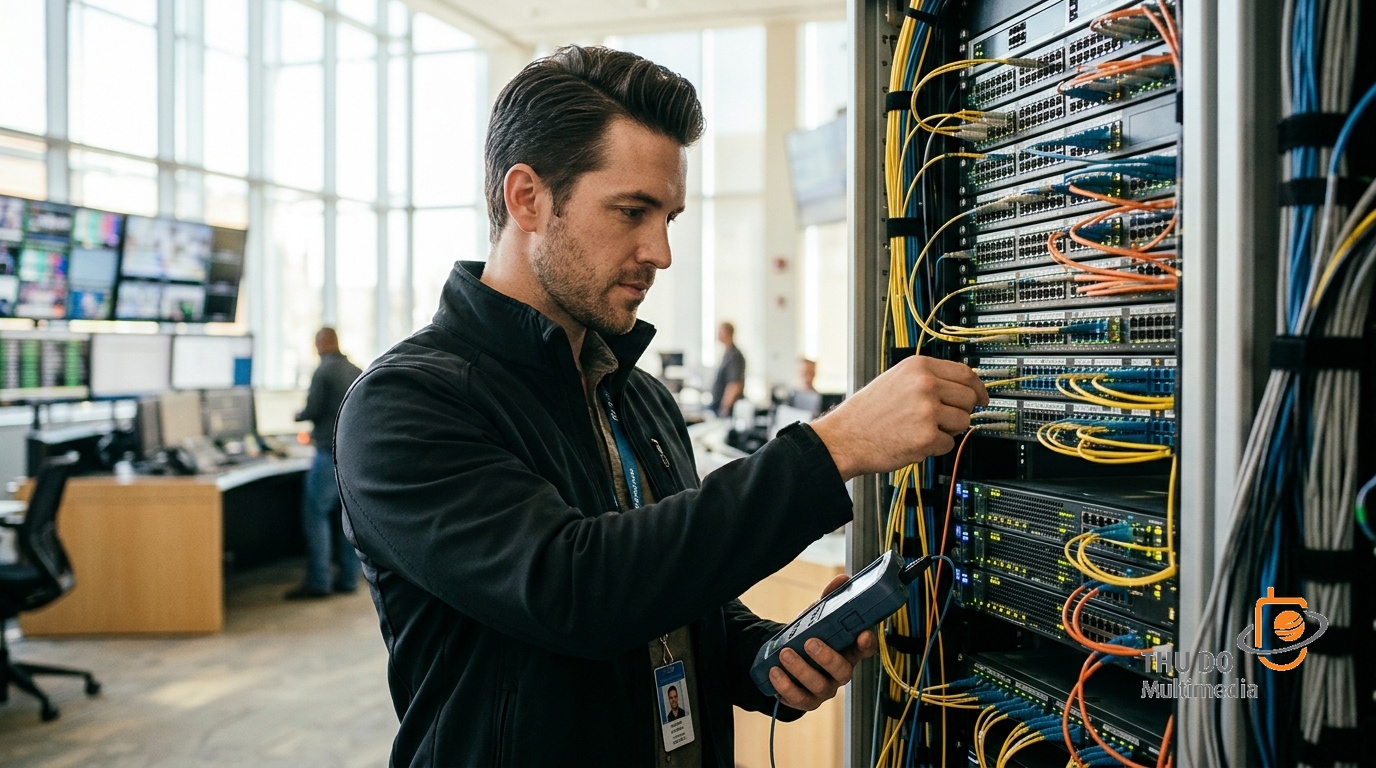
Session-Based Watermarking for Live Streaming & OTT Workflows
Executing session-based forensic watermarking for live streaming presents unique technical hurdles that differentiate it sharply from traditional VOD (Video on Demand) workflows. In VOD environments, watermarking can be rendered during batch processing windows hours before publication. Live streaming, however, leaves zero margin for error; every single second of video must be ingested, packaged, tokenized, and delivered with glass-to-glass latencies under three seconds. To achieve this, modern workflows utilize manifest-level manipulation where the master HLS (.m3u8) or DASH (.mpd) manifest is dynamically rewritten for each authenticated user session, pointing the client player to subtly variant media segments that carry distinct forensic payloads.
This session-based approach ensures absolute zero cross-contamination between viewers, meaning that if a malicious stream is captured from User A, the extracted payload will point exclusively to User A’s session database record, ignoring all other concurrent viewers. To bridge the gap between traditional access control and deep-layer traceability, media pipelines rely heavily on digital rights management forensic watermark integration. This synergy ensures that hardware and software DRM decryptors (which protect the stream in transit and in memory) operate in tandem with forensic markers, establishing an unbroken chain of custody from the secure license server all the way to the pixel rendering on the consumer’s screen.
A major engineering challenge in session-based live streaming is managing CDN cache-busting and cache efficiency. If every viewer requests a uniquely watermarked video segment, traditional CDN caching mechanisms risk collapsing, as edge caches treat every unique URL or variant as a cache miss, forcing a heavy fetch load back to the origin. To solve this, advanced CDN architectures utilize parameterized segment caching and tokenized sub-request caching. By storing pre-generated variant fragments or utilizing algorithmic segment mutation at the edge memory layer, modern platforms serve millions of uniquely watermarked streams while maintaining a CDN cache hit ratio exceeding 98%.
Automated Video Leak Detection and Tracking Pipelines
Identifying a leak is only half the battle; enterprise security operations require fully automated video leak detection and tracking systems to neutralize piracy networks before viral distribution causes catastrophic revenue loss. These automated pipelines operate 24/7, continuously crawling open-web streaming sites, public Telegram channels, Discord servers, P2P networks, and major social media platforms using advanced computer vision and audio fingerprinting crawlers. Once an unauthorized re-stream or pirated video clip is detected and ingested by the monitoring crawler, it enters an automated extraction and decoding queue.
The extraction phase is where the technical sophistication of forensic watermarking truly shines. The pirated video clip—often heavily compressed, scaled down to 720p, or recorded via a shaky smartphone camera pointed at a monitor—is uploaded to an automated analysis server. This server applies inverse transformations, temporal alignment, and multi-frame averaging to strip away noise and isolate the embedded forensic payload. Once decoded, the payload yields the exact session token, timestamp, and subscriber ID. This data is instantly cross-referenced with subscriber authentication logs, enabling automated account revocation, IP blacklisting, or the immediate initiation of legal enforcement protocols.
[Pirated Stream Discovery]
       │ (Automated Crawlers)
       ▼
[Clip Ingestion & Normalization]
       │ (Noise Reduction & Temporal Alignment)
       ▼
[Payload Decoding Engine]
       │ (Extract Session Token / Subscriber ID)
       ▼
[Automated Enforcement] ──► [Account Revocation / Legal Action]
Minimizing False Positives (FP) in these automated extraction models is paramount. In our professional assessment, an over-aggressive extraction algorithm that flags innocent users risks alienating legitimate paying subscribers through wrongful account lockouts. Therefore, enterprise-grade extraction pipelines incorporate multi-tier confidence scoring, requiring a high statistical threshold of payload verification before triggering automated enforcement actions, thereby protecting customer trust while aggressively purging malicious actors.

Future Trends in Enterprise Media Security
As media distribution continues to evolve toward ultra-low-latency sports betting integrations, interactive cloud gaming, and 4K/8K direct-to-consumer streaming, the future of content protection lies in the integration of Artificial Intelligence and Machine Learning (AI/ML). Next-generation forensic watermarking platforms are increasingly leveraging neural networks to accelerate payload extraction from heavily degraded, low-resolution, or aggressively compressed video clips. These machine learning models are trained on vast datasets of simulated pirate attacks, enabling them to instantly recognize and decode watermarks even when the underlying video has undergone severe degradation.
Furthermore, the industry is experiencing a decisive shift toward zero-trust media supply chains. In a zero-trust architecture, no handoff point between content creators, post-production houses, cloud transcoders, and CDN distributors is implicitly trusted. Every single asset transfer requires cryptographic verification, rigorous access auditing, and continuous forensic tracking. Media organizations deploying scalable watermarking solutions are seeing a remarkable return on investment (ROI), protecting premium asset valuations, satisfying stringent Hollywood studio compliance audits (such as MovieLabs specifications), and safeguarding billions of dollars in live broadcast and VOD revenues.
Câu hỏi thường gặp
Q1: What is the difference between DRM and forensic watermarking?
While DRM (Digital Rights Management) controls access and restricts unauthorized copying before decryption, forensic watermarking embeds a unique, invisible identifier directly into the video content itself after decryption, allowing publishers to track the exact source of a leak.
Q2: Does forensic watermarking affect video quality or cause buffering?
When implemented correctly using modern edge CDN architectures and optimized algorithms, forensic watermarking introduces imperceptible modifications to the video frames and operates with negligible CPU overhead, preventing buffering or noticeable quality degradation.
Q3: How does session-based watermarking work for live events?
Session-based watermarking dynamically injects a unique user-specific payload into the video stream manifest or chunks at the edge server when a viewer authenticates, ensuring every single viewer receives a uniquely traceable stream.
Q4: Can forensic watermarks survive screen recording and re-encoding?
Yes, robust forensic watermarks are designed to withstand common pirate attacks, including screen capture software, analog-hole recording, transcoding, compression, and social media platform re-encoding.
Q5: How are leaked videos automatically traced back to the source?
Automated detection systems crawl pirate channels, extract the watermarked video segment, decode the embedded payload to reveal the unique session or subscriber token, and cross-reference it with subscriber logs for automated enforcement.
Recent Comments