
AV1 and HEVC Video Encoding represent the ultimate technical crossroads for modern video engineers, product managers, and enterprise streaming architects. While HEVC remains the entrenched hardware standard, AV1 delivers superior royalty-free compression efficiency that is rapidly transforming ultra-high-definition content delivery.
Key Takeaways:
* Superior Compression: AV1 achieves approximately 30% better bandwidth savings compared to HEVC at equivalent perceptual quality.
* Licensing Economics: HEVC requires costly, fragmented patent pool royalties, whereas AV1 is completely open-source and royalty-free.
* Hardware Adoption: Over 80% of newly released consumer GPUs and mobile SoCs feature native hardware decoding support for AV1.
* Encoding Complexity: AV1 traditionally demands higher compute overhead, though modern open-source presets like SVT-AV1 have drastically closed the speed gap.
Introduction: The Evolution of Video Codecs in the 4K Era
In our experience engineering large-scale video delivery pipelines, the explosion of ultra-high-definition (UHD) streaming has rendered traditional legacy codecs like H.264/AVC economically and technically obsolete. As global audiences demand pristine 4K and experimental 8K resolutions across mobile devices, living-room smart TVs, and web browsers, the cost of raw data transmission has skyrocketed. Content delivery networks (CDNs) charge billions collectively for redundant bitstream delivery, forcing streaming platforms to aggressively pursue advanced compression techniques. This reality has elevated codec selection from a backend developer footnote to a board-level financial strategy that dictates profit margins and user retention.
Historically, High Efficiency Video Coding (HEVC / H.265) served as the undisputed heavyweight champion for UHD distribution, heavily backed by enterprise hardware and broad broadcast adoption. However, the streaming landscape has been disrupted by AOMedia Video 1 (AV1), an open-source, royalty-free next-generation format developed by industry giants such as Netflix, Google, and Amazon. Choosing between these two powerhouses is no longer a simple matter of looking at static compression ratios. Instead, modern video architects must carefully balance encoding speed, hardware decoding support, licensing overhead, and Mobile 4K Streaming Bandwidth Optimization to build future-proof video distribution platforms.
To navigate this complex technological shift successfully, organizations must look beyond theoretical benchmarks and analyze real-world compute economics. When scaling to millions of concurrent viewers, a 20% reduction in bitrate translates directly to millions of dollars saved in CDN transit fees, offsetting the higher CPU costs of modern compression tools. Throughout this article, we will dissect the architectural foundations, performance realities, and practical implementation frameworks required to master AV1 and HEVC Video Encoding in production environments.
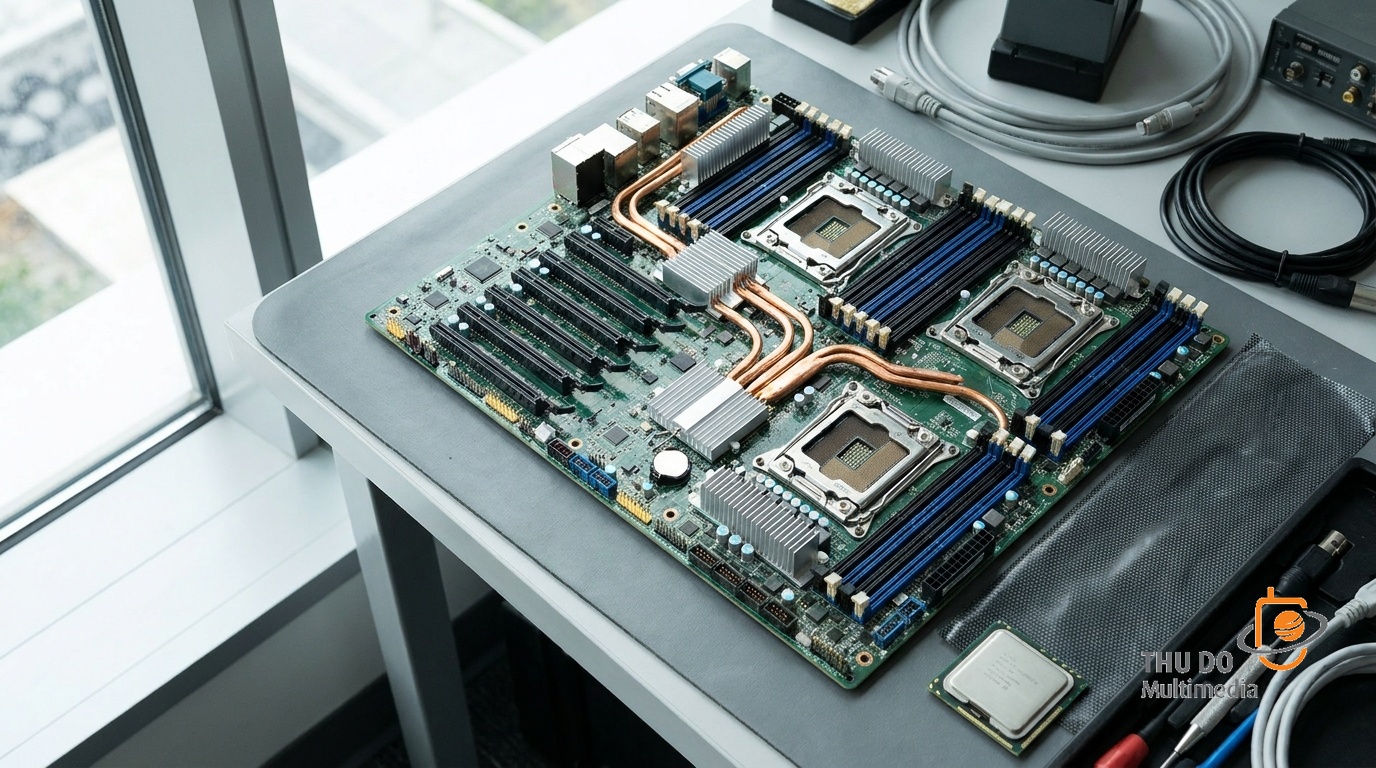
Understanding HEVC (H.265): The Established Enterprise Standard
Developed by the Joint Collaborative Team on Video Coding (JCT-VC), High Efficiency Video Coding was engineered as the direct successor to H.264, designed to double the compression efficiency while supporting resolutions up to 8K UHD. The architecture achieves this through advanced Coding Tree Units (CTUs), which dynamically flex block sizes from 4×4 up to 64×64 pixels depending on the visual complexity of the frame. This granular spatial partitioning allows HEVC to preserve sharp edges and intricate textures in high-motion scenes far better than its predecessor, cementing its status as the high efficiency video coding standard for professional broadcast workflows and physical media like 4K Ultra HD Blu-ray.
The market adoption of HEVC has been remarkably robust, particularly within closed consumer ecosystems dominated by Apple devices, modern smart TVs, and professional digital cinema cameras. Hardware decoders for HEVC have been embedded in consumer chipsets for nearly a decade, ensuring virtually ubiquitous playback compatibility without draining device batteries. Broadcasters favor HEVC because its mature toolsets integrate seamlessly into existing MPEG-2 transport streams and traditional satellite or cable distribution infrastructures, minimizing friction during migration phases.
Despite its technical maturity and widespread hardware backing, HEVC suffers from a notoriously complex and litigious licensing landscape. The format is encumbered by multiple overlapping patent pools—including Access Advance, Velos Media, and MPEG LA—each demanding separate per-unit or enterprise royalty fees. For software developers, browser vendors, and small-to-medium streaming platforms, navigating these tangled patent pools introduces severe financial friction and legal uncertainty, stifling innovation and delaying native browser integration across open-source ecosystems.
Decoding AV1: The Open-Source, Royalty-Free Challenger
The genesis of AV1 lies in a collaborative industry revolt against the licensing friction and high costs associated with legacy formats. Formed in 2015, the Alliance for Open Media (AOMedia)—comprising tech titans like Google, Netflix, Amazon, Meta, Microsoft, and hardware manufacturers like Intel, AMD, and NVIDIA—set out to build a completely open, royalty-free video codec optimized for the internet. By eliminating patent pool royalties, AV1 democratized high-efficiency video distribution, enabling startups and enterprise giants alike to stream high-quality video without fearing unexpected legal liabilities or per-stream fee structures.
From a technical perspective, AV1 borrows foundational concepts from experimental codecs like Google’s VP9 and Daala, introducing revolutionary coding tools such as recursive transform partitioning, advanced intra-prediction angles, and multi-reference frame motion compensation. These innovations yield exceptional AOMedia Video 1 performance benchmarks, consistently outperforming older standards in subjective visual quality tests conducted by independent organizations like Moscow State University (MSU). By stripping away the financial barriers of entry, AV1 has become the default codec of choice for modern web-first applications, real-time communications (WebRTC), and massive over-the-top (OTT) video platforms looking to curb bandwidth consumption.
“AV1 represents a monumental leap forward for internet video, aligning technical excellence with a royalty-free economic model that empowers developers and platforms of all sizes to scale without artificial constraints.” — Senior Video Infrastructure Architect
However, transitioning to AV1 requires acknowledging its historical compute overhead. Early software implementations were notoriously resource-heavy, leading engineers to question its viability for real-time broadcasting. Fortunately, open-source community efforts—most notably the Scalable Video Technology for AV1 (SVT-AV1) encoder developed in collaboration with Intel and Netflix—have radically optimized encoding speeds, turning a theoretical academic format into a practical enterprise-grade workhorse.
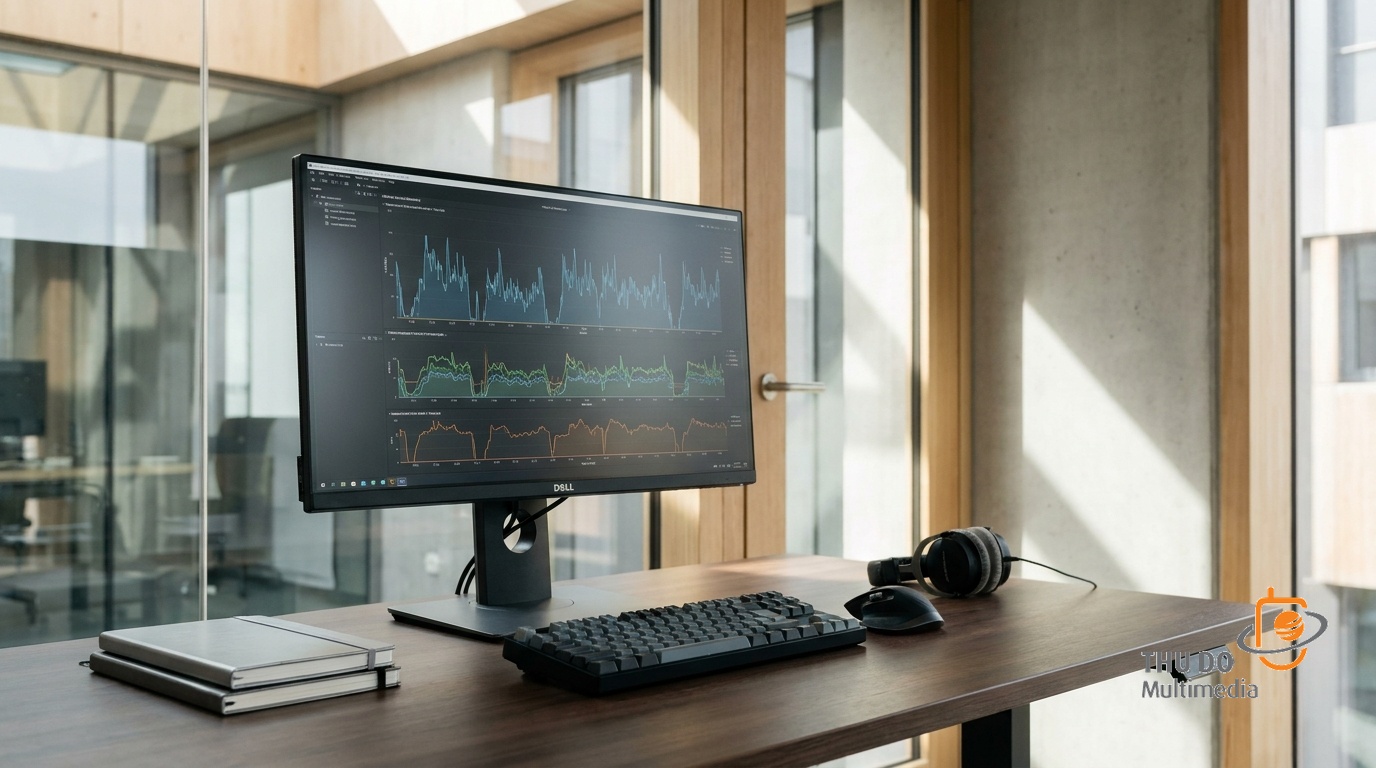
Technical Showdown: AV1 vs. HEVC Compression Efficiency
When evaluating AV1 vs HEVC compression efficiency, empirical data consistently demonstrates that AV1 delivers superior visual fidelity at identical bitrates, or equivalent perceptual quality at significantly lower bitrates. Industry benchmarks reveal that AV1 typically achieves a 20% to 30% reduction in bandwidth consumption compared to HEVC, and up to 50% savings when compared against legacy H.264 streams. This compression advantage stems from AV1’s sophisticated block-partitioning algorithms and advanced directional intra-prediction tools, which effectively eliminate spatial and temporal redundancies that HEVC’s rigid macroblock structures miss.
In complex visual scenarios—such as rapid camera pans, swirling water, confetti explosions, or dense foliage—codecs often suffer from blocking artifacts and mosquito noise. AV1 addresses these challenges through advanced film grain synthesis models and constrained directional transform filters that preserve organic textures without artificially inflating the bitrate. This makes it an extraordinarily powerful tool for Mobile 4K Streaming Bandwidth Optimization, ensuring that users streaming high-definition content over restricted cellular data plans experience zero buffering, lower data caps impact, and crystal-clear image reproduction.
To quantify these efficiency gains in a real-world enterprise setting, consider a platform streaming 100 petabytes of video data annually. Shifting from HEVC to AV1 with an average 25% bandwidth reduction eliminates 25 petabytes of redundant data transmission. Even when factoring in the increased cloud compute costs required for encoding, the net savings on CDN transit fees typically yield a positive return on investment within the first two quarters of deployment.
Performance Realities: Encoding Speed and Hardware Support
While AV1 wins decisively on compression ratios, the practical realities of H.265 vs AV1 encoding speed have historically presented a major bottleneck for engineering teams. Traditional reference software encoders (such as libaom-av1) can require anywhere from 4x to 10x more compute time than optimized HEVC encoders, translating to higher cloud infrastructure costs and delayed live-streaming handoffs. This computational asymmetry forced early adopters to carefully weigh the savings on downstream CDN bandwidth against the upfront surge in upstream CPU rendering expenses.
Fortunately, the hardware ecosystem has evolved rapidly. Modern CPU architectures featuring AVX-512 instruction sets, combined with highly optimized open-source software like SVT-AV1, have slashed encoding times to levels competitive with traditional codecs. Furthermore, hardware decoding support for AV1 is now ubiquitous across modern consumer hardware. Discrete GPUs from NVIDIA (RTX 30 and 40 series), AMD (RX 7000 series), Intel (Arc GPUs), and modern mobile system-on-chips (SoCs) like the Snapdragon 8 Gen series and Apple M-series silicon feature dedicated hardware decoding blocks. This hardware acceleration ensures that end-user devices can decode AV1 streams smoothly with minimal battery drain or thermal throttling.
When planning an enterprise migration strategy, product managers must audit their target audience’s device demographics. While modern flagships and smart TVs handle AV1 natively, legacy devices require fallback mechanisms. Implementing a robust adaptive bitrate (ABR) packaging strategy—utilizing HEVC for legacy endpoints and AV1 for modern web and mobile clients—ensures maximum reach without sacrificing cutting-edge performance.

Comprehensive Next-Generation Video Codecs Comparison
To select the best video codec for 4K streaming, engineers must evaluate codecs across a standardized multi-dimensional matrix. The following structural comparison outlines the core operational differences between legacy and modern compression standards:
| Evaluation Metric | H.264 / AVC | HEVC / H.265 | AV1 (AOMedia Video 1) |
|---|---|---|---|
| Licensing Model | Fragmented / Proprietary | Proprietary (Complex Patent Pools) | 100% Royalty-Free |
| Max Resolution Support | Up to 4K | Up to 8K and Beyond | Up to 8K and Beyond |
| Compression Efficiency | Baseline | Moderate (Reference Standard) | Superior (20-30% better than HEVC) |
| Encoding Complexity | Low / Fast | Moderate | High (Mitigated by SVT-AV1) |
| Hardware Decoding | Universal | Universal (Decade-old adoption) | Broad (80%+ of modern devices) |
Conducting this next-generation video codecs comparison reveals that while HEVC remains a safe fallback for legacy broadcast loops and closed hardware ecosystems, AV1 is the undisputed king of web, mobile, and cloud-native OTT distribution. Organizations seeking long-term architectural dominance are actively shifting their primary encoding profiles to AV1 while maintaining HEVC as a secondary compatibility stream.
Câu hỏi thường gặp
Is AV1 completely free to use for commercial streaming?
Yes, AV1 is an open-source, royalty-free video format developed by the Alliance for Open Media. Companies do not have to pay patent pool royalties to encode, distribute, or stream video content utilizing the AV1 codec.
Why is AV1 encoding so much slower than HEVC?
AV1 utilizes advanced coding tools, larger transform blocks, and sophisticated prediction mechanisms that demand significantly more processing power. However, modern open-source encoders like SVT-AV1 have drastically accelerated encoding speeds, making real-time enterprise adoption entirely feasible.
Can older devices play AV1 video files?
Devices without dedicated hardware decoding chips for AV1 can still play files via software decoding. However, this may cause higher CPU usage, increased battery drain, and potential playback stuttering on older mobile phones or legacy hardware.
Is HEVC still relevant now that AV1 is available?
Yes. HEVC remains dominant in closed-ecosystem hardware, physical media like 4K Blu-ray, and traditional broadcast workflows where entrenched hardware decoding infrastructure and legacy tuners are already deployed.
Conclusion
The transition from legacy compression formats to advanced standards is no longer optional for competitive digital media platforms. Throughout this analysis of AV1 and HEVC Video Encoding, we have explored how HEVC provides robust, entrenched hardware support despite the friction of costly licensing fees, while AV1 offers an open-source, royalty-free paradigm that maximizes compression efficiency and reduces long-term CDN transit costs. By carefully auditing device demographics, leveraging modern optimization presets like SVT-AV1, and executing a thoughtful adaptive bitrate strategy, video engineers can successfully future-proof their distribution pipelines and deliver uncompromising visual quality to global audiences.
Recent Comments