
Dynamic Ad Insertion for Connected TV is a programmatic technology that replaces static linear commercials with targeted ads tailored to individual household demographics, transforming modern video streaming into a hyper-personalized, data-driven advertising ecosystem.
Key Takeaways
- Seamless User Experience: Server-Side Ad Insertion (SSAI) stitches ads directly into the video manifest, eliminating buffering and audio spikes.
- Millisecond-Level Auctions: Real-time bidding (RTB) evaluates household data and content categories to execute ad transactions in fractions of a second.
- Ad-Blocker Resilience: Unified stream manifests make client-side ad blockers completely ineffective against modern programmatic delivery.
- Standards-Based Precision: Protocols like SCTE-35 act as critical digital markers, ensuring frame-accurate ad breaks without clipping program content.
Introduction to Dynamic Ad Insertion (DAI) for Connected TV
In our experience working with top-tier digital broadcasters, the shift from traditional linear television to modern streaming environments has fundamentally rewritten the rules of viewer engagement. Dynamic Ad Insertion for Connected TV stands at the absolute epicenter of this transformation, moving the industry far away from the rigid, one-size-fits-all commercial breaks of the past. Instead of broadcasting a single blanket advertisement to millions of households simultaneously, modern publishers utilize sophisticated streaming infrastructure to customize ad pods per viewer. This technological leap bridges the gap between digital programmatic advertising and traditional living-room television viewing, creating an environment where every single commercial spot can be uniquely relevant.
The explosive growth of Connected TV (CTV) and Over-the-Top (OTT) media consumption has accelerated this transition. As audiences abandon cable in favor of ad-supported streaming services, publishers face mounting pressure to monetize their inventory effectively without degrading the user experience. By deploying personalized video ads over-the-top, streaming platforms can serve highly targeted commercials based on granular household data, transforming what used to be a passive viewing session into an interactive, high-yield monetization engine. This capability is precisely why modern media companies treat ad insertion architecture as a core business driver rather than a mere technical afterthought.
At its technical core, dynamic ad placement in streaming media relies on intelligent asset management systems that communicate seamlessly with ad decision servers in real time. When a viewer tunes into a live sports broadcast or an on-demand movie, the streaming workflow evaluates available ad inventory, runs rapid programmatic auctions, and selects the most relevant creative available. In our architectural assessments, we often remind engineering teams that the success of this process depends entirely on zero perceivable latency. If an ad takes too long to resolve, viewers experience frustrating buffering circles that quickly drive them to competing platforms.
“The transition to programmatic video streaming is not merely an upgrade in monetization; it represents a complete architectural overhaul of how video manifests are assembled, delivered, and measured across millions of disparate consumer devices.” — Streaming Infrastructure Technical Review
How Server-Side Ad Insertion (SSAI) Powers Modern CTV
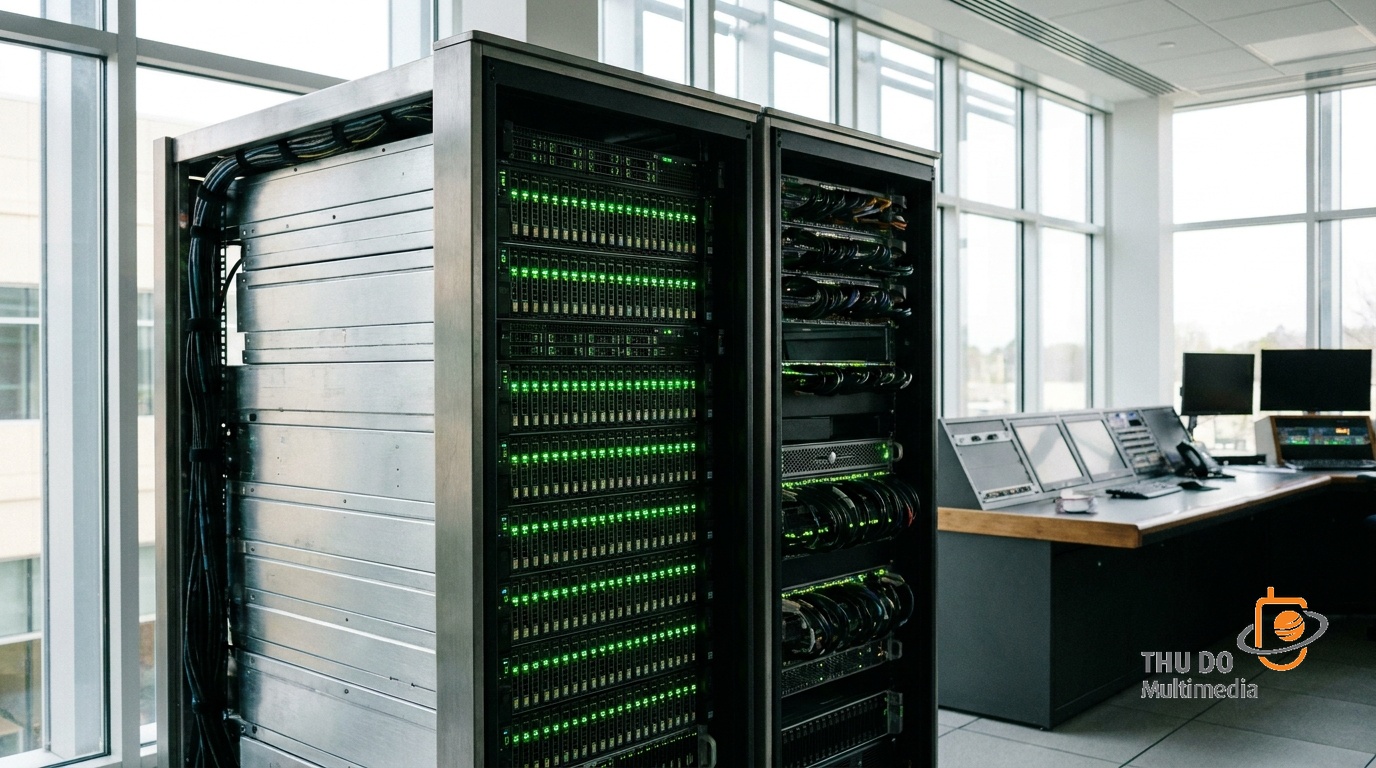
The architectural shift from Client-Side Ad Insertion (CSAI) to server side ad insertion CTV has been one of the most significant engineering milestones in modern broadcasting. In legacy CSAI setups, the video player application running on a smart TV or streaming stick was responsible for pausing the main content, making an independent call to an ad server, fetching a separate ad file, playing it, and then resuming the main stream. This fractured workflow frequently resulted in jarring frame drops, mismatched audio levels, and severe vulnerability to client-side ad blockers. SSAI solves these engineering bottlenecks entirely by moving the heavy lifting to the cloud infrastructure.
Under the SSAI framework, the ad stitching process occurs directly within the video manifest file—such as HTTP Live Streaming (HLS) or Dynamic Adaptive Streaming over HTTP (DASH)—before any data ever reaches the consumer’s device. The media server stitches the targeted advertisement segments directly into the master playlist sequence. To the end-user device, the resulting stream looks and feels like a single, continuous video file. According to recent industry benchmarks, this unified delivery method successfully neutralizes client-side ad blockers, ensuring that publishers capture 100% of their intended ad impressions without revenue leakage.
Beyond ad-blocker mitigation, SSAI radically improves the viewer’s Quality of Experience (QoE) by eliminating common playback errors. Anyone who has watched a live-streamed sports event on legacy platforms remembers the sudden volume spikes, loading spinners, and freezing screens that occurred when commercial breaks triggered. By utilizing advanced OTT video ad insertion technology, platforms maintain consistent bitrates, adaptive resolution scaling, and frame-accurate transitions between editorial content and commercial pods. This broadcast-quality reliability is essential for retaining audiences accustomed to traditional television stability.
In real-world implementations, platforms leveraging robust SSAI pipelines experience significantly lower abandonment rates during commercial breaks. When a major streaming service covers a high-traffic live event with millions of concurrent viewers, the backend manifest manipulator must dynamically stitch unique ads for millions of distinct households simultaneously without stuttering. This requires immense computational elasticity, scalable cloud orchestration, and intelligent caching mechanisms to ensure that the viewer’s transition from show to commercial is completely imperceptible.
The Role of SCTE-35 Signaling in Ad Break Automation
Achieving frame-accurate ad insertion across millions of diverse consumer devices requires standardized signaling protocols, with SCTE-35 signaling implementation serving as the undisputed industry baseline. SCTE-35 is a digital standard that embeds cue tones and metadata markers directly into professional video feeds. These markers act as precise navigational waypoints, telling downstream ad servers and manifest manipulators exactly when a commercial break begins, how long the allocated window lasts, and precisely when the main program content is scheduled to resume.
In live broadcasting environments, managing these signals is a high-stakes engineering challenge. Legacy broadcast feeds often utilize traditional audio tones or analog triggers that cannot pass cleanly into IP-based, packet-switched CTV networks. Modern cloud-based manifest manipulators must ingest these incoming feeds, interpret the embedded SCTE-35 splice commands in real time, and translate them into digital instructions for ad decision servers. If a signal is delayed by even a few frames, the resulting ad splice can clip the end of a dramatic dialogue scene or cut off an advertisement prematurely, severely damaging the viewing experience.
Best practices in modern engineering demand rigorous validation of SCTE-35 cue tones across all ingest points, particularly during live sports and high-profile entertainment events where timing tolerances are razor-thin. Broadcasters utilize specialized monitoring tools to verify that splice insertion descriptors—such as time_signal and splice_insert—are accurately propagated through transcoders and packagers. When executed correctly, this automated signaling ensures that regional blackouts, local station insertions, and programmatic ad pods occur with absolute synchronization across mobile, web, and television screens.
Programmatic Advertising and Real-Time Bidding on Connected TV

The monetization of modern streaming television relies heavily on programmatic advertising on connected TV, shifting the industry away from rigid upfront media commitments toward automated, data-driven marketplaces. In this ecosystem, every available commercial slot triggers an automated auction that resolves in milliseconds. During this microscopic window, Demand-Side Platforms (DSPs), Supply-Side Platforms (SSPs), and Ad Decision Servers (ADS) evaluate a massive array of data points to determine the highest-value ad for that specific household.
The mechanics of real time ad bidding for connected TV operate at lightning speed. When a user tunes into a supported channel, the ad server evaluates household demographics, geographic location, device identifiers, and the current content category. This information is packaged into an OpenRTB bid request and dispatched to multiple advertisers simultaneously. Within roughly 100 milliseconds, the winning bid is selected, the targeted creative is dynamically stitched into the stream via SSAI, and the commercial begins playing on the viewer’s screen.
This programmatic paradigm maximizes yield for publishers while providing advertisers with unprecedented transparency and granular measurement capabilities. Unlike linear TV, where ratings are estimated via sample panels, programmatic CTV delivers deterministic impression tracking, completion rate verification, and sophisticated attribution modeling. Brands no longer have to guess whether their commercials reached their intended demographic; they receive verified engagement data that proves exact return on ad spend (ROAS).
Delivering Precision: Targeted Advertising for Smart TVs

The true power of modern streaming technology lies in targeted advertising for smart TVs, which leverages deterministic household identifiers, IP matching, and sophisticated device graphs to serve hyper-relevant commercials. Rather than targeting broad demographic groups like “adults aged 25-54,” modern campaigns can home in on specific household behaviors, purchase histories, and lifestyle preferences. This precision minimizes ad fatigue, ensuring that viewers see commercials that genuinely align with their interests.
However, navigating privacy regulations such as GDPR, CCPA, and evolving platform-level tracking policies requires a delicate technical balance. Streaming publishers and advertisers are increasingly adopting contextual targeting alongside first-party audience data to respect consumer privacy while maintaining relevance. Furthermore, dynamic creative optimization (DCO) allows brands to swap out localized pricing, regional languages, or tailored imagery in real time within the exact same ad slot, maximizing message resonance without requiring separate video asset production for every market.
Platforms like PubMatic provide essential supply-side infrastructure that helps publishers optimize their programmatic monetization while maintaining strict compliance with privacy standards and latency thresholds. By partnering with robust ad-tech ecosystems, publishers ensure that hyper-targeting algorithms execute efficiently without introducing playback latency or compromising stream stability.
Câu hỏi thường gặp
- Q: What is the difference between Client-Side Ad Insertion (CSAI) and Server-Side Ad Insertion (SSAI) in CTV?
- A: CSAI delivers the video stream to the device, where a video player client requests and inserts the ad. This often leads to buffering and compatibility issues with ad-blockers. SSAI (or DAI) stitches the ad directly into the video manifest file on the server side before it reaches the device, creating a seamless, broadcast-quality viewing experience.
- Q: How does SCTE-35 work in dynamic ad insertion?
- A: SCTE-35 is a digital signaling standard embedded within video feeds. It acts as a marker that tells the ad server and manifest manipulator precisely when an ad break starts, how long it lasts, and when the main program content resumes.
- Q: Why is programmatic advertising important for Connected TV?
- A: Programmatic advertising enables automated, data-driven buying and selling of CTV ad inventory in real time. It allows advertisers to target specific audience segments rather than broad demographic blocks, while maximizing revenue yields for publishers.
- Q: Can viewers use ad-blockers against Dynamic Ad Insertion on Connected TV?
- A: Generally, no. Because server-side DAI delivers the advertisement as a unified video stream (stitching the ad and content segments together into a single file), client-side ad blockers cannot differentiate between the main content and the commercial, rendering them ineffective.
Recent Comments