Discover how on-prem DRM-SMS integration helps Indian IPTV providers slash piracy, boost ARPU, and comply with Schedule 10, fast and effectively
Why Indian IPTV Providers Are Turning to On-Prem DRM with SMS Integration
As India’s IPTV landscape matures, service providers are under intense pressure to protect content, curb piracy, and boost profitability. Subscriber numbers may be growing, but revenue isn’t, thanks to rampant account sharing, screen recording, and loopholes in enforcement. The most effective solution now emerging across India? Deploying on-premise DRM tightly integrated with Subscriber Management Systems (SMS).
This article explores why this strategy is rapidly becoming a national best practice and how Indian IPTV operators are already seeing double-digit revenue gains from this shift.
1. Why On-Prem DRM with SMS Integration Is India’s New Strategic Move
Across states like Maharashtra, Kerala, and Tamil Nadu, leading IPTV providers have begun shifting from cloud-based or partially enforced security models to fully integrated, on-premise DRM. The reason is clear: On-prem deployment provides full control, faster enforcement, and zero reliance on third-party infrastructure during legal disputes or audits.
The results speak volumes:
A 92% drop in illegal content sharing within just three months
Over 45% growth in paid subscriptions within six months of implementation
Rapid enforcement against violators without compromising the user experience
As Schedule 10 compliance tightens, on-prem DRM gives operators a defensible, auditable framework, while SMS integration ensures accountability down to each individual subscriber.
2. Business Advantages of Integrating On-Prem DRM-SMS
a. Subscriber-Level Violation Tracking
Each subscriber is assigned a unique DRM license tied to their registered devices. When piracy occurs—be it via screen recording, session hijacking, or unauthorized restreaming, the system instantly identifies which subscriber was involved. This real-time traceability transforms DRM from a passive firewall into an active enforcement engine.
b. Controlled Account Sharing – Without Frustrating Legitimate Users
Instead of blanket blocks or login bans, integrated DRM-SMS systems apply smart policies:
Tiered concurrent device limits based on package level
Dynamic session expiration
Warnings and lockouts only for violators
This means subscribers enjoy uninterrupted access while violators are quietly filtered out, preserving UX while enforcing compliance.
c. Personalized Offers and ARPU Growth
Using real-time SMS data such as watch history, package tier, and device type, IPTV operators can:
Recommend premium add-ons or pay-per-view (PPV) based on actual interest
Upsell to higher packages when users approach device or feature limits
Launch region-specific promotions based on viewer behavior
All of this becomes feasible when DRM, subscriber profiles, and billing are unified under one platform.
d. Seamless On-Prem Deployment – No Cloud Dependency
With Thu Do Multimedia’s on-prem DRM platform, Indian ISPs can:
Deploy rapidly via REST APIs that plug into existing SMS and CDN layers
Avoid international hosting or privacy risks
Maintain full legal control of user data, content licenses, and keys within Indian territory, critical for Schedule 10 audits
The system is fully compatible with Android TV, Smart TVs, mobile apps, and web players, making it a versatile and future-proof solution for Indian networks.
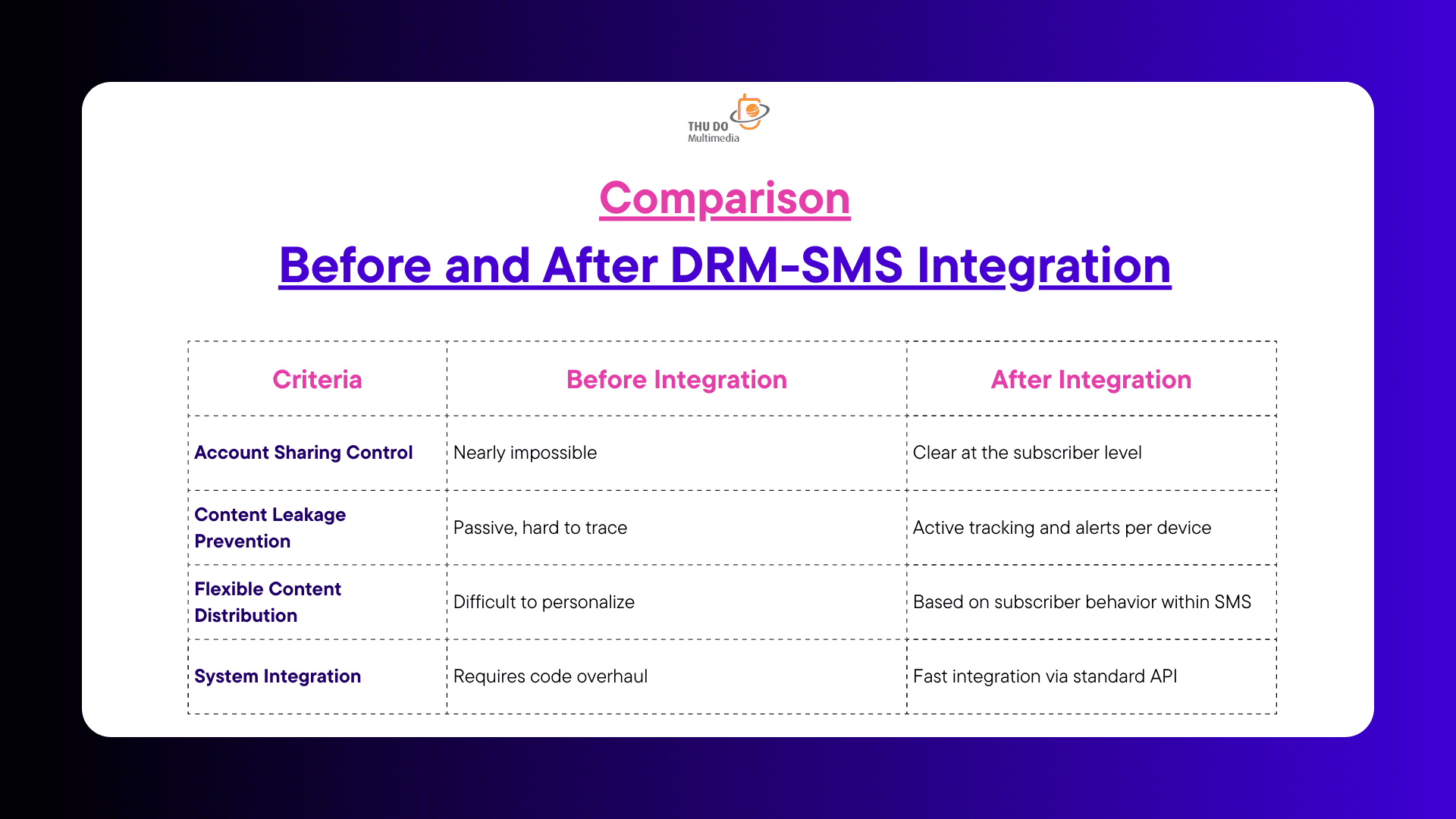
3. Comparison: Before and After DRM-SMS Integration
Comparison Before and After DRM-SMS Integration
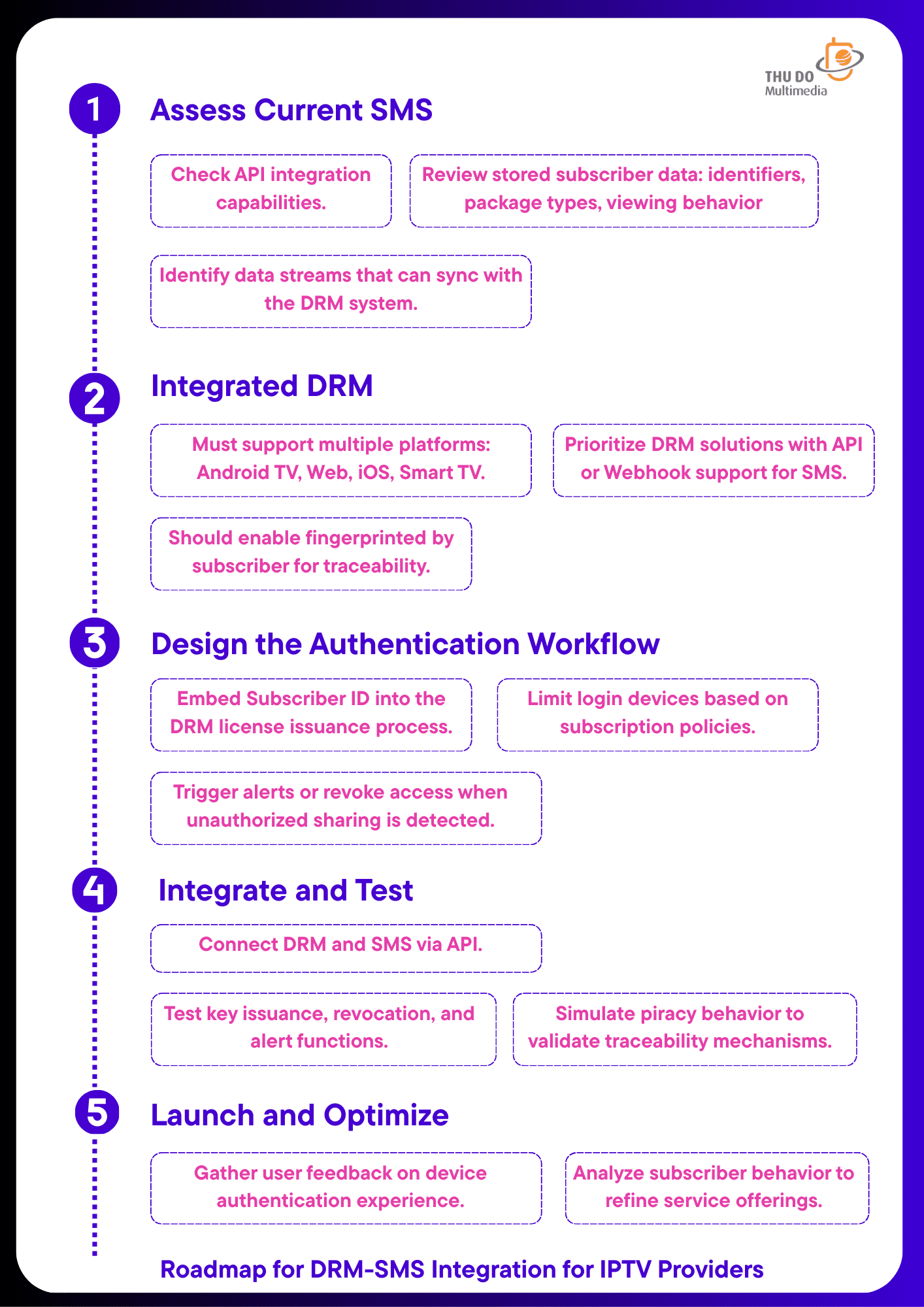
4. Roadmap for DRM-SMS Integration for IPTV Providers
Integrating DRM with the Subscriber Management System (DRM-SMS) is not just a technological task – it’s a strategic move. Here’s a step-by-step roadmap to help IPTV providers in India stay on track, avoid pitfalls, and maximize efficiency:
Roadmap for DRM-SMS Integration for IPTV Providers
5. Case Study: IPTV Provider in Tamil Nadu
One leading IPTV provider in Tamil Nadu faced mounting losses due to account sharing and pirated re-streaming. After deploying Thu Do Multimedia’s On-Prem DRM-SMS integration, results were immediate.
Within 2 months:
Over 3,200 accounts involved in piracy were identified
Unauthorized devices were locked out
1,000+ shared users converted to paid plans after a warning
Overall IPTV revenue rose by 28% in the first full quarter
The platform not only helped regain control but also unlocked new monetization routes through usage-based content bundles and regional PPV offerings.
Ready to Comply and Protect Your Content?
With Schedule 10 enforcement ramping up and piracy growing more sophisticated, Indian IPTV providers can no longer afford weak links in their security stack.
Thu Do Multimedia’s On-Prem DRM-SMS solution gives you full control, complete traceability, and the power to boost revenue while staying fully compliant.
Book a Live Demo to experience how on-prem DRM works in a real-world OTT environment. Contact our India team at +919918101716 (Mr. Yeeshu Baijal – CEO India) to discuss deployment.
10th Schedule is raising serious concerns among IPTV/OTT providers in India. Learn how it impacts compliance, technology, and what you can do to adapt effectively.
1. What is 10th Schedule and Why is It a Hot Topic in India’s OTT Industry?
Since March 2024, the term 10th Schedule has become a buzzword across India’s broadcasting and OTT forums. For many IPTV and OTT businesses, this marked a turning point. 10th Schedule is not just a regulatory appendix – it’s a wake-up call. It signals tighter legal oversight, higher compliance expectations, and the elevation of OTT platforms to the same level of scrutiny as traditional broadcasters.
If you’re operating an OTT platform or providing IPTV services in India, understanding and adapting to 10th Schedule is no longer optional – it’s essential.
Learn more about data retention requirements in India’s: Telecom Act 2023
2. 10th Schedule Explained: A New Era in Indian Telecom Regulation
10th Schedule is an annex added to the Amended Indian Telecommunication Act 2023. For the first time, OTT platforms (particularly video streaming and internet-based TV) are explicitly brought under the same regulatory framework as conventional broadcasting services.
Key Provisions in 10th Schedule That Impact OTT Platforms
Mandatory registration and licensing akin to television broadcasters.
Pre-screening of content before publication.
Logging and retention of content for a minimum of 180 days.
Obligation to remove flagged content within 24 hours upon government notice.
Administrative fines of up to ₹50 lakh (~$60,000 USD).
3. How 10th Schedule Impacts IPTV/OTT Systems in India
3.1. Legal Pressure and Operational Risk
Before 10th Schedule, many OTT platforms operated in a regulatory grey area. Now, they are being reclassified as full-fledged broadcasters.
A startup OTT provider shared: “Compliance costs could now take up 20–30% of our annual operating budget.”
3.2. Technical Overhaul Required
10th Schedule is not just a legal challenge—it’s a wake-up call for OTT platforms to modernize their entire backend infrastructure. If you want to survive (and thrive) in India’s new regulatory landscape, here’s where you must act fast:
a. Full Logging and Storage: Be Transparent, Stay Protected Every click, every stream, every second, platforms must now retain full session logs. This isn’t just about compliance; it’s about building trust. Your backend must be ready to:
Store user streaming activity securely for 180 days.
Provide quick access to playback logs during audits.
Show clear encryption and DRM tracking per session.
If your system can’t deliver that today, it’s time to upgrade before the fines start rolling in.
b. Content Takedown Automation: Respond in 24 Hours or Less Manual removals? Outdated. Under 10th Schedule, you only have 24 hours to take down content flagged by authorities. You need:
A takedown engine that responds instantly across web, app, and smart TVs.
Integration with legal request APIs for real-time compliance.
Reporting tools that prove action was taken down to the minute.
Fail to act fast, and your entire platform could be blacklisted. Speed isn’t optional. It’s survival.
c. AI-Powered Risk Detection: Publish Smart, Not Sorry Before your content goes live, it should be screened by AI that understands India’s sensitivities:
Detect hate speech, adult scenes, political risks even nuanced cultural cues.
Score your content for risk level.
Flag anything problematic before it sparks controversy (or a fine).
Smart publishers aren’t reacting. They’re predicting. AI is your front line of defense.
With 10th Schedule, the era of “stream now, fix later” is over. The future belongs to platforms that are proactive, secure, and smart from the inside out.
4. Will 10th Schedule Stifle Innovation?
While aimed at regulatory clarity, 10th Schedule is creating concern among creators and indie producers:
Startups face greater barriers to entry.
Creative content release gets delayed.
Indie filmmakers and content creators are turning away from local platforms.
5. Final Thoughts: 10th Schedule – Threat or Opportunity?
10th Schedule is the ultimate test of readiness for India’s OTT ecosystem. It’s not just a regulation, it’s a turning point. Platforms that invest in technology, legal compliance, and high-quality content will rise as tomorrow’s market leaders. Those who ignore it? They risk massive penalties, or worse being shut down. Now is the time to act. One step behind could mean losing the entire game.
Sigma DRM – Ready for 10th Schedule. Ready for India.
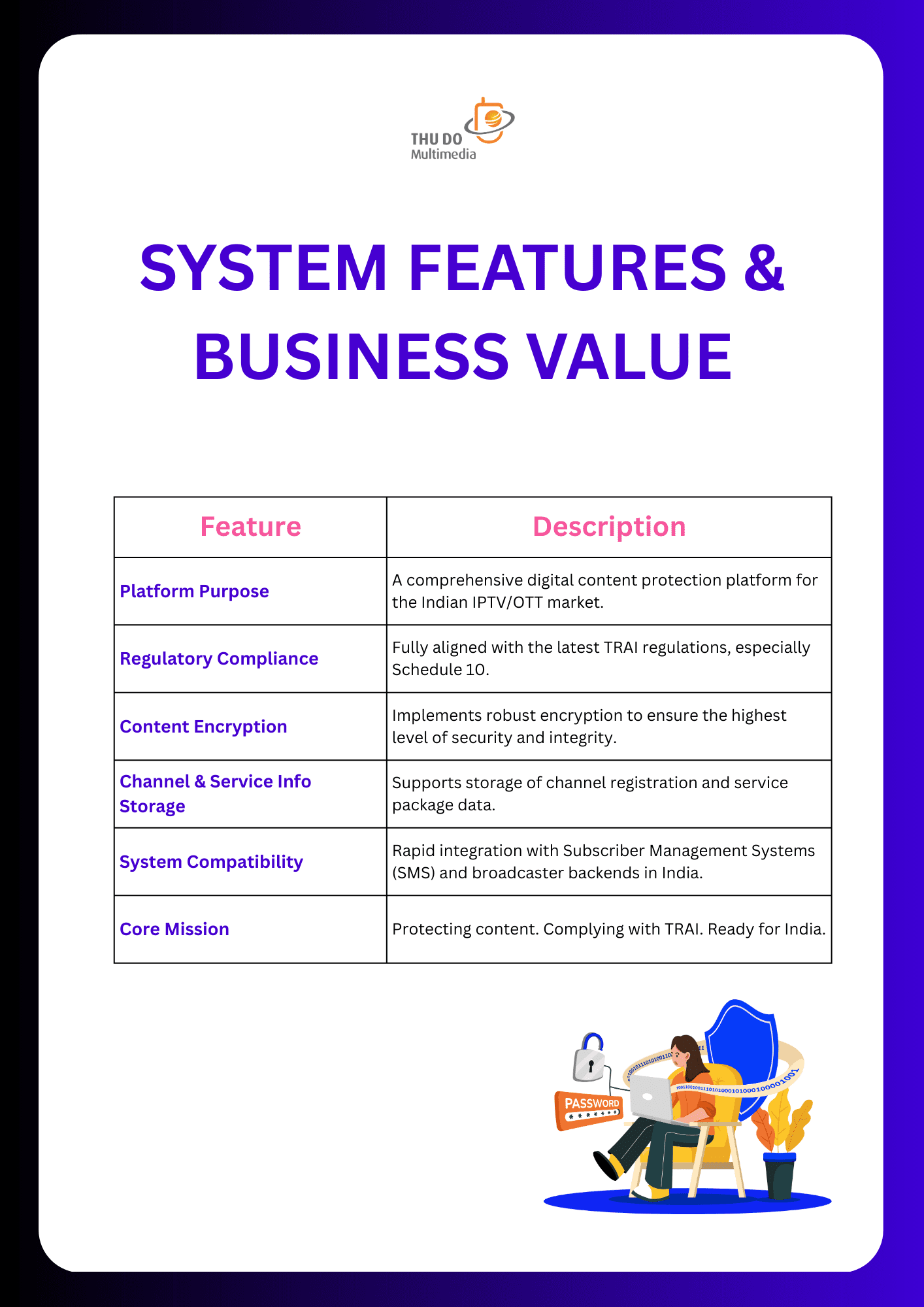
Sigma DRMis a comprehensive digital content protection platform, purpose-built for the IPTV/OTT market in India. The system fully complies with the latest legal requirements from TRAI, especially 10th Schedule, including:
Robust content encryption ensuring the highest levels of integrity and security.
Storage of channel registration details and service package information.
Fast compatibility with SMS systems and subscriber management backends used by Indian broadcasters.
Sigma DRM — Protecting content. Complying with TRAI. Ready for India.
10th Schedule – System features and Business value
Sigma DRM – Built for Anti-Piracy. Compliant by Design. Trusted by Industry Leaders.
Worried about whether your OTT platform complies with 10th Schedule? 👉 Contact our DRM technology experts: Demo/POC with Thu Do Sale


Recent Comments