
Regional content is the primary catalyst for India’s OTT explosion, capturing 52% of total viewership as platforms pivot from saturated urban centers to Tier-II and Tier-III cities. By serving hyper-local narratives in mother-tongue languages, vernacular streaming platforms are unlocking a projected $28.1 billion market by 2034, completely redefining digital entertainment consumption.
Key Takeaways:
* The Indian OTT market is projected to surge from $5.4 billion in 2025 to $28.1 billion by 2034, growing at an impressive 19.09% CAGR.
* Regional language content now commands 52% of total OTT viewing in India, backed by a 40% year-on-year consumption increase.
* Despite India having 22 constitutionally scheduled languages, major platforms meaningfully serve only about five, highlighting a massive untapped audience.
* Niche platforms like Hoichoi boast ~13 million subscribers with up to 70% paid users, proving the profitability of deep, loyal regional demographics.
In our experience navigating the digital entertainment landscape, we’ve witnessed a monumental shift. The days of a “one size fits all” pan-Indian broadcasting model are officially over. Today, the secret to capturing the subcontinent’s massive audience lies in authentic, hyper-local storytelling. Winning with Vernacular: How Regional Content is Fueling India’s Next Wave of OTT Growth is not just an industry buzzword; it is the definitive strategy reshaping a multi-billion dollar ecosystem. Let us dive deep into the data, the infrastructure, and the case studies proving that the future of streaming speaks in local dialects.
What is Driving the Indian OTT market regional expansion?
The current state of the market is undergoing a seismic transformation. For years, the focus of major media conglomerates was heavily skewed towards Hindi and English-speaking urbanites. However, as those metropolitan demographics reach subscription fatigue, streaming giants and agile tech startups alike are looking deeper into the heartland. This shift marks the true beginning of the Indian OTT market regional expansion, where the focus has completely pivoted from broad, generic messaging to culturally nuanced narratives that resonate with the true, granular diversity of the subcontinent.
The financial trajectory of this pivot is staggering. Based on our analysis of recent industry data, the Indian OTT market, valued at a robust $5.4 billion in 2025, is projected to skyrocket to an astonishing $28.1 billion by 2034. This represents a Compound Annual Growth Rate (CAGR) of 19.09%. Yet, there remains a glaring supply-demand gap. While streaming platforms reported a 40% year-on-year increase in regional language content consumption as of November 2025, major platforms still only meaningfully serve about five out of India’s 22 constitutionally scheduled languages and over 1,300 recognized mother tongues.
Bridging this gap requires much more than just translating subtitles or dubbing existing shows; it demands authentic cultural representation from the ground up. As industry leaders have noted, audiences want to see their own festivals, folklore, societal nuances, and local heroes reflected on screen. When platforms invest in the grassroots linguistic diversity of the nation, they unlock a level of brand trust that generic content simply cannot achieve.
“The future of Indian streaming doesn’t speak one language. It speaks twenty-two. The platforms that will dominate the next decade are those that invest heavily in the grassroots linguistic diversity of the nation, moving beyond translation into true cultural integration.”
By the Numbers: local language digital media consumption
We are currently standing at a historic tipping point in viewership habits. For the first time in the history of Indian broadcasting, regional content has eclipsed mainstream languages, commanding a massive 52% (more than half) of total OTT viewing in the country. This unprecedented surge in local language digital media consumption proves that audiences inherently prefer consuming stories in their mother tongues. It creates a profound emotional connection and cognitive ease that dubbed foreign or mainstream content simply cannot replicate.
The production ecosystem is rapidly adapting to this new reality, reallocating budgets to meet the demand. According to the authoritative FICCI-EY report, an incredible 56% of all content produced for digital platforms in 2025 was specifically shot in regional languages. Furthermore, industry analysts at PwC highlight that the average CAGRs across OTT, gaming, animation, VFX, and live entertainment are sitting comfortably above 15%, driven almost entirely by the insatiable demand for local storytelling and high-quality vernacular production.
Real-world manifestations of this trend are highly visible in the rapid expansion of localized production hubs outside of Mumbai. Cities like Hyderabad, Chennai, and Kolkata are transforming into massive digital content powerhouses. They are now equipped with state-of-the-art VFX studios, sound stages, and dedicated writing rooms focused exclusively on churning out vernacular web series and films that rival international productions in quality.

Why is non-metro audience OTT growth India the Real Frontier?
As metropolitan markets approach a state of saturation, the battleground for subscriber acquisition has definitively moved to Tier-II, Tier-III, and rural landscapes. This demographic shift is precisely why non-metro audience OTT growth India is widely considered the real frontier of digital entertainment. Audiences in these regions are discovering the internet primarily through affordable smartphones and cheap mobile data packages. Their absolute first expectation upon coming online is to find high-quality entertainment, news, and sports in the exact language they speak at home.
However, capturing this audience requires overcoming significant technical and infrastructural barriers—a critical gap many early platforms failed to address. To truly win in non-metro areas, streaming services must deploy robust technological infrastructure. This includes low-bandwidth streaming capabilities, mobile-first user experiences, and highly compressed video delivery networks that function seamlessly on fluctuating 4G or 3G connections. The platforms that master this technical backend, ensuring a buffer-free experience on low-end Android devices, are the ones currently experiencing exponential growth in rural subscriber bases.
A prime example of this success is the explosive growth seen in the Bhojpuri and Malayalam markets. Industry visionaries, such as Kevin Vaz, have repeatedly highlighted these specific regions as high-growth engines driving current subscriber acquisition. By combining culturally authentic, hyper-local content with tech stacks optimized for rural connectivity, platforms are successfully onboarding millions of first-time digital subscribers who were previously completely ignored by mainstream national media.
What are the Key Drivers Behind vernacular streaming platforms growth?
Understanding the mechanics of this boom requires looking beyond just scripted dramas and blockbuster movies. The unprecedented vernacular streaming platforms growth is being fueled heavily by highly interactive, engaging formats that turn passive viewers into active community participants. When content speaks the viewer’s exact language, the barrier to engagement drops significantly. This leads to much higher retention rates, longer session durations, and a highly active user base that feels a sense of ownership over the platform.
Let’s explore the immense power of non-fiction and audience interactivity. Reality TV shows, talent hunts, and unscripted formats like Bigg Boss produced in regional languages allow audiences to directly influence outcomes via real-time voting. This interactive non-fiction drives immense platform stickiness. Furthermore, regional celebrities foster an intense, cult-like loyalty. When a beloved local star hosts a reality show, community participation is staggering, leading to viral social media loops that act as highly effective, free organic marketing for the OTT platform.
This deep engagement also unlocks highly lucrative opportunities for contextual advertising. Brands are discovering that integrating their messaging natively into regional non-fiction formats offers a vastly superior Return on Investment (ROI) compared to conventional, pan-Indian banner ads. Advertisers can speak directly to specific cultural demographics in their own dialect, building a level of brand trust and conversion rates that are impossible to achieve through generic national campaigns.
Cricket and Live Sports in 19+ Languages
Live sports broadcasting serves as the ultimate litmus test for vernacular adoption. The evolution of cricket broadcasting in India is perhaps the most compelling case study in our industry regarding language localization. Today, major tournaments are successfully broadcasted to audiences in over 19 languages, proving that language expansion is a critical lever for maximizing concurrent viewership and user acquisition.
Our research shows an interesting psychological trend among modern audiences: even bilingual viewers who are perfectly fluent in English or Hindi increasingly prefer to consume sports commentary in their native dialects. Hearing the excitement of a crucial wicket or a match-winning six described in the colloquialisms and idioms of their mother tongue provides a far more emotional, visceral viewing experience that resonates deeply.
This strategy has allowed major streaming platforms like JioCinema and Disney+ Hotstar to penetrate much deeper into rural markets, setting a benchmark for how live events must be handled moving forward. The phenomenal success of multi-lingual sports feeds is a proven blueprint that entertainment, gaming, and news platforms are now desperately trying to replicate across their own verticals.
How to Build a vernacular content strategy for video streaming: Case Studies
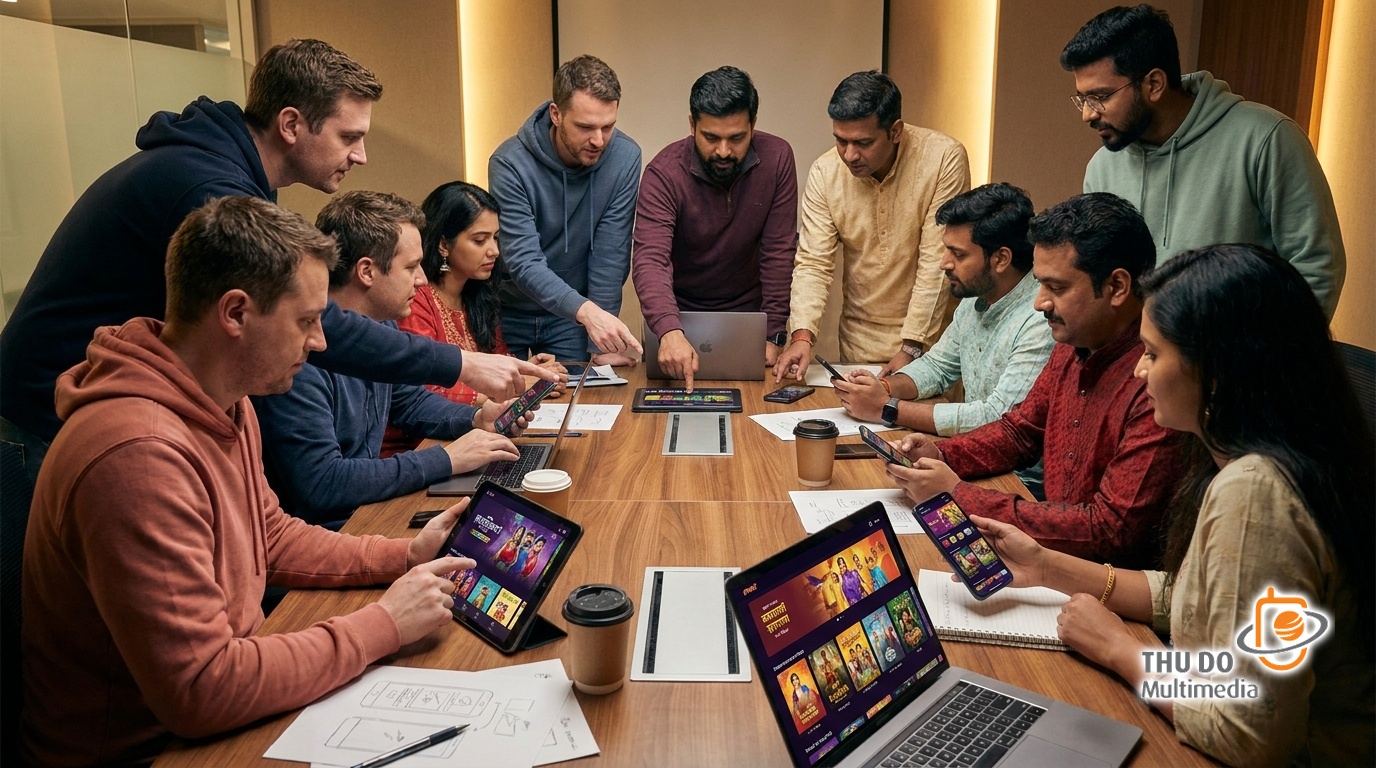
Theorizing about regional growth is one thing, but executing a highly profitable vernacular content strategy for video streaming requires precise market positioning and strict financial discipline. The most successful platforms have completely abandoned the “catch-all” approach, opting instead to build deep, impenetrable moats around specific linguistic communities. We can learn immense tactical lessons from the pioneers who have successfully monetized these niche regional audiences.
Let’s examine Chaupal, a platform currently dominating the Punjabi, Haryanvi, and Bhojpuri markets. Launched in 2021, Chaupal focused purely on authentic, culturally rooted storytelling tailored specifically for the underserved Northern and agricultural belts. Rather than building expensive standalone distribution infrastructure from scratch, they executed a masterstroke by forming an add-on channel partnership with Amazon Prime Video. This allowed them to leverage Amazon’s massive technological reach while maintaining their high-profile exclusives, such as Diljit Dosanjh’s blockbuster Jatt and Juliet 3, solidifying their status as the undisputed home of Pollywood.
Another phenomenal success story is Aha, the undisputed Telugu powerhouse. Backed by the traditional regional studio Geetha Arts, Aha’s 2020 launch proved that legacy cinema giants can successfully transition to digital-first platforms. By capturing a massive, cinema-loving linguistic base, Aha created a highly sustainable standalone platform. They proved that deep vertical integration within a single language can rival, and sometimes exceed, the profit margins of broader, multi-language aggregators.
Hoichoi: The Bengali Blueprint for Sustainable Growth
No deep dive into regional OTT is complete without dissecting Hoichoi. They have provided the ultimate blueprint for sustainable growth through strict financial discipline and a low-burn operational approach. Instead of burning venture capital on expensive billboard marketing, Hoichoi focused heavily on strategic telecom and OEM bundles. By partnering with giants like Vodafone and Samsung, they ensured their app was pre-installed on devices or bundled seamlessly with user data plans.
What truly defies industry norms are Hoichoi’s unique and highly profitable demographic metrics. They boast approximately 13 million subscribers across 100+ countries, tapping heavily into the lucrative global Bengali diaspora. Surprisingly, their fastest-growing segment is the 50+ age group, a demographic often ignored by tech startups, and they maintain a highly balanced gender mix of 60:40 (male-to-female), indicating broad household penetration.
Most importantly, Hoichoi achieves an incredible financial metric: up to 70% of its users are paid subscribers. This astonishing figure completely validates the philosophy that deep niche loyalty is infinitely more profitable than shallow, broad reach. By consistently delivering high-quality Bengali content, they have trained their audience to value and pay for their service, a feat many national platforms still struggle to achieve in a price-sensitive market.
The D2C Shift: Empowering Creators in regional language content OTT India
The next evolutionary step in the regional language content OTT India landscape is the massive Direct-to-Consumer (D2C) shift. For years, regional creators spanning devotional content, local news, and niche entertainment have relied heavily on third-party aggregators like YouTube or pan-India OTT apps to distribute their content. However, this reliance creates a massive “data dilemma”—aggregators hoard the valuable first-party data, leaving creators entirely blind to who their true audience is and what their viewing habits entail.
Furthermore, third-party platforms artificially cap the monetization potential for local creators through opaque algorithmic revenue-sharing models. To break free from this ceiling, we are seeing a massive trend of regional creators launching their own independent D2C video streaming platforms. By owning the tech stack, creators retain 100% of their first-party data, allowing them to build direct, intimate relationships with their consumers, control the user experience, and own their brand equity completely.
To make these independent platforms financially viable, creators must implement hybrid monetization strategies. Pure Subscription Video on Demand (SVOD) is often too restrictive for price-sensitive rural markets. Instead, successful regional platforms combine SVOD for premium content with Ad-supported VOD (AVOD) for older catalog items, alongside strategic telecom bundling. By owning their first-party data, these D2C platforms can charge significant premiums to local advertisers for hyper-targeted, contextual local ads, creating robust financial resilience.
“The true democratization of media happens when regional creators own their distribution. Transitioning to a D2C model isn’t just about higher margins; it’s about reclaiming the audience relationship and leveraging first-party data to drive sustainable, hybrid monetization.”
What are the Future regional language video streaming trends?
As we look ahead, predicting the trajectory of this industry requires analyzing both technological advancements and shifting consumer behaviors. One of the most prominent regional language video streaming trends is the rise of “Crossover Content.” Regional Intellectual Properties (IPs) like RRR and Kantara have proven that vernacular stories possess massive pan-India and even global appeal. Moving forward, the integration of high-quality subtitles and professional dubbing will make hyper-local vernacular content globally accessible, breaking down linguistic silos entirely.
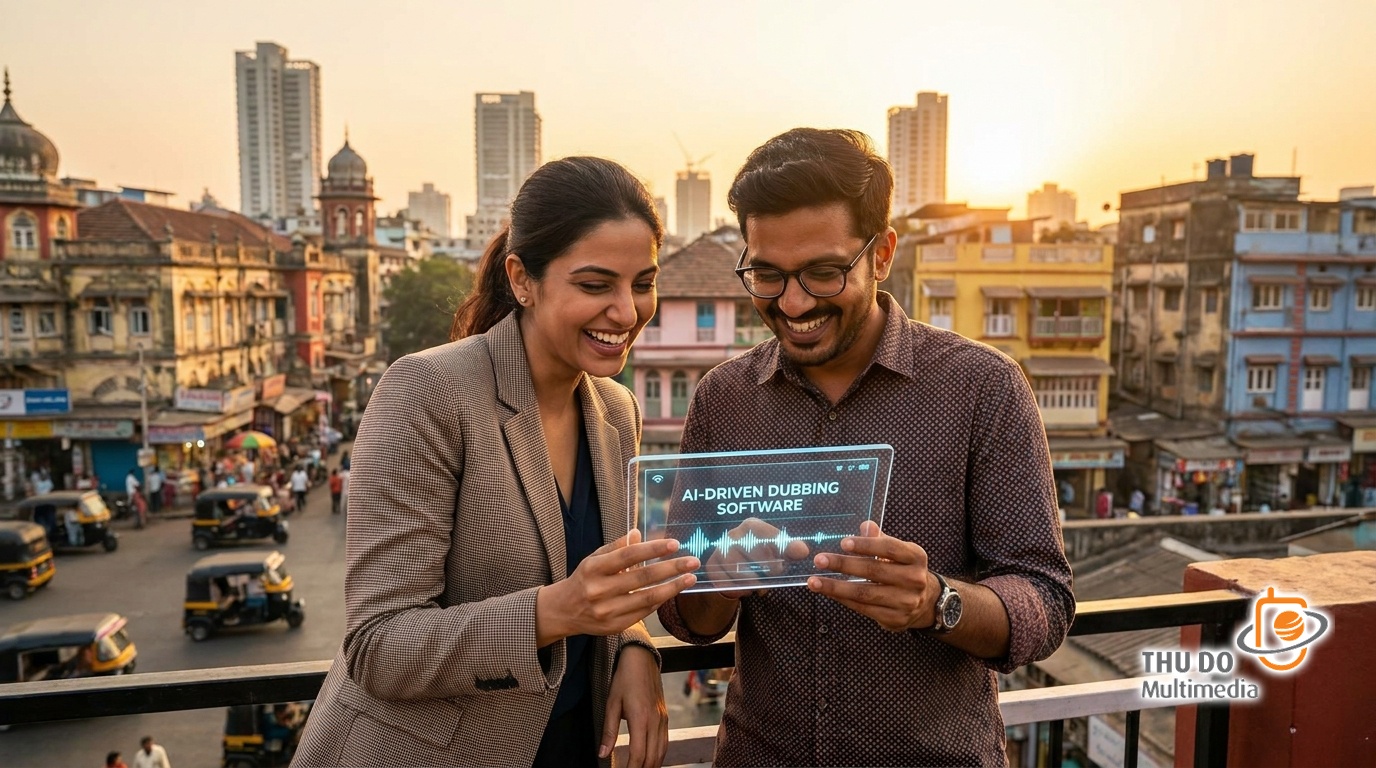
Technologically, the landscape is about to experience a massive, AI-driven upgrade. We predict a rapid rise in AI-driven dubbing and voice-cloning technology, which will allow regional platforms to instantly localize their content into dozens of micro-dialects at a fraction of traditional studio costs. Coupled with next-generation low-bandwidth streaming tech tailored specifically for rural connectivity, these platforms will penetrate even the most remote villages without buffering issues, delivering a premium experience on entry-level devices.
Finally, we will witness the aggressive diversification of platform genres. Regional OTT apps will no longer be restricted to just movies and web series. The future lies in expanding into niche verticals within a single app ecosystem—integrating hyper-local news feeds, daily spiritual and devotional programming, and even regional hyper-casual gaming. This “super-app” approach will ensure that vernacular platforms become the default, everyday digital destination for non-metro audiences.
Conclusion: Winning with Vernacular: How Regional Content is Fueling India’s Next Wave of OTT Growth
The digital entertainment landscape in India has fundamentally changed. The data, the audience behavior, and the undeniable financial success of localized platforms all point to one undeniable truth: the future of Indian streaming is regional. As we have explored throughout this analysis, the strategy of Winning with Vernacular: How Regional Content is Fueling India’s Next Wave of OTT Growth is the ultimate, proven playbook for capturing the next billion internet users.
Platforms that continue to ignore the 1,300 recognized mother tongues of India in favor of a homogenized national approach will inevitably face stagnation and subscriber churn. Conversely, those who invest in authentic storytelling, robust low-bandwidth technology, and hybrid D2C monetization models will reap unprecedented rewards. The massive success of brands like Hoichoi, Chaupal, and Aha serves as a guiding beacon for what is possible when you deeply respect and serve a specific linguistic community.
Ultimately, empowering creators to own their audience through independent D2C platforms and first-party data will drive the next decade of media innovation. The $28.1 billion market projection is not just a financial number; it is a testament to the power of cultural identity in the digital age. The vernacular revolution is here, and it is broadcasting loud, clear, and in every language.
Frequently Asked Questions (FAQs)
Q1: Why is regional language content driving OTT growth in India?
Regional content is driving OTT growth because urban, English/Hindi-speaking markets are rapidly reaching saturation. The next wave of internet users comes from Tier-II and Tier-III cities, where audiences strongly prefer consuming entertainment, non-fiction, and sports in their native languages. Currently, regional content accounts for over 52% of total OTT viewing in India, proving its dominance.
Q2: What is the projected market size of the Indian OTT industry?
The Indian OTT market is experiencing explosive, unprecedented growth. Valued at approximately $5.4 billion in 2025, it is projected to reach a staggering $28.1 billion by 2034. This expansion is growing at a Compound Annual Growth Rate (CAGR) of 19.09%, fueled heavily by vernacular content consumption.
Q3: Which are the top vernacular streaming platforms in India?
Several platforms have successfully carved out massive niche audiences by focusing on specific linguistic demographics. Top players include Hoichoi (dominating Bengali content with ~13 million global subscribers), Chaupal (highly focused on Punjabi, Haryanvi, and Bhojpuri markets), and Aha (a massive powerhouse for Telugu and Tamil entertainment).
Q4: How do regional OTT platforms make money sustainably?
Successful regional platforms use a mix of hybrid monetization strategies. Instead of burning cash on broad, generic marketing, platforms like Hoichoi partner with telecom companies (like Vodafone) and device manufacturers (like Samsung) for bundled subscriptions. They also combine subscription revenue (SVOD) with highly targeted, contextual advertising (AVOD) to efficiently monetize specific local demographics.
Recent Comments