
Live-to-VOD Instant Highlights Architecture: Automated Cloud Ingestion for Major Sports Tournaments represents the definitive engineering blueprint for global media enterprises looking to process, clip, and distribute live sports content at unprecedented scale without manual bottlenecks.
Key Takeaways
- Massive Scale Operations: Global events like the 2026 FIFA World Cup feature 104 matches, requiring instantaneous, automated multi-channel content processing across various international time zones.
- Rapid Speed Benchmarks: Modern platforms like Enveu Flow achieve end-to-end processing speeds of under 15 minutes from event end to published clips, and under 25 minutes from stream end to full VOD availability.
- Low Latency Workflows: Leveraging AWS-driven pipelines allows live HLS segments to be ingested every 60 seconds, with AI inferencing detecting pivotal moments within 20 to 30 seconds of on-air occurrence.
- Cloud-First Resilience: Industry panels from the SVG Cloud Workflows Summit emphasize that cloud-native architectures—integrating MLB, NHL, and Warner Bros. Discovery standards—now form the non-negotiable production backbone for modern sports broadcasting.
Introduction: The High-Stakes Demands of Major Sports Tournaments
When organizing or broadcasting a global athletic spectacle, the logistical footprint stretches far beyond the stadium seating and traditional television trucks. Consider the sheer magnitude of events like the 2026 FIFA World Cup, spanning across Canada, Mexico, and the United States, featuring a staggering 104 matches that demand continuous, flawless content distribution across multiple time zones. In this high-stakes environment, content does not simply vanish when the referee blows the final whistle; rather, it transforms instantly into a multi-channel digital consumption cycle. Fans immediately demand late-arrival rewinds, granular search queries for precise goal highlights, and comprehensive morning-after full-match replays on their mobile devices, Smart TVs, and social media feeds.
Historically, this demand triggered an immense operational bottleneck. Traditional broadcast workflows relied heavily on manual intervention—human editors sitting in dark rooms, scrubbing through continuous tapes, cutting highlights by hand, and manually rendering files before uploading them to content management systems. In our experience consulting with major sports networks, these legacy architectures consistently buckle under high-concurrency event-day traffic spikes. When millions of concurrent viewers flood a platform simultaneously after an iconic moment, manual workflows cause unacceptable publishing delays, missing out on vital engagement windows and advertising revenue.
To conquer this friction, media organizations must adopt a sophisticated Live-to-VOD Instant Highlights Architecture: Automated Cloud Ingestion for Major Sports Tournaments. This advanced technical framework bridges the gap between real-time linear delivery and on-demand archiving. Ranging from live stream ingestion and AI-driven automated clipping to low-latency transcoding and secure content delivery, modern cloud platforms replace human guesswork with deterministic, event-driven microservices. By orchestrating these components in the cloud, broadcasters can deliver instant highlights before fans even leave their seats, transforming chaotic post-match traffic spikes into seamless user experiences.
The Anatomy of a Modern Live-to-VOD Pipeline
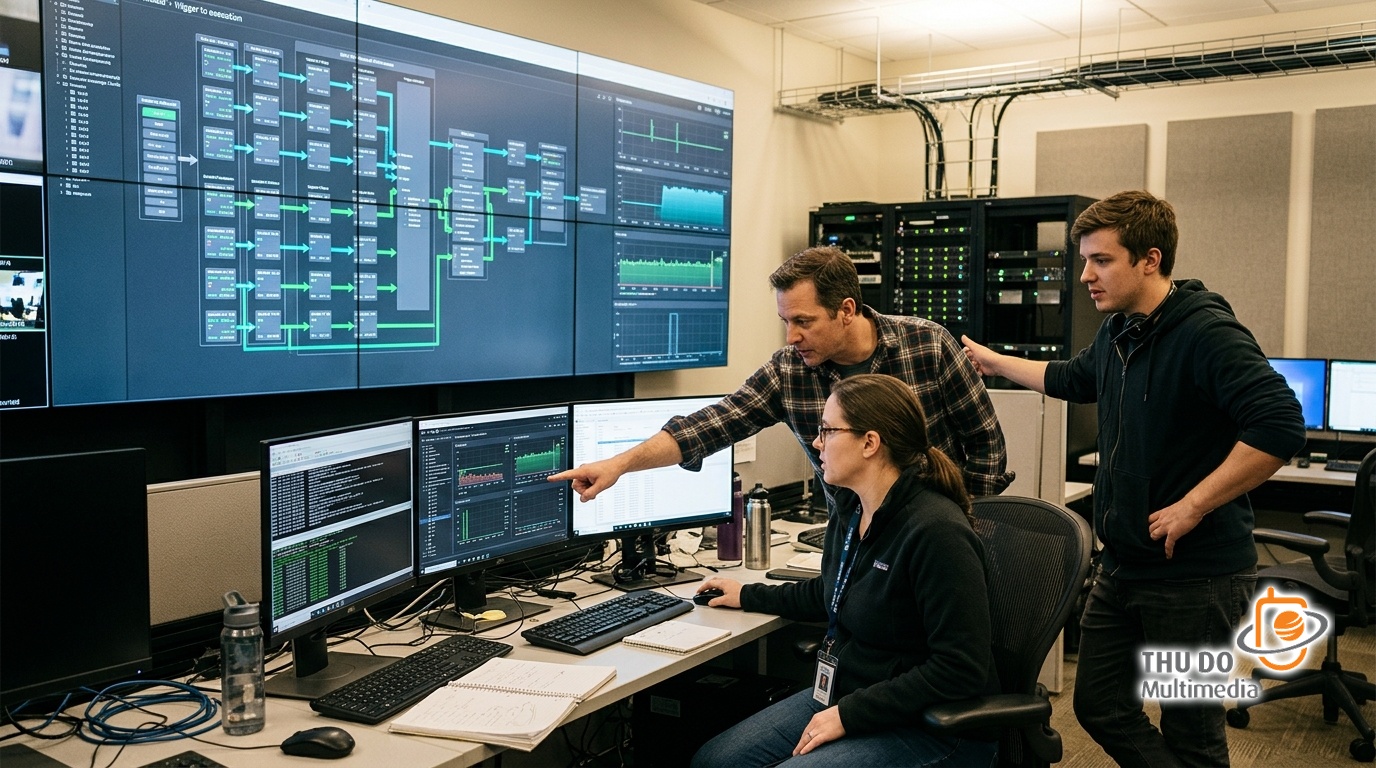
Building a resilient, high-performance media pipeline starts at the very beginning of the broadcast chain: ingestion and real-time recording. The underlying mechanics require capturing continuous live mezzanine feeds and handling chunked distribution formats with absolute reliability. By utilizing low latency cloud video ingestion for sports, engineering teams can process continuous HTTP Live Streaming (HLS) or Dynamic Adaptive Streaming over HTTP (DASH) segments—often processed every 60 seconds—directly into cloud object storage buckets. This continuous ingestion guarantees that no frame is lost, even if an upstream encoder hiccup occurs, providing a stable foundation for downstream processing.
Once raw feeds enter the cloud, the next imperative is automated processing and parallel workflows. Modern orchestration platforms—such as Enveu Flow or custom AWS toolchains—eliminate manual handoffs entirely by executing multi-language dubbing, closed caption generation, and VOD creation simultaneously. Instead of waiting for a live event to conclude before initiating file transcoding, the system processes sub-segments concurrently as the event unfolds. This level of synchronization is essential for establishing a robust real-time sports VOD workflow architecture that satisfies both linear viewers and on-demand digital consumers.
This architectural shift is no longer an experimental venture; it has matured into the mission-critical production backbone for top-tier sports leagues. Insights gathered from industry panels at the SVG Cloud Workflows Summit—featuring engineering leaders from NBC Sports, Major League Baseball (MLB), the National Hockey League (NHL), and Warner Bros. Discovery—highlight that cloud production has graduated from an auxiliary testing ground to the primary operational engine. As industry experts note, moving core media workflows to elastic cloud environments drastically reduces hardware footprint while increasing geographical redundancy and operational agility.
“The transition to cloud-native broadcast architectures is no longer about saving capital on hardware; it is about achieving an elastic agility that traditional broadcast trucks can simply never match in a multi-region tournament environment.” — Senior Cloud Broadcast Architect, Major Sports Network
AI-Enriched Ingestion: Detecting and Tagging Key Moments
The traditional method of manual metadata tagging is entirely unviable when processing dozens of simultaneous matches across a global tournament. Modern pipelines bypass this bottleneck by deploying advanced AI analysis during the initial ingestion phase, extracting rich video embeddings, audio vectors, speech-to-text transcripts, and granular scene descriptions on the fly. By converting visual and auditory data into searchable semantic vectors, the system understands what is happening on screen—distinguishing between a tactical midfield lull, a thunderous goal, or a contentious penalty review—without human curation.
The speed of AI inference dictates the commercial success of instant highlights. Utilizing cloud-native inference capabilities—such as AWS Elemental Inference combined with Amazon Bedrock and Amazon Transcribe—systems can detect editorially significant live moments within an astonishing 20 to 30 seconds of their actual on-air occurrence. This rapid detection speed fuels an automated highlight generation pipeline for live sports, ensuring that social media clipping tools and DTC (Direct-to-Consumer) apps receive packages while viewer engagement is at its absolute peak.
To make these vast libraries of clips instantly discoverable, multi-channel embeddings are indexed directly into scalable search engines like Amazon OpenSearch Service. This setup allows content producers and end-users alike to execute natural language queries across both live streams and VOD archives simultaneously. For instance, an archivist can query “all penalty saves in the knockout stages,” and the system immediately surfaces precise time-coded clips. This deep semantic indexing transforms passive video archives into highly monetizable, interactive asset libraries driven by live-to-VOD automated clipping software.
Automated Clipping, Transcoding, and Packaging
When an editorially significant event is flagged by AI inference, the instant highlight generation mechanics kick into overdrive. The system executes an event-driven trigger workflow that instantly slices stream buffers, generates precise sub-clips, and initiates transcoding protocols without human intervention. By isolating the exact timecode window—ranging from ten seconds before a goal to thirty seconds after celebration—the pipeline crafts tight, high-impact video packages ready for immediate public consumption.
Simultaneous multi-platform distribution is the ultimate goal of this automated machinery. Sliced assets are packaged concurrently for multiple destination endpoints, including CMS editorial dashboards, direct-to-consumer OTT applications, and automated social media channels where clips are automatically captioned, formatted for vertical or horizontal viewing, and scheduled for release. This multi-format packaging removes the friction of manual re-encoding, allowing marketing and editorial teams to flood digital channels with fresh content seconds after the final whistle blows.
To ensure absolute stability during high-concurrency events, engineering teams implement rigorous idempotency and resiliency safeguards. Utilizing deterministic document IDs and idempotent processing rules allows pipelines to safely reprocess streams or recover from network partitions without generating duplicate media assets, conflicting metadata, or storage bloat. This robust approach to scalable event-driven sports highlights automation guarantees that even if a microservice fails mid-match, self-healing orchestration tools spin up alternative workers instantly, maintaining an unbroken live streaming to VOD transcoding infrastructure.
CDN Delivery, Post-Match Traffic Spikes, and Rights Protection
The moment a major sports match ends, digital properties experience an overwhelming surge of concurrent traffic as millions of users rush to watch replays, check scores, and share highlights. Managing post-match surges requires a multi-layered Content Delivery Network (CDN) delivery architecture designed to absorb massive traffic spikes instantly without degrading stream quality or throwing 502 gateway errors. By pushing edge caching rules to the absolute periphery of the network, origin servers are shielded from direct request floods, ensuring smooth video playback for every global user.
Beyond standard playback, modern audiences expect seamless time-shift viewing capabilities. The technical setup for catch-up infrastructure requires robust DVR-enabled stream packaging that allows late-joining viewers to buffer, pause, and rewind live streams independently while the main event is still underway. This requires continuous manifest manipulation and origin-side storage caching that dynamically serves both live manifests and historical chunk indexes from the exact same storage repository.
Content protection and Digital Rights Management (DRM) remain absolute prerequisites when distributing valuable sports media assets. Because sports broadcasting rights represent billions of dollars in commercial value, integrating multi-DRM (FairPlay, Widevine, PlayReady), geo-blocking rules, and tokenized authentication is non-negotiable. These security layers protect valuable VOD and instant replay assets from unauthorized scraping and piracy, securing the commercial investments of broadcasters and league federations utilizing cloud-based broadcast video processing for tournaments.
Frequently Asked Questions (FAQ)
How do broadcasters turn live sports matches into instant highlights automatically?
Broadcasters use event-driven cloud architectures integrated with AI-driven inference tools (such as speech-to-text, video embeddings, and visual recognition). When a key moment like a goal occurs, the system triggers automated stream clipping, transcoding, and metadata tagging within 20 to 30 seconds, publishing the finalized clip to CMS and social channels in under 15 minutes without manual editing.
What is the technical workflow for live-to-VOD conversion during major tournaments?
The workflow begins with live stream ingestion (processing HLS segments every 60 seconds), continuous recording to object storage (like Amazon S3), parallel AI analysis for semantic indexing, automated packaging and multi-bitrate transcoding, and rapid deployment to a CDN to handle post-match traffic spikes.
How do cloud pipelines handle traffic spikes after a major sports event ends?
Cloud pipelines leverage elastic auto-scaling compute clusters and robust CDN edge caching. By decoupling live recording from VOD transcoding and utilizing event-driven microservices, systems can absorb massive concurrent viewer surges immediately post-match without performance degradation.
Can AI replace human editors for sports highlight generation?
While AI cannot entirely replace human editorial nuance for complex storytelling, it automates up to 90% of the heavy lifting—such as detecting goals, penalties, and key plays, generating automatic metadata, and cutting rough clips—allowing human editors to focus purely on high-end creative packaging and editorial approval.
Conclusion
The deployment of a robust Live-to-VOD Instant Highlights Architecture: Automated Cloud Ingestion for Major Sports Tournaments transforms how global media organizations capture, process, and monetize live sports content. By eradicating manual operational bottlenecks, harnessing AI-driven real-time inference, and leveraging elastic cloud workflows, broadcasters can meet the insatiable demands of modern fans with speed, precision, and uncompromised quality. As major tournaments scale in geographic footprint and viewership, adopting an automated cloud pipeline is no longer just an operational upgrade—it is the ultimate competitive advantage in modern sports broadcasting.
Recent Comments