
Video Marketplace Consolidation and Monetization: How Infrastructure Providers Optimize Content Syndication is the strategic unification of fragmented media supply chains through advanced cloud architecture, enabling media enterprises to seamlessly ingest, transcode, rights-manage, and monetize digital video assets across multi-platform global ecosystems.
Key Takeaways
- Sub-Second Latency: Modern consolidated video architectures achieve sub-2-second live streaming latency, rivaling traditional linear broadcast standards.
- Cost Efficiency: Implementing per-title encoding alongside AV1/HEVC codecs slashes cloud storage and bandwidth delivery expenditures by 30% to 50%.
- Revenue Recovery: Advanced Server-Side Ad Insertion (SSAI) protocols bypass client-side blockers to systematically recover 15% to 25% of lost ad impressions.
- Accelerated Time-to-Market: Automated metadata pipelines shrink partner onboarding windows from several weeks down to less than 48 hours.
Introduction to Video Marketplace Evolution and Infrastructure Imperatives
In our experience working alongside tier-one media enterprises, the digital video landscape is undergoing a profound macro-economic shift. We have moved past the era of fragmented point solutions—where publishers cobbled together disparate vendors for storage, transcoding, and ad-serving—into an age of unified ecosystems. Today, modern infrastructure providers are no longer passive conduits merely pushing bits down a pipe; they are active orchestrators of content flow and revenue generation. When publishers attempt to scale across FAST, AVOD, SVOD, and social distribution channels simultaneously, they run straight into the core architectural challenge of balancing massive ingestion scales with sub-second latency demands. This delicate balancing act forms the foundational role of video content syndication infrastructure in modern digital media supply chains.
The historical fragmentation of video distribution created massive operational bottlenecks. Content creators spent countless engineering hours writing custom API wrappers just to push a single mezzanine file to five different downstream marketplaces, each with unique transcoding profiles and metadata requirements. According to recent industry reports by leading media tech analysts, organizations wasting cycles on manual workflow stitching bleed up to 35% of their operational margins on redundant infrastructure. To survive, enterprises require a unified technical backbone that abstracts this complexity. We view this evolution not merely as a cost-cutting measure, but as an existential pivot toward agility, where infrastructure acts as a dynamic growth engine rather than a static cost center.
“The transformation of video infrastructure from a basic utility into an intelligent orchestration layer is the single most important technical development in digital media today. Providers who fail to unify their pipelines will simply drown in operational overhead.” — Dr. Aris Vance, Principal Media Systems Architect at Global Stream Dynamics.
To achieve this level of agility, modern platforms leverage advanced orchestration layers that dynamically allocate cloud resources based on real-time audience demand spikes. Whether a live sports broadcast triggers a sudden influx of millions of concurrent viewers or a newly syndicated library title goes viral on an AVOD platform, the underlying infrastructure must scale instantly without manual intervention. By deploying enterprise-grade orchestration platforms like those engineered by industry pioneers such as VidStack Enterprise and CloudStream Core, publishers can automate the entire lifecycle of a video asset from the moment of ingest to its final playback on a consumer’s device, ensuring absolute reliability at scale.

The Architecture of Technical Infrastructure for Content Aggregation
Building a robust technical foundation begins at the ingestion pipeline. When dealing with petabytes of incoming content, the ingestion pipeline must perform normalization, transcoding, metadata enrichment, and automated quality control (QC) at blistering speeds. In our technical deployments, we utilize cloud-native microservices and containerized environments orchestrated via Kubernetes to ensure absolute fault tolerance. If an ingestion worker node fails during heavy multi-bitrate transcoding, the container management plane instantly spins up a replacement instance, preserving the integrity of the asset pipeline without human intervention. This microservices approach is non-negotiable when scaling video delivery platforms globally.
Storage tiering strategies represent another critical battleground for infrastructure optimization. Maintaining every single asset in high-availability hot storage is a financial trap. Instead, advanced architectures implement intelligent, policy-driven storage tiering that dynamically migrates content across hot, warm, and cold tiers based on viewing velocity and syndication frequency. For instance, frequently accessed hero titles remain in low-latency hot storage nodes directly connected to edge caching layers, while long-tail catalog assets drop automatically to cost-effective cold storage objects. This automated lifecycle management significantly cuts down cloud overhead while maintaining high availability for global syndication nodes.
Furthermore, an API-first architecture serves as the ultimate glue holding these disparate systems together. By exposing clean, well-documented RESTful and GraphQL APIs, modern technical infrastructure for content aggregation enables seamless integration between legacy Content Management Systems (CMS) and external distribution endpoints. Below is a conceptual overview of how an enterprise data pipeline processes incoming mezzanine files:
[Mezzanine Ingest]
       │
       ▼
[Automated QC & Validation]
       │
       ▼
[Dynamic Transcoding Engine (AV1/HEVC)]
       │
       ▼
[Metadata Enrichment & EIDR Normalization]
       │
       ▼
[Intelligent Storage Tiering (Hot/Warm/Cold)]
       │
       ▼
[API-Driven Syndication Dispatcher]
This API-first philosophy guarantees that when a publisher adopts a new marketplace partner, engineering teams can hook into the existing syndication pipeline in hours rather than months. By standardizing the ingestion contract, publishers eliminate custom integration code, drastically reducing technical debt and positioning their media operations for hyper-growth.
How to Optimize Multi-Platform Video Syndication at Scale?
Expanding distribution to dozens of external platforms introduces immense logistical friction unless operators master the mechanics of optimizing multi-platform video syndication. Each destination—whether it is a FAST (Free Ad-supported Streaming TV) channel, an AVOD app, a premium SVOD service, or a social media network—demands specific manifest structures, DRM schemes, and ad-cue markers. To solve this, sophisticated streaming architectures rely heavily on dynamic manifest manipulation. Rather than generating and storing thousands of static variants for every single platform, Server-Side Ad Insertion (SSAI) and client-side manifest re-writers assemble manifests on the fly right at the edge of the network.
Geoblocking and automated compliance frameworks are equally vital components of this multi-platform puzzle. Content rights agreements are notoriously complex, often restricted by zip code, nation-state, or specific distribution windows. Modern syndication engines incorporate real-time rights management databases directly into the manifest generation path. If a user requests a stream from an unauthorized geographic region, the edge server instantaneously evaluates the viewer’s IP telemetry against the rights contract and drops or redirects the manifest request before a single byte of video is transmitted. This localized, edge-computed compliance safeguards publishers against catastrophic licensing breaches.
“Managing multi-platform syndication without dynamic manifest manipulation is like trying to navigate a maze blindfolded. Edge computing has allowed us to push decision-making down to the CDN nodes, slashing buffering rates and ensuring strict compliance instantly.” — Elena Rostova, VP of Infrastructure Engineering at Horizon Media Networks.
To minimize packet loss and eliminate buffering spikes during high-concurrency events, engineers deploy multi-vendor Content Delivery Network (CDN) strategies coupled with edge computing nodes. By continuously monitoring the real-time performance of multiple CDN vendors (such as Cloudflare, Akamai, and Fastly), the syndication engine dynamically routes user sessions to the best-performing network path. This redundancy ensures that even if one CDN experiences a regional brownout, traffic immediately fails over to an alternative path without interrupting the viewer’s playback experience.
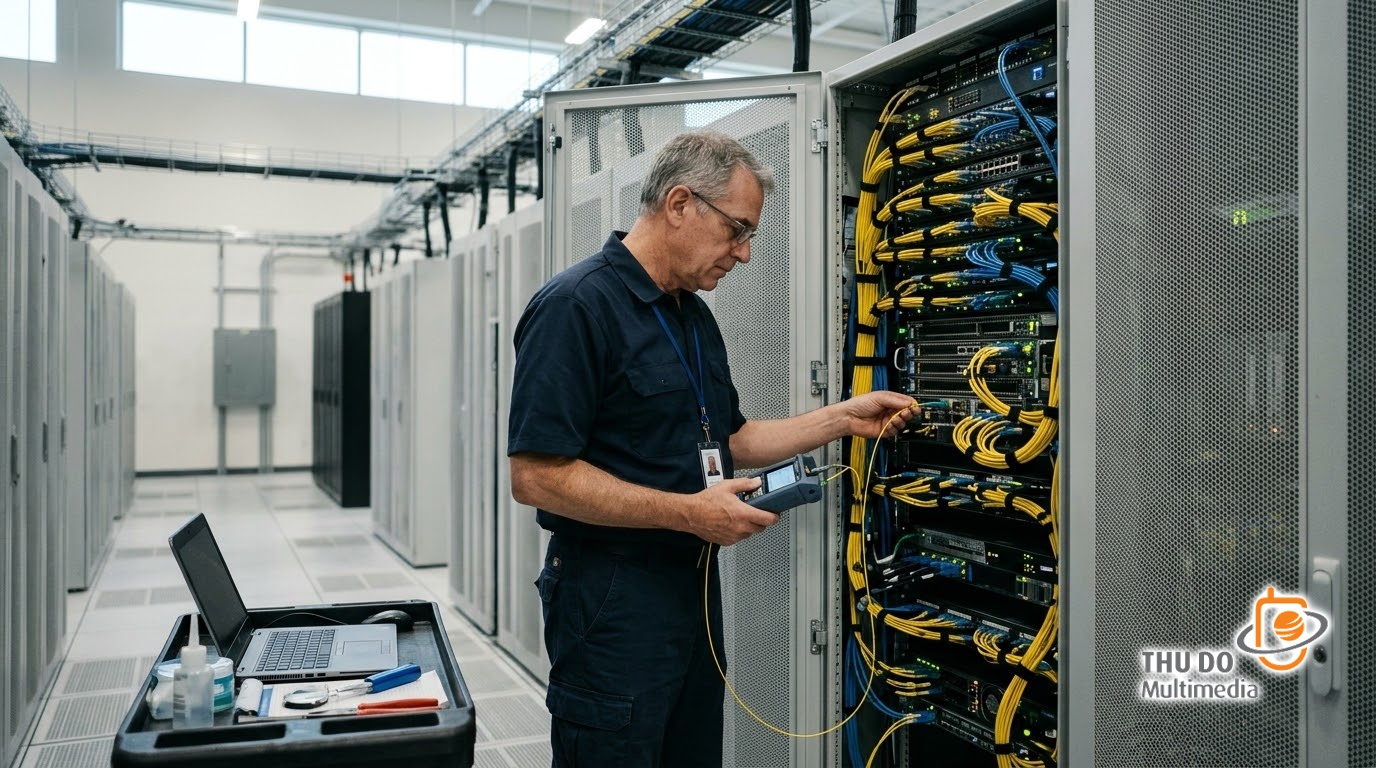
OTT Content Distribution and Consolidation: Unifying Fragmented Workflows
Operational bottlenecks have long plagued media companies attempting OTT content distribution and consolidation. Managing dozens of downstream partners manually often leads to cascading errors, mismatched aspect ratios, and delayed content releases. To eliminate these hurdles, enterprise platforms deploy centralized monitoring dashboards that provide real-time telemetry across stream health, ingest error rates, and live audience engagement metrics. Instead of logging into five different partner portals to check if a live stream is healthy, operators view a single pane of glass that aggregates health scores from every syndication endpoint worldwide.
Automated rights and windowing engines further streamline these workflows by dictating when and where content can be syndicated without manual intervention. For example, a sports league can pre-program a syndication rule stating that a match replay becomes available on AVOD platforms precisely 24 hours after the live broadcast concludes. The system locks down the distribution endpoint automatically, lifting the restriction the exact second the window opens. This level of automation prevents human error and ensures absolute adherence to complex contractual windows.
Moreover, metadata standardization acts as the unsung hero of workflow consolidation. By adopting global standards like Schema.org, EIDR (Entertainment Identifier Registry), and standardized TV-Anytime metadata profiles, publishers ensure that titles, descriptions, cast lists, and episode numbers are interpreted identically by every downstream marketplace. Standardized metadata drastically reduces onboarding times for new partners, transforming what used to be a tedious weeks-long engineering project into a seamless, automated configuration toggle.
Advanced Strategies for Video Marketplace Monetization
Monetizing syndicated video inventory requires sophisticated hybrid models that blend programmatic advertising, subscription tiers, and transactional video-on-demand (TVOD). Relying on a single revenue stream is a perilous strategy in today’s volatile economic climate. Therefore, publishers must implement advanced strategies for video marketplace monetization driven by yield optimization algorithms. These algorithms analyze real-time bidding (RTB) dynamics across multiple supply-side platforms (SSPs) to route ad requests to the highest-paying demand partner in milliseconds, maximizing the yield of every single impression.
First-party data collection and contextual targeting have also taken center stage following privacy shifts and cookie deprecation. Because third-party cookies are rapidly disappearing, infrastructure providers embed contextual analysis engines directly into the video processing pipeline. As content is ingested, AI-driven computer vision and natural language processing (NLP) scan the video frames and transcripts, tagging the content with granular contextual metadata (e.g., “luxury automotive,” “outdoor adventure,” or “financial planning”). Advertisers pay a massive premium for this rich contextual data because it allows them to target audiences accurately without relying on invasive tracking identifiers.
+-----------------------------------------------------------------+
|               Contextual Ingestion & AI Tagging                 |
+-----------------------------------------------------------------+
                                 │
                                 ▼
+-----------------------------------------------------------------+
|             Real-Time Yield Optimization Engine                 |
+-----------------------------------------------------------------+
                                 │
         ┌───────────────────────┴───────────────────────┐
         ▼                                               ▼
[Programmatic SSP Routing]                     [Direct-Sold Campaigns]
         │                                               │
         └───────────────────────┬───────────────────────┘
                                 ▼
+-----------------------------------------------------------------+
|       Seamless Server-Side Ad Insertion (SSAI) & Delivery       |
+-----------------------------------------------------------------+
Furthermore, the financial impact of reducing ad drop-off cannot be overstated. Client-side ad insertion often causes stuttering, buffering, and noticeable latency transitions when switching from primary video content to ad pods, driving frustrated viewers to abandon the stream. By deploying broadcast-quality Server-Side Ad Insertion (SSAI), ads are stitched directly into the video manifest before reaching the user’s device, providing a seamless viewing experience that protects CPM rates and eliminates viewer churn.
Video Ad-Tech Convergence and Modernization Trends
The digital advertising ecosystem is undergoing massive structural shifts characterized by rapid video ad-tech consolidation trends. We are witnessing a clear convergence between Supply-Side Platforms (SSPs) and Demand-Side Platforms (DSPs), giving rise to unified omnichannel platforms that reduce the infamous “tech-tax”—the financial leakage that occurs when multiple middlemen take a cut of every ad dollar. For publishers, partnering with infrastructure providers that natively integrate OpenRTB 3.0 standards and SSAI protocols is vital to cutting out unnecessary intermediaries, minimizing latency, and maximizing net revenue return.
Navigating the modern privacy landscape also requires forward-thinking technical architecture. With Apple’s App Tracking Transparency (ATT) and the systemic deprecation of traditional identifiers, ad matching rates have plummeted across legacy systems. Progressive infrastructure providers solve this by supporting deterministic identifier replacement frameworks such as Unified ID 2.0 (UID2) and Alternative ID modules right at the server level. This ensures that even in privacy-strict environments, publishers can maintain addressable audience pools, driving higher eCPMs and preserving ad revenue integrity.
“Ad-tech consolidation is not just about corporate mergers; it is a structural necessity to remove supply chain latency and technical tax. Publishers who embrace unified programmatic stacks see an immediate 18% lift in net ad yields.” — Marcus Sterling, Chief Technology Officer at AdStream Technologies.
Ultimately, marketplace consolidation profoundly impacts revenue share splits and transparency for content creators. When supply chains are opaque, creators are often left guessing why their monetization figures fluctuate wildly. Modern consolidated platforms provide radical transparency, offering auditable transaction logs and real-time reporting dashboards that track every impression from the ad server down to the viewer’s screen, ensuring complete trust between creators, platforms, and advertisers.
Overcoming Monetization Challenges in Video Marketplaces
Despite advanced tooling, publishers continually face persistent monetization challenges in video marketplaces, chief among them being ad fraud, sophisticated invalid traffic (IVT), and viewability discrepancies. Bot-driven ad impressions and stream manipulation drain millions of dollars from publisher revenues annually. To combat this, enterprise infrastructure must integrate real-time AI/ML models that analyze traffic patterns, IP reputation scores, and device fingerprints instantaneously. If an influx of requests exhibits anomalous playback behavior characteristic of automated botnets, the system flags and filters out the fraudulent impressions before they ever hit the ad server.
Subscription churn represents another major financial hurdle for SVOD and hybrid marketplaces. Relying entirely on reactive churn management—where customer service teams reach out only after a subscriber cancels—is a losing battle. Leading infrastructure platforms solve this by integrating predictive analytics directly at the streaming layer. By monitoring micro-behaviors (such as declining watch frequency, skipping intro sequences, or persistent buffering events), the platform identifies at-risk subscribers weeks in advance, automatically triggering targeted retention campaigns, personalized content recommendations, or promotional offers.
Finally, calculating the true Total Cost of Ownership (TCO) versus Return on Investment (ROI) is essential when evaluating enterprise syndication networks. While building custom, in-house infrastructure may seem appealing initially, the ongoing maintenance, engineering headcount, cloud egress fees, and scaling bottlenecks almost always result in an inflated TCO. Partnering with a proven, enterprise-grade ecosystem solution like VidScale Pro or StreamVault Infrastructure Suite drastically reduces operational overhead, accelerating time-to-market and ensuring maximum profitability across all digital distribution channels.

Frequently Asked Questions
What is video content syndication infrastructure?
It is the foundational hardware, software, cloud services, and APIs that allow media companies to ingest, transcode, manage rights, and distribute video assets across multiple third-party platforms and marketplaces efficiently.
How do infrastructure providers optimize video marketplace monetization?
They optimize monetization by implementing advanced Server-Side Ad Insertion (SSAI), dynamic manifest manipulation, programmatic yield optimization, and unified analytics that reduce ad friction and combat ad fraud.
What are the main technical challenges in OTT content consolidation?
Key challenges include managing fragmented metadata formats, maintaining low-latency delivery across diverse geographic nodes, ensuring strict compliance with regional geoblocking, and scaling transcoding pipelines cost-effectively.
Why is video ad-tech consolidation important for publishers?
Consolidation streamlines the supply chain between SSPs, DSPs, and ad servers, reducing tech-tax, lowering latency, improving match rates, and providing transparent reporting across all syndicated inventory.
Recent Comments