Advantages of Server-Side Ad Insertion (SSAI) is a game-changer in digital advertising, focusing on viewer engagement and seamless ad experiences.
This technology has revolutionized how ads are delivered and has brought numerous benefits to the table. In this detailed article, we will explore five keys advantages of SSAI, explaining why it’s a must-have tool for content creators and advertisers.
1. Advanced Anti-Adblocking with SSAI
SSAI empowers publishers and advertisers to sidestep ad-blocking software by seamlessly stitching together videos and ads, guaranteeing the delivery of content in a unified stream. Adblocking software has been a persistent headache for advertisers and publishers alike. It prevents SSAI-powered ads from reaching the right viewers, causing income loss and missed chances. Unlike client-side ad insertion that ad-blockers can quickly spot and avoid, SSAI works on the server side, making it much better at resisting ad-blockers.
By dynamically stitching SSAI-enabled ads into the content stream on the server side, SSAI circumvents adblockers effectively. This ensures that your carefully crafted advertisements delivered through SSAI reach your target audience unimpeded, leading to improved ad engagement and increased ROI.
Anti-Adblocking with SSAI
2. Personalized Ad Targeting with SSAI
SSAI empowers advertisers in the world of advertising by enabling precise audience targeting. This technology allows advertisers to tailor their campaigns based on a multitude of factors, including demographics, location, and viewing history, making relevance the reigning monarch of the advertising realm. Here’s how SSAI achieves this:
User Data Utilization: SSAI can leverage user data to understand viewer preferences, allowing advertisers to serve SSAI-enabled ads that align with their interests, demographics, and browsing behavior.
Real-Time Adaptation: SSAI can adapt in real-time to changing viewer behavior and preferences, ensuring that the SSAI-enabled ads shown are always current and engaging.
Dynamic Insertion: SSAI-enabled ads can be inserted seamlessly into the content stream, making the transition from content to ads and back nearly imperceptible, resulting in a smoother and more personalized user experience.
3. Increased/New Revenues through SSAI
SSAI provides content creators and broadcasters with a formidable tool as they persistently seek methods to maximize their revenue streams. SSAI can significantly impact revenue streams in several ways:
Higher Ad Completion Rates: Advanced anti-adblocking and personalized targeting via SSAI, it increases the likelihood of viewers watching SSAI-enabled ads to completion, translating into more revenue for advertisers.
Competitive Advantage: Offering SSAI capabilities can make publishers more attractive to advertisers, potentially leading to increased demand for ad space and higher rates.
Monetization Opportunities: SSAI can enable new monetization strategies, such as server-side ad stitching for live events, opening up fresh revenue streams that were previously untapped.
4. TV-Like User Experience with SSAI
SSAI brings this TV-like user experience to the digital realm, enhancing viewer satisfaction—one of the hallmarks of traditional television being its seamless ad integration:
Buffer-Free Transitions: With SSAI, ad transitions are smooth and buffer-free, eliminating the frustration of lengthy ad load times that can drive viewers away.
Content Continuity: SSAI ensures that ads do not disrupt the flow of content, contributing to a more enjoyable viewing experience and encouraging viewers to stay engaged.
Consistent Quality: Ad quality is maintained at a high standard through SSAI, preserving the overall viewing experience, which is crucial for retaining viewers and keeping them coming back.
5. Increased Control with SSAI
SSAI gives advertisers what they really want: control over their ad campaigns. With SSAI, advertisers have more power to decide where and when their ads appear, and who sees them. This helps them feel more confident and in charge of their campaigns. SSAI provides advertisers and publishers with a high degree of control over their SSAI-enabled ad delivery:
Content Integration: Advertisers can specify precisely where and how their SSAI-enabled ads are integrated into the content, ensuring optimal viewer engagement.
Real-Time Monitoring: SSAI platforms often come equipped with real-time analytics, allowing advertisers to monitor SSAI-enabled ad performance and make adjustments as needed.
Ad Capping: Publishers can implement ad capping via SSAI to prevent viewer overload and ensure a balanced viewer experience.
SSAI is a vital tool for advertisers and publishers in the digital world. It helps you fight ad-blockers effectively by having great features like stopping ad-blockers, showing ads to the right people, making more money, giving a TV-like experience, and letting you control how ads are shown. When you use SSAI, you can stay ahead of others and make your viewers happier, which means more money and happier viewers for you.
In recent years, numerous streaming video publishers have shifted from client-side ad insertion to server-side ad insertion (SSAI). SSAI seamlessly integrates ad creatives into the video stream, maintaining playback quality similar to the video segments. The primary aim is to enhance the viewer’s experience, aligning ad breaks in streaming videos more closely with traditional TV ad breaks. Secondary goals include simplifying video player development by eliminating the need for ad SDKs and minimizing ad losses due to ad blockers.
However, does SSAI technology genuinely enhance the viewer experience?
To validate this expectation, a comparison of quality of experience data for server-side versus client-side ads is necessary.
Thudo Multimedia conducted an analysis of 3.3 billion on-demand video streams across desktop, Roku, and Android Fire TV players in June and July 2023.
Firstly, video completion rates and startup times were compared between client-side and server-side ads. It was discovered that content completion rates are 5% to 10% higher for videos with server-side ads, despite a 1 to 2-second delay in video startup times. This suggests that SSAI systems introduce additional latency, which might lead to viewers dropping off while waiting for the video to start. However, once the viewer begins playing a video, they are more likely to watch it to completion.
Secondly, the study aimed to determine whether dynamic ad insertion in SSAI systems increased video startup times. By comparing startup times on SSAI video streams with no dynamically inserted ads to those with ads, it was observed that video streams with no ads had a one-second shorter startup time and resulted in 2% to 5% higher video completion rates than those with ads.
Furthermore, ad creative buffering and average bit rates were compared between client-side and SSAI streams, revealing that these metrics were comparable, with differences primarily linked to variations in video player and platform rather than the use of SSAI.
SSAI: Elegant solution for ad insertion
In conclusion, while SSAI ads undeniably contribute to a better viewer experience once a viewer starts watching, they may potentially cause more viewers to drop off before the video begins. Recommendations for publishers transitioning to SSAI include collaborating with SSAI vendors to improve video startup times when inserting ads, enhancing the video app experience by combining client-side and server-side ads, and carefully balancing video streams with and without ads based on viewer segments. Utilizing Thudo Multimedia for stream monitoring allows for identification of areas for improvement and the implementation of strategies to optimize the move to SSAI.
In an era where the internet and its interconnected devices assume an increasingly central role in our lives, we discover ourselves growing ever more reliant on this digital realm. However, this profound shift has also brought about various advantages across numerous sectors, albeit accompanied by the looming threat of cybercrime.
It has made online purchases more convenient, cost-effective, and secure, transformed long-distance communication, and accelerated the dissemination of information. However, this growing reliance on the internet has also given rise to a menacing specter: cybercrime. Across the globe, cybercriminals and hackers are actively exploiting the exchange of information and online transactions that occur on the internet, posing a significant threat to individuals and businesses, regardless of their online presence’s scale.
In this comprehensive article, we will delve into the multifaceted world of cybercrime. We will explore what cybercrime encompasses, its potential ramifications for businesses, and effective strategies for safeguarding your enterprise against these digital threats. Our journey will cover:
What Constitutes Cybercrime?
The term ‘cybercrime’ serves as an umbrella, encompassing a wide array of criminal activities carried out through the internet, typically facilitated by electronic devices, such as computers, connected to the web. These cybercrimes assume various forms and pose varying levels of risk.
Motivations Behind Cybercrimes
The primary driving force behind most cybercrime endeavors is financial gain. While some cyberattacks aim solely to inflict damage on digital assets or devices for political or personal reasons, these occurrences are relatively infrequent. Cybercriminals employ a diverse range of schemes and techniques to monetize their illicit activities. A few examples include:
Motivations Behind Cybercrimes
Extortion
Cybercriminals may seize vital or sensitive data and demand a ransom for its release. Modern cybercriminals employ tactics such as ransomware or structured Distributed Denial of Service (DDoS) attacks to extort victims.
Phishing
Cybercriminals endeavor to acquire sensitive information by impersonating well-known individuals or brands. This form of cybercrime typically lures unsuspecting victims into divulging their personal information. The stolen data can be monetized in various ways, such as making unauthorized purchases using stolen credit card information or selling personally identifiable or sensitive data to third parties.
This list provides a glimpse into the strategies employed by cybercriminals to launch and profit from their attacks, though it is by no means exhaustive.
Diverse Forms of Cybercrimes
The U.S. Department of Justice categorizes cybercrimes into three main types:
Criminal Activity Targeting Computers: This includes infecting devices with malware.
Criminal Activity Utilizing Computers: Criminals employ computers to commit other crimes, like sending spam emails containing links to phishing sites.
Criminal Activity Where Computers Serve as Accessories to Crimes: In this scenario, computers are used in tandem with other criminal activities, such as storing stolen credit card information.
Cybercriminals may engage in one or more of these activities concurrently. For instance, a cybercriminal might infect a computer with malware, gain control of it, and subsequently employ the compromised computer to launch a DDoS attack against another target.
Illustrative Cybercrime Activities
Every day, a myriad of distinct cybercrime activities take place, with new methods and technologies continuously emerging. Here are some notable examples:
Phishing
This is among the most prevalent cybercrimes, involving the fraudulent impersonation of reputable entities or individuals to deceive victims into revealing personal or sensitive information. Phishing is not confined to email; it can also occur through other communication channels like text messages and social media messages.
Spear Phishing
A targeted form of phishing is directed at specific individuals, often involving extensive research on the victim to craft convincing attacks.
HTTPS Phishing
Cybercriminals employ fake HTTPS websites, primarily through email, to trick users into sharing sensitive information.
Pharming
A technique redirecting users from intended websites to malicious ones, often initiated by malware infections.
Malware Infection
Malware takes various forms, including computer viruses, Trojans, and worms. These malicious programs can modify or damage files, replicate themselves, or open backdoors for cybercriminals.
Data Breach
This umbrella term covers multiple cybercrimes aimed at illicitly accessing confidential or sensitive information.
Cybersquatting
Cybercriminals register and exploit domain names resembling those of legitimate businesses or individuals to profit from them, often by selling them at exorbitant prices.
DDoS Attacks
Denial of Service (DoS) attacks aim to disrupt internet services, while Distributed Denial of Service (DDoS) attacks involve multiple unwitting computers overwhelming a target with requests.
Crypto jacking
A relatively recent cybercrime, involving the hijacking of computer resources for cryptocurrency mining.
Cyber Espionage
Attackers clandestinely obtain data from businesses or individuals without consent, often via hacking.
Potential Risks and Impacts of Cybercrime for Businesses
Cybercrime used to primarily threaten larger enterprises with prominent online footprints. However, recent trends indicate a shift towards targeting smaller businesses and organizations, capitalizing on their comparatively weaker security infrastructure. Consequently, no entity remains immune: while large corporations remain lucrative targets, smaller businesses and even individuals face significant risks.
Here are some of the critical negative repercussions cybercrime can inflict on businesses:
Disruption of Service or Operations
Cyberattacks, such as DDoS and malware infections, can cause substantial disruptions to daily business operations, resulting in not only revenue losses but also potential harm to brand reputation. Hacktivist groups, in particular, may target organizations to protest perceived wrongdoings.
Financial Repercussions
Cybercrimes can engender severe financial consequences, including loss of customer trust, competitive disadvantages due to leaked pricing strategies, indirect financial impacts from operational disruptions, extortion through ransomware, and expenses associated with hiring legal and cybersecurity experts.
For instance, Home Depot incurred a $13 million Settlement Fund in 2014 due to the theft of 50 million credit card records.
Stolen or Infringed Intellectual Property
Certain cybercrimes aim to pilfer or violate a business’s intellectual property, such as domain squatting, which involves registering domains mirroring legitimate ones before the actual trademark holders can do so. Many businesses now store intellectual property in the cloud, making it vulnerable to cyberattacks.
Forced Changes in Business Practices
The threat of cyberattacks or actual breaches can compel businesses to alter their daily operations, adapting to factors such as data breach threats or legislative changes like the General Data Protection Regulation (GDPR). Consumers’ growing concern for security also forces businesses to prioritize trust-building.
Reputational Damage
Businesses can suffer long-lasting or permanent damage to their reputations following cybercrimes. Studies indicate that compromised companies may witness share price drops, and customers tend to trust affected businesses less, often ceasing transactions with them altogether.
For example, a 2021 report by Comparitech revealed that the share prices of breached companies dropped by an average of 3.5%.
Safeguarding Your Business from Cybercrimes
To protect your business from the ever-evolving landscape of cybercrimes, consider adopting the following best practices:
DRM: Safeguarding Your Business from Cybercrimes
Keep Everything Updated
Regularly update software and operating systems, including robust internet security solutions like antivirus software. Cybercriminals frequently exploit known vulnerabilities, making updates crucial for defense.
Use Strong and Unique Passwords
Employ lengthy, complex passwords composed of letters, numbers, and symbols. Avoid reusing passwords across different sites and change them periodically. Password management solutions can assist in generating and managing strong, unique passwords.
Utilize Reliable Security Solutions
Given the diversity of cybercrimes targeting businesses, invest in comprehensive security software solutions, including:
Reliable antivirus and anti-malware software with AI-driven behavioral detection.
Bot detection and mitigation to safeguard against malicious bots.
Real-time Brand Protection Solutions for detecting trademark and copyright infringements and automating takedown requests.
Educate and Train Your Employees
Your business’s security is only as robust as its least informed personnel. Include cybersecurity training as part of employee onboarding and update it regularly to reflect evolving threats. Place special emphasis on phishing awareness and response.
Looking Ahead
Cybercrime is no longer a concern exclusive to large enterprises; smaller businesses and individuals are equally at risk. It is incumbent upon everyone to protect themselves from cybercrime, as the consequences can be far-reaching. By following the actionable tips outlined above, you can establish a strong foundation for safeguarding your business and yourself from the perils of cybercrime.
Explore how DRM technology empowers creators with seven robust methods for safeguarding digital copyrights.
In the digital realm, DRM (Digital Rights Management) is a formidable guardian of digital content copyrights. Here, we delve into seven essential methods through which DRM technology fortifies the protection of intellectual property in the digital domain.
7 Ways DRM Safeguards Digital Content Copyright
Why do we need DRM?
1. Encryption and Access Control:
DRM employs robust encryption techniques to safeguard digital content. Access is granted solely to those possessing the appropriate decryption keys, effectively shielding copyrighted material from unauthorized access or distribution.
2. Prevention of Unauthorized Copying:
DRM incorporates anti-copying mechanisms, making it exceedingly challenging for unauthorized users to duplicate or reproduce digital content. This measure helps content creators maintain control over their intellectual assets.
3. Time and Device Restrictions:
DRM allows content providers to set limitations on the time duration or the number of devices on which their content can be accessed. This ensures that content is used within the bounds of licensing agreements and deters widespread sharing.
4. Counteraction of Screen Capture:
DRM technology includes measures to thwart screen capture and recording, reducing the risk of content theft through these means.
5. Expiry Dates and Usage Limits:
DRM permits the establishment of expiration dates for digital content or the imposition of usage limits. For instance, access to content may expire after a specific date or after a predefined number of views or interactions.
6. Geo-Blocking:
To adhere to regional licensing agreements and safeguard content distribution rights, DRM can enforce geo-blocking. This restricts access based on users’ geographic locations, IP addresses, or specific devices.
7. Watermarking for Ownership Assertion:
DRM facilitates the embedding of watermarks, such as text, images, logos, or slogans, within digital content. These watermarks serve as clear indicators of ownership and enhance brand recognition.
In summary, DRM Safeguards technology stands as a stalwart defender of digital content copyright through encryption, access control, and a range of protective measures. Content creators and copyright holders use these measures to preserve their intellectual property rights. They also maintain control over its dissemination in the digital landscape.
Apple with its DRM solution FairPlay Streaming helps distribute streaming media securely via the HLS protocol (HTTP Live Streaming)
FairPlay Certificate Registration Tutorial
In this article, we introduce to you how Apple processes to create DRM certificates in Fairplay Streaming (FPS). Let’s find out more!
About Overview
FairPlay Streaming stands as Apple’s proprietary DRM solution designed to enhance the secure delivery of streaming media to devices utilizing the HTTP Live Streaming (HLS) protocol. Leveraging FairPlay Streaming (FPS) technology, content providers, encoding vendors, and delivery networks gain the capability to encrypt content, facilitate secure key exchange, and safeguard playback across iOS, iPadOS, watchOS 7, tvOS, and macOS platforms
In order to utilize Apple’s FairPlay Streaming (FPS) DRM, individuals must obtain the FPS Deployment Package directly from Apple and furnish their Brightcove representative with the following details:
The FPS Certificate file .der or .cer
Private key file .pem
Private key password string
Application secret key (ASK) string
Step 1: Register for an Apple Developer Account and Request the Deployment Package
To obtain the FPS Deployment Package, it is necessary to have an Apple developer account. If you do not possess one, you can proceed to sign up for an account.
Navigate to the FairPlay Streaming website, locate the ‘Request Deployment Package’ link at the bottom, and log in using your Apple developer account credentials.
After submitting your request for the Deployment Package through the provided input form, Apple will confirm and issue a package that includes the FPS Credential Creation Guide document.
During the application process, you will be asked if you have completed the implementation and testing of the Key Server Module (KSM). Please answer: ‘I am using a 3rd party DRM service and the company has already built and tested the Key Server Module’.
Step 2: Generate the Private Key and Certificate Signing Request (CSR)
The subsequent step involves generating a private key file named private key.pem and a certificate signing request file named certreq.csr, following the instructions outlined in the provided guidelines document.
OpenSSL must be installed on the PC or server environment where this process is performed.
The steps below outline the process using OpenSSL to create the CSR file:
Open the OpenSSL command-line tool.
Generate the Private Key File: privatekey.pem by typing and running the following command. openssl genrsa -aes256 -out privatekey.pem 1024
Enter a password for the private key and save it for later use. The password should be shorter than 32 characters, and special characters are not allowed.
Generate the Certificate Signing Request file by typing and running the following command. The contents of the -subj parameter can be modified to suit your organization’s information. openssl req -new -sha1 -key privatekey.pem -out certreq.csr -subj “/CN=SubjectName/OU=OrganizationalUnit/O=Organization/C=US”
Enter the Private Key password.
Step 3: Generate FPS Certificate on the Apple Developer Portal
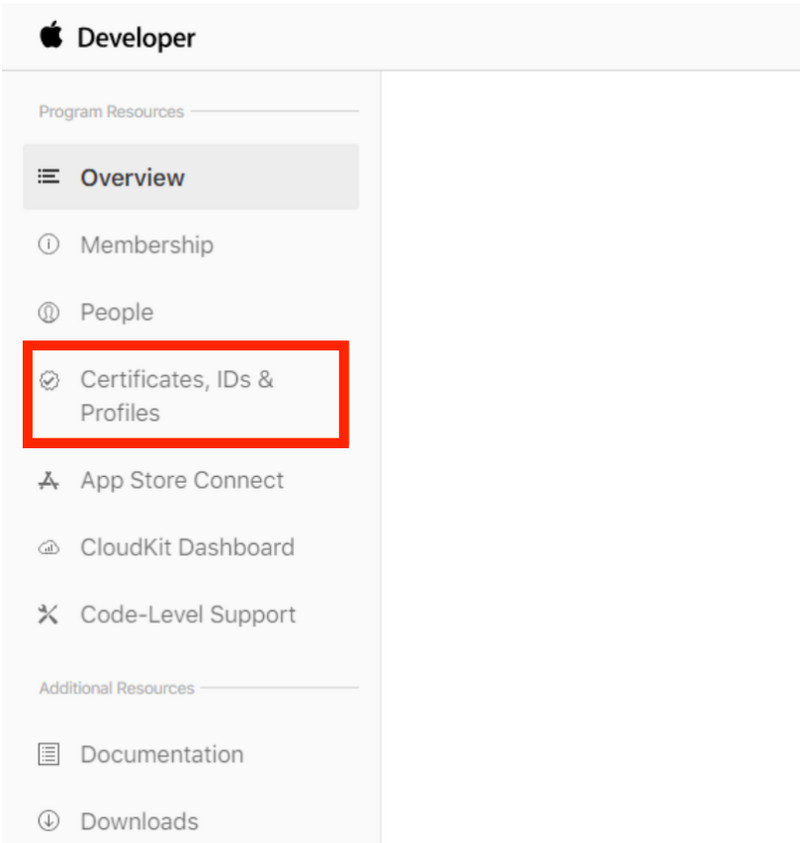
Log in to the Apple Developer Portal and click Certificate, IDs & Profiles on the left menu
Log in to the Apple Developer Portal
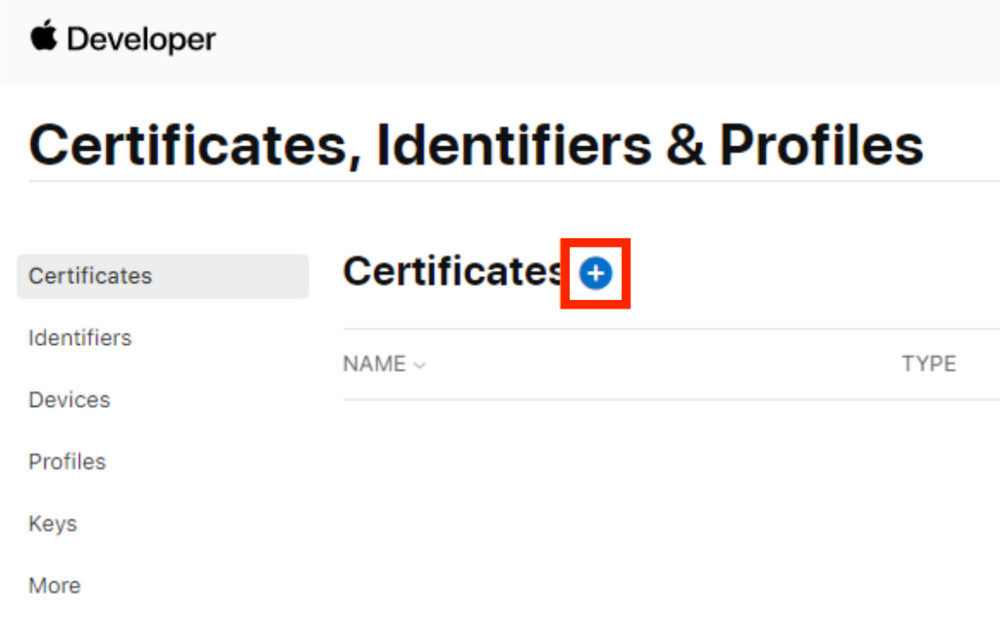
In the Certificates subtitle click the button
Certificates subtitle click the button
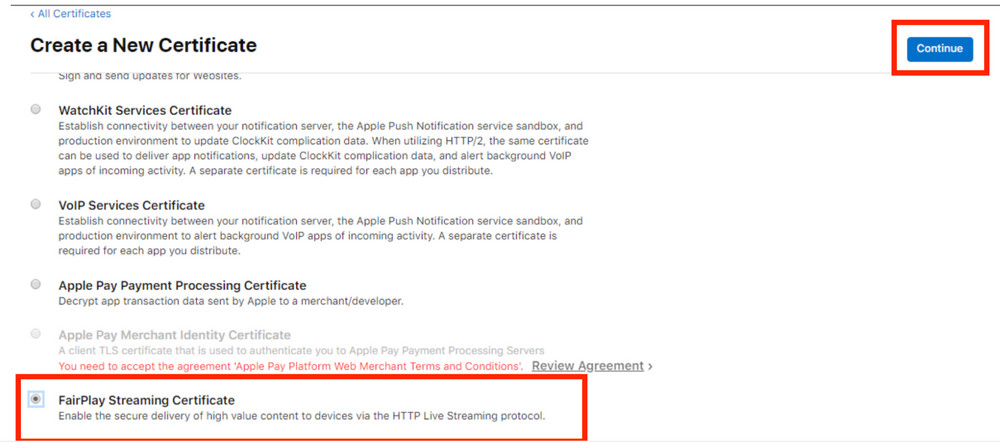
On the Create a New Certificate section, select the FairPlay Streaming Certificate option
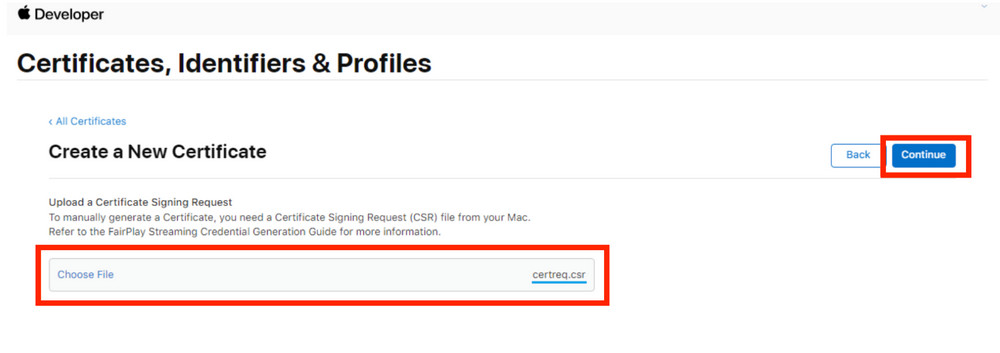
Create a New Certificate
Click Continue
Click Choose File
Choose File
Select the certreq.csr file created with OpenSSL.
Click Continue.
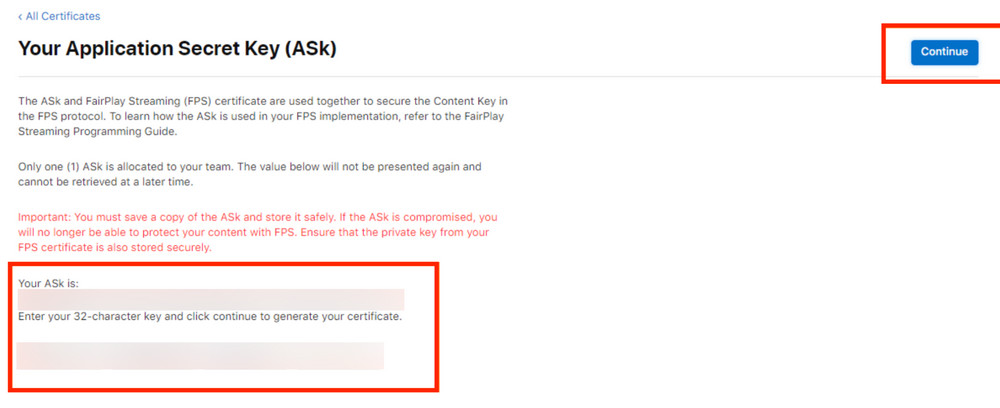
Copy the Application Secret Key provided by Apple, and store it safely. If the ASK is compromised, you will no longer be able to protect your content with FPS
Application Secret Key
Paste the ASK in the space provided.
Click Continue
Click the Generate button when the pop-up appears to confirm that you have saved your Application Security Key
Click Certificates in the left menu to see your FairPlay Streaming Certificate in the list.
Click on your Certificate
Click the Download button to save the FPS certificate file: fairplay.cer
After download the FPS certificate file, please contact your Sigma MultiDRM account manager to finish the process.
Of the powerful 20 companies that have digital rights management (DRM) solutions, including IBM, Google, Apple, and Adobe, Thu Do Multimedia is the one Vietnamese name.
Thu Do Media was officially established in 2010, when its CEO and founder Nguyen Ngoc Han was 30 years old.
Han and his co-workers began to research and develop online apps and games for mobile phones.
At that moment, in Vietnam, most technology firms just imported games from other countries to distribute in the home market, and there were very few companies developing games.
Following an uncommon path, Thu Do then focused on ensuring security. Its games could protect and restore data in case of internet interruption when people are playing games.
The market was very favorable in 2010-2012, bringing great success to Thu Do media. Billiard Online, one of its products, for example, got 40 million downloads all over the globe.
In 2013, when smartphones became popular, global distributors could distribute games globally and directly to the user.
With its advantage in content and data protection tools, Thu Do focused on making data protection products that meet international standards to sell to the global market.
At that time, when there were both opportunities and ‘storms’ which could sweep away immature businesses, Thu Do focused on providing solutions to the media sector.
Digital content protection solution
Recalling the first operation period, Han said it was full of hardships. The first problem was that it didn’t have an ‘alliance’. He then persuaded mobile network operators to cooperate and share profits. The other problem was the workforce. Thu Do leaders had to visit technology universities to seek interns and pay them wages which were higher than the scholarships they expected from the schools.
Vietnamese pride
Thu Do is the first company in Southeast Asia with a DRM solution – Sigma DRM – successfully tested. Sigma DRM has added Vietnam to the list of countries which have global DRM solutions.
“There are only 12 companies in the world that can invent DRM solutions in the media sector. And Thu Do Media is on the same list as the ‘big guys’ such as IBM, Adobe, Apple, Google, and Microsoft,” Han said.
Thu Do had to undergo a tough road to gain the achievement. After successfully inventing a solution, Thu Do has to have the solution tested and recognized by international inspection prestigious institutions. The company then sent an email to one of the institutions, but there was no reply.
Later, with support from a Vietnamese famous in the global TV and media sector, the company got the nod from the inspection institution. After a very strict inspection, Sigma DRM was successfully inspected and recognized as meeting global standards.
According to Han, Thu Do Media is the only company in the world that provides comprehensive OTT media solutions together with DRM. This is because the other ‘big guys’ on the list of 20 companies with DRM only specialize in developing products in certain fields.
Thu Do’s comprehensive solution can satisfy basic requirements.
“We design a menu with many different dishes for diners. They can choose one or many dishes in the menu, i.e. one or many services of the comprehensive solution, instead of having to choose different services from different solution providers to create a system of their own,” he said.
Recently, a problem occurred related to Google’s Widevine DRM solution: hackers publicized all the source codes on the internet, resulting in a lack of copyright protection for content on 4 billion devices of the Android ecosystem and 2.6 billion devices using Chrome.
The incident once again showed the strength of Sigma DRM: it could resist attacks thanks to the superior security capability of a third protection shield. According to Cartesian, Thu Do’s Sigma Active Observer-SAO is the first DRM solution that has a third protection shield.
In early 2023, Thu Do took the first steps to reach out to the global market. It plans to enter the US market first, and then Southeast Asia.









Recent Comments