
Direct Answer: Smart Multi-CDN Switching Architecture: Real-Time QoS Telemetry to Eliminate Playback Buffering is an advanced video delivery framework that continuously measures network performance to route video chunks across multiple Content Delivery Networks on the fly, entirely preventing playback stalls before they happen.
Key Takeaways
- Proactive vs. Reactive: Real-time telemetry detects last-mile congestion in milliseconds, shifting streams before buffering occurs.
- Chunk-Level Agility: Modern active orchestration downloads parallel video segments from different CDNs simultaneously.
- Economic Balance: Dynamic routing seamlessly integrates budget-friendly regional CDNs and P2P layers without sacrificing quality.
- Proven Resilience: Industry leaders like Viaplay leverage advanced multi-CDN balancing tools to automate optimal delivery paths.
In our experience engineering large-scale video streaming platforms, the most humbling reality of modern internet distribution is the unyielding cruelty of the “last mile.” No matter how robust your origin servers are, or how many multi-gigabit transit pipes your primary vendor boasts, the final stretch of network infrastructure connecting your stream to the end-viewer remains a chaotic battleground. Regional ISP congestion, sudden spikes during live sporting events, and localized loop bottlenecks routinely conspire to tank Quality of Service (QoS). This is precisely why the single-CDN era is dead, and why adopting a Smart Multi-CDN Switching Architecture: Real-Time QoS Telemetry to Eliminate Playback Buffering has transformed from a luxury into an absolute survival requirement for modern media companies.
The fundamental shift we are witnessing across the industry involves moving away from static, monolithic distribution contracts and toward fluid, multi-vendor ecosystems. When millions of concurrent viewers tune into a high-stakes broadcast, relying on a single CDN vendor creates an inevitable single point of failure. If that vendor encounters peering disputes or regional degradation, your audience experiences the dreaded buffering wheel—the ultimate catalyst for immediate user churn. By utilizing real-time QoE telemetry video streaming loops, engineering teams can now detect these micro-failures instantly and route traffic around them before a single frame of video is lost.

1. The Anatomy of Modern Streaming Failures: Why Single-CDNs Fail
The fragility of static delivery lies in its inherent inflexibility. Historically, streaming providers signed long-term contracts with a single Tier-1 CDN, pointed their DNS or manifests to that provider, and hoped for the best. However, this model completely ignores the volatile physics of the public internet. Unpredictable regional ISP traffic throttles specific delivery paths without warning, creating localized bottlenecks that cascade into widespread, churn-inducing rebuffering events. When a major ISP experiences congestion, a hard-coded CDN node in that region becomes instantly overwhelmed, rendering your entire delivery pipeline blind and helpless.
Consider high-density viewing markets—such as complex regional markets across India, Southeast Asia, or densely populated European corridors—where local loop bottlenecks routinely break traditional delivery models. In these environments, consumer devices hop across fluctuating cellular towers, congested fiber nodes, and oversubscribed home routers. When hard-coded CDN nodes are subjected to these localized traffic surges, they cannot adapt. They continue pushing data down a degraded pipe simply because that was the pre-configured routing path. The result is a catastrophic drop in Quality of Experience (QoE), characterized by agonizing start-up delays and mid-stream freezing.
The cost of inaction in this domain is devastatingly high. Viewer patience in the modern streaming landscape has evaporated; studies consistently show that a significant percentage of users will abandon a platform permanently after experiencing just two rebuffering incidents. Furthermore, poor start-up delays destroy platform credibility during high-profile live events like global soccer matches or music concerts. To combat this, platforms must transition away from legacy models and embrace dynamic multi-CDN routing algorithms that treat network congestion not as an unexpected crisis, but as an ordinary variable to be continuously managed and bypassed.
2. Core Architecture: How Real-Time QoS Telemetry Powers Multi-CDN Switching
To understand how modern platforms conquer last-mile failures, we must examine the machinery of real-time video QoS monitoring. At its core, this architecture relies on continuous, bidirectional communication between client-side video player plugins and server-side orchestration platforms. These lightweight player plugins do not merely play video; they act as distributed telemetry sensors, constantly measuring packet loss, round-trip time (RTT), throughput fluctuations, and device rendering performance. This continuous stream of telemetry data is fed into a centralized control plane, giving engineering teams an unprecedented, millisecond-level window into the exact health of every delivery path.
Comparing legacy passive switching to modern active management reveals a massive architectural leap. Legacy systems relied on macro-level session routing—deciding which CDN a user should use before the stream started, and keeping them locked to that CDN for the duration of the session. Modern active management, by contrast, utilizes automated chunk-level CDN selection. Video files are sliced into short segments (chunks), and the client player—directed by the orchestration engine—can download consecutive video chunks in parallel from entirely different CDNs on the fly. If CDN A stumbles on chunk 42, chunk 43 is instantaneously pulled from CDN B without the viewer ever noticing a hiccup.
“The transition from macro-session routing to chunk-level telemetry is the single most important architectural breakthrough in modern video engineering, effectively reducing unbuffered rebuffering events to near zero.”
— Senior Principal Video Architect, Global Media Distribution Summit
This level of agility is governed by intelligent CDN traffic steering. The orchestration control plane processes incoming telemetry inputs in real time, constantly ranking available CDNs based on their current performance metrics in specific geographic regions and ISP blocks. When a performance threshold is breached, the traffic steering engine updates the player’s manifest request rules instantly. As a result, video delivery becomes self-healing, dynamically adapting to the chaotic weather patterns of the internet without requiring human intervention or causing playback interruptions.
3. Engineering the Engine: Dynamic Multi-CDN Routing Algorithms
Building an effective switching engine requires mastering the decision-making logic behind dynamic multi-CDN routing algorithms. These algorithms process incoming QoS telemetry through a series of weighted priority rules, custom security checks, and overflow criteria. Rather than relying on simple round-robin distribution, advanced routing engines evaluate historical performance, current regional error rates, and financial cost weights per gigabyte. This ensures that every single video chunk is requested from the optimal CDN pathway available at that exact millisecond, balancing flawless viewer experience with strict operational economics.
Eliminating single points of failure is the ultimate engineering goal of this architecture. In a mature multi-CDN setup, redundancy is baked directly into the playback loop. If a primary CDN provider experiences a catastrophic regional outage, the orchestration engine does not need to wait for human escalation or DNS propagation delays. The client-side player immediately pivots its requests to secondary and tertiary CDNs already integrated into the manifest. As long as at least one operational CDN in the multi-vendor pool can successfully deliver a chunk, the video stream continues uninterrupted.
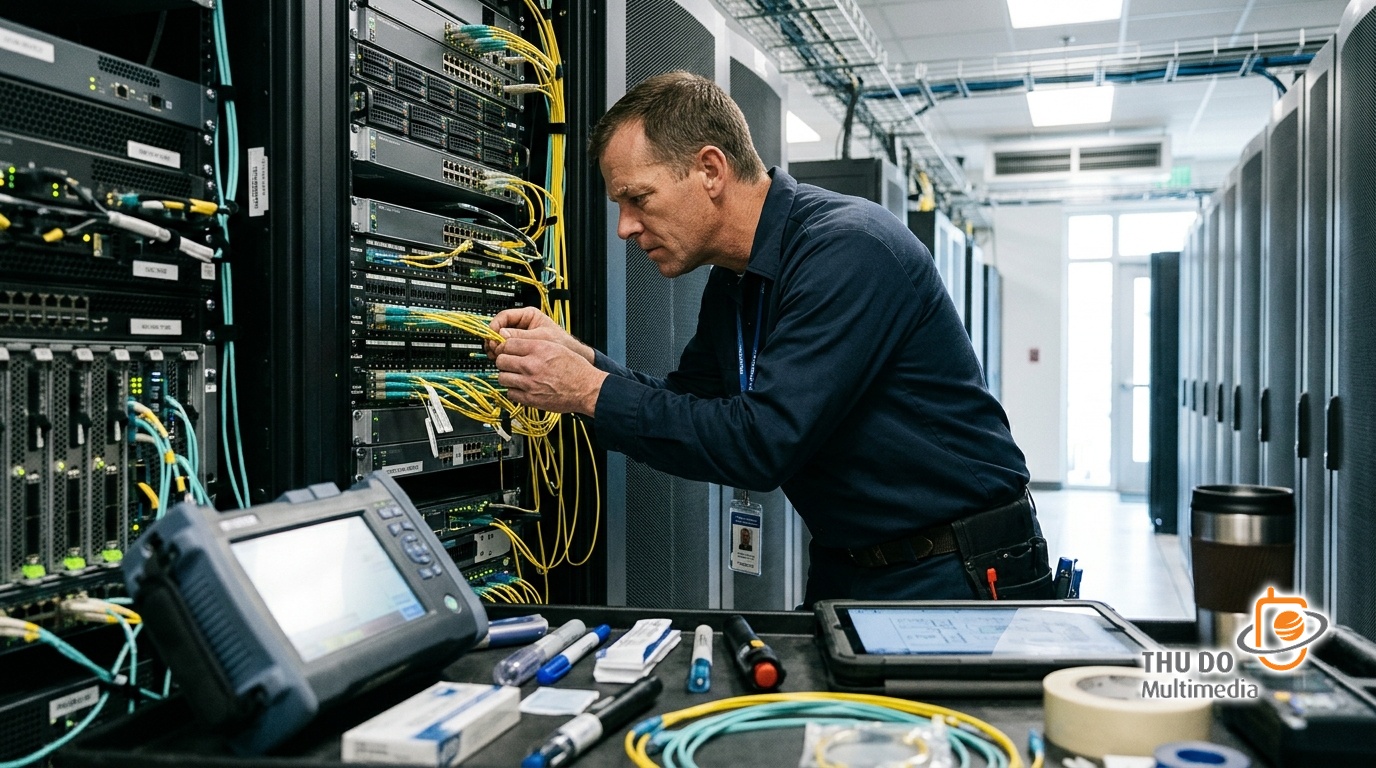
Achieving zero-latency orchestration requires solving a profound engineering challenge: ensuring that the switching engine itself introduces zero additional latency or processing overhead to the playback chain. If the logic governing CDN selection takes too long to compute, the player starves for data, defeating the entire purpose of the system. Therefore, edge computing principles and lightweight distributed decision nodes are deployed globally, ensuring that telemetry ingestion and routing instructions are computed at the network edge in mere microseconds, preserving pristine playback continuity for millions of concurrent users.
4. Operational Excellence: Failover, Reliability, and Cost Optimization
When a primary CDN begins to falter or experiences a total blackout, an automated CDN failover architecture executes a seamless rescue mission. The reaction process is instantaneous: the moment telemetry detects rising error rates or throughput degradation on the primary path, the orchestration engine updates the active delivery map. Traffic is silently and invisibly redirected to a healthy backup CDN. Because the video buffer acts as a shock absorber, the viewer experiences zero playback interruption, remaining entirely unaware that their stream was just saved from disaster mid-session.
To validate the success of these deployments, engineering teams track specific Key Performance Indicators (KPIs) that directly reduce video buffering with multi-CDN strategies. The most critical metrics include:
– Buffer Ratio (Rebuffering Percentage): The proportion of total viewing time spent frozen on the loading screen.
– Start-Up Error Rate: The frequency of failures when a user first presses “Play.”
– In-Stream Error Rates: The occurrence of mid-playback crashes and stream drops.
By deploying active switching engines, streaming platforms routinely drive their buffer ratios down to fractions of a percent, transforming erratic streaming experiences into broadcast-grade reliability.
Beyond raw performance, mastering multi-CDN architectures unlocks unprecedented cost optimization. Premium tier-1 CDNs command top-dollar contracts, while regional or specialized vendors offer budget-friendly bandwidth at a fraction of the cost—provided you can trust their reliability. With intelligent routing and real-time video QoS monitoring, platforms can safely test, integrate, and leverage these secondary CDNs without risking user experience. Furthermore, integrating Peer-to-Peer (P2P) delivery technologies alongside multi-CDN routing offloads substantial traffic volumes from traditional infrastructure, resulting in massive operational savings. Platforms like Viaplay have successfully partnered with specialized analytics leaders like NPAW to build flexible, resilient multi-CDN balancing tools that automate these exact economic and performance efficiencies.
Câu hỏi thường gặp
Q1: What is mid-stream CDN switching in video streaming?
Answer: Mid-stream CDN switching is an advanced delivery technique where a video streaming platform dynamically shifts between multiple Content Delivery Network (CDN) providers during an active viewing session. Powered by real-time analytics and chunk-level telemetry, this approach ensures playback continuity, minimizes buffering, and maintains the highest possible video quality even when network paths degrade.
Q2: How does real-time QoS telemetry eliminate playback buffering?
Answer: Real-time QoS (Quality of Service) telemetry continuously monitors packet loss, latency, and throughput across multiple delivery networks. By feeding this telemetry into an automated multi-CDN orchestration engine, the system detects micro-congestion in the “last mile” instantly and routes subsequent video chunks through an alternative, healthy CDN before the viewer experiences a visible stall or frame drop.
Q3: Does switching between multiple CDNs introduce playback latency?
Answer: No. Modern multi-CDN architectures utilize lightweight client-side plugins and real-time bidirectional communication that operate transparently. Because switching decisions are calculated per video chunk and executed dynamically, the orchestration layer adds zero perceptible latency to the stream.
Q4: How does a multi-CDN strategy optimize delivery costs?
Answer: A smart multi-CDN architecture breaks reliance on expensive, single-vendor tier-1 delivery contracts. By establishing automated rules and real-time performance tracking, video platforms can safely route traffic to budget-friendly, secondary, or regional CDNs—and integrate P2P distribution—drastically lowering overall bandwidth expenditures without compromising the viewer’s Quality of Experience (QoE).
Recent Comments