
AI in localization: breaking language barriers in multi-lingual OTT markets is transforming how media companies scale global content catalogs, transitioning from slow manual workflows to lightning-fast automated pipelines. By leveraging neural translation, voice cloning, and generative AI, streaming platforms can now deploy synchronized audio and subtitles in over 150 languages in a matter of days.
- Explosive Market Growth: The global AI localization for OTT market is projected to surge from USD 0.72 billion in 2025 to USD 2.53 billion by 2031, driven by a robust 22.70% CAGR.
- Overcoming the 90-Day Retention Trap: Platforms failing to provide localized audio, accurate subtitles, and regional cultural context risk flatlining subscriber growth and immediate churn within 90 days.
- Massive Platform Scale: Industry benchmarks reveal major players expanding rapidly, such as Disney+ scaling support to 58 languages with the addition of 17 new languages and RTL user interfaces.
- Advanced Hybrid Operations: Integrating a Human-in-the-Loop (HITL) framework guarantees that high-speed AI automation maintains strict adherence to professional reading standards and cultural nuances.
The Localization Bottleneck in Modern OTT Expansion
When mid-tier streaming services attempt to scale internationally, they frequently hit what we call the 90-Day Retention Trap. In our experience working with media executives, failing to provide native audio, accurate subtitles, and regional cultural context in vital markets like Mexico City, Jakarta, or Munich leads to flatlined subscriber growth and immediate churn. Viewers in today’s hyper-competitive landscape demand content that speaks directly to their cultural sensibilities. If a platform launches in a new region with subpar subtitles or awkward dubbing, users abandon the service within the first three months, rendering international customer acquisition efforts entirely unprofitable.
The root cause of this retention crisis lies in the scaling crisis of legacy workflows. Traditional localization pipelines are notoriously slow, resource-heavy, and financially punishing. They require manual casting sessions, physical recording studios, manual audio mixing, and painstaking frame-by-frame audio sync. This manual approach creates a massive bottleneck that makes contemporary streaming schedules—which demand simultaneous worldwide drops—virtually impossible to execute. When content release windows shrink from months to days, legacy studios simply cannot keep pace with the sheer volume of incoming programming.
To survive in this high-stakes environment, media companies must view AI in Localization: Breaking Language Barriers in Multi-Lingual OTT Markets not as an optional add-on, but as a mandatory technological requirement. Emerging streaming services can no longer hope to compete with industry titans like Netflix, Disney+, and Amazon Prime Video using outdated, manual translation methods. Adopting artificial intelligence allows platforms to level the playing field, ensuring that regional catalogs can be localized simultaneously without compromising on artistic integrity or technical broadcast standards.
“Localization is no longer just about translation; it is about cultural immersion. Platforms that fail to automate and scale their localization pipelines will find themselves completely shut out of emerging global viewer segments.” — Global Media Technology Review

Deconstructing the Five Layers of Comprehensive OTT Localization
Audio localization—encompassing dubbing and voiceover—represents the emotional core of content delivery, yet regional preferences vary wildly across the globe. While markets like Germany, France, Spain, Italy, and Latin America heavily favor professional dubbing, countries in Scandinavia, the Netherlands, and parts of Asia traditionally lean toward subtitling. Understanding these deeply ingrained viewer habits dictates how platforms allocate their localization budgets, ensuring that high-value content receives the precise treatment local audiences expect.
Subtitle and caption generation, meanwhile, serves as the fastest and most cost-effective localization tier for modern streaming platforms. Beyond driving international discoverability, automated subtitling plays a vital role in fulfilling mandatory accessibility compliance across diverse global jurisdictions. By utilizing advanced automated subtitling in multilingual OTT systems, services can transcribe, translate, and deploy captions across 150+ languages simultaneously, ensuring deaf and hard-of-hearing communities are never left behind.
Beyond dialogue, metadata translation is the invisible engine of content discovery. Translating titles, synopses, and genre tags accurately ensures that regional search algorithms surface the right content to the right users. Furthermore, UI and UX adaptation requires meticulous attention to detail, including the re-engineering of app menus, search functionalities, content recommendations, and right-to-left (RTL) user interfaces for specific language groups such as Arabic and Hebrew speakers. Finally, payment and compliance localization—handling local currency processing and regional streaming regulations—minimizes user friction at checkout, completing a seamless end-to-end viewer journey.
Revolutionizing Audio Workflows with AI Video Dubbing for Streaming Platforms
The integration of AI video dubbing for streaming platforms has completely revolutionized how media companies manage their post-production pipelines. Modern automated video translation pipelines seamlessly integrate dialogue transcription, contextual translation, and advanced voice synthesis to process entire content catalogs in days rather than months. This technological leap allows content aggregators to unlock long-tail value from older, unlocalized vault titles that would have otherwise remained financially unviable for traditional studio dubbing.
At the heart of this audio revolution is AI voice cloning for OTT entertainment, powered by sophisticated neural networks that replicate original voice tones, accents, and emotional nuances. Instead of hiring dozens of disparate voice actors for every regional market, platforms utilize emotion-transfer algorithms to ensure the dubbed voice carries the exact same dramatic weight, comedic timing, and psychological intensity as the original actor’s performance. This preserves the creative authenticity of the source material while delivering a frictionless listening experience for foreign-language viewers.
The capabilities of modern AI extend far beyond pre-recorded VOD content into real-time live event integration. Platforms now utilize specialized tools to generate simultaneous multilingual audio feeds for live sports, news, and entertainment events without broadcast delays. Real-world sports implementations are already underway, with major global organizations such as NASCAR, Ligue 1, and the Australian Open actively deploying real-time AI dubbing to engage international fanbases in their native languages instantly.
Scaling Global Catalogs via Automated Subtitling in Multilingual OTT
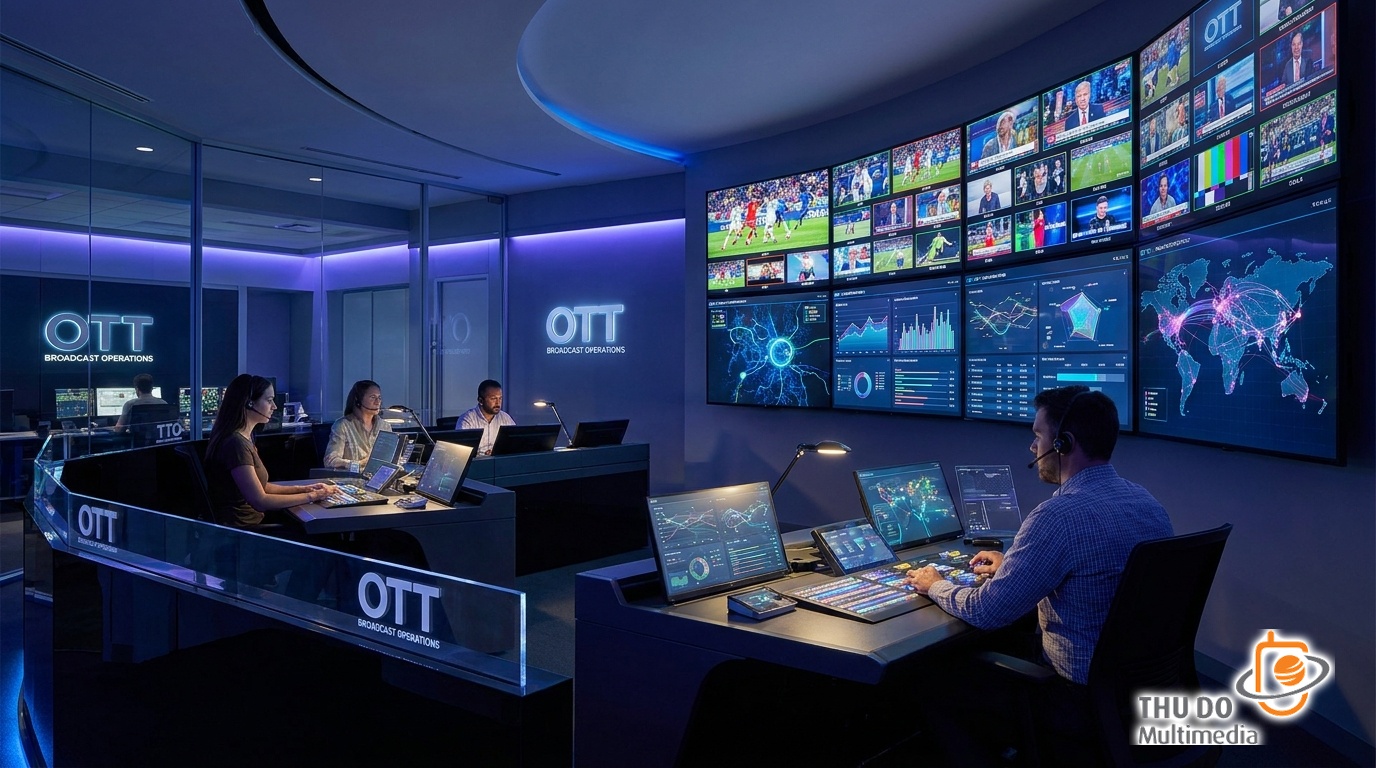
When scaling massive content libraries across international borders, the speed and cost efficiencies offered by automated subtitling in multilingual OTT are simply unmatched by human-only workflows. Analyzing financial expenditures reveals that traditional subtitling agencies charge exorbitant per-minute rates, creating insurmountable budget barriers for mid-tier platforms. AI-driven subtitling slashes these operational costs by up to 80% while accelerating delivery times from weeks to mere minutes, empowering services to expand their global footprint rapidly.
However, speed must never compromise technical quality; adhering to professional reading standards is critical for viewer retention. Advanced automated systems are programmed to maintain strict subtitle reading speed benchmarks, typically capping output between 15 to 20 characters or words per second to prevent cognitive overload for viewers. If subtitles flash too quickly or exceed safe line-length parameters, audience frustration spikes, leading to immediate drop-offs in viewer engagement.
Beyond formatting, compliance and accessibility are paramount. Automated captioning tools help streaming services effortlessly meet legal accessibility mandates—such as FCC and European Accessibility Act guidelines—across diverse global territories. This is achieved through sophisticated machine learning for media localization, where adaptive AI models continuously improve subtitle accuracy by learning from cultural nuances, slang, regional idioms, and feedback loops over time, ensuring hyper-localized accuracy for every new title released.
Overcoming Quality Challenges: The Hybrid Human-in-the-Loop (HITL) Approach
Despite the remarkable advancements in artificial intelligence, pure machine translation can occasionally misinterpret complex idioms, subtle metaphors, or region-specific cultural references, posing potential risks to brand reputation. Acknowledging these AI limitations and occasional hallucinations is the first step toward building a robust localization strategy. If left unchecked, unedited machine translations can result in culturally tone-deaf subtitles or robotic-sounding dialogue that alienates discerning audiences.
To eliminate these risks, industry leaders rely on the power of hybrid quality assurance, commonly known as the Human-in-the-Loop (HITL) approach. This methodology combines high-speed AI automation with expert human oversight, guaranteeing optimal cultural nuance, contextual accuracy, and strict readability standards. AI handles the heavy lifting of transcription, initial translation, and timing synchronization, while human linguists step in for the final polish, ensuring that creative intent and emotional subtlety shine through.
From an economic perspective, this model optimizes resource allocation across the entire organization. Instead of wasting skilled human linguists on tedious, repetitive transcription and baseline translation work, HITL empowers them to focus exclusively on creative polish, quality control, and regional cultural consulting. This synergistic balance between artificial intelligence and human expertise delivers enterprise-grade localization quality at a fraction of the traditional cost and time investment.

The Future of Cross-Lingual Video Content Distribution & Market Growth
The financial trajectory of the global AI localization for OTT market underscores a massive paradigm shift in digital entertainment. According to recent industry reports, the market is scaling rapidly from USD 0.72 billion in 2025 to USD 0.91 billion in 2026, and is projected to surge toward USD 2.53 billion by 2031. This unprecedented financial expansion highlights the urgent industry-wide transition toward automated, software-driven localization solutions.
A Compound Annual Growth Rate (CAGR) of 22.70% signifies immense opportunity for investors, media executives, and technology providers within the streaming ecosystem. This growth is further validated by massive platform expansion case studies. For instance, industry benchmarks show Disney+ expanding its audio support to a staggering 58 languages by adding 17 new languages and incorporating right-to-left (RTL) user interfaces, proving that multi-lingual accessibility is the ultimate driver of international subscriber acquisition.
Ultimately, mastering cross-lingual video content distribution, generative AI in audio localization, and scalable subtitling and dubbing for VOD empowers streaming platforms to future-proof their operations. By integrating these advanced capabilities, services can break down remaining language barriers, capture untapped international viewer segments, and secure long-term profitability in an increasingly borderless digital media landscape.
Câu hỏi thường gặp
What is AI localization in OTT streaming?
AI localization in OTT streaming is the automated process of adapting video content, audio tracks, subtitles, metadata, and user interfaces for international audiences using artificial intelligence, machine learning, voice cloning, and neural translation technologies.
How does AI dubbing work for live sports and events?
Real-time AI dubbing systems ingest live audio feeds, transcribe the commentary, translate it instantly into target languages, apply voice cloning and emotion transfer, and synthesize new audio tracks simultaneously with minimal broadcast latency for live broadcasts.
Why is the human-in-the-loop (HITL) approach necessary in AI video localization?
While AI automates massive workloads at high speeds, human-in-the-loop (HITL) oversight is essential to catch contextual errors, preserve cultural nuances, adapt local idioms, and ensure subtitles adhere strictly to professional reading speed standards.
What are the five key layers of a complete OTT localization strategy?
A comprehensive localization strategy covers audio localization (dubbing and voiceover), subtitle and caption generation, metadata translation (titles and tags), user interface (UI/UX) adaptation, and payment and regulatory compliance localization.
Recent Comments