
AI in Localization: Breaking Language Barriers in Multi-Lingual OTT Markets is transforming how streaming services scale international catalogs, replacing slow manual workflows with instant neural translation, voice cloning, and automated subtitling to combat subscriber churn across global regions.
Key Takeaways
* Explosive Market Valuation: The global AI localization for OTT market is surging from USD 0.72 billion in 2025 to USD 0.91 billion in 2026, projecting toward USD 2.53 billion by 2031 at a 22.70% CAGR.
* Massive Platform Expansion: Major players like Disney+ have expanded audio support to 58 languages, adding 17 new languages alongside right-to-left user interfaces for Arabic and Hebrew speakers.
* Live Event Integration: Real-time AI dubbing solutions are actively deployed by global sports organizations like NASCAR, Ligue 1, and the Australian Open for simultaneous multi-language broadcasts.
* Hybrid Quality Assurance: Combining advanced AI automation with human-in-the-loop (HITL) oversight remains essential to maintain cultural nuance and strict subtitle reading standards.
Introduction: The Localization Bottleneck in Modern OTT Expansion
Imagine launching your premium streaming service in vibrant new international markets like Mexico City, Jakarta, or Munich, only to watch subscriber growth flatline within ninety days. In our experience working with media executives, this catastrophic retention trap almost always stems from a catalog that feels fundamentally foreign—lacking native audio tracks, featuring clunky subtitles, or missing regional cultural context entirely. When viewers open an app and find their native language unsupported, they bounce immediately, turning to local competitors who speak directly to their cultural identity. This high-stakes reality has made comprehensive localization a do-or-die requirement for modern over-the-top (OTT) streaming platforms aiming for sustainable global expansion.
The underlying challenge, however, is a severe scaling crisis within traditional localization pipelines. Historically, adapting a single season of a television show required a grueling sequence of casting voice actors, booking physical recording studios, manual mixing, and painstaking audio synchronization. Doing this for thousands of hours of content across dozens of languages is simply too slow and expensive for modern global release schedules, which demand simultaneous day-and-date drops worldwide. To compete effectively against industry titans like Netflix, Disney+, and Amazon Prime Video, emerging and mid-tier streaming services must adopt AI in Localization: Breaking Language Barriers in Multi-Lingual OTT Markets as a core technological pillar rather than an optional add-on.
This strategic shift represents a complete paradigm change in media supply chains. By harnessing generative AI in multilingual video localization, platforms can bypass traditional capacity bottlenecks, slashing turnaround times from months to mere days. Throughout this article, we will examine the five core layers of OTT localization, analyze staggering market growth metrics, explore groundbreaking technological breakthroughs in voice cloning, and provide a clear roadmap for integrating AI tools into existing Language Service Provider (LSP) workflows.
What Are the Five Layers of Comprehensive OTT Localization?
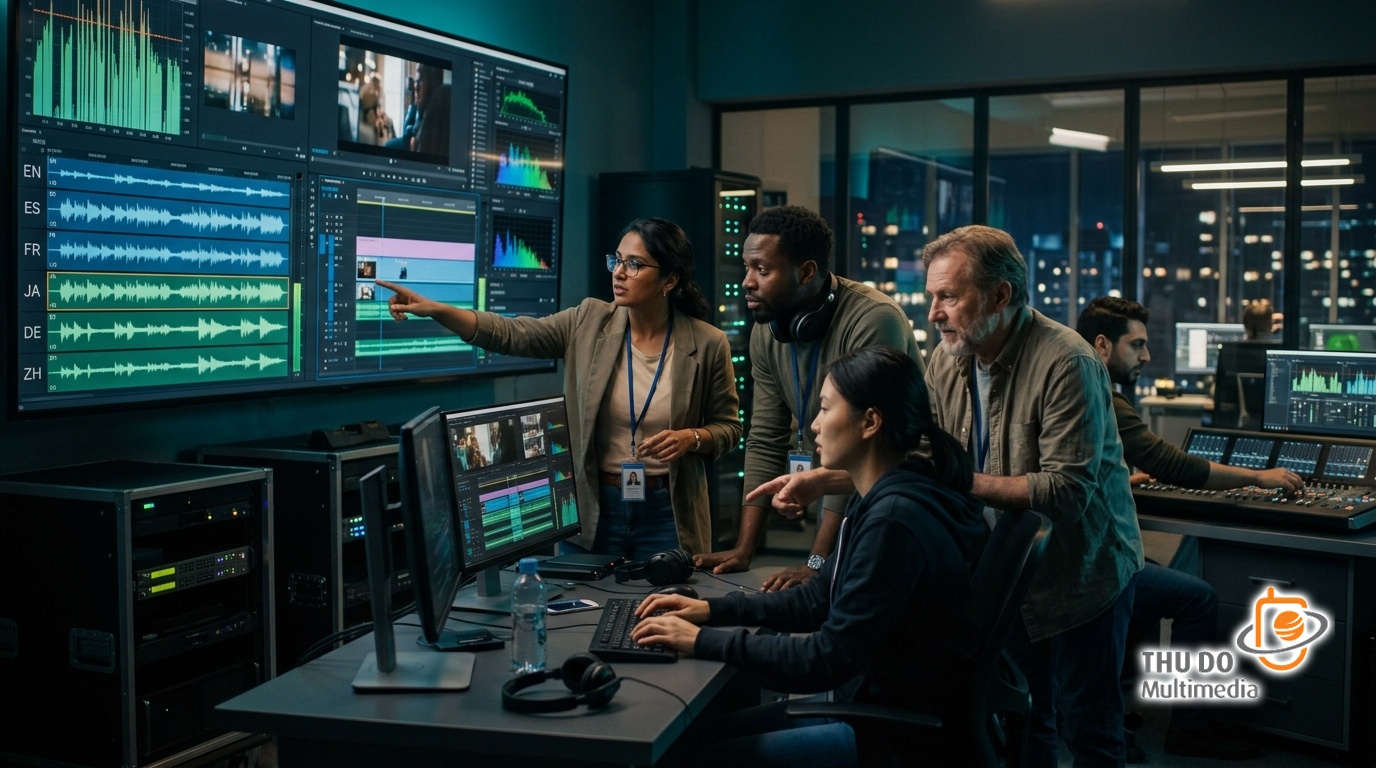
Breaking down the modern localization framework reveals five distinct operational layers that streaming platforms must master: Audio Localization, Subtitle and Caption Generation, Metadata Optimization, UI/UX Adaptation, and Regulatory Compliance. Each layer demands specialized technological handling to ensure that the end-user experience feels native, seamless, and emotionally resonant. Ignoring even one of these layers—such as failing to localize metadata search tags—can render an otherwise brilliantly dubbed series completely undiscoverable within regional content carousels.
Audio localization represents the most complex layer, encompassing traditional dubbing and voiceover work. Regional preferences vary dramatically across the globe: audiences in Germany, France, Spain, and Latin America strongly prefer fully dubbed content, whereas viewers in Scandinavia, the Netherlands, and parts of Asia lean heavily toward subtitled originals. To service these diverse preferences efficiently, streaming networks now rely on AI dubbing for OTT streaming platforms powered by sophisticated AI voice cloning for streaming content. These modern systems analyze source audio, extract vocal textures, and generate fully localized voice tracks that preserve the original actor’s emotional inflection across target languages without requiring physical studio sessions.
Beyond spoken audio, subtitle and caption generation serve as the baseline of accessible streaming. Automated pipelines must handle high-speed transcriptions, precise translations, and meticulous timing synchronization across more than 150 languages simultaneously. According to industry benchmarks, automated video subtitling and closed captioning systems must strictly adhere to reading speed standards, typically maintaining 15 to 20 parameters per second to prevent viewer fatigue. Meanwhile, the metadata and UI/UX layers require translating titles, descriptions, and genre tags, while adapting search algorithms and handling regional currency and regulatory compliances to ensure a frictionless user journey from the moment a subscriber opens the application.
How Does Market Growth Accelerate Cross-Border OTT Releases?
The financial trajectory of AI-driven media adaptation reflects an industry undergoing total transformation. The global AI localization for OTT market is valued at USD 0.72 billion in 2025, scaling rapidly to USD 0.91 billion in 2026, and projected to surge toward a massive USD 2.53 billion by 2031 at a robust 22.70% CAGR. This extraordinary financial expansion is driven by streaming providers desperately seeking cost-effective media translation for OTT services to fuel simultaneous worldwide releases. Traditional staggered release models, which exposed studios to rampant piracy and lost marketing momentum, are rapidly becoming obsolete as instantaneous AI deployment takes over.
Real-world adoption by industry giants illustrates the sheer scale of this transformation. In July 2026, Disney+ made headlines by expanding its audio support to 58 languages, adding 17 new languages alongside a specialized right-to-left user interface designed specifically for Arabic and Hebrew speakers. This structural overhaul eliminated historical technical barriers, allowing millions of new subscribers to navigate catalogs and consume content in their native tongues seamlessly. Similarly, regional case studies highlight surging demand: in India, a clear majority of Amazon Prime Video customers stream content across multiple languages, cementing multilingual originals and robust dubbing libraries as a mandatory baseline for customer acquisition and retention.
Furthermore, international markets are pioneering unique content export models. South Korea’s K-FAST program has successfully scaled domestic television catalogs into English, Spanish, and Portuguese using automated localization pipelines, turning niche regional broadcasts into global streaming hits. In Japan, retail and video-on-demand hybrid platforms like QVC Japan have introduced multilingual AI subtitles to make vast archival catalogs accessible to inbound tourists and international expatriates. These examples demonstrate that mastering cross-border localization is no longer reserved for Hollywood conglomerates; it is an accessible engine for international growth across every corner of the media landscape.
What Are the Technological Breakthroughs in Generative AI and Voice Cloning?
The technological engine powering modern localization is rooted in advanced machine learning and neural architectures. By deploying neural machine translation for entertainment media, streaming platforms can transform raw scripts into culturally nuanced dialogue that respects local idioms, humor, and social norms far better than literal, word-for-word translations. Generative models analyze the broader narrative context of a scene, ensuring that dialogue adjustments maintain character intent and dramatic tension across radically different linguistic structures.
Voice cloning and emotion transfer represent the crowning achievement of modern audio engineering. Traditional dubbing often suffers from a jarring disconnect where the translated voice lacks the emotional weight, breathiness, or anger of the original on-screen performance. Modern AI tools overcome this by mapping the original actor’s vocal texture and micro-inflections, transferring those exact emotional signatures into the newly generated voice tracks across multiple target languages simultaneously. Whether an actor is whispering a secret or screaming in terror, the AI-generated voice mirrors that exact psychological state.
The frontier of this technology now extends directly into live broadcasting. Real-time live AI dubbing systems—such as DubStream—generate simultaneous multi-language commentary feeds for live broadcasts without noticeable audio lag. Major sports organizations, including NASCAR, Ligue 1, and the Australian Open, actively utilize these real-time pipelines to stream live sporting events in dozens of languages concurrently. This technological leap ensures that global audiences experience live events with the same emotional intensity and immediacy as local fans in the stadium.
How Can LSPs Optimize Productivity Through Integrated Workflows?
As Language Service Providers (LSPs) rush to adopt automation, a dangerous pitfall has emerged: blind automation. According to findings from the ACL Anthology on multimedia localization workflows, workflows that merely substitute human vendors with raw, unfiltered AI tools often experience severe quality degradation. Without human oversight, raw AI translations frequently introduce unnatural phrasing, missed cultural nuances, and syntax errors that ultimately fail to justify any initial productivity gains. High-end streaming services cannot afford the brand damage associated with botched subtitle timing or robotic, emotionless voice tracks.
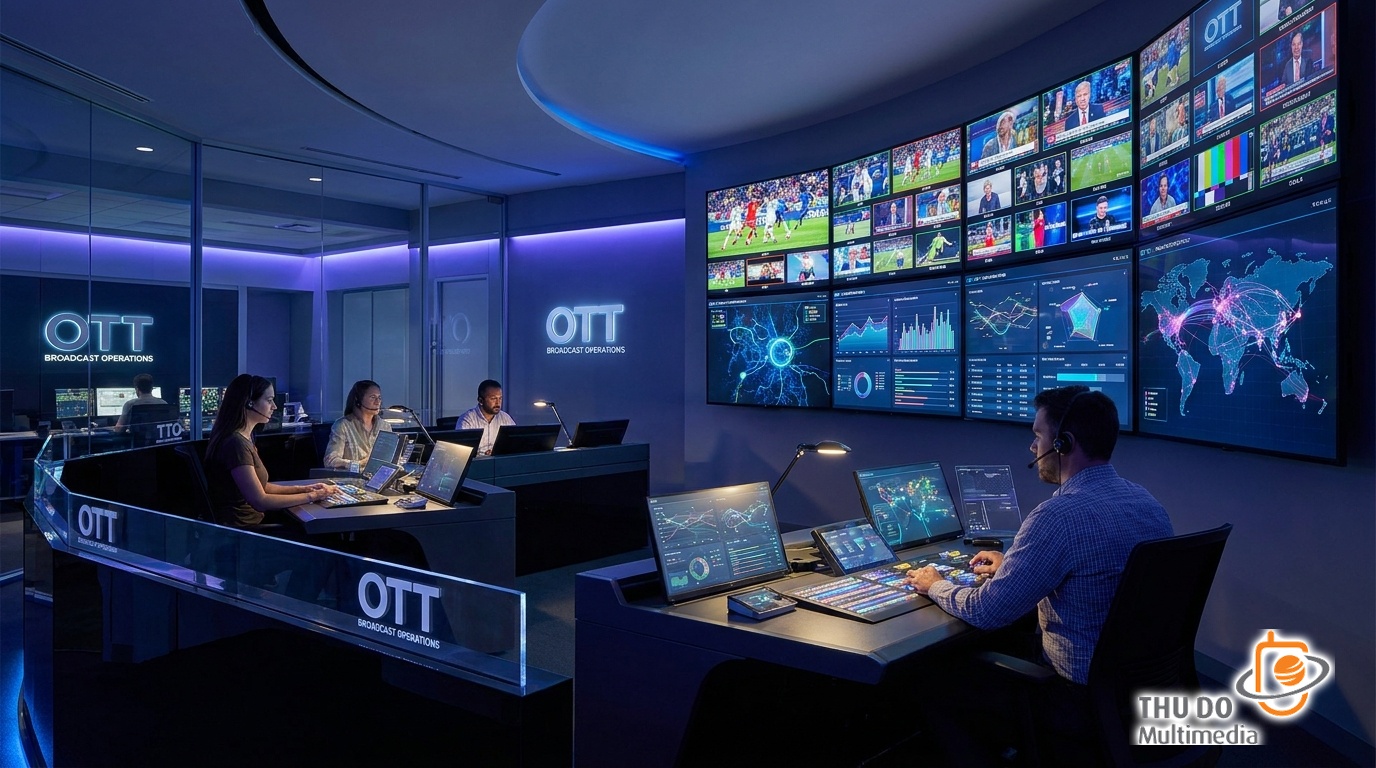
To solve this, industry leaders advocate for integrated hybrid workflows. In these ecosystems, natural language processing in video localization handles the heavy lifting—drafting initial transcriptions, baseline translations, and preliminary voice cloning passes. Human editors, specialized spotters, and cultural consultants then step in as quality assurance guardians, refining the output and ensuring absolute emotional and cultural accuracy. This human-in-the-loop (HITL) model enhances overall operational productivity while preserving the professional quality standards that discerning OTT subscribers expect.
Moreover, these AI tools are designed to complement, rather than entirely replace, established transnational localization providers like Iyuno, VSI, and Deluxe. By alleviating the severe capacity bottlenecks that plague traditional vendor pipelines during simultaneous global rollouts, AI-driven pre-processing empowers these legacy powerhouses to scale their operations efficiently. LSPs that successfully train their staff to master these hybrid operating practices will dominate the market, balancing industrial-grade scale with uncompromising artistic integrity.
Overcoming Cost and Scale Barriers in OTT Expansion
Expanding an OTT platform into new international territories historically required astronomical capital expenditures, often pricing smaller regional services out of the global market. Today, by leveraging cost-effective media translation technologies, streaming providers can localize entire content seasons in days rather than months, dramatically slashing per-minute localization costs. This democratization of content distribution allows independent studios and niche subscription services to test new international markets with minimal financial risk, scaling their localization investments dynamically based on actual subscriber uptake.
Achieving this economic efficiency requires careful architectural integration within existing Media Asset Management (MAM) and Digital Supply Chain systems. Platforms must embed automated localization APIs directly into their ingestion workflows, ensuring that incoming master files are automatically queued for transcription, translation, voice synthesis, and quality scoring. This automated pipeline management eliminates manual file transfers and administrative overhead, allowing project managers to oversee dozens of language versions of a single title from a single dashboard.
However, balancing scale with quality remains an ongoing strategic imperative. Streaming platforms must deploy AI in Localization: Breaking Language Barriers in Multi-Lingual OTT Markets with clear governance frameworks, establishing automated confidence scores and mandatory human review thresholds for high-profile tentpole releases. By combining the blinding speed of machine learning with rigorous editorial oversight, OTT providers can break down language barriers permanently, delivering rich, localized storytelling to every corner of the globe.

Câu hỏi thường gặp
Q1: How does AI dubbing work for OTT streaming platforms?
Answer: AI dubbing automates video translation by first transcribing the source dialogue using speech-to-text algorithms, translating the text via neural machine translation, and then generating new voice tracks using advanced voice cloning and emotion transfer technology. Finally, it synchronizes the generated audio timing to match the original video actors’ lip movements and expressions.
Q2: What is the difference between AI subtitling and traditional subtitling?
Answer: Traditional subtitling relies entirely on human translators, spotters, and quality controllers to manually transcribe, translate, and time-code dialogue, which can take weeks or months. AI subtitling automates transcription, translation, and time synchronization across 150+ languages instantly, allowing platforms to scale up content libraries while adhering strictly to reading speed standards.
Q3: Can AI localization handle live streaming events like sports and news?
Answer: Yes. Modern real-time AI dubbing platforms (such as DubStream) utilize low-latency speech processing to ingest a single-source live broadcast, translate the commentary, and generate simultaneous multi-language audio feeds without noticeable broadcast delay, as currently utilized by brands like NASCAR and the Australian Open.
Q4: Does AI replace human translators in media localization workflows?
Answer: Not entirely. Industry research indicates that completely replacing human vendors with raw AI tools often results in quality degradation and unnatural phrasing. Instead, successful Language Service Providers (LSPs) use integrated, hybrid workflows where AI handles heavy lifting (drafting translations and baseline voice generation) while human editors provide final quality assurance, cultural nuance checks, and fine-tuning.
Recent Comments