
Direct Answer: AVOD and FAST channels are dominating the 2027 OTT landscape by capturing over 70% of total television viewing time. Facing severe subscription fatigue, modern audiences are actively migrating away from expensive paywalls toward hybrid, ad-supported environments that deliver zero-dollar entertainment entry points without sacrificing content quality.
Key Takeaways:
- Streaming reached a milestone 47.5% share of total U.S. TV viewing by late 2025, with nearly 73% of total TV viewing in Q1 2026 occurring in ad-supported environments.
- Connected TV (CTV) households are projected to surpass 121 million by 2027, commanding roughly 28–30% of total programmatic advertising budgets.
- Approximately 68% of U.S. households subscribing to traditional SVOD services now actively utilize at least one ad-supported tier, up from 54% a year prior.
The Death of Pure SVOD: Subscription Fatigue and Market Saturation in 2027
In our experience tracking the media ecosystem, the era of unbridled subscription growth has officially hit a brick wall. We have witnessed a profound psychological and financial tipping point where managing five to seven individual fifteen-dollar-a-month streaming services has sparked widespread consumer revolt. Subscribers are no longer willing to tolerate an ever-expanding patchwork of walled gardens. This financial friction has triggered soaring churn rates, catching legacy media giants off guard and forcing a frantic pivot into the efficiency era. The foundational narrative of the “streaming wars”—which burned billions of dollars on user acquisition without securing a clear, repeatable path to profitability—is dead.
The data underlying this shift highlights deep structural vulnerabilities in the legacy SVOD-only framework. While streaming captured a record 47.5% share of total U.S. TV viewing by the end of 2025, that metric masked severe financial turbulence behind the scenes. Broadcasters realized that subscriber acquisition costs (CAC) were rapidly outpacing lifetime value (LTV). As inflation tightened household budgets globally, consumers began pruning their digital subscriptions with ruthless efficiency. This market reality directly fueled SVOD churn and the rise of AVOD, creating an urgent mandate for media executives to re-architect their distribution models around ad-supported monetization.
To survive this reckoning, forward-thinking platforms are integrating hybrid tiers and free streaming options directly into their core applications. Industry leaders like StreamTech Global and their proprietary OmniStream OTT Engine have spearheaded this architectural transition, providing broadcasters with modular infrastructure that instantly converts high-churn SVOD environments into resilient ad-supported ecosystems. By deploying sophisticated machine learning algorithms that predict subscriber drop-off windows, these platforms dynamically transition price-sensitive users to free ad-supported tiers rather than losing them to competitor churn.

Why Viewers Are Rejection-Ready: The Economics of Subscription Fatigue
The modern consumer views digital subscriptions through the lens of utility and diminishing returns. When every network launched its own isolated app, they inadvertently recreated the worst aspects of the legacy cable bundle—minus the unified guide. Viewers are rejection-ready because the cumulative monthly cost of fragmented streaming apps now rivals or exceeds traditional cable bills. In response, audiences are voting with their remotes, abandoning platforms that demand upfront capital commitments for content they only watch occasionally.
The Shift from Subscriber Growth Metrics to Average Revenue Per User (ARPU) Efficiency
Wall Street has completely rewritten the playbook for media valuation. The era of rewarding sheer subscriber volume at all costs has given way to a relentless focus on Average Revenue Per User (ARPU) efficiency and operating margins. Broadcasters are discovering that a monthly active user (MAU) in an ad-supported environment often generates superior lifetime ARPU compared to a heavily discounted, churn-prone SVOD subscriber. This metric shift mandates that engineering and product teams prioritize ad-load optimization and programmatic yield over vanity subscriber counts.
Mainstream Dominance: How Ad-Supported Streaming Captured Over 70% of Viewing
Ad-supported television has undergone a radical cultural and economic rehabilitation. Once dismissed as a secondary, low-brow alternative to premium subscription services, ad-supported environments now command the vast majority of total television viewing time. This transformation did not happen overnight; it was engineered by shifting consumer expectations, better ad-load pacing, and the undeniable appeal of free entertainment. Today’s viewers actively embrace targeted advertising as a fair trade-off for zero-dollar access to premium Hollywood movies, live sports, and binge-worthy series.
The scale of this shift is staggering. According to Nielsen and FurtherTV data, nearly 73% of total television viewing occurred in ad-supported environments, with streaming capturing 46.6% of that ad-supported share. Furthermore, ad-supported video on demand trends 2027 indicate that younger demographics are anchoring the entire medium. Streaming represents roughly 66.7% of the time adults aged 18 to 49 spend watching ad-supported television, with over 81% of their streaming consumption occurring on ad-backed juggernauts like YouTube, Hulu, Prime Video, and Peacock.
“The psychological barrier of watching commercials has completely dissolved. Modern viewers are conditioned by digital platforms to accept relevant advertising in exchange for financial relief, provided the ad experience is frictionless and non-disruptive.” — Global OTT Strategy Group Report
Generational Shifts: Why Adults 18–49 Prefer Hybrid Ecosystems Over Paywalls
Younger demographics—Millennials and Gen Z—possess very little historical loyalty to traditional pay-TV bundles. Having grown up with ad-supported social video platforms, they view commercial breaks as an acceptable, native component of digital entertainment. Rather than paying twenty dollars a month to avoid ads, these cohorts prefer hybrid ecosystems that let them curate their viewing experiences across multiple free and low-cost apps. Platforms that fail to offer flexible, ad-backed tiers are effectively locking themselves out of the most economically active media consumption demographic.
The Convergence of SVOD and AVOD: Blurring Lines in Modern Monetization
The traditional boundaries separating SVOD, AVOD, and FAST are officially extinct. The modern streaming application is a fluid, multi-tiered ecosystem where a single user interface seamlessly blends subscription-only premieres, on-demand ad-supported libraries, and 24/7 linear channel guides. This convergence allows media companies to monetize every single user touchpoint. Whether a viewer is willing to pay for an ad-free experience or prefers a zero-dollar ad-supported session, the underlying platform captures monetization value, maximizing overall portfolio yield.
Unleashing Profitability: Advanced Monetization Strategies for FAST Channels
Free Ad-Supported Streaming TV (FAST) has evolved from a digital dumping ground for archival content into a highly sophisticated, high-margin broadcasting powerhouse. Media operators are discovering that pre-produced content libraries represent an untapped goldmine when packaged correctly. By pairing legacy catalogs with intelligent curation and modern programmatic ad architecture, networks are generating massive advertising yields without incurring the runaway production costs associated with original prestige programming.
However, extracting maximum profitability requires moving beyond static, loop-based linear feeds. The most successful monetization strategies for FAST channels leverage hybrid architectures that merge linear channel scheduling with on-demand library access and interactive viewer features. Broadcasters are utilizing tools like StreamTech Global’s FAST-Engine Studio to automate channel creation, dynamically ingest metadata, and schedule programming based on real-time audience telemetry, ensuring that ad inventory is always aligned with peak viewership demographics.
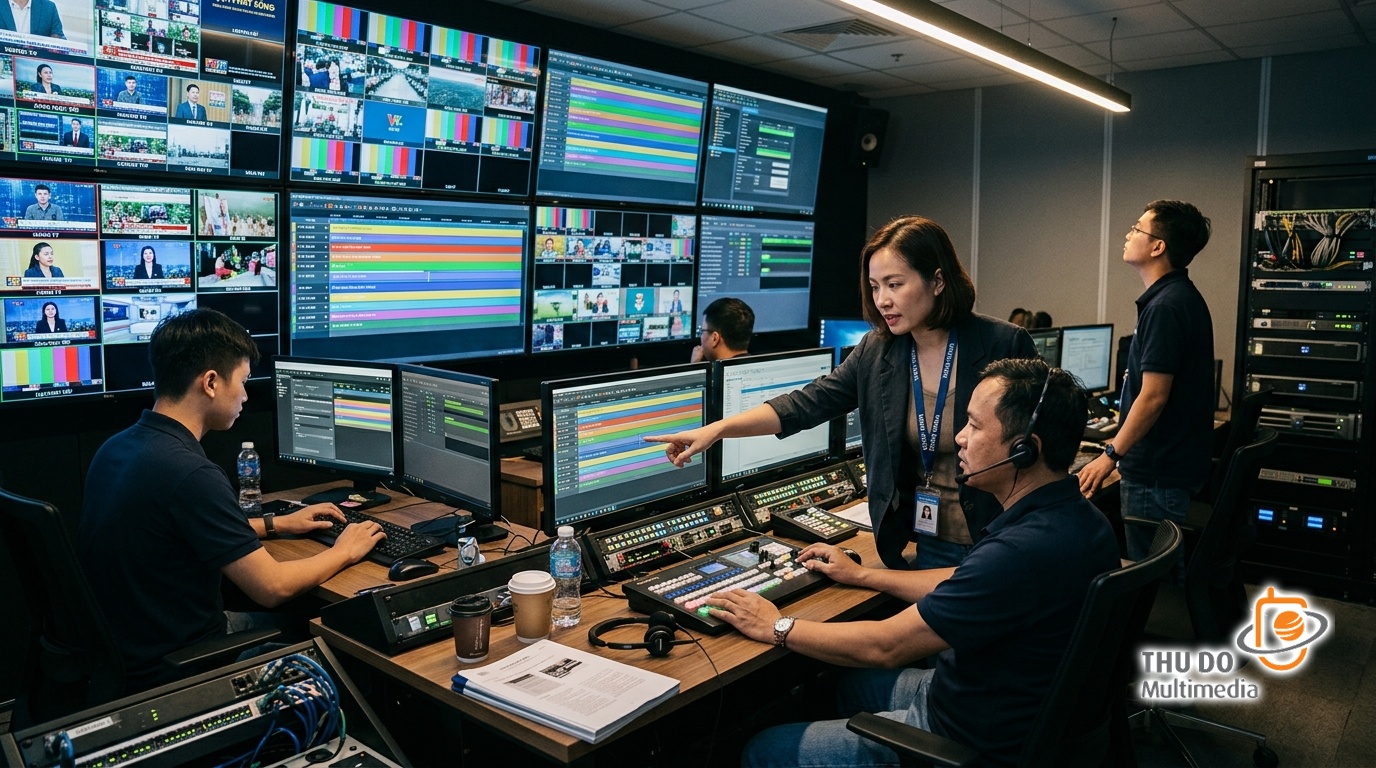
Dynamic Ad Insertion (DAI) and Server-Side Ad Insertion (SSAI) Realities
The technical backbone of modern FAST profitability relies entirely on flawless ad delivery. Client-side ad insertion is rapidly disappearing due to ad-blockers and latency issues, replaced by advanced Server-Side Ad Insertion (SSAI). SSAI stitches advertisements directly into the video manifest stream at the server level, delivering a seamless broadcast-quality experience that bypasses client-side interference. For programmatic buyers, this infrastructure guarantees viewability and enables hyper-targeted addressable advertising down to the household or geographic level.
Revitalizing Content Catalogs: Merging Linear Lineups with On-Demand Libraries
Content discovery fatigue is a real threat to FAST channel retention. To combat this, leading networks are fusing the passive comfort of linear television with the agency of on-demand libraries. When a viewer drops into a live FAST channel stream but wants to watch the beginning of a movie, modern OTT platforms instantly prompt them to jump into the associated AVOD on-demand catalog. This intelligent routing keeps users inside the ecosystem longer, multiplying total ad impressions and boosting overall platform monetization.
Targeting the Price-Sensitive Viewer: Behavioral Shifts in Emerging OTT Markets
Macroeconomic headwinds, global inflation, and tightening household budgets have fundamentally altered how audiences consume media. Price-sensitive viewers across both mature Western markets and emerging territories (such as Latin America, Southeast Asia, and parts of EMEA) are displaying unprecedented intolerance for subscription price hikes. In these environments, price-sensitive streaming audience behavior dictates that mobile-first viewing and ultra-low-cost connected hardware take precedence over living-room exclusivity.
The democratization of affordable connected devices—ranging from budget smart TVs to low-cost streaming sticks—has ignited massive viewership growth in price-sensitive regions. These audiences demand instantaneous, frictionless access to entertainment. They expect applications to load instantly on fluctuating cellular or broadband networks without buffering. Broadcasters targeting these demographics must build lightweight, adaptive streaming pipelines that deliver high visual fidelity even under challenging network conditions, ensuring that zero-dollar entry points remain accessible to all socioeconomic tiers.
The Psychology of “Zero-Dollar” Entertainment Entry Points
The psychological appeal of a platform that costs nothing cannot be overstated. In price-sensitive markets, the mere absence of a paywall lowers user acquisition friction to absolute zero. Consumers are willing to download multiple ad-supported apps because there is no financial risk involved. This behavioral shift has transformed FAST and AVOD apps into the default discovery portals for modern entertainment, where users spend significant time browsing free channels before ever considering a paid transaction.
Balancing Content Quality with Cost Controls for Budget-Conscious Consumers
Serving price-sensitive audiences profitably requires a delicate balancing act between content appeal and operational overhead. Broadcasters cannot afford bloated licensing fees for niche programming. Instead, successful operators utilize data-driven curation to license high-affinity niche genres—such as true crime, reality television, and localized sports—that command loyal, highly engaged audiences while keeping content acquisition costs strictly controlled.
The CTV Explosion: Scaling Infrastructure for the 2027 Advertising Boom
Connected TV (CTV) has decisively eclipsed traditional linear television as the primary battleground for brand advertising dollars. With CTV households projected to surge past 121 million U.S. households by 2027, advertisers are aggressively shifting massive budgets into the ecosystem. Currently, connected TV advertising in emerging OTT markets accounts for roughly 28–30% of all programmatic ad spend, a figure that continues to climb as addressable targeting capabilities outperform legacy broadcast buys.
This explosive growth is driving unprecedented structural consolidation across the media landscape. Major corporate mergers and acquisitions—such as Fox acquiring Roku and studio conglomerates consolidating streaming portfolios—are reshaping the competitive terrain. Independent FAST and AVOD networks must navigate these M&A waves by aligning with robust technology partners who can guarantee programmatic scale, enterprise-grade security, and universal device interoperability across fragmented hardware ecosystems.
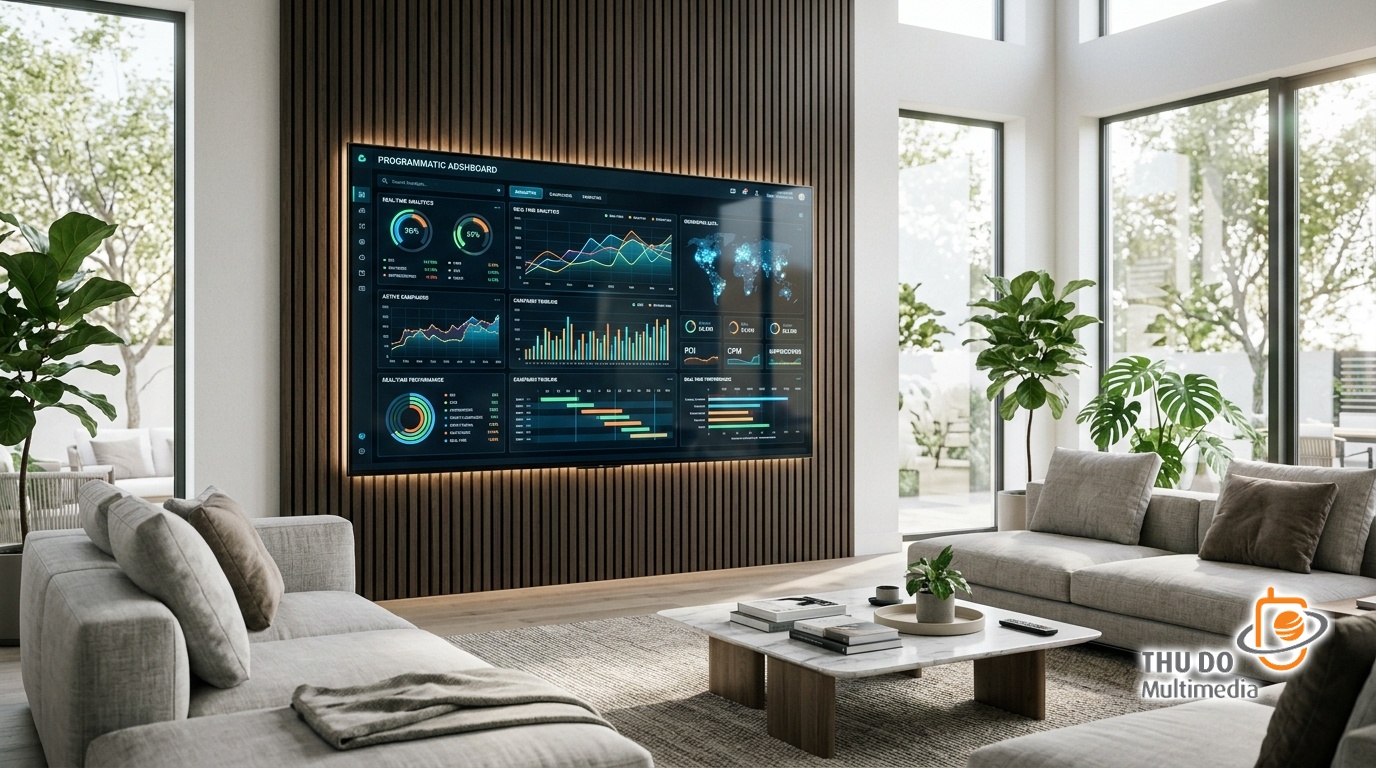
Programmatic Yield Optimization and CTV Ad Spend Allocations
As programmatic budgets flood into CTV, automated yield optimization has become the holy grail for network operators. Advertisers no longer buy broad dayparts; they demand audience guarantees, viewability verification, and precise frequency capping. Utilizing programmatic platforms integrated with real-time bidding (RTB) exchanges allows broadcasters to auction their ad inventory to the highest bidder in milliseconds, maximizing yield per impression while ensuring brand safety across all distributed channels.
Industry Consolidation: Navigating M&A Waves Among Major FAST and Roku Players
The rapid maturation of the free ad-supported streaming tv market growth has turned the industry into a playground for mega-corporations. As standalone platforms get absorbed by hardware giants and major studios, independent broadcasters face the challenge of maintaining carriage and visibility. Partnering with enterprise-grade OTT infrastructure providers ensures that mid-sized networks retain ownership of their data and monetization channels, insulating them from the disruptions caused by industry-wide corporate consolidation.
The Blueprint for Broadcasters: The Future of Hybrid OTT Business Models
As we look toward the realities of 2027, media executives must transition from experimental digital strategies to hardened, scalable infrastructure. The future of hybrid OTT business models belongs to operators who successfully unify FAST, AVOD, and premium SVOD tiers into a single, cohesive technical stack. Building this unbreakable ecosystem requires meticulous attention to underlying delivery mechanisms, ensuring that multi-format video streams flow efficiently from cloud storage to end-user devices without latency or buffering.
To execute this blueprint successfully, broadcasters rely on battle-tested enterprise solutions. StreamTech Global provides the comprehensive technological foundation needed to orchestrate this complexity. By combining carrier-grade Content Delivery Networks (CDNs), optimized video codecs, Server-Side Ad Insertion, and automated channel scheduling into a unified platform, StreamTech Global empowers media companies to dominate price-sensitive markets, eliminate SVOD churn, and maximize programmatic ad yields sustainably.
Tech Stack Essentials: CDNs, Codecs, and Low-Latency Delivery
Delivering high-definition hybrid streams to millions of concurrent viewers requires a state-of-the-art technical foundation. Broadcasters must deploy multi-CDN architectures combined with next-generation video codecs (such as AV1 and HEVC) to drastically reduce bandwidth consumption while preserving crystal-clear image quality. Furthermore, ultra-low-latency delivery pipelines are mandatory for hybrid platforms that seamlessly blend live linear FAST feeds with interactive, on-demand AVOD content.
Building an Unbreakable OTT Ecosystem: Combining FAST, AVOD, and Premium Tiers
The ultimate winner in the 2027 streaming economy will not be the company with the biggest content budget, but the one with the most agile monetization engine. By architecting a platform that effortlessly guides viewers from free linear FAST channels to targeted AVOD libraries and optional premium tiers, broadcasters create an unbreakable ecosystem. This diversified revenue model insulates media companies from market volatility, guarantees long-term ARPU growth, and delivers the exact entertainment experience modern, price-sensitive consumers demand.
Frequently Asked Questions
What is the main difference between AVOD and FAST channels?
AVOD (Advertising Video on Demand) allows viewers to stream on-demand content library titles for free in exchange for watching commercials, similar to platforms like Tubi or the on-demand section of Pluto TV. In contrast, FAST (Free Ad-Supported Streaming TV) replicates the traditional linear television experience by offering scheduled, 24/7 channel feeds that users can drop into live without choosing a specific title.
Why are pure SVOD models losing market dominance by 2027?
Pure Subscription Video on Demand (SVOD) models are struggling due to severe subscription fatigue, market saturation, and rising consumer pushback against managing multiple fifteen-dollar-a-month services. This has driven sky-high churn rates, making customer acquisition financially unsustainable for media companies relying solely on recurring subscription fees.
How does Connected TV (CTV) drive ad revenue in hybrid OTT models?
Connected TV acts as the crucial bridge between traditional TV viewing habits and digital targeting precision. With CTV households projected to exceed 121 million by 2027 and programmatic ad spend allocating roughly 28–30% to CTV, advertisers can deliver addressable, high-yield ads directly to living rooms on a massive scale.
Are consumers willing to watch ads to lower their streaming costs?
Yes, definitively. Market data from Deloitte and Nielsen shows that over 68% to 73% of households and television viewers now actively engage with ad-supported environments. Furthermore, over 54% to 68% of traditional SVOD subscribers have opted into ad-supported tiers to reduce monthly expenses.
Recent Comments