Copyright infringement in the field of OTT (Over-The-Top) has become a serious and complex issue in today’s digital age. OTT is an online television and media distribution model where music, movies, and television programs are transmitted over the Internet and do not require traditional broadcasting infrastructure. On September 26, 2023, in Hanoi, the Digital Content Creation Alliance Vietnam (DCCA) in collaboration with Thủ Đô Multimedia organized a seminar titled “Solving the Copyright Protection Issue for the Music, Film, and Digital Television Industry.”
According to statistics from the Department of Radio, Television, and Electronic Information (Ministry of Information and Communications), from August 2022 to August 2023, nearly 1,000 illegal football websites like xoilac.1tiengruoi.link, xoivo4.com, coichua.net, etc., were blocked from access.
These figures were shared by Mr. Phạm Hoàng Hải, Director of the Digital Content Copyright Center at the Department of Radio, Television, and Electronic Information, Ministry of Information and Communications, during the seminar “Solving the Copyright Protection Issue for the Music, Film, and Digital Television Industry.”
Copyright infringement remains widespread on the internet. Organized by the Digital Content Creation Alliance Vietnam, the Vietnam Digital Media Association, and Thủ Đô Multimedia, the seminar held on September 26 in Hanoi focused on unique areas such as music, film, and digital television. These areas have seen a high number of copyright violations in recent times and have been challenging to address.
Mr. Vũ Kiêm Văn, Vice Chairman and Secretary-General of the Vietnam Digital Media Association, stated during the opening speech that the issue of protecting content copyrights in the digital transformation era faces numerous challenges.
According to Nguyễn Ngọc Hân, CEO of Thủ Đô Multimedia, alongside the convenience for consumers in accessing entertainment content, the digital transformation revolution also brings unprecedented challenges in terms of content security and copyright protection. This requires the development of new solutions to safeguard content from various copyright infringement risks.
Mr. Pham Hoang Hai, Director of the Digital Content Copyright Center, Department of Broadcasting, Television and Electronic Information, Ministry of Information and Communications shared about the situation of digital content copyright infringement in Vietnam.
Pham Hoang Hai, Director of the Digital Content Copyright Center, highlighted that copyright infringement in Vietnam is complex and involves numerous websites (pirate websites) that broadcast football matches and movies. According to SimilarWeb, there are approximately 70 pirate football websites with over 1.5 billion views in 2022 and 2023. Additionally, over 200 pirate movie websites attract around 120 million views per month, with the top 10 receiving more than 66 million views each month.
Recently, some pirate websites have shifted to the theft of Japanese Anime comics. Copyright infringement related to Anime comics has faced strong reactions from Japanese copyright holders regarding violations in Vietnam.
The common characteristics of many copyright-infringing websites are the use of international domains and obscured information services. They operate publicly, frequently change domains when blocked, and often include harmful advertisements, gambling, and other illegal content.
A typical method of copyright infringement is that, after content owners broadcast or publish their content on platforms like OTT, terrestrial digital television, or satellite digital television, infringing parties will engage in violations by live-streaming the content on social media or by cutting and publishing the content.
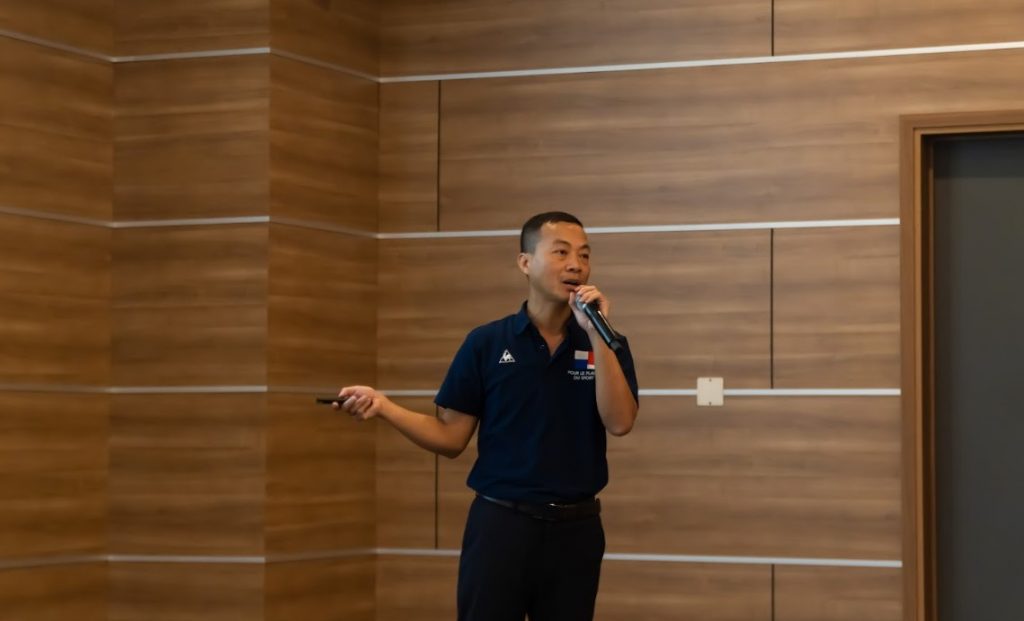
Ms. Pham Thanh Thuy, representing K+, shared the difficulties her unit has faced in the struggle against Xoi Lac TV over time – Photo: QUYEN PHAM
According to Pham Thanh Thuy, responsible for Copyright Infringement Prevention at K+, a digital television service, handling copyright infringement cases through administrative measures typically takes about 2-3 years and can extend to 4 years, as exemplified by the Phim Moi case.
In the context of the rapid development of OTT platforms, a representative from K+ revealed that Vietnam ranks third in the region for copyright infringement rates, with 15.5 million people regularly accessing pirate websites. Copyright infringement on digital platforms is now the predominant form of violation.
Content owners hope that effective copyright protection can lead to at least 10% of the 15.5 million viewers of pirate content transitioning to legal subscriptions, which would provide additional revenue for investments in higher-value content, sports programs, and better-quality films. This, in turn, would contribute to the development of the digital content creation industry in Vietnam.
Proposed proactive blocking model for copyright-violating websites
According to the assessment of a representative from the Department of Radio, Television, and Electronic Information, the application of technical measures, specifically blocking access to copyright-violating websites, has had some positive effects in changing user habits. CAP’s survey shows that 23% of internet users in Vietnam reported that they would not access or would reduce their access to pirate websites due to these blocking measures.
However, the blocking measures have some drawbacks, such as inconsistency between Internet Service Providers (ISPs) regarding the methods and timeframes for blocking. Some ISPs block access immediately, while others delay blocking for up to three days or longer. Furthermore, these measures do not effectively address newly emerging domains.
The Department of Radio, Television, and Electronic Information suggests several solutions for effective copyright infringement prevention on the internet, including establishing cooperation between copyright holders, government authorities, and ISPs; creating flexible blocking mechanisms that can adapt to new domains; and applying various appropriate technical measures (DNS, IP, CDN) for blocking access. In addition, they propose developing automatic blocking tools to minimize the time and manpower required for blocking.
Analyzing the difficulties in applying legal measures, including administrative, civil, and criminal measures, to combat copyright infringement in the digital environment, Phạm Thanh Thủy emphasizes that many countries are adopting new trends, such as proactive blocking and “Knock & Talk.”
The person in charge of Copyright Infringement Prevention at K+ added that, according to Media Partners Asia, the situation regarding infringement has improved in countries with effective blocking measures, including Vietnam. AVIA’s survey shows that the majority of viewers no longer watch pirate websites and have transitioned to legal services as pirate websites are blocked.
Phạm Thanh Thủy also suggests that Vietnam should adopt a proactive blocking model similar to the one in the UK. In this model, if pirate websites change domains or IP addresses after the first block, ISPs will proactively block these new domains or IP addresses upon receiving notifications from copyright owners or relevant government authorities without the need for further administrative procedures.
On September 26, a seminar on “Solving the Copyright Protection Puzzle for the Music, Film, and Digital Television Industry” was organized by Thudo Multimedia Company, attracting significant attention from various newspapers. Báo Tiền phong (Pioneer Newspaper) reported:
In Vietnam, up to 80% of copyright violations occur in the digital space, resulting in losses of USD 348 million in 2022 (equivalent to VND 7,000 billion). This information was shared during the seminar “Solving the Copyright Protection Puzzle for the Music, Film, and Digital Television Industry,” which was organized by the Vietnam Digital Content Creativity Alliance (DCCA) on the morning of September 26 in Hanoi.
Numerous experts, lawyers, and representatives from content providers in music, film, and digital television on digital platforms shared insights into the current state of copyright infringement, particularly within the fields of music, film, and digital television. They also proposed preventative measures and solutions to combat copyright infringements.
Mr. Vu Kiem Van, Vice President – General Secretary of Vietnam Digital Communications Association (VDCA) – affirmed that the issue of content copyright protection is currently facing difficulties.
Mr. Vu Kiem Van, Vice President and Secretary-General of the Vietnam Digital Communication Association (VDCA), emphasized the challenges faced in protecting content copyright, especially in the current digital transformation context. He suggested that delegates focus on areas with specific challenges, such as music, film, and digital television, which have experienced the most copyright infringements and are the most difficult to address.
In the rapidly developing landscape of over-the-top (OTT) digital television platforms, users have entered a new era of consuming entertainment content. However, the convenience of accessing films and distributing content has made it increasingly challenging and complex to ensure content security and copyright protection.
In the realm of sports, a representative from a broadcasting channel that purchased broadcasting rights revealed that Vietnam ranks among the top three regions in terms of copyright violations, with 15.5 million people frequently accessing unauthorized websites. This situation has led to considerable losses. “Premier League matches with broadcasting rights are freely available on the internet. If 10% of the 15.5 million unauthorized views were converted into legitimate subscribers, the revenue generated would be substantial. With this revenue, we could reinvest in more valuable products, such as sports programs and better films,” said Phạm Thanh Thủy. Copyright violations in the digital realm primarily occur on illicit websites and various applications and social networks.
Mr. Nguyen Ngoc Han, CEO of Thudo Multimedia
Nguyen Ngoc Han, the CEO of Thủ Đô Multimedia Company, revealed that in Vietnam, 80% of copyright violations take place in the digital domain, resulting in losses of USD 348 million in 2022, equivalent to VND 7,000 billion. “Copyright infringement in Vietnam is like a labyrinth. In previous years, copyright infringement was as simple as copying a set-top box for cable television. Nowadays, copyright infringement methods have become more sophisticated and complex, even extending across national borders,” stated Nguyễn Ngọc Hân.
Despite the deployment of solutions to prevent unauthorized access and distribution, current copyright protection measures are insufficient to address the existing risks. Therefore, experts and industry leaders suggest that, in addition to AI-based copyright protection technologies, there is a need for extensive cooperation among stakeholders and a clear and stringent penalty system.
On September 26th, Thudo Multimedia Company organized a seminar on ‘Solving the Copyright Protection Puzzle for the Music, Film, and Digital Television Industry,’ with the participation of many journalists from various major editorial offices tuoitre.vn news reported:
The digital revolution in the fields of television, music, and film has brought unprecedented challenges to content security and copyright protection.
The Center for Digital Content Copyright in Vietnam has stated that from August 2022 to August 2023, government agencies have blocked nearly 1,000 illegal football streaming websites, including Xoi Lac TV, which has been repeatedly blocked but continues to operate illegally. Why?
Despite being blocked multiple times, the illegal football streaming website Xoi Lac TV has continued to exist under new domain names – Screenshot taken on September 26th.
At a recent press conference of the Ministry of Information and Communications, representatives from the Broadcasting, Television, and Electronic Information Department reported that in 2023, they, along with the Information Security Department, blocked a total of 162 infringing websites.
Despite being blocked many times, the pirated football website Xoi Lac TV still blatantly exists under a new domain name – Screenshot on the afternoon of September 26
If you count websites that change their domain names, there are many more, close to a thousand. However, dealing with these entities has not met the expectations of the regulatory authorities.
This is because, as soon as the domain name is blocked, these channels quickly change their IP address and domain name, taking only 5 to 10 minutes.
The Broadcasting, Television, and Electronic Information Department gave Xoi Lac TV as the most flagrant example of an infringing copyright website, with 20 different domain names. When the authorities block one domain name, a new one appears shortly after.
This way, Xoi Lac TV has been operating illegally for nearly 5 years.
At the seminar on copyright infringement prevention in the digital environment on September 26th, Ms. Pham Thanh Thuy, in charge of copyright infringement prevention for satellite digital television K+, said that the company cannot propose administrative penalties or file civil lawsuits. Currently, the only solution is domain name blocking, which has proven to be ineffective.
“We keep fighting, keep blocking, but when they change the domain name, we block again, and we rely on the support of state management agencies,” Thuy said.
Also, at the seminar, the Center for Digital Content Copyright in Vietnam (VDCC – under the Broadcasting, Television, and Electronic Information Department) said that to make domain name blocking more effective, in the near future, they will establish a flexible blocking mechanism to chase new domain names that appear after being blocked.
Furthermore, they will develop automatic blocking tools to minimize time and human resources, as well as apply various suitable technical measures to block access.
Regarding the Xoi Lac TV case, the Broadcasting, Television, and Electronic Information Department stated that they are coordinating with the police and businesses to fight firmly. In the future, the handling of these cases will not be limited to administrative penalties but will involve higher-level sanctions.
Ms. Pham Thanh Thuy, representing K+, shared the difficulties her unit has faced in the struggle against Xoi Lac TV over time – Photo: QUYEN PHAM
Is AI the Solution?
The seminar received many opinions on the current situation of copyright infringement in digital content in general, as well as in the music, film, and digital television industries in particular.
Representatives from both businesses and government agencies shared the difficulties in preventing copyright infringements. Administrative solutions like domain blocking and lawsuits have either been ineffective or very challenging.
Representatives from Thuy Do Multimedia believe that while administrative and legal solutions have not yielded high effectiveness, businesses should proactively prevent copyright infringement using technical solutions.
The company has shared the Sigma Multi-DRM solution, which integrates artificial intelligence (AI) in copyright protection (commercial name Sigma Active Observer – SAO), helping content owners and online content distribution platforms protect the copyright of their content on the internet.”
“Recently, on September 26th, a seminar on ‘Solving the Copyright Protection Challenge for the Music, Film, and Digital Television Industry’ was held by Thudo Multimedia Company, attracting significant attention from journalists. Among them, the newspaper Tiền Phong (Vanguard) covered the event:
Copyright violations in the music, film, and digital television industries on digital platforms have been rampant, increasingly complex, and sophisticated. This calls for the establishment of an automated mechanism to block access to pirate websites, as well as tightening legal mechanisms for copyright protection.
Rampant Copyright Infringement
At the seminar ‘Solving the Copyright Protection Challenge for the Music, Film, and Digital Television Industry,’ organized by the Vietnam Digital Content Creation Alliance (DCCA) in collaboration with others on September 26th, numerous experts, lawyers, and representatives from digital content providers shared insights into the copyright infringement situation, especially in the music, film, and television industries. They proposed preventive measures and solutions to combat copyright infringements.
Mr. Vu Kiem Van, Vice Chairman and Secretary-General of the Vietnam Digital Communication Association (VDCA), emphasized that protecting content copyrights, especially in the digital context, faces significant challenges. Elaborating further on this, Mr. Pham Hoang Hai, Director of the Digital Content Copyright Center at the Radio and Television and Electronic Information Department under the Ministry of Information and Communications, pointed out that copyright violations in Vietnam are very complex, with numerous pirated websites frequently posting and illegally streaming football matches and movies.
According to data from SimilarWeb, there were approximately 70 pirated football websites with over 1.5 billion views in 2022 and 2023. Additionally, more than 200 pirated movie websites attracted about 120 million views per month, with the top 10 websites receiving over 66 million monthly views. In the past year, starting from August 2022, the Radio and Television and Electronic Information Department collaborated with the Cybersecurity Authority and copyright owners to block nearly 1,000 pirated football websites such as coichua.net, tammao.tv, xoilac.live, among others.
“Many pirated websites share a common characteristic of using international domain names and constantly changing domains when blocked. The typical form of violation by these pirated websites is the streaming of content through livestreams or cutting and posting content on social media. These contents are taken from legitimate platforms such as OTT, terrestrial digital television, satellite digital television,” stated Mr. Pham Hoang Hai. Moreover, in addition to reposting content illicitly, pirate websites often inject harmful advertisements, gambling, and betting content.
Lawyer Pham Thanh Thuy, responsible for combating copyright violations for a channel that purchased broadcasting rights for the English Premier League, mentioned that Vietnam has 15.5 million people who regularly access pirate websites, ranking it among the top three regions for copyright infringements. She added, ‘Matches from the English Premier League with copyright are widely available on the Internet. If 10% of the 15.5 million illicit views convert to legitimate subscriptions, the revenue would be significant. With this income, we can reinvest in more valuable products, purchase better sports programs and films, thereby contributing to the development of the digital content creative industry in Vietnam.’
Automated Blocking Mechanism
Regarding the extent of the damages caused by copyright infringements, Mr. Nguyen Ngoc Han, CEO of Thudo Multimedia, revealed that up to 80% of copyright violations occur on digital platforms, resulting in a loss of $348 million in 2022, equivalent to 7 trillion Vietnamese dong. Globally, copyright infringements in 2022 led to a $65 billion loss for the music, film, and television industries.
In addition to technical solutions such as access blocking and active access blocking systems, experts and delegates emphasized the role of legal measures, particularly in supporting copyright owners. Pham Thanh Thuy highlighted some challenges. Administrative, civil, and criminal enforcement measures are difficult and time-consuming. She mentioned that ‘the lawsuit against phimmoi.net has lasted four years without a result.’
Pham Hoang Hai suggested that after an extended period of implementing access-blocking measures against pirate websites, positive results have been achieved. Specifically, the number of copyright-violating links has decreased by 7%, and the access to blocked websites has dropped by 98%. Moreover, the practice of blocking pirate websites has gradually changed the internet usage habits of Vietnamese citizens. As a result, 23% of internet users in Vietnam indicated that they would not access or access pirate websites less due to the impact of access-blocking measures.
Phimmoi.net, one of the largest pirated movie viewing websites in Vietnam, has been blocked.
However, access-blocking measures still have some shortcomings. ‘We need to establish coordination between copyright owners, state management agencies, and internet service providers (ISPs). We need to establish flexible access-blocking mechanisms and block newly emerging domains after the initial block. Then, we should apply various suitable technical measures to block access,’ Pham Hoang Hai emphasized.
In line with Pham Hoang Hai’s views, Pham Thanh Thuy proposed that Vietnam should adopt a proactive blocking model similar to that of the United Kingdom. In this model, when pirate websites change domain names or IP addresses after the initial block, ISPs will actively block new domain names and IP addresses when receiving notifications from copyright owners or relevant state authorities without the need for further administrative procedures.
Acknowledging the necessity of an automated blocking system, Nguyen Ngoc Han suggested that Vietnam should leverage AI technology to enhance monitoring of all aspects of content distribution and online broadcasting. ‘The use of advanced artificial intelligence (AI) helps detect and review all data exchange activities during content distribution on the internet more quickly and accurately,’ Nguyen Ngoc Han explained.
“On September 26th, Thudo Multimedia Company organized a seminar on ‘Solving the Copyright Protection Challenge for the Music, Film, and Digital Television Industry,’ with the participation of many journalists from major editorial offices vod.vn magazine wrote:
The digital revolution in the fields of television, music, and film has brought unprecedented challenges in terms of content security and copyright protection.
Speaking at the seminar ‘Solving the Copyright Protection Challenge for the Music, Film, and Digital Television Industry’ held on September 26th, Mr. Vu Kiem Van, Vice Chairman and Secretary-General of the Vietnam Digital Communication Association (VDCA), stated that the issue of protecting content copyrights, especially in the current digital transformation context, is facing numerous challenges.
In the context of the rapidly developing digital content distribution, Over-The-Top (OTT) television platforms, and online film distributors like Netflix, Hulu, and Hotstar, have brought users into a completely new era of entertainment content consumption. The convenience of accessing movies, TV shows, and live music events on various devices has transformed how audiences interact with content.
OTT television service providers in Vietnam and online film distributors like Netflix, Hulu, and Hotstar have become essential players in the internet entertainment ecosystem by meeting the demand for unlimited content. Thus, ensuring the integrity and exclusivity of distributed content has become a critical issue, one that content owners and distributors increasingly prioritize.
“However, this digital revolution also brings unprecedented challenges in terms of content security and copyright protection, requiring the development of new solutions to protect content from various copyright infringements,” Mr. Van expressed.
According to Mr. Pham Hoang Hai, Director of the Digital Content Copyright Center at the Radio and Television and Electronic Information Department under the Ministry of Information and Communications, despite the efforts of relevant authorities to prevent copyright infringements, challenges remain.
“Measures such as domain blocking have been implemented in Vietnam, and digital rights management (DRM) solutions like Widevine, FairPlay, and PlayReady have been deployed to prevent unauthorized access and distribution. However, current copyright protection solutions are still inadequate and require a multidimensional approach to address the existing risks. Particularly, what content providers face within the DRM loophole is the exploitation of packet spoofing to deceive the license server and bypass content access authentication for untrusted accounts,” said Mr. Hai.
In addition to DRM’s shortcomings, OTT TV providers and online film distributors also face a series of other risks, demanding comprehensive copyright protection solutions, such as using screen recording devices to replay content or exploiting Virtual Private Networks (VPNs) to circumvent geographic restrictions, enabling access to content from one country to be illicitly distributed in another.
A Comprehensive Copyright Protection Shield with Technology
According to experts, in an environment of expanding content distribution and increasingly complex digital content copyright violations, facing diverse digital threats will persist in the digital environment. Alongside policy regulation and management, technology will play a vital role.
One of the technological solutions highly regarded by experts is the application of artificial intelligence (AI) to create a more comprehensive copyright protection “shield.” This is seen as an innovative solution that surpasses the limitations of traditional methods, providing a flexible and proactive defense mechanism, actively detecting and reporting copyright infringement risks.
Advanced artificial intelligence algorithms can detect and scrutinize all data exchange activities during content distribution on the internet. This solution has been implemented by major digital content creation companies worldwide, including YouTube, with its ContentID system, turning the platform into a leading revenue-generating machine in the creative industry.
The symposium on September 26th regarding “Solving the Copyright Protection Issue for the Music, Film, and Digital Television Industry” organized by Thudo Multimedia has garnered significant attention from various newspapers, including the renowned Văn Hóa Culture newspaper. They reported:
“Copyright violations in digital content are rampant but challenging to prevent. The symposium, addressing a hot and interdisciplinary topic, attracted numerous experts from the film, television, media, technology, legal, and management sectors. They participated and provided valuable insights and proposals aimed at enhancing the effectiveness of copyright protection for Vietnam’s music, film, and digital television industry in the near future.
During the symposium’s opening statement, Vice President and Secretary-General of the Digital Media Association of Vietnam, Vũ Kiêm Văn, remarked, ‘The issue of protecting content copyrights, especially in the current digital transformation context, faces numerous challenges. Over time, many specialized conferences and seminars have been organized, drawing the interest of numerous organizations and individuals related to content creation, business, management, and content distribution.
Most recently, on September 13th, the Digital Media Association of Vietnam, in collaboration with the Vietnam Journalists Association and the People’s Representative Newspaper, organized a workshop on protecting press copyrights in the digital environment. Prior to that, in April, the Digital Media Association of Vietnam, in partnership with VTC Digital Television, organized a forum on digital content creation, digital advertising, and digital copyright protection. Additionally, the Vietnam Digital Content Creative Alliance, in collaboration with domestic and international partners, organized numerous discussions and symposiums on copyright protection for films, books, music, and online games.'”
Speaking about the current state of copyright infringement and the difficulties in preventing it, Phạm Hoàng Hải, representing the Department of Broadcasting and Electronic Information (Ministry of Information and Communications), presented alarming statistics: “Copyright violations are currently very complex, with numerous websites (pirate websites) infringing on copyrights related to football matches, movies, and television shows.
According to SimilarWeb statistics, there are currently around 70 pirate football websites with over 1.5 billion views in 2022 and 2023 combined. Additionally, SimilarWeb’s data indicates that there are over 200 pirate movie websites attracting approximately 120 million views per month, with the top 10 sites receiving more than 66 million views each month.
Recently, some pirate websites have shifted to Japanese manga and anime content. Copyright infringement of anime has drawn strong reactions from Japanese copyright owners concerning copyright violations in Vietnam.”
Expanding on the economic damages caused by copyright protection gaps, Nguyễn Ngọc Hân, the CEO of Thủ Đô Multimedia Company, stated: “80% of violations occur on digital platforms, with content related to television programs, movies, and music being the most frequently infringed. Statistics show that the three global industries of film, music, and television incurred damages of 65 billion USD in 2022, while in Vietnam, the figure was around 348 million USD in 2022, equivalent to approximately 7 trillion Vietnamese dong. Copyright infringement in Vietnam ranks third in Southeast Asia and ninth globally. Without effective copyright protection, the digital content industry in Vietnam will struggle to develop and contribute to the country’s prosperity.”
Many other delegates, including lawyer Phạm Thanh Thủy, in charge of copyright infringement prevention for K+ (a Vietnamese television service), Hoàng Thị Bích Hạnh, representing the Press Department (Ministry of Information and Communications), Phạm Anh Tuấn, representing FPT Play, Hoàng Đình Chung, Deputy Permanent Chairman of the Vietnam Digital Content Creative Alliance, and Nguyễn Thị Thu Hà, Deputy Director of the Film Department (Ministry of Culture, Sports, and Tourism), contributed to the symposium, providing notable information and opinions on the severity of copyright infringement in journalism and entertainment content on the internet and collaborative efforts to combat it.
For example, from August 2022 to August 2023, the Department of Broadcasting and Electronic Information, in collaboration with the Information Security Department (Ministry of Information and Communications) and copyright authorities, worked together to block nearly 1,000 pirate football websites. The Copyright Office, Intellectual Property Office, and the Film Department (Ministry of Culture, Sports, and Tourism) have also increased both the variety and quantity of their efforts from 2023 onwards. With their current functions and newly enacted laws, the Film Department is responsible for monitoring and reviewing copyright violations in the film and entertainment industry. The legal definition of film under the new law has been expanded.”
Proposing new models and actively preventing infringement
Despite various solutions and community efforts to protect copyrights, their effectiveness remains limited in curbing copyright infringement in the fields of film, music, and digital television. During the discussions, delegates, speakers, and guests continued to share their experiences in dealing with this issue. Three groups of solutions were proposed, including two traditional approaches that have been in use for some time: technical solutions and the continuous development of new technologies to encrypt content or track violations, as well as legal measures to support copyright owners, including administrative, civil, and criminal actions.
The third group of solutions is a new trend that has been successfully applied in many advanced countries around the world: blocking access and “Knock and Talk” (locally known as “gõ cửa và nói chuyện,” which involves identifying the financial sources of copyright infringers and issuing warnings/recommendations to customers not to use infringing services, as well as enhancing various forms of communication to raise awareness and consciousness about copyright.”
Regarding technological solutions, it can be said that integrated artificial intelligence (AI) solutions play a significant role in protecting digital content copyrights. At the symposium, representatives from Thủ Đô Multimedia, including Nguyễn Ngọc Hân, shared a new solution developed by their organization: Sigma Multi-DRM integrated with artificial intelligence (AI) for copyright protection (commercially known as Sigma Active Observer – SAO). This solution assists content owners and online content distribution platforms in safeguarding the copyrights of their digital content on the internet.
Mr. Nguyen Ngoc Han, CEO of Thudo Multimedia
According to Nguyễn Ngọc Hân, Sigma Multi-DRM consists of three layers of protection that have been validated by Catersian, an international organization specializing in security product assessments. Currently, only one product from a technology company in the Southeast Asian region has received this certification. The tool offers active monitoring solutions, including five key features: multidimensional threat detection, VPN detection and removal, resistance to packet forgery, user behavior analysis, and real-time information. By using Sigma Multi-DRM integrated with SAO, OTT television service providers and online content publishers can protect exclusive content, enhance brand credibility, optimize revenue, and take proactive steps in security.”
In conclusion, Nguyễn Ngọc Hân emphasized, “Regarding the Sigma Multi-DRM solution, Thủ Đô Multimedia is ready to collaborate and support state management agencies and copyright owners in creating an environment that protects digital content. This will expedite the implementation of solutions with financial savings compared to purchasing foreign technologies.”







Recent Comments