
AI in Localization: Breaking Language Barriers in Multi-Lingual OTT Markets

AI in Localization: Breaking Language Barriers in Multi-Lingual OTT Markets

AI in localization: breaking language barriers in multi-lingual OTT markets is transforming how media companies scale global content catalogs, transitioning from slow manual workflows to lightning-fast automated pipelines. By leveraging neural translation, voice cloning, and generative AI, streaming platforms can now deploy synchronized audio and subtitles in over 150 languages in a matter of days.

  • Explosive Market Growth: The global AI localization for OTT market is projected to surge from USD 0.72 billion in 2025 to USD 2.53 billion by 2031, driven by a robust 22.70% CAGR.
  • Overcoming the 90-Day Retention Trap: Platforms failing to provide localized audio, accurate subtitles, and regional cultural context risk flatlining subscriber growth and immediate churn within 90 days.
  • Massive Platform Scale: Industry benchmarks reveal major players expanding rapidly, such as Disney+ scaling support to 58 languages with the addition of 17 new languages and RTL user interfaces.
  • Advanced Hybrid Operations: Integrating a Human-in-the-Loop (HITL) framework guarantees that high-speed AI automation maintains strict adherence to professional reading standards and cultural nuances.

The Localization Bottleneck in Modern OTT Expansion

When mid-tier streaming services attempt to scale internationally, they frequently hit what we call the 90-Day Retention Trap. In our experience working with media executives, failing to provide native audio, accurate subtitles, and regional cultural context in vital markets like Mexico City, Jakarta, or Munich leads to flatlined subscriber growth and immediate churn. Viewers in today’s hyper-competitive landscape demand content that speaks directly to their cultural sensibilities. If a platform launches in a new region with subpar subtitles or awkward dubbing, users abandon the service within the first three months, rendering international customer acquisition efforts entirely unprofitable.

The root cause of this retention crisis lies in the scaling crisis of legacy workflows. Traditional localization pipelines are notoriously slow, resource-heavy, and financially punishing. They require manual casting sessions, physical recording studios, manual audio mixing, and painstaking frame-by-frame audio sync. This manual approach creates a massive bottleneck that makes contemporary streaming schedules—which demand simultaneous worldwide drops—virtually impossible to execute. When content release windows shrink from months to days, legacy studios simply cannot keep pace with the sheer volume of incoming programming.

To survive in this high-stakes environment, media companies must view AI in Localization: Breaking Language Barriers in Multi-Lingual OTT Markets not as an optional add-on, but as a mandatory technological requirement. Emerging streaming services can no longer hope to compete with industry titans like Netflix, Disney+, and Amazon Prime Video using outdated, manual translation methods. Adopting artificial intelligence allows platforms to level the playing field, ensuring that regional catalogs can be localized simultaneously without compromising on artistic integrity or technical broadcast standards.

“Localization is no longer just about translation; it is about cultural immersion. Platforms that fail to automate and scale their localization pipelines will find themselves completely shut out of emerging global viewer segments.” — Global Media Technology Review

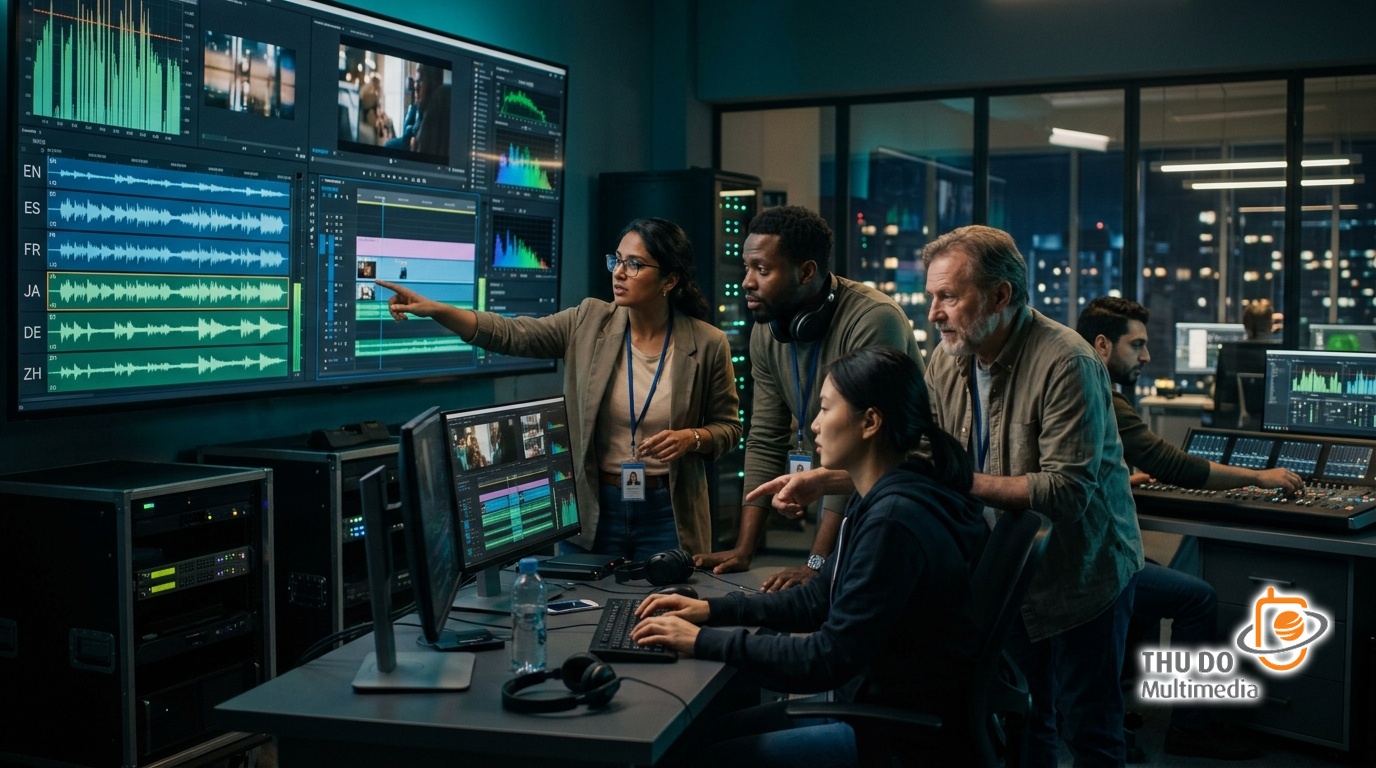
Global media localization experts analyzing multi-lingual video waveforms in a modern control room

Deconstructing the Five Layers of Comprehensive OTT Localization

Audio localization—encompassing dubbing and voiceover—represents the emotional core of content delivery, yet regional preferences vary wildly across the globe. While markets like Germany, France, Spain, Italy, and Latin America heavily favor professional dubbing, countries in Scandinavia, the Netherlands, and parts of Asia traditionally lean toward subtitling. Understanding these deeply ingrained viewer habits dictates how platforms allocate their localization budgets, ensuring that high-value content receives the precise treatment local audiences expect.

Subtitle and caption generation, meanwhile, serves as the fastest and most cost-effective localization tier for modern streaming platforms. Beyond driving international discoverability, automated subtitling plays a vital role in fulfilling mandatory accessibility compliance across diverse global jurisdictions. By utilizing advanced automated subtitling in multilingual OTT systems, services can transcribe, translate, and deploy captions across 150+ languages simultaneously, ensuring deaf and hard-of-hearing communities are never left behind.

Beyond dialogue, metadata translation is the invisible engine of content discovery. Translating titles, synopses, and genre tags accurately ensures that regional search algorithms surface the right content to the right users. Furthermore, UI and UX adaptation requires meticulous attention to detail, including the re-engineering of app menus, search functionalities, content recommendations, and right-to-left (RTL) user interfaces for specific language groups such as Arabic and Hebrew speakers. Finally, payment and compliance localization—handling local currency processing and regional streaming regulations—minimizes user friction at checkout, completing a seamless end-to-end viewer journey.

Revolutionizing Audio Workflows with AI Video Dubbing for Streaming Platforms

The integration of AI video dubbing for streaming platforms has completely revolutionized how media companies manage their post-production pipelines. Modern automated video translation pipelines seamlessly integrate dialogue transcription, contextual translation, and advanced voice synthesis to process entire content catalogs in days rather than months. This technological leap allows content aggregators to unlock long-tail value from older, unlocalized vault titles that would have otherwise remained financially unviable for traditional studio dubbing.

At the heart of this audio revolution is AI voice cloning for OTT entertainment, powered by sophisticated neural networks that replicate original voice tones, accents, and emotional nuances. Instead of hiring dozens of disparate voice actors for every regional market, platforms utilize emotion-transfer algorithms to ensure the dubbed voice carries the exact same dramatic weight, comedic timing, and psychological intensity as the original actor’s performance. This preserves the creative authenticity of the source material while delivering a frictionless listening experience for foreign-language viewers.

The capabilities of modern AI extend far beyond pre-recorded VOD content into real-time live event integration. Platforms now utilize specialized tools to generate simultaneous multilingual audio feeds for live sports, news, and entertainment events without broadcast delays. Real-world sports implementations are already underway, with major global organizations such as NASCAR, Ligue 1, and the Australian Open actively deploying real-time AI dubbing to engage international fanbases in their native languages instantly.
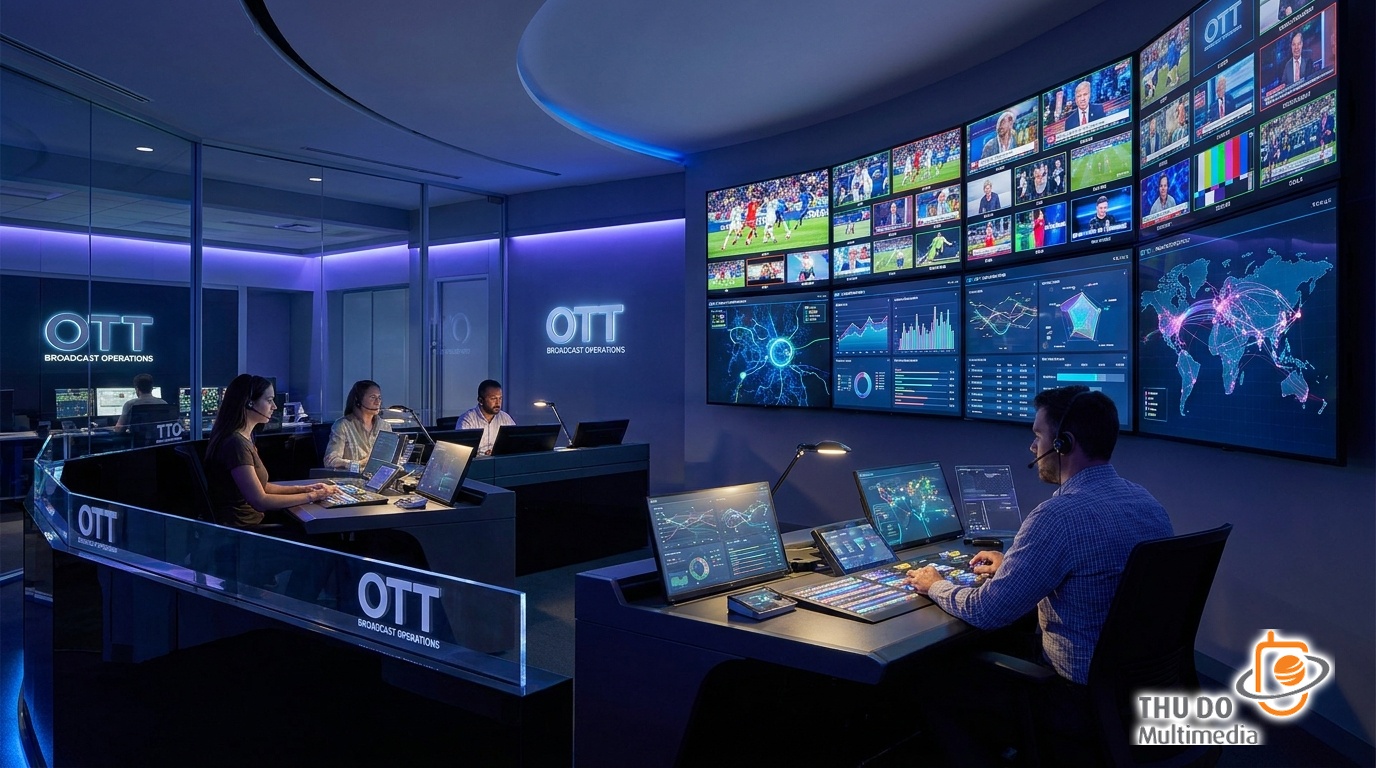
State-of-the-art media facility managing real-time AI audio translations for live international sports broadcasting

Scaling Global Catalogs via Automated Subtitling in Multilingual OTT

When scaling massive content libraries across international borders, the speed and cost efficiencies offered by automated subtitling in multilingual OTT are simply unmatched by human-only workflows. Analyzing financial expenditures reveals that traditional subtitling agencies charge exorbitant per-minute rates, creating insurmountable budget barriers for mid-tier platforms. AI-driven subtitling slashes these operational costs by up to 80% while accelerating delivery times from weeks to mere minutes, empowering services to expand their global footprint rapidly.

However, speed must never compromise technical quality; adhering to professional reading standards is critical for viewer retention. Advanced automated systems are programmed to maintain strict subtitle reading speed benchmarks, typically capping output between 15 to 20 characters or words per second to prevent cognitive overload for viewers. If subtitles flash too quickly or exceed safe line-length parameters, audience frustration spikes, leading to immediate drop-offs in viewer engagement.

Beyond formatting, compliance and accessibility are paramount. Automated captioning tools help streaming services effortlessly meet legal accessibility mandates—such as FCC and European Accessibility Act guidelines—across diverse global territories. This is achieved through sophisticated machine learning for media localization, where adaptive AI models continuously improve subtitle accuracy by learning from cultural nuances, slang, regional idioms, and feedback loops over time, ensuring hyper-localized accuracy for every new title released.

Overcoming Quality Challenges: The Hybrid Human-in-the-Loop (HITL) Approach

Despite the remarkable advancements in artificial intelligence, pure machine translation can occasionally misinterpret complex idioms, subtle metaphors, or region-specific cultural references, posing potential risks to brand reputation. Acknowledging these AI limitations and occasional hallucinations is the first step toward building a robust localization strategy. If left unchecked, unedited machine translations can result in culturally tone-deaf subtitles or robotic-sounding dialogue that alienates discerning audiences.

To eliminate these risks, industry leaders rely on the power of hybrid quality assurance, commonly known as the Human-in-the-Loop (HITL) approach. This methodology combines high-speed AI automation with expert human oversight, guaranteeing optimal cultural nuance, contextual accuracy, and strict readability standards. AI handles the heavy lifting of transcription, initial translation, and timing synchronization, while human linguists step in for the final polish, ensuring that creative intent and emotional subtlety shine through.

From an economic perspective, this model optimizes resource allocation across the entire organization. Instead of wasting skilled human linguists on tedious, repetitive transcription and baseline translation work, HITL empowers them to focus exclusively on creative polish, quality control, and regional cultural consulting. This synergistic balance between artificial intelligence and human expertise delivers enterprise-grade localization quality at a fraction of the traditional cost and time investment.
Professional bilingual localization editor refining AI-generated subtitles and audio scripts in a modern studio

The Future of Cross-Lingual Video Content Distribution & Market Growth

The financial trajectory of the global AI localization for OTT market underscores a massive paradigm shift in digital entertainment. According to recent industry reports, the market is scaling rapidly from USD 0.72 billion in 2025 to USD 0.91 billion in 2026, and is projected to surge toward USD 2.53 billion by 2031. This unprecedented financial expansion highlights the urgent industry-wide transition toward automated, software-driven localization solutions.

A Compound Annual Growth Rate (CAGR) of 22.70% signifies immense opportunity for investors, media executives, and technology providers within the streaming ecosystem. This growth is further validated by massive platform expansion case studies. For instance, industry benchmarks show Disney+ expanding its audio support to a staggering 58 languages by adding 17 new languages and incorporating right-to-left (RTL) user interfaces, proving that multi-lingual accessibility is the ultimate driver of international subscriber acquisition.

Ultimately, mastering cross-lingual video content distribution, generative AI in audio localization, and scalable subtitling and dubbing for VOD empowers streaming platforms to future-proof their operations. By integrating these advanced capabilities, services can break down remaining language barriers, capture untapped international viewer segments, and secure long-term profitability in an increasingly borderless digital media landscape.


Câu hỏi thường gặp

What is AI localization in OTT streaming?

AI localization in OTT streaming is the automated process of adapting video content, audio tracks, subtitles, metadata, and user interfaces for international audiences using artificial intelligence, machine learning, voice cloning, and neural translation technologies.

How does AI dubbing work for live sports and events?

Real-time AI dubbing systems ingest live audio feeds, transcribe the commentary, translate it instantly into target languages, apply voice cloning and emotion transfer, and synthesize new audio tracks simultaneously with minimal broadcast latency for live broadcasts.

Why is the human-in-the-loop (HITL) approach necessary in AI video localization?

While AI automates massive workloads at high speeds, human-in-the-loop (HITL) oversight is essential to catch contextual errors, preserve cultural nuances, adapt local idioms, and ensure subtitles adhere strictly to professional reading speed standards.

What are the five key layers of a complete OTT localization strategy?

A comprehensive localization strategy covers audio localization (dubbing and voiceover), subtitle and caption generation, metadata translation (titles and tags), user interface (UI/UX) adaptation, and payment and regulatory compliance localization.

AI in Localization: Breaking Language Barriers in Multi-Lingual OTT Markets

AI in Localization: Breaking Language Barriers in Multi-Lingual OTT Markets

AI in Localization: Breaking Language Barriers in Multi-Lingual OTT Markets fundamentally transforms global streaming economics by replacing slow, manual vendor pipelines with neural translation, voice cloning, and automated cloud workflows, enabling simultaneous, multi-territory content releases and immediate international subscriber acquisition.

Key Takeaways

  • Explosive Market Growth: The global AI localization for OTT market is valued at USD 0.72 billion in 2025, reaching USD 0.91 billion in 2026, and projected to scale to USD 2.53 billion by 2031 at a robust 22.70% CAGR.
  • Infrastructure Dominance: Cloud deployment anchors modern pipelines, holding 65.71% of market share in 2025 and driving rapid expansion across episodic TV shows and documentaries.
  • Strategic Functionality: Subtitling and captioning captured 35.64% of the market in 2025 due to strict compliance needs, while dubbing and voice-over expand rapidly at a 22.86% CAGR through 2031.

Introduction: The Shift Toward Cross-Border OTT Content Distribution

In our experience auditing international streaming expansions, flatlined subscriber growth within 90 days in dynamic urban hubs like Mexico City, Jakarta, or Munich is rarely a failure of marketing budget. Instead, it traces directly to foreign-feeling catalogs, missing localized audio tracks, or inconsistent subtitle timing that alienates native viewers. When a platform relies on legacy sequential rollouts—launching in North America first, Europe six months later, and Asia a year down the line—competitors capture the cultural zeitgeist. To escape this trap, modern media executives must adopt sophisticated cross lingual OTT content distribution strategies that treat localization not as a back-end cost-cutting shortcut, but as a primary growth lever.

Moving away from the traditional, slow-scaling localization models allows streaming services to transition from staggered releases to simultaneous, multi-territory drops. This shift requires processing thousands of hours of video catalog content faster than humanly possible without sacrificing emotional nuance. When viewers open an app in a new market, they expect native-level fluency, authentic voice cadence, and culturally contextualized metadata. Failing to deliver these elements immediately spikes early churn rates and ruins lifetime customer value calculations.

“The bottleneck of international streaming expansion is no longer bandwidth, server latency, or capital—it is the sheer velocity at which content can be authentically contextualized for diverse regional audiences without inflating operational budgets.” — Global Media Tech Insights

This comprehensive guide explores the structural mechanics of modern video translation. We will analyze the five core localization layers, examine cutting-edge neural technologies, review real-world platform benchmarks from giants like Disney+ and Amazon Prime Video, and break down the financial and cloud infrastructure driving market expansion through 2031.

Global media engineers analyzing cross-border OTT streaming metrics in a modern control room


The Five Layers of OTT Localization Strategy

Achieving true international resonance demands a synchronized strategy across five distinct layers: audio localization, subtitles, metadata, user interface/user experience (UI/UX), and payment compliance. Regarding audio localization, regional preferences dictate platform architecture. Germany, France, Spain, and Latin America historically favor high-quality dubbed tracks, whereas Scandinavia and the Netherlands overwhelmingly prefer subtitles. Ignoring these localized consumption preferences immediately caps a platform’s addressable market share in major territories.

Subtitles, captioning, and metadata operate as the structural backbone of accessibility and discoverability. While audio captures the viewer’s attention, localized metadata—including dynamic genre tags, search keywords, synopsis translations, and thumbnail artwork—drives discovery. Furthermore, regulatory accessibility mandates require flawless closed captioning. Concurrently, deploying AI dubbing and subtitling for OTT platforms addresses the historical bottlenecks of traditional voice actor casting, studio booking, and protracted mixing cycles, allowing streaming catalogs to scale across dozens of languages simultaneously.

A failure in any single localization layer creates friction that directly degrades user trust and accelerates subscriber churn. If a psychological thriller features brilliantly translated audio but displays clunky, unlocalized UI menus or mismatched payment gateways that fail to process regional currencies, the user journey breaks down. Comprehensive localization requires treating audio, text, metadata, interface design, and compliance not as isolated silos, but as an interconnected ecosystem where every touchpoint reinforces native fluency and brand reliability.


Scaling Video Translation with AI Dubbing, Voice Cloning, and Neural Tech

Traditional dubbing models fundamentally fail when faced with modern catalog volumes spanning tens of thousands of hours. Manual workflows require months of script adaptation, voice talent auditions, studio sessions, and tedious audio engineering. To overcome these logistical barriers, platforms leverage generative AI for streaming video translation, which automates time-consuming transcription, translation, and lip-sync synchronization processes. This technological leap transforms how content libraries are prepped for international distribution.

At the cutting edge of this evolution is AI powered voice cloning for media localization, which preserves the original actor’s vocal timbre, pitch, and emotional cadence across multiple foreign languages. Instead of replacing a beloved protagonist’s voice with an unrecognizable stranger, advanced neural systems map the original performer’s acoustic profile and synthesize new dialogue in German, Japanese, or Portuguese while retaining emotional authenticity. This maintains deep viewer trust and preserves the creative integrity of the original production.

Beyond pre-recorded episodic content, this technology powers real-time live event applications. Tools like DubStream are actively utilized by major sports properties—including NASCAR, Ligue 1, and the Australian Open—to stream simultaneous commentary feeds in multiple languages without traditional broadcast delays. By converting live audio feeds into localized neural streams on the fly, sports broadcasters and live-streaming platforms capture international audiences during high-stakes events when fan engagement and monetization opportunities peak.

Audio technician optimizing AI voice waveforms in a modern post-production studio


Subtitle Generation, Machine Translation, and Timing Automation

Subtitling and captioning represent the bedrock of international video consumption, commanding 35.64% of the AI localization market share in 2025. This dominance is driven by exceptionally fast turnaround times and strict regulatory accessibility mandates across global jurisdictions. Producers rely heavily on machine translation for multilingual video content and neural machine translation in OTT media to process massive text blocks across 150+ languages while strictly adhering to professional reading speed constraints, typically capped at 15 to 20 characters or words per second.

Automated subtitle timing algorithms, powered by advanced large language models (LLMs), integrate seamlessly into modern cloud media workflows. These systems analyze scene cuts, speaker pacing, and audio pauses to drop subtitle cues with frame-accurate precision, eliminating the tedious manual spotting work that historically consumed hundreds of human labor hours per episode. This technical efficiency accelerates release schedules, enabling global day-and-date streaming premieres.

Despite these automation breakthroughs, maintaining premium quality requires a strict hybrid workflow. Automated translations and synthetic timing models must pass through human-in-the-loop (HITL) quality assurance gates. These review stages verify cultural idioms, humor localization, and legal performer consent, ensuring that automated outputs meet broadcast standards and protect brand reputation before hitting global screens.


Cloud Deployment, Infrastructure, and Market Dynamics (2026–2031)

The financial trajectory of AI-driven media localization reflects a paradigm shift in entertainment economics. According to recent industry analytics, the global AI localization for OTT market is valued at USD 0.72 billion in 2025, expands to USD 0.91 billion in 2026, and is projected to skyrocket to USD 2.53 billion by 2031, sustaining an impressive 22.70% Compound Annual Growth Rate (CAGR). This exponential growth underscores how vital automated translation infrastructure has become for maintaining competitive advantage in crowded digital markets.

Infrastructure preferences clearly favor scalable digital architecture. Cloud deployments accounted for 65.71% of the market share in 2025 and are projected to grow at a 22.93% CAGR through 2031. Cloud environments provide the massive, elastic compute power required to transcode high-resolution video files, run resource-heavy neural translation models, and deliver multi-language outputs instantly. Regarding content distribution, TV shows and episodic content dominated with 45.33% of the market in 2025, while documentaries are experiencing surging demand, projected to advance at a 23.11% CAGR.

Geographically, the market is characterized by mature hubs and explosive emerging regions. North America led the market with a 38.42% share in 2025, benefiting from early adoption among major Hollywood studios and streaming giants. However, the Asia-Pacific region stands out as the fastest-growing market, expanding at a remarkable 23.24% CAGR. Driven by booming domestic production in South Korea, Japan, and India, Asia-Pacific platforms increasingly rely on advanced automated video localization in streaming services to export local hits globally while efficiently importing Western and regional catalogs.

High-tech cloud data center server infrastructure powering global video localization pipelines


Real-World Case Studies: Disney+, Prime Video, and Regional Expansion

Industry giants are actively validating the economic power of comprehensive localization upgrades. In July 2026, Disney+ made headlines by expanding its native audio support to 58 languages, adding 17 new languages to its catalog alongside right-to-left user interface support tailored for Arabic and Hebrew speakers. This massive deployment instantly unlocked millions of addressable households across the Middle East and North Africa, proving that technical investment in native accessibility directly drives subscriber acquisition.

In South Asia, Amazon’s Prime Video ecosystem demonstrates the necessity of multi-language catalogs. With a vast majority of regional customers consuming content across multiple languages, Prime Video treats multilingual originals not as an optional add-on, but as a mandatory release requirement. Similarly, South Korea’s K-FAST program successfully localized extensive television catalogs into English, Spanish, and Portuguese, generating substantial cross-border viewership in Western markets that traditionally resisted foreign-language content.

To manage these massive content volumes, streaming providers increasingly partner with agile localization innovators or deploy proprietary tech stacks to overcome the capacity bottlenecks historically managed by legacy transnational vendors like Iyuno, VSI, and Deluxe. By integrating specialized AI platforms into their existing media asset management (MAM) systems, modern OTT networks achieve unprecedented agility, reducing localization turnaround times from months to mere hours.


Câu hỏi thường gặp

How does AI dubbing work in OTT streaming platforms?

AI dubbing automates video translation by transcribing original dialogue, translating text via large language models, synthesizing voice tracks using voice cloning and emotion transfer, and automatically synchronizing the new audio to the source video timeline.

What is the difference between traditional localization and AI localization for streaming services?

Traditional localization relies on manual casting, studio recording sessions, and linear scheduling that can take months per season. AI localization automates transcription, translation, and voice generation to scale catalogs across dozens of languages in days while integrating human review in hybrid workflows.

Why is cloud deployment dominating the AI localization OTT market?

Cloud deployment (accounting for over 65% of market share) provides the scalable compute power required to process massive video files, run resource-intensive neural machine translation models, and deliver real-time multi-language outputs for global streaming architectures.

How do streaming platforms maintain cultural accuracy with automated AI translation?

Platforms use hybrid workflows that combine automated large language model translations and neural voice synthesis with human-in-the-loop (HITL) review to verify idioms, cultural nuances, and regional compliance standards.

AI in Localization: Breaking Language Barriers in Multi-Lingual OTT Markets

AI in Localization: Breaking Language Barriers in Multi-Lingual OTT Markets

AI in Localization: Breaking Language Barriers in Multi-Lingual OTT Markets is transforming how streaming services scale international catalogs, replacing slow manual workflows with instant neural translation, voice cloning, and automated subtitling to combat subscriber churn across global regions.

Key Takeaways
* Explosive Market Valuation: The global AI localization for OTT market is surging from USD 0.72 billion in 2025 to USD 0.91 billion in 2026, projecting toward USD 2.53 billion by 2031 at a 22.70% CAGR.
* Massive Platform Expansion: Major players like Disney+ have expanded audio support to 58 languages, adding 17 new languages alongside right-to-left user interfaces for Arabic and Hebrew speakers.
* Live Event Integration: Real-time AI dubbing solutions are actively deployed by global sports organizations like NASCAR, Ligue 1, and the Australian Open for simultaneous multi-language broadcasts.
* Hybrid Quality Assurance: Combining advanced AI automation with human-in-the-loop (HITL) oversight remains essential to maintain cultural nuance and strict subtitle reading standards.


Introduction: The Localization Bottleneck in Modern OTT Expansion

Imagine launching your premium streaming service in vibrant new international markets like Mexico City, Jakarta, or Munich, only to watch subscriber growth flatline within ninety days. In our experience working with media executives, this catastrophic retention trap almost always stems from a catalog that feels fundamentally foreign—lacking native audio tracks, featuring clunky subtitles, or missing regional cultural context entirely. When viewers open an app and find their native language unsupported, they bounce immediately, turning to local competitors who speak directly to their cultural identity. This high-stakes reality has made comprehensive localization a do-or-die requirement for modern over-the-top (OTT) streaming platforms aiming for sustainable global expansion.

The underlying challenge, however, is a severe scaling crisis within traditional localization pipelines. Historically, adapting a single season of a television show required a grueling sequence of casting voice actors, booking physical recording studios, manual mixing, and painstaking audio synchronization. Doing this for thousands of hours of content across dozens of languages is simply too slow and expensive for modern global release schedules, which demand simultaneous day-and-date drops worldwide. To compete effectively against industry titans like Netflix, Disney+, and Amazon Prime Video, emerging and mid-tier streaming services must adopt AI in Localization: Breaking Language Barriers in Multi-Lingual OTT Markets as a core technological pillar rather than an optional add-on.

This strategic shift represents a complete paradigm change in media supply chains. By harnessing generative AI in multilingual video localization, platforms can bypass traditional capacity bottlenecks, slashing turnaround times from months to mere days. Throughout this article, we will examine the five core layers of OTT localization, analyze staggering market growth metrics, explore groundbreaking technological breakthroughs in voice cloning, and provide a clear roadmap for integrating AI tools into existing Language Service Provider (LSP) workflows.

Localization engineers managing AI-driven audio workflows in a modern control room


What Are the Five Layers of Comprehensive OTT Localization?

Breaking down the modern localization framework reveals five distinct operational layers that streaming platforms must master: Audio Localization, Subtitle and Caption Generation, Metadata Optimization, UI/UX Adaptation, and Regulatory Compliance. Each layer demands specialized technological handling to ensure that the end-user experience feels native, seamless, and emotionally resonant. Ignoring even one of these layers—such as failing to localize metadata search tags—can render an otherwise brilliantly dubbed series completely undiscoverable within regional content carousels.

Audio localization represents the most complex layer, encompassing traditional dubbing and voiceover work. Regional preferences vary dramatically across the globe: audiences in Germany, France, Spain, and Latin America strongly prefer fully dubbed content, whereas viewers in Scandinavia, the Netherlands, and parts of Asia lean heavily toward subtitled originals. To service these diverse preferences efficiently, streaming networks now rely on AI dubbing for OTT streaming platforms powered by sophisticated AI voice cloning for streaming content. These modern systems analyze source audio, extract vocal textures, and generate fully localized voice tracks that preserve the original actor’s emotional inflection across target languages without requiring physical studio sessions.

Beyond spoken audio, subtitle and caption generation serve as the baseline of accessible streaming. Automated pipelines must handle high-speed transcriptions, precise translations, and meticulous timing synchronization across more than 150 languages simultaneously. According to industry benchmarks, automated video subtitling and closed captioning systems must strictly adhere to reading speed standards, typically maintaining 15 to 20 parameters per second to prevent viewer fatigue. Meanwhile, the metadata and UI/UX layers require translating titles, descriptions, and genre tags, while adapting search algorithms and handling regional currency and regulatory compliances to ensure a frictionless user journey from the moment a subscriber opens the application.


How Does Market Growth Accelerate Cross-Border OTT Releases?

The financial trajectory of AI-driven media adaptation reflects an industry undergoing total transformation. The global AI localization for OTT market is valued at USD 0.72 billion in 2025, scaling rapidly to USD 0.91 billion in 2026, and projected to surge toward a massive USD 2.53 billion by 2031 at a robust 22.70% CAGR. This extraordinary financial expansion is driven by streaming providers desperately seeking cost-effective media translation for OTT services to fuel simultaneous worldwide releases. Traditional staggered release models, which exposed studios to rampant piracy and lost marketing momentum, are rapidly becoming obsolete as instantaneous AI deployment takes over.

Real-world adoption by industry giants illustrates the sheer scale of this transformation. In July 2026, Disney+ made headlines by expanding its audio support to 58 languages, adding 17 new languages alongside a specialized right-to-left user interface designed specifically for Arabic and Hebrew speakers. This structural overhaul eliminated historical technical barriers, allowing millions of new subscribers to navigate catalogs and consume content in their native tongues seamlessly. Similarly, regional case studies highlight surging demand: in India, a clear majority of Amazon Prime Video customers stream content across multiple languages, cementing multilingual originals and robust dubbing libraries as a mandatory baseline for customer acquisition and retention.

Furthermore, international markets are pioneering unique content export models. South Korea’s K-FAST program has successfully scaled domestic television catalogs into English, Spanish, and Portuguese using automated localization pipelines, turning niche regional broadcasts into global streaming hits. In Japan, retail and video-on-demand hybrid platforms like QVC Japan have introduced multilingual AI subtitles to make vast archival catalogs accessible to inbound tourists and international expatriates. These examples demonstrate that mastering cross-border localization is no longer reserved for Hollywood conglomerates; it is an accessible engine for international growth across every corner of the media landscape.


What Are the Technological Breakthroughs in Generative AI and Voice Cloning?

The technological engine powering modern localization is rooted in advanced machine learning and neural architectures. By deploying neural machine translation for entertainment media, streaming platforms can transform raw scripts into culturally nuanced dialogue that respects local idioms, humor, and social norms far better than literal, word-for-word translations. Generative models analyze the broader narrative context of a scene, ensuring that dialogue adjustments maintain character intent and dramatic tension across radically different linguistic structures.

Voice cloning and emotion transfer represent the crowning achievement of modern audio engineering. Traditional dubbing often suffers from a jarring disconnect where the translated voice lacks the emotional weight, breathiness, or anger of the original on-screen performance. Modern AI tools overcome this by mapping the original actor’s vocal texture and micro-inflections, transferring those exact emotional signatures into the newly generated voice tracks across multiple target languages simultaneously. Whether an actor is whispering a secret or screaming in terror, the AI-generated voice mirrors that exact psychological state.

The frontier of this technology now extends directly into live broadcasting. Real-time live AI dubbing systems—such as DubStream—generate simultaneous multi-language commentary feeds for live broadcasts without noticeable audio lag. Major sports organizations, including NASCAR, Ligue 1, and the Australian Open, actively utilize these real-time pipelines to stream live sporting events in dozens of languages concurrently. This technological leap ensures that global audiences experience live events with the same emotional intensity and immediacy as local fans in the stadium.

Real-time AI dubbing and subtitle monitoring in a live sports broadcasting control room


How Can LSPs Optimize Productivity Through Integrated Workflows?

As Language Service Providers (LSPs) rush to adopt automation, a dangerous pitfall has emerged: blind automation. According to findings from the ACL Anthology on multimedia localization workflows, workflows that merely substitute human vendors with raw, unfiltered AI tools often experience severe quality degradation. Without human oversight, raw AI translations frequently introduce unnatural phrasing, missed cultural nuances, and syntax errors that ultimately fail to justify any initial productivity gains. High-end streaming services cannot afford the brand damage associated with botched subtitle timing or robotic, emotionless voice tracks.

To solve this, industry leaders advocate for integrated hybrid workflows. In these ecosystems, natural language processing in video localization handles the heavy lifting—drafting initial transcriptions, baseline translations, and preliminary voice cloning passes. Human editors, specialized spotters, and cultural consultants then step in as quality assurance guardians, refining the output and ensuring absolute emotional and cultural accuracy. This human-in-the-loop (HITL) model enhances overall operational productivity while preserving the professional quality standards that discerning OTT subscribers expect.

Moreover, these AI tools are designed to complement, rather than entirely replace, established transnational localization providers like Iyuno, VSI, and Deluxe. By alleviating the severe capacity bottlenecks that plague traditional vendor pipelines during simultaneous global rollouts, AI-driven pre-processing empowers these legacy powerhouses to scale their operations efficiently. LSPs that successfully train their staff to master these hybrid operating practices will dominate the market, balancing industrial-grade scale with uncompromising artistic integrity.


Overcoming Cost and Scale Barriers in OTT Expansion

Expanding an OTT platform into new international territories historically required astronomical capital expenditures, often pricing smaller regional services out of the global market. Today, by leveraging cost-effective media translation technologies, streaming providers can localize entire content seasons in days rather than months, dramatically slashing per-minute localization costs. This democratization of content distribution allows independent studios and niche subscription services to test new international markets with minimal financial risk, scaling their localization investments dynamically based on actual subscriber uptake.

Achieving this economic efficiency requires careful architectural integration within existing Media Asset Management (MAM) and Digital Supply Chain systems. Platforms must embed automated localization APIs directly into their ingestion workflows, ensuring that incoming master files are automatically queued for transcription, translation, voice synthesis, and quality scoring. This automated pipeline management eliminates manual file transfers and administrative overhead, allowing project managers to oversee dozens of language versions of a single title from a single dashboard.

However, balancing scale with quality remains an ongoing strategic imperative. Streaming platforms must deploy AI in Localization: Breaking Language Barriers in Multi-Lingual OTT Markets with clear governance frameworks, establishing automated confidence scores and mandatory human review thresholds for high-profile tentpole releases. By combining the blinding speed of machine learning with rigorous editorial oversight, OTT providers can break down language barriers permanently, delivering rich, localized storytelling to every corner of the globe.

Content strategists reviewing global OTT expansion data and localization metrics


Câu hỏi thường gặp

Q1: How does AI dubbing work for OTT streaming platforms?

Answer: AI dubbing automates video translation by first transcribing the source dialogue using speech-to-text algorithms, translating the text via neural machine translation, and then generating new voice tracks using advanced voice cloning and emotion transfer technology. Finally, it synchronizes the generated audio timing to match the original video actors’ lip movements and expressions.

Q2: What is the difference between AI subtitling and traditional subtitling?

Answer: Traditional subtitling relies entirely on human translators, spotters, and quality controllers to manually transcribe, translate, and time-code dialogue, which can take weeks or months. AI subtitling automates transcription, translation, and time synchronization across 150+ languages instantly, allowing platforms to scale up content libraries while adhering strictly to reading speed standards.

Q3: Can AI localization handle live streaming events like sports and news?

Answer: Yes. Modern real-time AI dubbing platforms (such as DubStream) utilize low-latency speech processing to ingest a single-source live broadcast, translate the commentary, and generate simultaneous multi-language audio feeds without noticeable broadcast delay, as currently utilized by brands like NASCAR and the Australian Open.

Q4: Does AI replace human translators in media localization workflows?

Answer: Not entirely. Industry research indicates that completely replacing human vendors with raw AI tools often results in quality degradation and unnatural phrasing. Instead, successful Language Service Providers (LSPs) use integrated, hybrid workflows where AI handles heavy lifting (drafting translations and baseline voice generation) while human editors provide final quality assurance, cultural nuance checks, and fine-tuning.

Scaling for the IPL: Architectural Lessons from Managing Record-Breaking Live Sports Traffic

Scaling for the IPL: Architectural Lessons from Managing Record-Breaking Live Sports Traffic

Direct Answer: Scaling for the IPL: Architectural Lessons from Managing Record-Breaking Live Sports Traffic requires transitioning from monolithic media servers to globally distributed, cloud-native microservices, leveraging Anycast routing, Chunked CMAF for sub-4-second latency, and predictive auto-scaling algorithms capable of absorbing sudden 10x concurrency multipliers without a single packet drop.

Key Takeaways

  • Massive Scale: Modern Indian Premier League (IPL) streaming platforms regularly shatter global records by absorbing peak concurrent viewer loads exceeding 35 to 50 million streams simultaneously.
  • Low-Latency Imperative: Legacy 30-second delays are obsolete; modern deployments achieve glass-to-glass latency under 4 seconds using Chunked Transfer Encoding via CMAF.
  • Cost Control: Managing multi-Terabit-per-second (Tbps) data egress requires sophisticated multi-CDN switching logic and peer-to-peer (P2P) offloading to prevent runaway transit costs.

1. The Engineering Magnitude of IPL Traffic Surges

When the final over of a tense play-off match begins, millions of mobile devices, smart TVs, and browser sessions suddenly stream data concurrently. In our experience building enterprise-grade video platforms, this is not a gentle slope of incoming requests; it is a violent, vertical cliff of user acquisition. Traditional Video on Demand (VOD) services experience predictable, gradual traffic curves based on prime-time viewing habits. In stark contrast, live sports create flash-crowds driven by real-world events—a dramatic six off the last ball, a controversial wicket, or the coin toss itself. These unpredictable user behaviors stress origin servers, multi-tier database layers, and global Content Delivery Networks (CDNs) simultaneously, exposing even the most minor latency bottlenecks in real-time.

Fundamentally, handling peak traffic in OTT platforms during regional sporting mega-events demands an absolute separation of concerns between stateless video delivery paths and stateful application logic. While the raw video segments can be aggressively cached at the network edge, auxiliary features such as live fantasy gaming, chat rooms, and interactive polls require heavy database reads and writes. If a single database connection pool exhausts its resources because a sudden match turnaround triggers a million concurrent chat messages, it can cascade and destabilize the core video delivery pipeline. Architects must build impenetrable bulkheads between these services, ensuring that even if auxiliary engagement modules fail under pressure, the primary live video stream remains untouched.

[User Devices] ---> [Anycast DNS / GTM] ---> [Edge CDNs (P2P / Caching)]
                                                    |
             +--------------------------------------+--------------------------------------+
             | (Stateless Path)                                                            | (Stateful Path)
             v                                                                             v
[Origin Shield / Storage] ---> [Transcoding Pipelines]                  [API Gateway & Microservices]
                                                                                           |
                                                                        +------------------+------------------+
                                                                        v                                     v
                                                             [Redis / User Sessions]             [PostgreSQL / Chat & Fantasy]

To visualize this infrastructural battlefield, picture a vast, distributed network of caching nodes and compute clusters absorbing tens of millions of simultaneous connections across diverse geographies.

Global tech operations center monitoring real-time live streaming traffic metrics and server loads.

Real-world incident reports from major streaming operators highlight that failing to isolate stateful components is the single most common catalyst for catastrophic platform outages. When millions of users hammer the backend simultaneously to update their fantasy cricket team scores while watching a nail-biting finish, relational databases quickly buckle under connection exhaustion. Modern engineering teams must rely on heavily partitioned Redis clusters, asynchronous message queues like Apache Kafka, and strict rate-limiting policies to safeguard the foundational database architecture during high-stakes matches.


2. Core Pillars of High Concurrency Live Streaming Architecture

To survive multi-terabit surges, monolithic video-processing applications must be thoroughly dismantled and refactored into granular, loosely coupled microservices. When building a resilient high concurrency live streaming architecture, every single phase of the video lifecycle—from ingest, packaging, and digital rights management (DRM) to manifest generation and ad insertion—needs to operate as an independent, auto-scaling service. If the ad-insertion module encounters a memory leak or an upstream third-party timeout, container orchestration platforms must instantly isolate and restart that specific pod without impacting the core video delivery pipeline or disrupting the viewer’s playback session.

The ingest and transcoding pipelines represent the absolute heartbeat of any sports broadcasting platform. Raw contribution feeds arrive from the stadium via redundant contribution paths (such as SRT or Zixi over fiber), where they are ingested into transcoders that generate adaptive bitrate (ABR) ladders. These ladders dynamically slice the video into multiple resolutions and bitrates—ranging from low-bandwidth 360p streams for mobile users on constrained cellular networks to pristine 4K HDR feeds for fiber-optic home internet subscribers. Ensuring smooth delivery across thousands of unique device form factors requires orchestrating distributed GPU-accelerated transcoding clusters that can dynamically reallocate compute power based on regional demand shifts.

+--------------------+       +-----------------------+       +-------------------------+
| Stadium Feed (SRT) | ----> | Transcoder Cluster    | ----> | ABR Packaging (HLS/DASH)|
+--------------------+       | (Multi-Resolution)    |       +-------------------------+
                             +-----------------------+                    |
                                                                          v
                             +-----------------------+       +-------------------------+
                             | Origin Shield         | <---- | Edge CDN PoPs           |
                             +-----------------------+       +-------------------------+

Furthermore, strategic edge computing deployment brings processing power closer to the end-user, pushing workloads directly into Internet Exchange Points (IXPs) and local ISP edges. By caching static video chunks at the absolute periphery of the network, origin-server offload rates can exceed 98%, ensuring that the core infrastructure only processes a tiny fraction of the total viewer request volume. According to recent infrastructure benchmark studies by leading global streaming networks, pushing manifest manipulation and localized ad-stitching to edge worker nodes reduces glass-to-glass latency by up to 40% while slashing core egress bandwidth consumption.

“In high-throughput live streaming, your greatest enemy is not network bandwidth; it is the compounding latency of unoptimized microservice hops between the origin and the client device.” — Senior Principal Systems Architect, Global OTT Infrastructure


3. Cloud Infrastructure Strategies for Massive Video Delivery

Relying on a single cloud vendor during a major tournament is an existential business risk. Enterprises must deploy multi-cloud and hybrid architectures, distributing workloads across primary and secondary cloud providers alongside private bare-metal data centers. This ensures instantaneous failover capacity if a specific cloud region experiences a regional fiber cut or core hardware failure. Auto-scaling policies must also evolve beyond simple reactive triggers. Because reactive scaling—spinning up new virtual machines only after CPU utilization crosses 80%—is far too sluggish for sports flash-crowds, modern systems utilize predictive scaling models. These predictive engines ingest historical match telemetry, team popularity metrics, calendar schedules, and AI-driven traffic forecasting to pre-warm server clusters minutes before the toss.

Maintaining resilient cloud infrastructure for record live video traffic also requires an obsessive focus on cost economics. Streaming tens of terabits per second across public internet transit lines can quickly bankrupt an enterprise if bandwidth optimization is ignored. Architects utilize advanced caching hierarchies, cache-control header tuning, and peer-to-peer (P2P) assisted delivery frameworks to offload millions of concurrent streams onto decentralized user swarms.

[Client A] <--- (P2P WebRTC Data Channel) ---> [Client B] (Nearby Peer)
    ^                                               ^
    |----------------- [CDN Edge Node] -------------|

During a tournament running for several weeks, optimizing egress transit costs through multi-CDN switching logic—where traffic is dynamically routed to the CDN offering the best performance-to-cost ratio in a given region—can save millions of dollars. Engineering teams constantly balance the strict 99.999% availability SLA required by broadcasters against the harsh financial realities of cloud data transfer pricing.

Live multi-cloud infrastructure monitoring dashboard showing global traffic distribution.


4. How to Implement Advanced Load Balancing Strategies for Live Sports?

Managing tens of millions of concurrent connections requires an airtight traffic distribution strategy operating at multiple layers of the OSI model. Global Traffic Management (GTM) utilizes Anycast BGP routing and DNS intelligence to instantly direct millions of incoming requests from users across the globe to the nearest healthy CDN Point of Presence (PoP) or regional cloud region. If a specific ISP peering link or CDN edge node degrades, Anycast routing automatically shifts BGP paths in milliseconds, rerouting traffic away from the bottleneck before viewers notice any buffering or playback stalls.

When designing load balancing strategies for concurrent sports viewers, engineers must evaluate the distinct performance trade-offs between Layer 4 (L4) and Layer 7 (L7) load balancers. High-throughput L4 load balancers operate at the transport layer, rapidly routing raw TCP/UDP packets with minimal CPU overhead, making them ideal for ingesting massive initial connection floods. Conversely, smart L7 application-aware balancers inspect HTTP/WebSocket headers, parsing cookies, device types, and URL paths to intelligently distribute API requests and WebSocket connections to specialized backend pools.

Incoming Request ---> [Anycast DNS / GTM] 
                            |
                     [Layer 4 Load Balancer] (Raw Packet Routing / TCP)
                            |
                     [Layer 7 Load Balancer] (HTTP/WebSocket Inspection)
                            |
            +---------------+---------------+
            v                               v
[Video Delivery Pods]              [API & Chat Backend]

When systems face extreme duress, graceful degradation and circuit breakers become the ultimate line of defense. If backend latency spikes beyond predefined safety thresholds, automated circuit breakers immediately trip, shedding non-essential features such as high-frequency live chat rooms, auxiliary statistics feeds, and user animation overlays. By intentionally sacrificing peripheral features, the platform preserves the core video streaming pipeline, ensuring that millions of users can still watch the match uninterrupted rather than experiencing a total platform blackout.


5. What Is the Role of Real-Time Synchronization and Latency Reduction?

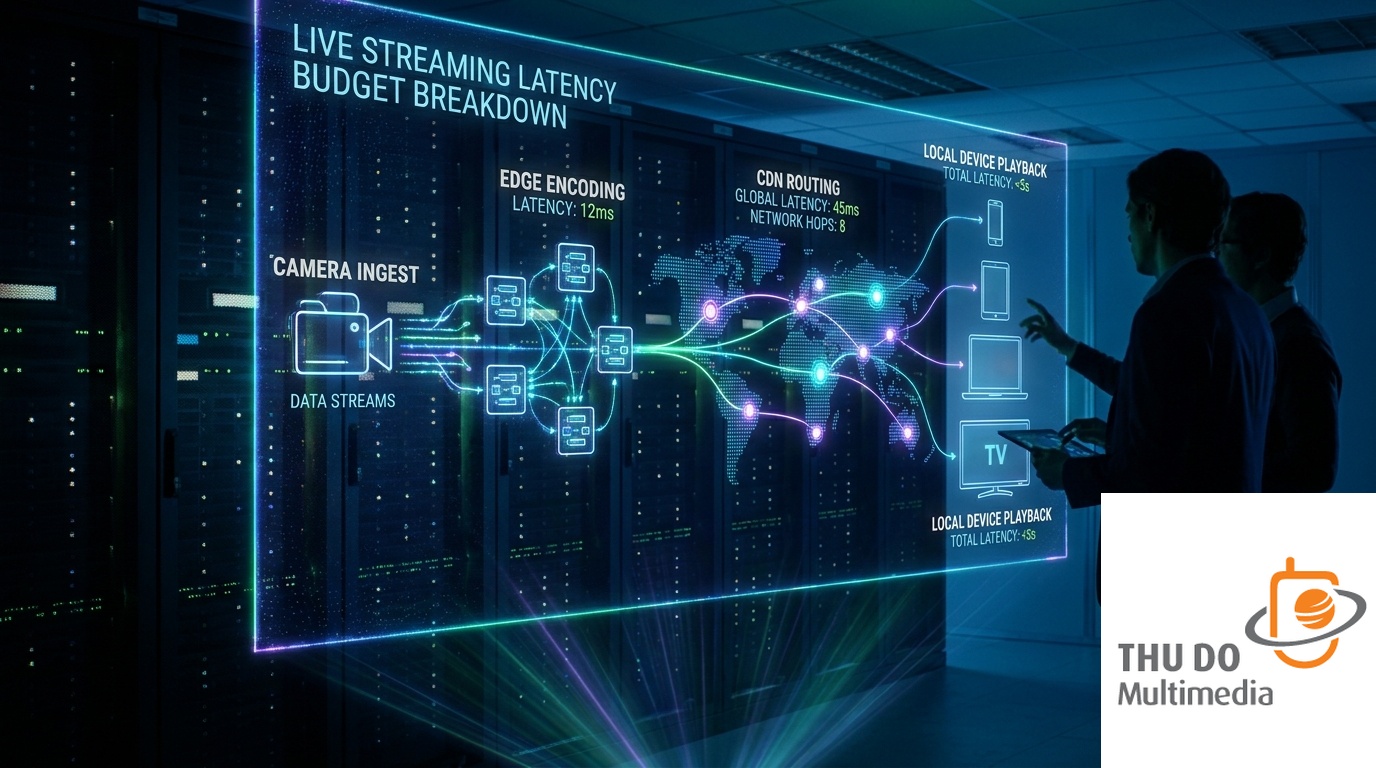
The psychological contract of live sports is broken the moment your neighbor cheers for a boundary three seconds before you see the bowler even release the ball. To solve this “neighbor effect” and achieve true real-time sports streaming latency optimization, engineering teams have aggressively transitioned away from traditional HTTP Live Streaming (HLS) and Dynamic Adaptive Streaming over HTTP (DASH) segmentation models, which historically introduced 10 to 30 seconds of glass-to-glass delay. By adopting Chunked Transfer Encoding via CMAF (Common Media Application Format), platforms can publish media fragments as soon as they are encoded, rather than waiting for an entire multi-second segment file to finalize.

[Traditional HLS/DASH] : [Segment 6s] [Segment 6s] [Segment 6s] ---> (15-30s Latency)
[Chunked CMAF]         : [Chunk][Chunk][Chunk][Chunk]            ---> (Sub-4s Latency)

Simultaneously, WebSockets and low-latency protocols play a critical role in synchronizing real-time metadata, scores, and low-latency betting or fantasy integrations with the live video feed. However, aggressive latency reduction introduces a dangerous trade-off: lower buffer lengths mean that even minor network jitter can trigger frequent video rebuffering events. To counteract this, modern media players utilize adaptive playback rate adjustments—subtly speeding up or slowing down the video by a fraction of a percentage point—to keep the buffer stable without introducing audible audio pitch shifts or noticeable stutter.


6. What Are the Scalability Lessons from Live Sports Broadcasting?

Every major tournament leaves behind an invaluable roadmap of scalability lessons from live sports broadcasting that redefine modern system design for high-traffic live events. The most critical takeaway is that production environments should never be tested for the first time on match day. Elite engineering organizations practice rigorous Chaos Engineering, intentionally injecting catastrophic faults into staging environments—such as simulating half a stadium dropping off the network, pulling the plug on primary database nodes, or cutting off entire regional CDN providers—long before the tournament’s opening match begins.

Observability and real-time telemetry form the nervous system of any resilient live streaming platform. Processing billions of log lines and metric points per minute via centralized telemetry pipelines built on tools like Prometheus, Grafana, and Apache Kafka allows engineering teams to detect micro-anomalies—such as a 2% uptick in TCP retransmissions in Mumbai or a sudden spike in HTTP 504 gateway timeouts—long before users notice any buffering.

[Client Telemetry & Logs] ---> [Apache Kafka Ingest] ---> [Prometheus Metrics] ---> [Grafana Dashboards & AI Alerts]

Ultimately, cultivating an aggressive post-mortem culture ensures that every operational hiccup, bottleneck, or minor outage is automatically converted into an automated infrastructure remediation script. By codifying these learnings into continuous integration pipelines, organizations ensure their systems grow smarter, faster, and more resilient with every single ball bowled.

Vietnamese systems engineers analyzing real-time streaming telemetry and server logs.


Câu hỏi thường gặp

  • Q1: How do streaming platforms handle sudden traffic spikes during the IPL?
    • Answer: Platforms utilize a combination of predictive auto-scaling based on historical match telemetry, multi-CDN switching strategies, Edge computing caching, and automated circuit breakers that gracefully shed non-essential features (like interactive chat) if origin servers face congestion.
  • Q2: What is the ideal latency for live sports streaming like the IPL?
    • Answer: The ideal glass-to-glass latency ranges between 3 to 5 seconds. Achieving this requires moving away from traditional HTTP Live Streaming (HLS) segments toward Chunked CMAF (Common Media Application Format) and low-latency chunked transfer encoding.
  • Q3: Why do live sports streams crash during high-stakes matches?
    • Answer: Crashes typically happen due to sudden flash crowds overwhelming origin servers, database connection pool exhaustion from concurrent state updates (like fantasy score calculation), or improper CDN failover configuration when a primary regional delivery node fails.
  • Q4: How does multi-CDN architecture improve live streaming scalability?
    • Answer: Multi-CDN architecture prevents single-point-of-failure bottlenecks. If one CDN experiences congestion or packet loss in a specific geographic region, global traffic managers (GTM) seamlessly reroute viewer requests to an alternate, healthy CDN provider in real-time.

AVOD and FAST Channels: Dominating the Price-Sensitive OTT Markets of 2027

AVOD and FAST Channels: Dominating the Price-Sensitive OTT Markets of 2027

Direct Answer: AVOD and FAST channels are dominating the 2027 OTT landscape by capturing over 70% of total television viewing time. Facing severe subscription fatigue, modern audiences are actively migrating away from expensive paywalls toward hybrid, ad-supported environments that deliver zero-dollar entertainment entry points without sacrificing content quality.

Key Takeaways:

  • Streaming reached a milestone 47.5% share of total U.S. TV viewing by late 2025, with nearly 73% of total TV viewing in Q1 2026 occurring in ad-supported environments.
  • Connected TV (CTV) households are projected to surpass 121 million by 2027, commanding roughly 28–30% of total programmatic advertising budgets.
  • Approximately 68% of U.S. households subscribing to traditional SVOD services now actively utilize at least one ad-supported tier, up from 54% a year prior.

The Death of Pure SVOD: Subscription Fatigue and Market Saturation in 2027

In our experience tracking the media ecosystem, the era of unbridled subscription growth has officially hit a brick wall. We have witnessed a profound psychological and financial tipping point where managing five to seven individual fifteen-dollar-a-month streaming services has sparked widespread consumer revolt. Subscribers are no longer willing to tolerate an ever-expanding patchwork of walled gardens. This financial friction has triggered soaring churn rates, catching legacy media giants off guard and forcing a frantic pivot into the efficiency era. The foundational narrative of the “streaming wars”—which burned billions of dollars on user acquisition without securing a clear, repeatable path to profitability—is dead.

The data underlying this shift highlights deep structural vulnerabilities in the legacy SVOD-only framework. While streaming captured a record 47.5% share of total U.S. TV viewing by the end of 2025, that metric masked severe financial turbulence behind the scenes. Broadcasters realized that subscriber acquisition costs (CAC) were rapidly outpacing lifetime value (LTV). As inflation tightened household budgets globally, consumers began pruning their digital subscriptions with ruthless efficiency. This market reality directly fueled SVOD churn and the rise of AVOD, creating an urgent mandate for media executives to re-architect their distribution models around ad-supported monetization.

To survive this reckoning, forward-thinking platforms are integrating hybrid tiers and free streaming options directly into their core applications. Industry leaders like StreamTech Global and their proprietary OmniStream OTT Engine have spearheaded this architectural transition, providing broadcasters with modular infrastructure that instantly converts high-churn SVOD environments into resilient ad-supported ecosystems. By deploying sophisticated machine learning algorithms that predict subscriber drop-off windows, these platforms dynamically transition price-sensitive users to free ad-supported tiers rather than losing them to competitor churn.

Global tech analysts examining real-time subscriber churn metrics in a modern media command center

Why Viewers Are Rejection-Ready: The Economics of Subscription Fatigue

The modern consumer views digital subscriptions through the lens of utility and diminishing returns. When every network launched its own isolated app, they inadvertently recreated the worst aspects of the legacy cable bundle—minus the unified guide. Viewers are rejection-ready because the cumulative monthly cost of fragmented streaming apps now rivals or exceeds traditional cable bills. In response, audiences are voting with their remotes, abandoning platforms that demand upfront capital commitments for content they only watch occasionally.

The Shift from Subscriber Growth Metrics to Average Revenue Per User (ARPU) Efficiency

Wall Street has completely rewritten the playbook for media valuation. The era of rewarding sheer subscriber volume at all costs has given way to a relentless focus on Average Revenue Per User (ARPU) efficiency and operating margins. Broadcasters are discovering that a monthly active user (MAU) in an ad-supported environment often generates superior lifetime ARPU compared to a heavily discounted, churn-prone SVOD subscriber. This metric shift mandates that engineering and product teams prioritize ad-load optimization and programmatic yield over vanity subscriber counts.


Mainstream Dominance: How Ad-Supported Streaming Captured Over 70% of Viewing

Ad-supported television has undergone a radical cultural and economic rehabilitation. Once dismissed as a secondary, low-brow alternative to premium subscription services, ad-supported environments now command the vast majority of total television viewing time. This transformation did not happen overnight; it was engineered by shifting consumer expectations, better ad-load pacing, and the undeniable appeal of free entertainment. Today’s viewers actively embrace targeted advertising as a fair trade-off for zero-dollar access to premium Hollywood movies, live sports, and binge-worthy series.

The scale of this shift is staggering. According to Nielsen and FurtherTV data, nearly 73% of total television viewing occurred in ad-supported environments, with streaming capturing 46.6% of that ad-supported share. Furthermore, ad-supported video on demand trends 2027 indicate that younger demographics are anchoring the entire medium. Streaming represents roughly 66.7% of the time adults aged 18 to 49 spend watching ad-supported television, with over 81% of their streaming consumption occurring on ad-backed juggernauts like YouTube, Hulu, Prime Video, and Peacock.

“The psychological barrier of watching commercials has completely dissolved. Modern viewers are conditioned by digital platforms to accept relevant advertising in exchange for financial relief, provided the ad experience is frictionless and non-disruptive.” — Global OTT Strategy Group Report

Generational Shifts: Why Adults 18–49 Prefer Hybrid Ecosystems Over Paywalls

Younger demographics—Millennials and Gen Z—possess very little historical loyalty to traditional pay-TV bundles. Having grown up with ad-supported social video platforms, they view commercial breaks as an acceptable, native component of digital entertainment. Rather than paying twenty dollars a month to avoid ads, these cohorts prefer hybrid ecosystems that let them curate their viewing experiences across multiple free and low-cost apps. Platforms that fail to offer flexible, ad-backed tiers are effectively locking themselves out of the most economically active media consumption demographic.

The Convergence of SVOD and AVOD: Blurring Lines in Modern Monetization

The traditional boundaries separating SVOD, AVOD, and FAST are officially extinct. The modern streaming application is a fluid, multi-tiered ecosystem where a single user interface seamlessly blends subscription-only premieres, on-demand ad-supported libraries, and 24/7 linear channel guides. This convergence allows media companies to monetize every single user touchpoint. Whether a viewer is willing to pay for an ad-free experience or prefers a zero-dollar ad-supported session, the underlying platform captures monetization value, maximizing overall portfolio yield.


Unleashing Profitability: Advanced Monetization Strategies for FAST Channels

Free Ad-Supported Streaming TV (FAST) has evolved from a digital dumping ground for archival content into a highly sophisticated, high-margin broadcasting powerhouse. Media operators are discovering that pre-produced content libraries represent an untapped goldmine when packaged correctly. By pairing legacy catalogs with intelligent curation and modern programmatic ad architecture, networks are generating massive advertising yields without incurring the runaway production costs associated with original prestige programming.

However, extracting maximum profitability requires moving beyond static, loop-based linear feeds. The most successful monetization strategies for FAST channels leverage hybrid architectures that merge linear channel scheduling with on-demand library access and interactive viewer features. Broadcasters are utilizing tools like StreamTech Global’s FAST-Engine Studio to automate channel creation, dynamically ingest metadata, and schedule programming based on real-time audience telemetry, ensuring that ad inventory is always aligned with peak viewership demographics.

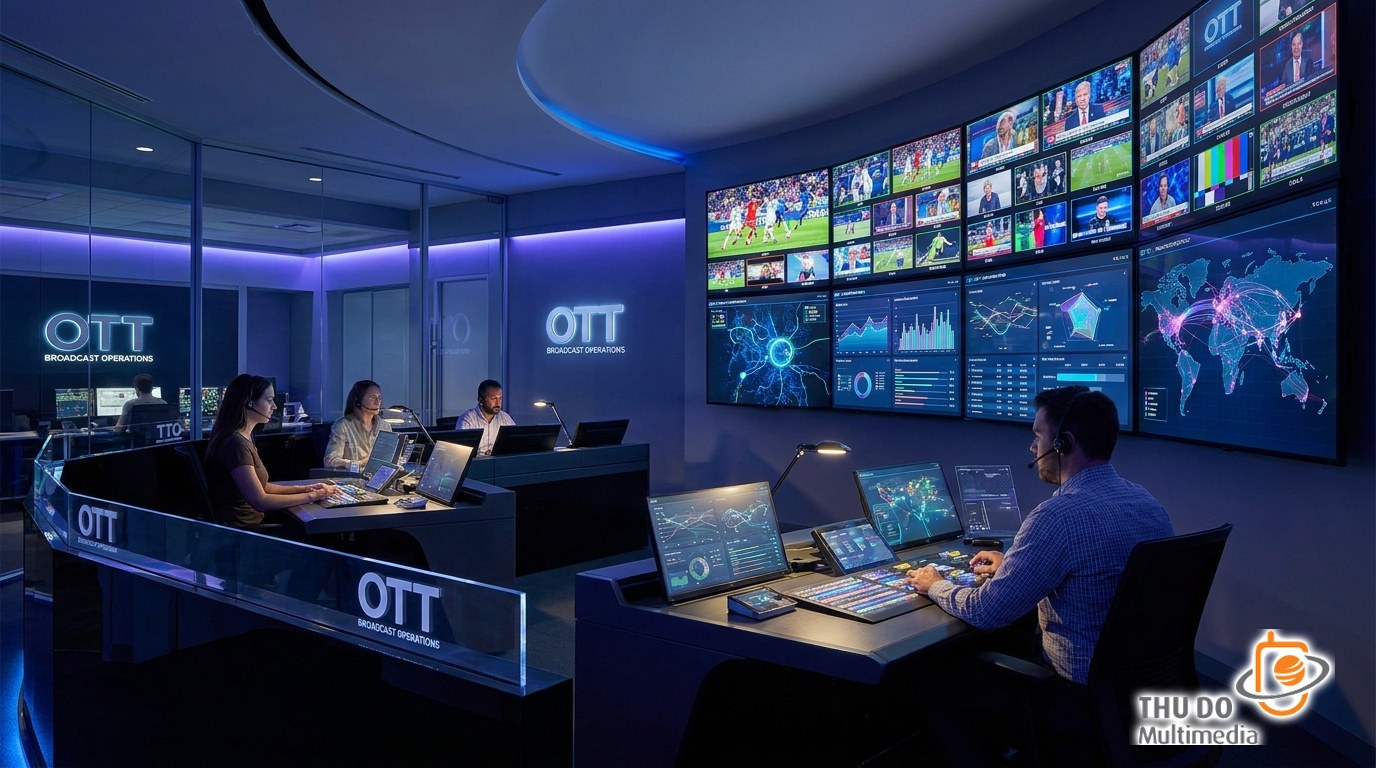
Broadcast engineers managing automated linear channel workflows in a high-tech media control room

Dynamic Ad Insertion (DAI) and Server-Side Ad Insertion (SSAI) Realities

The technical backbone of modern FAST profitability relies entirely on flawless ad delivery. Client-side ad insertion is rapidly disappearing due to ad-blockers and latency issues, replaced by advanced Server-Side Ad Insertion (SSAI). SSAI stitches advertisements directly into the video manifest stream at the server level, delivering a seamless broadcast-quality experience that bypasses client-side interference. For programmatic buyers, this infrastructure guarantees viewability and enables hyper-targeted addressable advertising down to the household or geographic level.

Revitalizing Content Catalogs: Merging Linear Lineups with On-Demand Libraries

Content discovery fatigue is a real threat to FAST channel retention. To combat this, leading networks are fusing the passive comfort of linear television with the agency of on-demand libraries. When a viewer drops into a live FAST channel stream but wants to watch the beginning of a movie, modern OTT platforms instantly prompt them to jump into the associated AVOD on-demand catalog. This intelligent routing keeps users inside the ecosystem longer, multiplying total ad impressions and boosting overall platform monetization.


Targeting the Price-Sensitive Viewer: Behavioral Shifts in Emerging OTT Markets

Macroeconomic headwinds, global inflation, and tightening household budgets have fundamentally altered how audiences consume media. Price-sensitive viewers across both mature Western markets and emerging territories (such as Latin America, Southeast Asia, and parts of EMEA) are displaying unprecedented intolerance for subscription price hikes. In these environments, price-sensitive streaming audience behavior dictates that mobile-first viewing and ultra-low-cost connected hardware take precedence over living-room exclusivity.

The democratization of affordable connected devices—ranging from budget smart TVs to low-cost streaming sticks—has ignited massive viewership growth in price-sensitive regions. These audiences demand instantaneous, frictionless access to entertainment. They expect applications to load instantly on fluctuating cellular or broadband networks without buffering. Broadcasters targeting these demographics must build lightweight, adaptive streaming pipelines that deliver high visual fidelity even under challenging network conditions, ensuring that zero-dollar entry points remain accessible to all socioeconomic tiers.

The Psychology of “Zero-Dollar” Entertainment Entry Points

The psychological appeal of a platform that costs nothing cannot be overstated. In price-sensitive markets, the mere absence of a paywall lowers user acquisition friction to absolute zero. Consumers are willing to download multiple ad-supported apps because there is no financial risk involved. This behavioral shift has transformed FAST and AVOD apps into the default discovery portals for modern entertainment, where users spend significant time browsing free channels before ever considering a paid transaction.

Balancing Content Quality with Cost Controls for Budget-Conscious Consumers

Serving price-sensitive audiences profitably requires a delicate balancing act between content appeal and operational overhead. Broadcasters cannot afford bloated licensing fees for niche programming. Instead, successful operators utilize data-driven curation to license high-affinity niche genres—such as true crime, reality television, and localized sports—that command loyal, highly engaged audiences while keeping content acquisition costs strictly controlled.


The CTV Explosion: Scaling Infrastructure for the 2027 Advertising Boom

Connected TV (CTV) has decisively eclipsed traditional linear television as the primary battleground for brand advertising dollars. With CTV households projected to surge past 121 million U.S. households by 2027, advertisers are aggressively shifting massive budgets into the ecosystem. Currently, connected TV advertising in emerging OTT markets accounts for roughly 28–30% of all programmatic ad spend, a figure that continues to climb as addressable targeting capabilities outperform legacy broadcast buys.

This explosive growth is driving unprecedented structural consolidation across the media landscape. Major corporate mergers and acquisitions—such as Fox acquiring Roku and studio conglomerates consolidating streaming portfolios—are reshaping the competitive terrain. Independent FAST and AVOD networks must navigate these M&A waves by aligning with robust technology partners who can guarantee programmatic scale, enterprise-grade security, and universal device interoperability across fragmented hardware ecosystems.

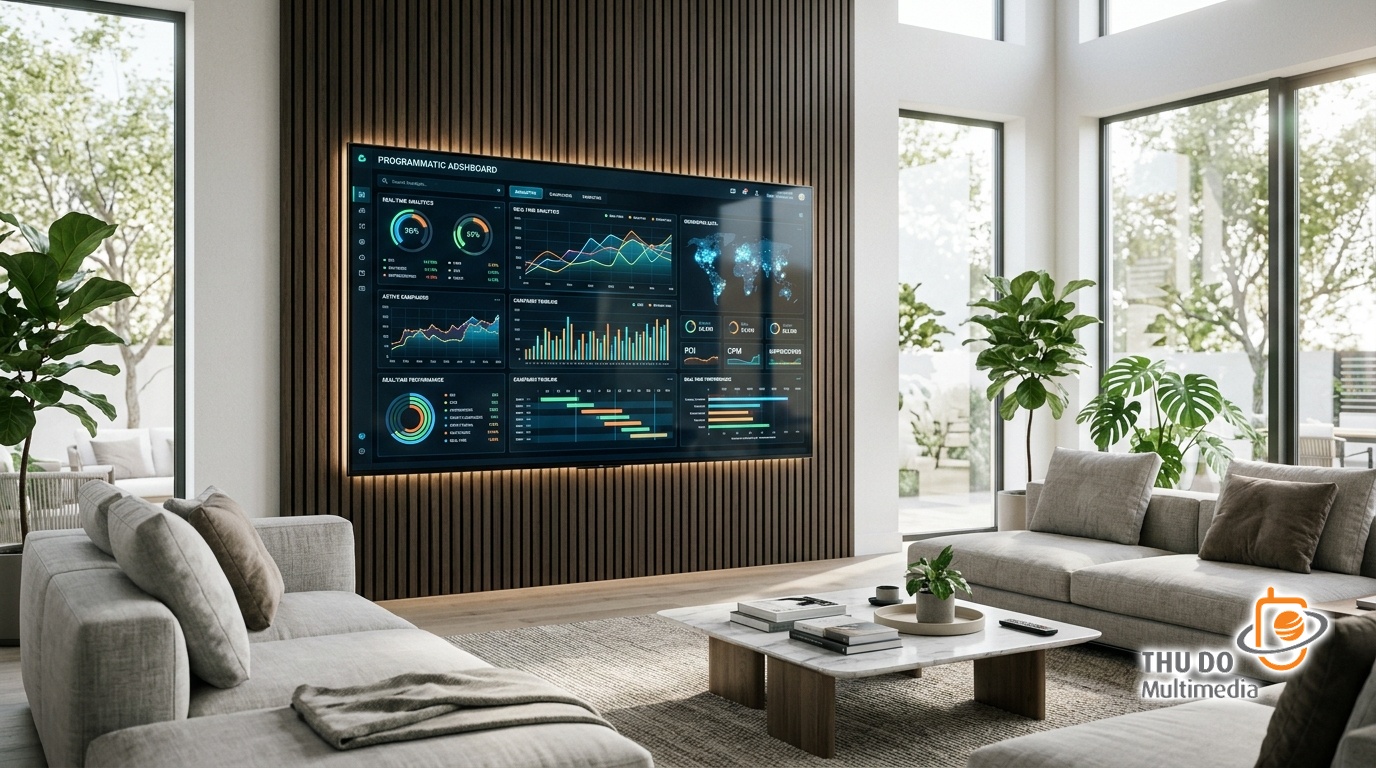
Connected TV interface displaying real-time programmatic ad delivery metrics in a contemporary living space

Programmatic Yield Optimization and CTV Ad Spend Allocations

As programmatic budgets flood into CTV, automated yield optimization has become the holy grail for network operators. Advertisers no longer buy broad dayparts; they demand audience guarantees, viewability verification, and precise frequency capping. Utilizing programmatic platforms integrated with real-time bidding (RTB) exchanges allows broadcasters to auction their ad inventory to the highest bidder in milliseconds, maximizing yield per impression while ensuring brand safety across all distributed channels.

Industry Consolidation: Navigating M&A Waves Among Major FAST and Roku Players

The rapid maturation of the free ad-supported streaming tv market growth has turned the industry into a playground for mega-corporations. As standalone platforms get absorbed by hardware giants and major studios, independent broadcasters face the challenge of maintaining carriage and visibility. Partnering with enterprise-grade OTT infrastructure providers ensures that mid-sized networks retain ownership of their data and monetization channels, insulating them from the disruptions caused by industry-wide corporate consolidation.


The Blueprint for Broadcasters: The Future of Hybrid OTT Business Models

As we look toward the realities of 2027, media executives must transition from experimental digital strategies to hardened, scalable infrastructure. The future of hybrid OTT business models belongs to operators who successfully unify FAST, AVOD, and premium SVOD tiers into a single, cohesive technical stack. Building this unbreakable ecosystem requires meticulous attention to underlying delivery mechanisms, ensuring that multi-format video streams flow efficiently from cloud storage to end-user devices without latency or buffering.

To execute this blueprint successfully, broadcasters rely on battle-tested enterprise solutions. StreamTech Global provides the comprehensive technological foundation needed to orchestrate this complexity. By combining carrier-grade Content Delivery Networks (CDNs), optimized video codecs, Server-Side Ad Insertion, and automated channel scheduling into a unified platform, StreamTech Global empowers media companies to dominate price-sensitive markets, eliminate SVOD churn, and maximize programmatic ad yields sustainably.

Tech Stack Essentials: CDNs, Codecs, and Low-Latency Delivery

Delivering high-definition hybrid streams to millions of concurrent viewers requires a state-of-the-art technical foundation. Broadcasters must deploy multi-CDN architectures combined with next-generation video codecs (such as AV1 and HEVC) to drastically reduce bandwidth consumption while preserving crystal-clear image quality. Furthermore, ultra-low-latency delivery pipelines are mandatory for hybrid platforms that seamlessly blend live linear FAST feeds with interactive, on-demand AVOD content.

Building an Unbreakable OTT Ecosystem: Combining FAST, AVOD, and Premium Tiers

The ultimate winner in the 2027 streaming economy will not be the company with the biggest content budget, but the one with the most agile monetization engine. By architecting a platform that effortlessly guides viewers from free linear FAST channels to targeted AVOD libraries and optional premium tiers, broadcasters create an unbreakable ecosystem. This diversified revenue model insulates media companies from market volatility, guarantees long-term ARPU growth, and delivers the exact entertainment experience modern, price-sensitive consumers demand.


Frequently Asked Questions

What is the main difference between AVOD and FAST channels?

AVOD (Advertising Video on Demand) allows viewers to stream on-demand content library titles for free in exchange for watching commercials, similar to platforms like Tubi or the on-demand section of Pluto TV. In contrast, FAST (Free Ad-Supported Streaming TV) replicates the traditional linear television experience by offering scheduled, 24/7 channel feeds that users can drop into live without choosing a specific title.

Why are pure SVOD models losing market dominance by 2027?

Pure Subscription Video on Demand (SVOD) models are struggling due to severe subscription fatigue, market saturation, and rising consumer pushback against managing multiple fifteen-dollar-a-month services. This has driven sky-high churn rates, making customer acquisition financially unsustainable for media companies relying solely on recurring subscription fees.

How does Connected TV (CTV) drive ad revenue in hybrid OTT models?

Connected TV acts as the crucial bridge between traditional TV viewing habits and digital targeting precision. With CTV households projected to exceed 121 million by 2027 and programmatic ad spend allocating roughly 28–30% to CTV, advertisers can deliver addressable, high-yield ads directly to living rooms on a massive scale.

Are consumers willing to watch ads to lower their streaming costs?

Yes, definitively. Market data from Deloitte and Nielsen shows that over 68% to 73% of households and television viewers now actively engage with ad-supported environments. Furthermore, over 54% to 68% of traditional SVOD subscribers have opted into ad-supported tiers to reduce monthly expenses.

Your cost effective OTT ad server with dynamic ad insertion

Key Takeaways
* Transforming video streaming from a massive cost center into a sustainable profit center requires a strategic shift toward server-side ad stitching to bypass ad blockers and maximize ARPU.
* Understanding core technologies like SCTE-104/35 markers and real-time transcoding is critical for delivering buffer-free, broadcast-quality experiences on budget constraints.
* While enterprise giants like AWS and Google dominate the conversation, agile platforms like Akta offer the essential on-the-fly transcoding and manifest manipulation tailored for mid-tier publishers without exorbitant engineering costs.
* Transparent pricing models—ranging from flat SaaS fees to CPM-based insertion structures—are vital for independent FAST channels aiming to offset ad server costs through programmatic demand.

In our experience working directly with independent broadcasters, local news networks, and mid-tier streaming publishers, the barrier to entry for enterprise-grade video monetization has always been price. You have the traffic, the premium content, and a highly engaged audience, but every time you attempt to monetize through seamless, television-like commercial breaks, the technical bills completely devour your margins. If you are searching for a cost effective OTT ad server with dynamic ad insertion, you are likely exhausted by the dizzying complexity and hidden fees associated with legacy tech giants. We are here to dismantle the jargon. This guide will walk you through exactly how to build a broadcast-grade, hyper-targeted video ad stack without requiring a massive engineering team or an endless enterprise budget.

Understanding the Need for an affordable OTT ad insertion platform

We have watched the streaming industry rapidly shift its primary mandate over the past two years: platforms can no longer operate as endless “cost centers” focused purely on user acquisition. Today, every independent FAST (Free Ad-Supported Streaming TV) channel and AVOD (Advertising-based Video on Demand) application must pivot to becoming a strict profit center. The core objective is maximizing ARPU (Average Revenue Per User) without alienating viewers through disruptive, highly repetitive, or broken advertising experiences. To achieve this delicate balance, independent publishers urgently need infrastructure that delivers premium monetization at a fraction of enterprise costs.

The data surrounding this market explosion is impossible to ignore. For instance, AWS reported that online viewership for Super Bowl LV experienced a massive increase of over 65% compared to the previous year, highlighting an unprecedented explosion in live streaming adoption globally. Furthermore, eMarketer data indicates that U.S. advertisers increased their spending on digital ads by almost 15% in a single year, with digital formats projecting to surpass two-thirds of the overall U.S. ad market. This massive migration of ad dollars means that even niche broadcasters are sitting on a goldmine of inventory, provided they have the right technology to capture it.

Consumers are currently suffering from severe subscription fatigue. As viewers heavily resist paying out-of-pocket for yet another monthly SVOD service, they are flocking to AVOD and FAST channels in record numbers. I frequently see mid-sized regional networks capitalizing on this trend by reviving archival content and local news broadcasts into 24/7 linear digital streams. However, without a dedicated system to monetize these streams, they leave thousands of dollars on the table daily. They require a lightweight, robust platform to capitalize on this shifting viewer sentiment before their larger competitors dominate the ad supply.

Furthermore, the era of blanket advertising is entirely dead. Modern media buyers demand hyper-localized, data-driven advertising that ensures higher conversions. For emerging markets and mid-tier apps, deploying localized campaigns is what separates a thriving channel from a dead one. Integrating an affordable OTT ad insertion platform allows these nimble organizations to segment their audiences by geography, device, and behavioral data, offering high-CPM targeted inventory to programmatic buyers without draining their operational budgets.

Core Mechanics of a cost efficient server side ad insertion SSAI Setup

If you have ever watched a live stream only to be interrupted by a spinning wheel of death right as a commercial break begins, you have witnessed the fatal flaw of legacy client-side ad insertion (CSAI). Server-Side Ad Insertion (SSAI) completely eliminates this “buffering death” by stitching the advertisement directly into the video stream at the server level, long before it ever reaches the viewer’s screen. This creates a beautifully seamless, traditional TV-like experience. For publishers on a budget, executing this flawlessly is paramount, as buffering immediately causes viewer abandonment and tanked completion rates.

To truly understand how this works, we must break down the three fundamental pillars of Dynamic Ad Insertion (DAI), a methodology pioneered by tech leaders like Google. First is Ad Pod Building, which involves receiving multiple ad creatives from various demand sources and unifying them into a single commercial break. Second is Creative Conditioning, which requires transcoding those video creatives in advance so their audio levels, resolution, and bitrates perfectly match the primary content. Finally, Manifest Manipulation is the actual stitching process where the customized ad playlist is seamlessly injected into the HLS or DASH stream sent to the user.

The precision of this stitching relies entirely on industry-standard triggers known as SCTE markers. In our deployments, we heavily utilize SCTE-104 markers for uncompressed raw video feeds directly from the broadcast studio, and SCTE-35 markers for compressed feeds traversing the cloud. These digital cues tell the ad server the exact millisecond an ad break begins and exactly how long it lasts. Understanding and utilizing these markers correctly is what prevents commercials from awkwardly cutting off a live sports play or local news segment.

Perhaps the most financially lucrative mechanic of SSAI is its inherent ability to bypass ad blockers. Because server-side stitching pushes all the business logic and ad calls to the cloud infrastructure rather than the user’s browser or device, client-side ad blockers cannot distinguish between the primary video content and the commercial. By implementing a cost efficient server side ad insertion SSAI setup, we have seen independent publishers immediately reclaim 15% to 20% of their previously blocked revenue overnight, rapidly offsetting any minimal infrastructure costs.

Key Features to Look for in a budget friendly video ad server for streaming

When evaluating infrastructure, the most critical feature to demand is on-the-fly ad transcoding. In real-world programmatic environments, third-party DSPs (Demand-Side Platforms) will frequently send ad creatives in wildly different formats, resolutions, and bitrates. If an ad is served in a format the user’s device cannot support, the player crashes. Platforms like Akta have masterfully solved this by identifying mismatches between third-party ads and device capabilities instantly, converting video formats in real-time. This ensures high-quality user experiences without requiring publishers to build expensive, proprietary transcoding farms.

Equally vital is absolute VAST (Video Ad Serving Template) compatibility. As a growing publisher, the last thing you want is to rip and replace your entire existing ad operations workflow. A truly accessible system must plug directly into your current ecosystem. By choosing a server that works seamlessly with your existing VAST-compliant third-party ad servers, you maintain your direct sales relationships and current programmatic demand partners. It turns complex integration into a plug-and-play scenario, keeping engineering costs drastically low.

You simply cannot manage what you cannot measure, making real-time analytics and viewability tracking a non-negotiable feature. Media buyers will not pay premium CPMs for your inventory unless they have absolute confidence that their ads were actually seen. Look for platforms capable of providing MRC-accredited impression tracking, detailed completion rates, and click-through metrics. Google Ad Manager’s DAI, for example, was notably the first SSAI solution to be accredited by the Media Rating Council (MRC) for client-initiated impression measurement on live and VOD content, setting the industry benchmark that all budget platforms now strive to match.

Finally, do not overlook the necessity for advanced sponsorship and linear scheduling controls. While programmatic backfill is great, the real money in streaming often comes from direct sponsorships during high-profile live events, such as local high school football championships or regional election coverage. A highly functional, budget friendly video ad server for streaming will give your ad-ops team fine-tuned control over specific ad units and pods, allowing them to dictate exactly which sponsor appears at which moment, flawlessly mimicking traditional broadcast-style linear ad scheduling.

Top Providers: Finding a cost effective OTT ad server with dynamic ad insertion

When navigating the market, the default path for many engineers is the AWS Media Services Stack. Leveraging AWS Elemental MediaTailor for manifest manipulation, alongside MediaLive and MediaConnect, provides an incredibly robust architecture. However, in our hands-on experience, while AWS offers phenomenal scalability for growing audiences, its complex pricing based on per-thousand ad insertions and transcoding minutes can spiral out of control for smaller publishers. It is a brilliant, highly reliable ecosystem, but it demands serious AWS architectural expertise to keep costs contained and optimized.

Conversely, Google Ad Manager offers a massive gravitational pull due to its vast programmatic demand marketplace. Broadcasters generally have two integration options: a full end-to-end DAI integration, or DAI Pod Serving, which is more flexible as it integrates seamlessly into a publisher’s existing third-party streaming solution. While Google’s technology is world-class and carries the aforementioned MRC accreditation, its platform is notoriously engineered for massive Tier-1 broadcasters like CBS or Fox. Mid-market publishers often find themselves lost in overly complex technical jargon and restrictive enterprise contracts.

This is exactly where we strongly recommend Akta and specialized niche providers. Akta is meticulously focused on eliminating the spinning wheel of buffering and handling complex transcoding completely on the fly. For independent FAST channels, mid-tier OTT apps, and local news stations that do not possess massive engineering teams, Akta provides an elegant, highly tailored alternative to the tech giants. They strip away the unnecessary enterprise bloat, delivering a cheap OTT advertising server with dynamic insertion that performs exceptionally well under live-stream pressure without the predatory hidden fees.

The global ecosystem is also expanding rapidly, introducing fierce competition that drives prices down. For context, the South Korea Ad Insertion Servers Market was valued at a massive $392 Million in 2025 and is projected to hit an astounding $1.22 Billion by 2035, growing at a CAGR of 12%. This aggressive international growth is spawning new cloud-native, edge-computing solutions from South Asian and South Korean markets. These emerging global alternatives are constantly pushing the boundaries of latency reduction at a significantly lower cost, providing more leverage for publishers when negotiating vendor contracts.

Transitioning to a scalable and economical streaming ad server

The fundamental first step in optimizing your financial overhead is entirely abandoning legacy on-premises hardware. Hybrid and cloud-native deployments offer incredible cost-saving benefits compared to the massive upfront CAPEX (Capital Expenditure) required to purchase, cool, and maintain physical ad insertion servers. By leveraging cloud-based microservices, publishers pay strictly for the compute and bandwidth they actually consume. When a live event spikes in viewership, the cloud dynamically scales up to stitch millions of personalized streams; when the event ends, the infrastructure—and the associated billing—scales right back down.

Managing variable bandwidth gracefully is another hallmark of smart infrastructure. In real-world scenarios, a viewer might be watching a pristine 4K stream on their smart TV, only to walk out the door and seamlessly transition to a shaky 4G mobile network. Economical servers must handle these fluctuating network conditions effortlessly through server-side orchestration and multi-bitrate transcoding. If the ad server fails to detect the drop in bandwidth and attempts to force a 4K commercial onto a 4G connection, the stream will freeze, the viewer will leave, and the ad impression is entirely lost.

Furthermore, integrating your architecture with Real-Time Bidding (RTB) environments is how you ensure maximum yield for every single ad break. Programmatic advertising has entirely shifted toward RTB, where millions of automated auctions are executed in mere milliseconds. A scalable and economical streaming ad server will bridge your live video inventory directly to these programmatic exchanges. This means that instead of paying expensive manual sales teams to fill your late-night remnant inventory, algorithms will automatically auction those slots to the highest bidding DSP, generating passive revenue around the clock.

Ultimately, your technology stack must be heavily future-proofed. The digital video landscape evolves rapidly, and you cannot afford to migrate platforms every two years. We advise clients to insist on strict modularity, robust DRM (Digital Rights Management) integration for premium content protection, and open API architectures. By ensuring your systems can easily ingest new programmatic protocols and adapt to shifting privacy regulations, you safeguard your operational efficiency for years to come.

Specialized Solutions: low cost dynamic ad insertion software for CTV

Connected TV (CTV) environments present incredibly unique, notoriously difficult formatting challenges. Unlike mobile or desktop web browsers, CTV devices—such as Roku, Apple TV, Chromecast, and Amazon Fire TV—are the digital equivalent of traditional living room broadcasting. Viewers expect an absolute premium, television-quality experience. Therefore, CTV requires heavily pre-conditioned creatives; if a 15-second spot is not transcoded perfectly to match the exact specifications of a Roku player, it simply will not play. Finding platforms that automate this device-specific conditioning without breaking the bank is crucial for CTV success.

To capitalize on the massive CPMs associated with the living room screen, your infrastructure needs Advanced TV features out of the box. We look for platforms offering “Smarter Ad Breaks” that dynamically adjust ad pod lengths based on user engagement, as well as robust programmatic signals coverage using lightweight IMA SDKs. These features ensure that vital user identifiers and contextual data are securely passed to advertisers in privacy-compliant ways. Such inventory sharing capabilities are specific to CTV environments and are vital for attracting premium brand advertisers.

Latency is the mortal enemy of live sports and breaking news on CTV. To solve this without massive infrastructure investments, modern solutions are leaning heavily on edge computing. By deploying lightweight ad server nodes directly at the network edges—closer to the viewer’s physical location—platforms dramatically reduce the round-trip time required to fetch, stitch, and deliver an ad. Implementing low cost dynamic ad insertion software for CTV that utilizes this edge architecture guarantees a premium, buffer-free broadcast experience while drastically reducing centralized server compute costs.

Navigating pricing for cost effective programmatic OTT ad servers

The most glaring gap in the current streaming technology market is the sheer lack of true cost and pricing transparency. If you read the marketing materials from AWS or Google, they will heavily promote their robust, enterprise-grade ecosystems but completely gloss over the actual implementation costs or detailed pricing models. This leaves small-to-mid-sized businesses entirely in the dark. Generally, you will encounter three models: CPM-based pricing (where you pay a few cents for every 1,000 ads stitched), flat SaaS licensing fees (predictable monthly costs), or revenue-share agreements (where the vendor takes a percentage of the ad revenue generated).

Understanding these models is the key to reducing wasted ad spend. When you utilize precise, personalized ad delivery through server-side stitching, the value of your inventory skyrockets. Because the ads are heavily targeted, immune to ad blockers, and delivered without buffering, brand advertisers are willing to pay significantly higher CPMs. In our strategic deployments, we often find that the increased yield generated from these premium placements easily offsets the usage costs of the ad server itself, turning a technological expense into a net-positive revenue driver.

The ultimate strategy for financial sustainability is leveraging indirect demand. By deploying an ad server that is inherently integrated with major programmatic exchanges—whether through Google’s TrueView, Magnite, or third-party DSPs—you ensure that unsold inventory is never wasted. The system automatically fills empty ad slots with relevant programmatic demand. When you properly navigate pricing for cost effective programmatic OTT ad servers, the underlying platform essentially pays for itself by monetizing every single second of available broadcast time that your direct sales team could not fill.

Câu hỏi thường gặp

What is Dynamic Ad Insertion (DAI) in OTT?
In our daily operations, we define DAI as an advanced server-side technology that empowers broadcasters to insert highly personalized, targeted video advertisements into live linear programming and Video-on-Demand (VOD) content in real-time. Instead of broadcasting the exact same commercial to a million viewers, DAI tailors the ad break to each individual viewer based on demographic and behavioral data.

How does Server-Side Ad Insertion (SSAI) differ from Client-Side Ad Insertion (CSAI)?
The difference lies entirely in where the technical heavy lifting occurs. SSAI seamlessly stitches the advertisement directly into the primary video stream at the server level, preventing buffering and completely bypassing client-side ad blockers. Conversely, CSAI relies heavily on the user’s local video player to pause the content, request the ad, load it, and play it. This localized process frequently leads to high latency, the dreaded spinning wheels of buffering, and extreme vulnerability to ad-blocking browser extensions.

What are SCTE-35 markers and why are they important?
SCTE-35 markers are vital industry-standard digital signals embedded directly within compressed video streams. We rely on them to tell the ad insertion server exactly when an ad break is supposed to begin and precisely how long it will last. Without these markers, automated systems would simply guess when to insert commercials, resulting in ads cutting off the most important moments of a live broadcast. They are the backbone of seamless transitions.

Can I implement an OTT ad server on a tight budget?
Absolutely. We consistently help smaller independent broadcasters bypass heavy upfront hardware costs by utilizing cloud-native platforms, hybrid deployment models, or solutions like “DAI Pod Serving.” By selecting platforms like Akta that plug directly into your existing infrastructure and offer usage-based, scalable pricing models, you can achieve broadcast-grade monetization without enterprise-level expenditures.

Is Google Ad Manager free for OTT dynamic ad insertion?
While creating a foundational Google Ad Manager account for basic display ads is free, utilizing its advanced Dynamic Ad Insertion (DAI) for video is certainly not. It typically involves complex serving fees or aggressive revenue-share models based strictly on ad impressions and video bandwidth volume. As your viewership and ad loads scale, the costs of Google’s DAI scale rapidly right alongside them, which is why evaluating transparent alternative platforms is highly recommended for mid-tier publishers.

Building a sustainable, profitable streaming network no longer requires compromising on quality or surrendering your margins to enterprise tech monopolies. By deeply understanding the mechanics of manifest manipulation, leveraging smart transcoding tools like Akta, and maintaining strict control over your programmatic integrations, you can achieve unprecedented monetization. Ultimately, when choosing a cost effective OTT ad server with dynamic ad insertion, your focus must remain on eliminating viewer friction while maximizing every possible ad impression through transparent, scalable architecture.