
Telco-OTT bundling in South Asia fuses telecommunications data packages with premium digital streaming subscriptions, solving low credit card adoption through direct carrier billing. By packaging vernacular entertainment, live sports, and global SVOD services into everyday mobile recharges, mobile operators transition from low-margin bandwidth utilities into high-retention digital lifestyle ecosystems that elevate ARPU and slash churn.
Key Takeaways
- Prepaid Dominance & Banking Gaps: With over 85% to 90% of South Asian mobile users on prepaid plans and credit card penetration hovering under 5% to 10%, telecom billing serves as the primary alternative financial rail for digital entertainment.
- ARPU Elevation: Packaging tiered streaming access incentivizes subscribers to graduate from bare-minimum $1.50–$3.00 monthly mobile spend into higher-yield multi-service entertainment tiers.
- Drastic Churn Reduction: Multi-product bundles create psychological and functional lock-in; losing access to synced watch histories, family accounts, and live sports access turns SIM-swapping into an inconvenient choice.
- Unified Aggregation Shift: Telecom operators are migrating from fragmented third-party app promotions toward unified super-apps and white-label orchestration hubs (like Tata Play Binge and Airtel Xstream) that streamline discovery and billing under a single sign-on interface.
Why Is Telco-OTT Bundling: The Secret Weapon for Subscriber Acquisition and Retention in South Asia?
In our extensive field engagements across emerging digital economies, we have witnessed a profound shift in consumer expectations. Telco-OTT Bundling: The Secret Weapon for Subscriber Acquisition and Retention in South Asia has evolved from an experimental marketing tactic into the foundational architecture of digital telco survival. For over a decade, South Asian telecommunications providers—operating across India, Pakistan, Bangladesh, and Sri Lanka—engaged in aggressive price competition. They laid extensive 4G and 5G fiber routes and dropped per-gigabyte data tariffs to some of the lowest rates on earth. However, this race to the bottom commoditized bare connectivity, turning operators into low-margin “dumb pipes” while offshore digital platforms extracted the real value from subscriber screen time.
The reality on the ground is defined by structural friction: unprecedented data consumption alongside ultra-low Average Revenue Per User (ARPU). In markets like India and Pakistan, monthly mobile data consumption routinely hits 15 to 25 gigabytes per user, yet base ARPU historically fluctuates between $2.00 and $3.50 USD. Because more than 85% to 90% of subscribers rely on prepaid connections and maintain dual-SIM devices, brand loyalty has traditionally been razor-thin. If Operator A increases tariffs by a few pennies, users readily switch network traffic to Operator B’s secondary SIM card. Connectivity alone provides no sustainable moat.
+-----------------------------------------------------------------------+
|                SOUTH ASIAN TELECOM PARADOX & RESOLUTION               |
|                                                                       |
|  [ Ultra-Low ARPU ($2-$3) ]            [ High Dual-SIM Churn (>85%) ] |
|               \                                      /                |
|                \                                    /                 |
|         COMMODITIZED "DUMB PIPE" BANDWIDTH (Low Defensibility)        |
|                                  |                                    |
|                                  v                                    |
|             +-----------------------------------------+               |
|             |        TELCO-OTT INTEGRATION LAYER      |               |
|             |  * Direct Carrier Billing (DCB / Airtime)|               |
|             |  * Single Sign-On (SSO) Aggregation Hub |               |
|             |  * Regional Vernacular & Sports Catalogs|               |
|             +-----------------------------------------+               |
|                                  |                                    |
|                                  v                                    |
|      [ Multi-Service Lock-In ]        [ Tiered ARPU Expansion ($5+) ] |
+-----------------------------------------------------------------------+
To counter this volatility, forward-looking operators are deploying comprehensive digital entertainment ecosystems. By integrating over-the-top (OTT) video streaming services straight into core consumer tariffs, telecom operators convert standard data connections into curated digital lifestyle gateways. Our analysis indicates that when a consumer relies on their mobile operator not just for connectivity, but for their daily dose of prime-time dramas, regional cinema, and live cricket broadcasts, SIM-swapping friction escalates dramatically.
“In developing mobile markets, pure connectivity is a rapidly depreciating asset. The operator that controls authentication, billing, and content discovery becomes an indispensable digital platform rather than an interchangeable utility pipeline.”
— Telecom Strategy Institute, Global Media & Connectivity Review
Market Dynamics: High Data Consumption vs. Low ARPU Realities
The core economic paradox of South Asia lies in the divergence between consumer engagement and consumer purchasing power. While mobile screen time ranks among the highest globally, average consumer willingness to enter recurring monthly credit card commitments for entertainment is virtually non-existent. Over 90% of consumers across Bangladesh and Pakistan operate outside the formal credit card ecosystem. When global SVOD services mandate international credit cards or complex recurring bank mandates, the vast majority of prospective viewers hit an immediate checkout wall.
By contrast, the local mobile recharge vendor or domestic digital wallet is a ubiquitous component of daily life. Telecom operators already maintain direct financial relationships with hundreds of millions of consumers through prepaid airtime balances and integrated mobile financial services such as Easypaisa, JazzCash, bKash, and UPI. Operators bridge the monetization divide by translating large annual OTT subscription commitments into digestible, sachet-sized daily, weekly, or monthly mobile pack allocations.
Why OTT Subscription Bundling for Telecom Operators Is Now Essential
The imperative for OTT subscription bundling for telecom operators is rooted in long-term customer lifetime value (LTV). Standalone customer acquisition costs for telecom operators have grown significantly as mobile penetration reaches natural saturation points across South Asian urban and rural centers. Acquiring an existing rival’s subscriber through pure price-slashing yields unsustainable payback periods.
Conversely, incorporating recognizable streaming catalogs into regular recharge cycles transforms generic mobile data recharges into high-value bundles. It provides immediate differentiation on physical retail posters and digital top-up apps alike. Consumers no longer compare 1.5 GB/day data quotas in isolation; they evaluate the total entertainment package, weighing complimentary access to regional cinema, live sports, and premium international series.
How Are Operators Driving Telco Subscriber Acquisition South Asian Market?
To achieve aggressive targets for telco subscriber acquisition South Asian market, operators have recognized that localized content is the ultimate customer magnet. In a region where cultural identity, language dialects, and regional sports passions vary wildly across state and national borders, generic marketing campaigns consistently fall flat. Leading operators orchestrate acquisition campaigns around high-stakes media moments, such as the Indian Premier League (IPL), the ICC Cricket World Cup, or the premiere of marquee vernacular web series.
       TRADITIONAL ACQUISITION                    OTT-BUNDLED ACQUISITION
   +------------------------------+          +------------------------------+
   |   1.5 GB/Day Generic Data    |          |  1.5 GB/Day + Sports Access  |
   |   Price-War Positioning      |   vs.    |  Zero-Rated Vernacular OTT   |
   |   High Switch Vulnerability  |          |  Unified Entertainment Hub   |
   +------------------------------+          +------------------------------+
                 |                                          |
                 v                                          v
      Marginal Gross Adds /                      High-Intent Gross Adds /
         Immediate Churn                            Deep App Engagement
During these peak broadcast events, price sensitivity yields to accessibility. When an operator secures exclusive, subsidized, or zero-rated digital streaming rights and bundles them into an accessible prepaid starter pack, gross customer additions surge. Prospective subscribers will actively purchase a new SIM card or port their existing connection simply to gain reliable, zero-friction access to critical cultural broadcasts on their mobile devices.
Furthermore, bundling eliminates the high barriers of direct-to-consumer (D2C) applications. When a streaming platform operates independently in South Asia, it confronts high marketing costs, severe onboarding drop-offs, and payment processing failures. When that same service enters a strategic telecom bundle, the operator’s physical retail presence and pre-installed super-app environment funnel millions of qualified users straight into the content ecosystem without transactional friction.
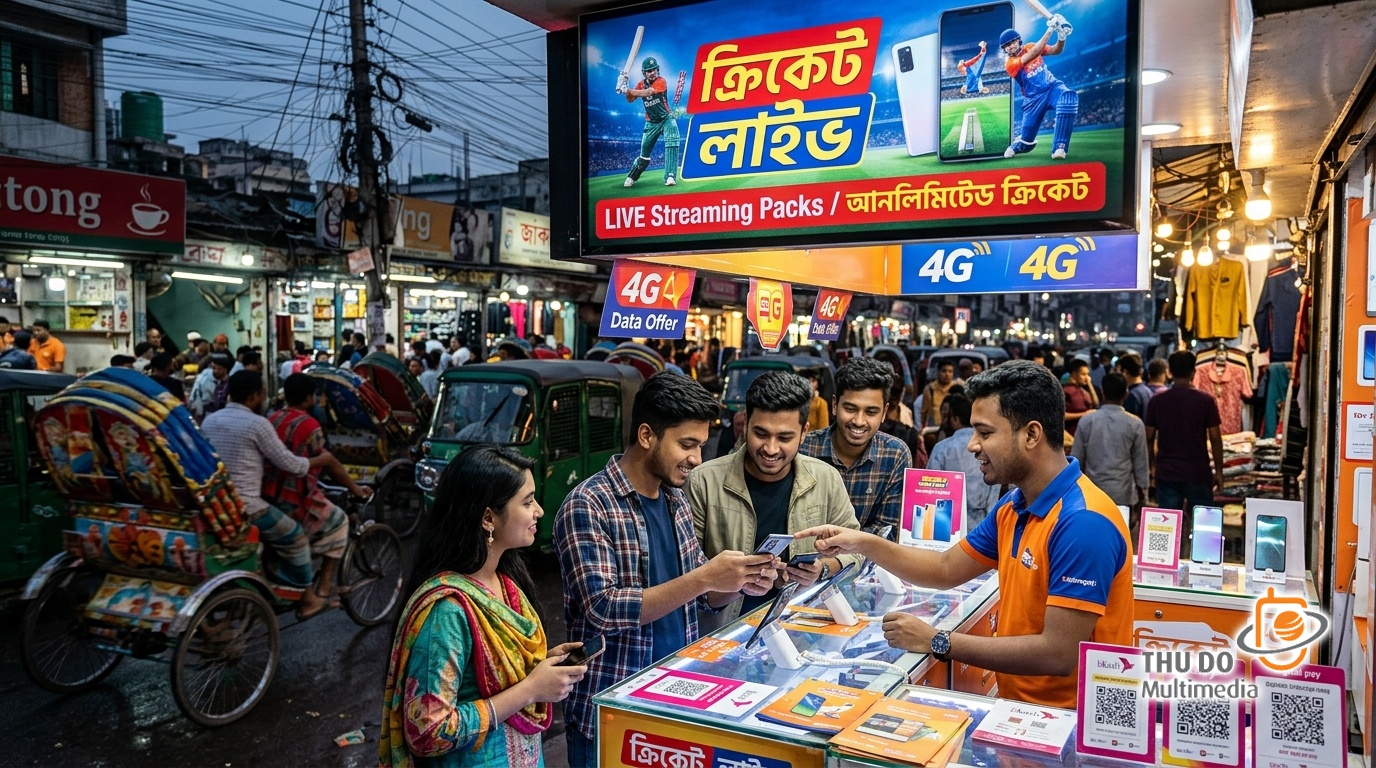
Leveraging Hyper-Local & Global Content as Customer Magnets
A successful acquisition engine balances both hyper-local programming and premium international catalogs. In India, while global platforms like Netflix and Amazon Prime Video offer prestige branding that appeals to affluent metropolitan cohorts, localized services like Hoichoi (Bengali), aha (Telugu/Tamil), and Chaupal (Punjabi/Bhojpuri) drive grassroots volume across tier-2 and tier-3 demographic belts.
Similarly, in Pakistan, platforms like Tamasha and Tapmad have established substantial active user bases by combining domestic drama serials with live cricket streaming rights. By partnering with these focused vernacular platforms, telecom operators craft hyper-targeted regional acquisition campaigns. A subscriber in West Bengal or Sylhet can be presented with a customized data package featuring instant access to top Bengali streaming libraries, delivering immediate cultural relevance that generic data deals cannot match.
Mobile Data Plans with Bundled OTT Subscriptions as Entry-Level Hooks
The tactical deployment of mobile data plans with bundled OTT subscriptions functions as a high-conversion entry point. Leading telecommunications operators develop micro-sachet packages: 1-day, 3-day, or weekend entertainment passes priced attractively for price-sensitive prepaid subscribers.
These entry-level hooks allow users to experience premium, ad-free streaming environments without committing to long-term direct subscriptions. Once the consumer experiences high-definition, buffer-free streaming via the operator’s optimized network, upgrading them to a standard 28-day, 56-day, or 84-day entertainment bundle becomes an intuitive operational progression rather than an uphill sales pitch.
How Can Operators Accelerate Telecom ARPU Growth Through Digital Content Bundling?
Achieving sustainable telecom ARPU growth through digital content bundling requires deliberate catalog tiering and disciplined upgrade pathways. Rather than distributing digital subscriptions across all price tiers, top-performing telecom operators use premium streaming access as an incentive to encourage prepaid users to move up the value chain.
For instance, an operator’s baseline 28-day prepaid pack may provide basic high-speed data alongside ad-supported regional entertainment. However, if that subscriber desires uninterrupted access to global streaming platforms or multi-device capabilities, they are guided toward higher-tier packs. This laddering strategy systematically increases monthly consumer outlay by 20% to 45%, converting low-margin users into profitable digital subscribers.
+-----------------------------------------------------------------------------------+
|               PREPAID VALUE-LADDERING ARCHITECTURE (ARPU EXPANSION)              |
|                                                                                   |
| [Tier 3: Convergent / Fiber Pack]  ==> 4K HDR Multi-Screen + Global OTTs ($8-$15) |
|         ^                                                                         |
| [Tier 2: Premium Mobile Pack]      ==> High-Speed 5G + Ad-Free Regional OTT ($4-$6)|
|         ^                                                                         |
| [Tier 1: Entry Prepaid Pack]       ==> Basic Data + Ad-Supported OTT ($2-$3)     |
+-----------------------------------------------------------------------------------+
Beyond prepaid-to-postpaid migrations, digital content packaging acts as a bridge for selling fixed-line home broadband (FTTH). As mobile data consumption familiarizes households with on-demand video entertainment, family demand inevitably outgrows shared mobile hotspot thresholds. Operators leverage their integrated mobile entertainment apps to identify high-consumption households and present them with unified convergence offers: one integrated monthly bill covering family mobile SIMs, unlimited high-speed fiber internet, and a curated connected-TV streaming box.
“The path to double-digit ARPU expansion in low-tariff environments does not lie in blunt voice and data price hikes. It requires creating structured entertainment packages where consumers willingly pay incremental premiums for bundled digital utility and convenience.”
— Asian Telecommunications Revenue Council, Annual Industry Perspectives
Upselling Prepaid Users to Tiered Premium Entertainment Packages
Prepaid subscribers in South Asia are highly rational spenders; they evaluate daily cost against daily perceived utility. To monetize this mindset, operators design tiered entertainment recharges that separate standard mobile-only access from high-definition, multi-screen licenses.
An operator might provide an entry-tier mobile-only streaming license on an entry-level monthly recharge, while reserving multi-screen 4K HDR access for their premium 84-day or annual plans. By packaging streaming services alongside extended validity periods, the operator accomplishes two goals simultaneously: securing upfront liquidity from the subscriber and structurally moving the baseline ARPU needle into healthier territory.
Monetizing Niche Verticals: Regional Cinema, Live Sports, and Micro-Passes
Not every subscriber wants a comprehensive, expensive entertainment package covering dozens of disparate platforms. Many consumers are single-interest viewers who care exclusively about a weekend cricket tournament, a specific regional cinema launch, or episodic devotional content.
Operators tap into these micro-demographics through targeted niche passes. By integrating flexible digital charging engines, an operator can monetize an exclusive 48-hour live sports pass or a 7-day regional cinema ticket deducted directly from the customer’s available prepaid airtime. These micro-transactions capture incremental, high-margin revenue from subscribers who would otherwise rely on pirated streams or forgo viewing entirely.
What Strategies Are Proven for Reducing Telco Churn with Streaming Bundles?
In mobile markets where multi-SIM device usage is standard practice, reducing telco churn with streaming bundles is a top operational priority for retention leaders. Bare network connectivity is inherently disposable; if a connection drops or a rival advertises a brief promotional discount, users readily swap network paths. However, personal entertainment usage creates deep behavioral inertia.
THE MULTI-LAYERED CUSTOMER RETENTION MOAT
+-------------------------------------------------------------+
|  LAYER 4: Multi-Device Family Sync (Home Fiber & Living TV) |  HIGHEST
|  LAYER 3: Curated Personal Watchlists & Viewing Profiles    |  SWITCHING
|  LAYER 2: Active Mid-Series / Live Sports Tournament Passes |  COSTS
|  LAYER 1: Standalone SIM Card (Bare Data & Voice Minutes)   |  ZERO MOAT
+-------------------------------------------------------------+
When an operator integrates a subscriber’s viewing habits, watchlists, family profiles, and payment histories into an integrated platform, switching networks carries tangible personal friction. A customer might discard an unattached SIM card without hesitation. That same customer will hesitate if discarding that connection immediately terminates their household’s evening streaming access, revokes their active sports pass, and clears out their personalized recommendation preferences.
Furthermore, modern operators utilize content consumption telemetry as a predictive churn detection engine. Traditional telecom churn indicators—such as drops in outgoing voice calls or subtle changes in data usage—are lagging metrics; by the time voice and data usage declines, the customer has often already activated a rival’s SIM. By tracking content engagement inside aggregated streaming hubs, data science teams identify disengagement long before network disconnection occurs, enabling automated, targeted retention incentives.
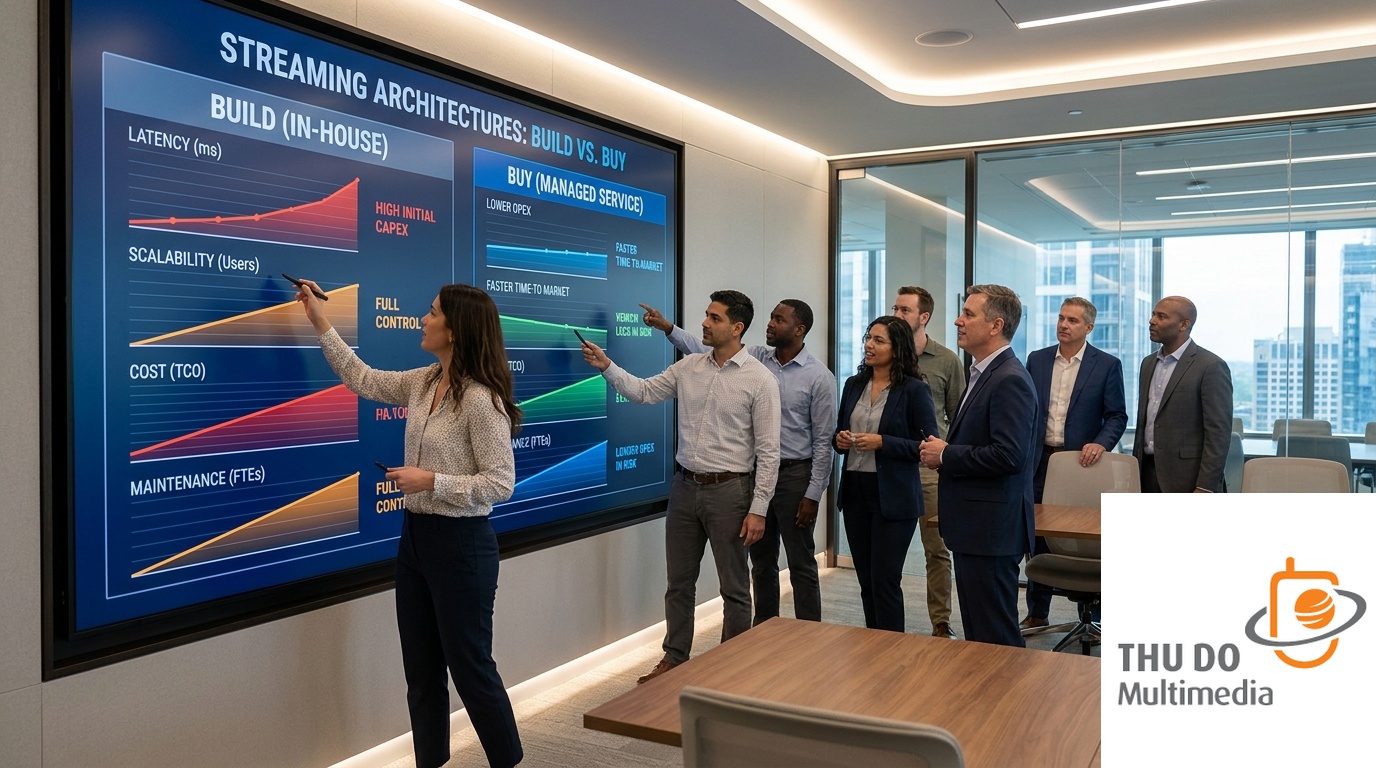
The Psychology of Content Stickiness and Multi-Service Lock-in
The psychology of multi-service lock-in rests on behavioral routines. Evening entertainment consumption is an emotional, domestic ritual. When an operator secures that ritual by powering the living room smart TV, the family tablet, and individual smartphones through an integrated entertainment bundle, the brand shifts from an anonymous utility provider into an integral home utility.
Shared-data family plans tied to multiple OTT screen allocations amplify this effect. Porting out no longer involves a single decision by one individual; it requires navigating household disruption across multiple users whose daily digital entertainment relies on the central family account. This dynamic introduces significant collective friction against network switching.
Predictive Churn Mitigation via Bundle Engagement Metrics
Advanced analytics teams monitor specific platform metrics:
* Consecutive active streaming days per week.
* Completion rates of ongoing television series.
* Interaction with personalized platform recommendations.
When a subscriber who typically streams ten hours of content weekly suddenly drops to zero streaming activity over a seven-day window, early warning algorithms flag a high-probability churn risk. In response, modern Business Support Systems (BSS) trigger automated engagement workflows. The user might receive an automated SMS or in-app push notification offering exclusive access to an upcoming movie premiere or bonus high-speed streaming data, re-engaging the subscriber before they initiate a formal mobile number portability (MNP) request.
What Technical Architecture Enables Carrier Billing and OTT Aggregation?
Underneath commercial partnerships lies a sophisticated technical and financial infrastructure. Navigating carrier billing and OTT aggregation requires closing the wide payment gap characteristic of developing markets while unifying fragmented digital experiences. Direct Carrier Billing (DCB) serves as the primary transaction engine that makes digital commerce viable across South Asia’s predominantly unbanked and underbanked populations.
+-----------------------------------------------------------------------------------+
|               DIRECT CARRIER BILLING (DCB) & AGGREGATION ENGINE                   |
|                                                                                   |
|  [ End User Device ]                                                              |
|          |                                                                        |
|          | 1. Mobile Identity (MSISDN Network Authentication)                     |
|          v                                                                        |
|  [ Telco Aggregation Gateway / Middleware ]                                       |
|          |                                                                        |
|          +--- 2. Direct Airtime Deduction (Prepaid) / Postpaid Invoice            |
|          |                                                                        |
|          +--- 3. Real-Time Entitlement Provisioning (OAuth 2.0 / REST API)        |
|          v                                                                        |
|  [ OTT Partner Ecosystem (Global & Regional Streaming Catalogs) ]                 |
+-----------------------------------------------------------------------------------+
Rather than requiring a credit card, DCB allows digital purchases to be charged directly against a customer’s available prepaid airtime balance or added to their monthly postpaid invoice. When paired with network-based authentication (such as Header Enrichment or MSISDN auto-detection), a consumer can purchase and activate a streaming service with a single click. There are no 16-digit card numbers to enter, no bank portals that time out, and no multi-step forms to abandon.
Simultaneously, aggregation architectures are evolving from external app deep-linking toward fully unified super-app environments. Instead of forcing users to download, log into, and manage a dozen individual streaming applications, operators are deploying integrated entertainment platforms such as Tata Play Binge, Airtel Xstream, and JioTV. These super-apps aggregate diverse third-party content catalogs into a single interface featuring unified search, centralized user entitlement, and streamlined billing.
Solving the Payment Gap via Carrier Billing and OTT Aggregation
In markets where formal banking rails struggle to support micro-transactions, Direct Carrier Billing functions as a vital financial bridge. Traditional card-based transactions incur merchant processing overhead and suffer from high network failure rates across domestic South Asian banks. DCB operates directly on the telecom operator’s native Online Charging System (OCS) and Digital Charging System (DCS), executing low-latency balance deductions with near-perfect authorization rates.
This financial infrastructure enables operators to support micro-sachet packaging—such as single-day passes costing pennies—that global credit card rails cannot process economically. The telecom billing system effectively replaces the traditional financial system for consumer digital entertainment purchases.
Super-App Aggregation vs. Standalone API Integration Architectures
From a systems architecture standpoint, telecom operators choose between two primary integration models:
| Architectural Metric | Standalone API Integration (App-to-App) | Unified Super-App Aggregation Hub |
|---|---|---|
| User Experience | Fragmented; user jumps between separate third-party apps | Seamless; single user interface for content discovery, playback, and billing |
| Authentication | Individual credentials or external deep-link redirects | Centralized Single Sign-On (SSO) via MSISDN / OAuth 2.0 |
| Search & Discovery | Siloed within individual OTT catalog databases | Universal search indexing across all aggregated content partners |
| Data Visibility | Minimal; partner controls post-click viewing telemetry | Deep; operator retains comprehensive viewing and engagement data |
| Network Overhead | Standard direct-to-app CDN traffic flows | Highly optimized local edge caching and direct peering integration |
Building a unified super-app demands modern BSS/OSS middleware capable of real-time entitlement synchronization. When a subscriber’s core prepaid balance lapses, the orchestration layer must automatically freeze, downgrade, or revoke downstream access across all linked OTT partners via secure REST APIs, ensuring the operator avoids billing leakages.
What Are the Best Telecom OTT Partnership Strategies South Asia?
Formulating successful telecom OTT partnership strategies South Asia requires balancing complex commercial terms, operational constraints, and regulatory requirements. A strategy that flourishes in a high-ARPU Western market will falter in the low-margin, prepaid-centric landscapes of South Asia. Operators and content providers must move past rigid licensing models and adopt flexible, shared-risk commercial structures that mirror local economic realities.
       WHOLESALE LICENSING                         REVENUE-SHARE MODEL
  +---------------------------+               +---------------------------+
  | High Fixed Minimum Guarantees|               | Variable Licensing Fees   |
  | High Risk on Telco        |      vs.      | Shared Downside & Upside  |
  | Demands Massive Volume    |               | Scalable for Niche Apps   |
  +---------------------------+               +---------------------------+
The commercial framework generally aligns with one of three primary partnership models:
1. Wholesale Minimum Guarantee (MG): The operator purchases streaming licenses in bulk at significant wholesale discounts, assuming the full sales and inventory risk. This structure suits marquee global platforms and must-have live sports assets where massive customer pull is guaranteed.
2. Dynamic Revenue-Share: The operator and the streaming platform split actual gross billings generated via direct carrier billing or add-on bundles. This low-risk approach is well-suited for long-tail, niche, and regional vernacular content partners.
3. Pure Co-Marketing / Distribution: The operator provides retail app visibility, promotional SMS campaigns, and zero-rated data access, while the OTT partner handles direct billing and pays the operator an affiliate acquisition bounty.
Beyond commercial negotiation, execution depends heavily on network traffic management. Video traffic accounts for over 70% of downstream mobile bandwidth. If an operator launches an aggressive OTT bundle without deploying local Content Delivery Network (CDN) edge caching and direct peering exchanges, surging video traffic can congest core mobile networks, degrade service quality for everyday users, and drive up transit backhaul costs.
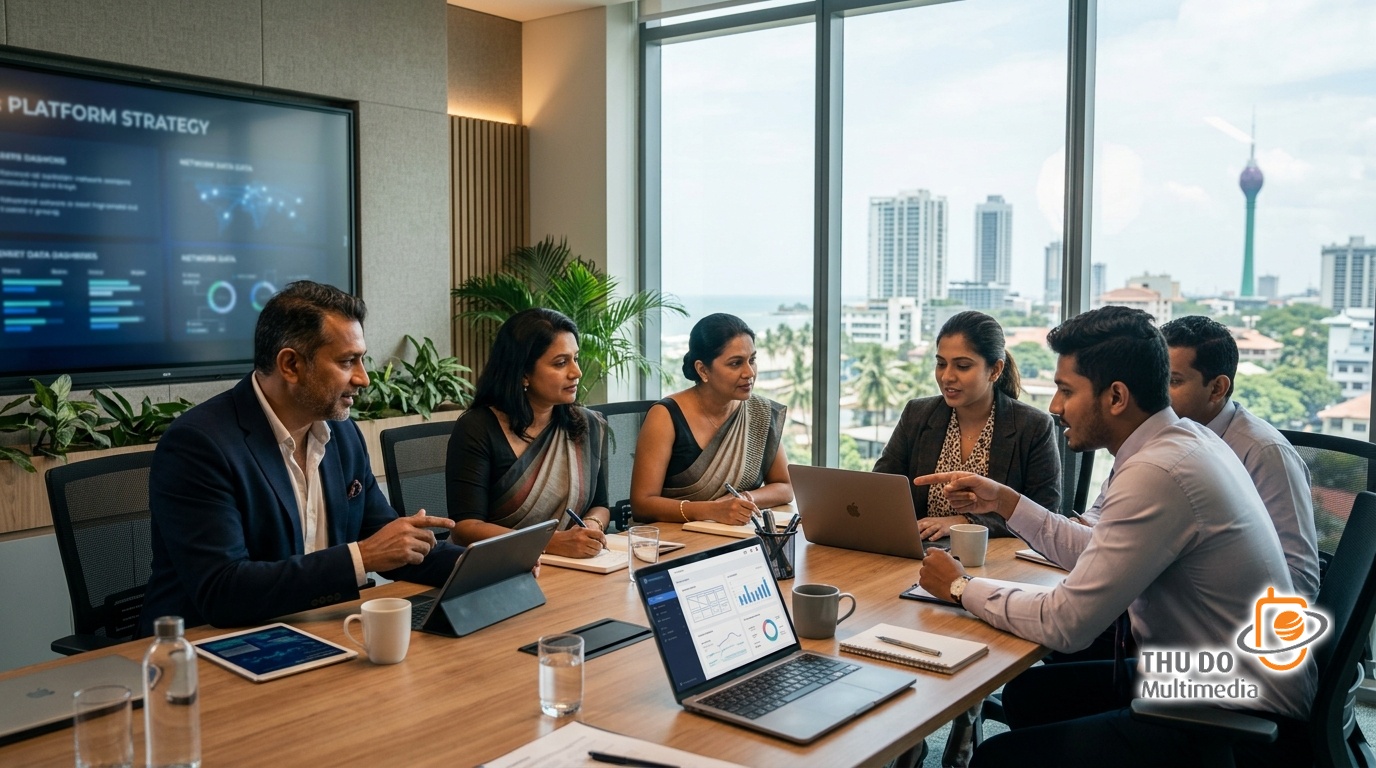
Revenue-Share vs. Wholesale Licensing vs. Co-Marketing Frameworks
Selecting the optimal commercial structure requires clear portfolio segmentation. Relying entirely on wholesale minimum guarantees exposes the telecommunications provider to severe balance sheet strain if bundled recharges underperform internal sales projections.
A resilient framework deploys a hybrid model: reserve capital-intensive wholesale guarantees strictly for tier-1 flagship partners that drive primary customer acquisition, while surrounding those tentpole offerings with a diverse ecosystem of regional vernacular and educational platforms engaged via flexible revenue-sharing terms. This strategy shields the operator’s operating margins while providing subscribers with a comprehensive, diverse entertainment catalog.
Operational Challenges: Legacy BSS/OSS Bottlenecks, Latency, and Content Governance
Legacy IT environments present substantial barriers to fast market execution. Many incumbent South Asian telecommunications operators still manage legacy billing engines designed decades ago for basic voice calls, SMS, and metered data balances. These legacy platforms lack the agility to manage dynamic micro-transactions, instant digital partner provisioning, and real-time subscription lifecycle changes.
Overcoming these operational bottlenecks requires implementing lightweight digital mediation middleware—such as modern cloud-native digital business platforms—that decouple modern OTT APIs from legacy billing backbones.
Furthermore, telecom operators must navigate strict regional regulatory environments. Content governance frameworks, net neutrality regulations, and local digital tax laws vary significantly across India, Bangladesh, and Pakistan. Operators must ensure zero-rated data offerings comply with local fair-competition frameworks while guaranteeing that aggregated content satisfies national broadcasting and digital decency guidelines.
Frequently Asked Questions
What is telco-OTT bundling, and how does it work in South Asia?
Telco-OTT bundling is a strategic commercial partnership where telecommunications operators package premium over-the-top (OTT) digital streaming services directly into mobile data, voice, or fixed-line broadband plans. In South Asia, the partnership operates primarily through Direct Carrier Billing (DCB) and network-based identity authentication (MSISDN).
Instead of requiring an independent sign-up or credit card payment, subscribers activate streaming entitlements using their mobile recharge balance or monthly postpaid bill. Authentication occurs seamlessly through single sign-on (SSO) gateways or within the operator’s proprietary entertainment super-app.
Why are OTT bundles more effective for customer retention than simple data discounts?
Pure mobile data has become an undifferentiated commodity across South Asia. Because multi-SIM adoption is widespread and mobile number porting is accessible, consumers will readily switch service providers for minor tariff discounts.
OTT bundles counter this dynamic by creating emotional and functional switching barriers:
* Users accumulate personal watchlists, viewing histories, and custom algorithms within the integrated streaming hub.
* Family members rely on shared multi-screen accounts tied to the primary telecom connection.
* Active access to long-running sports tournaments or serialized television shows makes switching networks an inconvenient trade-off.
How do telecom operators monetize OTT bundles if data tariffs are so low?
While baseline data tariffs remain low across South Asian markets, operators monetize digital content bundles through several complementary strategies:
1. Value-Laddering Recharges: Restricting premium, ad-free, or multi-screen streaming subscriptions to higher-tier prepaid and postpaid plans, systematically lifting base ARPU.
2. Direct Carrier Billing Margins: Retaining a processing and distribution margin (typically 10% to 25%) on micro-passes and add-on subscriptions charged via airtime balances.
3. Broadband Convergence: Using mobile video familiarity to upsell households to high-margin fixed-line fiber-to-the-home (FTTH) convergent packages.
4. Digital Ad Monetization: Capturing digital ad revenue within unified aggregation apps through native banner placements and sponsored content discovery.
What is the difference between Direct Carrier Billing (DCB) and traditional payment methods for OTT?
Traditional payment methods for OTT services—such as credit cards, debit cards with recurring authorization mandates, and international payment gateways—require formal bank accounts and encounter high drop-off rates across emerging markets where credit card penetration remains under 5% to 10%.
Direct Carrier Billing (DCB) bypasses traditional banking rails entirely. It allows digital content fees to be deducted directly from a user’s prepaid mobile airtime balance or added to their postpaid telecom invoice. DCB enables near-instant, one-click checkouts with high authorization success rates, making it the most inclusive payment infrastructure for digital entertainment in prepaid-dominated economies.
The Strategic Path Forward
The transition from dumb connectivity pipelines to integrated digital lifestyle ecosystems is no longer optional for South Asian telecommunications operators. As 5G network rollouts accelerate across India and 4G densification reaches deep into rural Pakistan, Bangladesh, and Sri Lanka, pure bandwidth will continue to commoditize. The operators that protect their customer bases and unlock sustainable revenue growth will be those that master the digital integration layer. By deploying scalable technical architectures, solving the regional payment gap through Direct Carrier Billing, and negotiating balanced commercial partnerships, operators transform content consumption into an enduring corporate advantage. Ultimately, Telco-OTT Bundling: The Secret Weapon for Subscriber Acquisition and Retention in South Asia remains the single most effective strategic lever for telecommunications providers aiming to secure sustainable ARPU expansion, build high-retention customer relationships, and lead the region’s evolving digital economy.
Recent Comments