A big part of how today’s digital content economy functions is through digital rights management, where content owners use digital asset management systems and other DRM tools to require payment for access to their material.
While DRM tools are great for locking down content, they also deliver additional benefits to organizations that use them.
This article explores the benefits of implementing digital rights management software, and how DRM tools can help organizations across a wide spectrum of industries stay compliant with licensing agreements, protect profits, and keep sensitive information out of the hands of unauthorized users.
What is digital rights management?
Digital rights management (DRM) is technology created to prevent illegal use, theft, and distribution of digital content. DRM protects digital content by employing multiple strategies to eliminate methods for creating duplicates of protected files or sending those files to others.
DRM solutions are multifaceted and IP holders can configure them to meet a variety of use cases. Limitations that organizations can implement via DRM include limits on sharing, printing, forwarding, downloading, saving copies, editing, or maintaining access to content outside a defined (subscription or rental) window.
Why is it important to protect digital content?
Because of the open architecture of the internet, most files by default can be downloaded and shared freely. But marketable digital assets — those designed to be sold or licensed to businesses and consumers — cannot remain marketable under these conditions. And businesses creating these assets can’t remain solvent without a way to limit transmission by requiring purchase or subscription for access to this content.
The benefits of digital rights management
For rights holders and others on the income-earning side of digital content, digital rights management delivers numerous benefits. In some cases, it singlehandedly enables profitability and allows for the continued viability of digital business models.
1. Protection of intellectual property
First, digital rights management protects intellectual property.In an online-first (or even online-only) world, many businesses profit solely or primarily from digital goods. The most obvious example is TV and film content.
While you can still buy movies on disc, the numbers show that most people don’t anymore. From 2011 to 2021, the total number of annual physical video transactions dropped nearly 5 billion, from 6.1 to 1.2 billion.
Consumers now pay for a digital copy of that video content, or they use streaming services they’re already paying for.
Without digital rights management, those downloaded files could be transferred, stored, given away, resold— anything you can do with pictures and video, you could do with the latest movie or Netflix series.
For businesses that rely on sales of or subscriptions to their digital content, DRM is often a necessary component of protecting that intellectual property and the profits the IP generates.
2. Prevents unauthorized use of content
Even in today’s market where businesses have access to DRM systems, an estimated 20% of potential revenue on video content is still lost to piracy.
DRM in most cases prevents users from getting their hands on a usable, transferable high-fidelity copy of whatever file or digital asset is being protected. And by preventing users from stealing this content, DRM reduces the possibility of unauthorized uses of that content.
3. Safeguards income streams
How Digital Rights Management Solution Benefits A Business
Additionally, digital rights management helps to safeguard income streams. When users cannot gain free, illegal access, they are left with a choice, to either gain legal access (which typically involves payment) or to go without.
Preventing piracy through DRM ensures more people will pay for a digital asset when they have no other easy option to access it.
4. Educates users about copyright and intellectual property
Part of the problem with online piracy is that users don’t always understand how copyright and intellectual property laws work.
Many who pirate content have a cursory understanding that what they’re doing is vaguely unethical and maybe illegal. When users run into DRM limitations, those guardrails can help to further understand what’s okay and what’s not.
5. Ensures regulatory compliance
Digital rights management is a valuable tool in ensuring regulatory compliance. This is a part of why users in the U.K. and the U.S. have different experiences of Netflix (and virtually every other streaming service with a multinational presence).
Copyright law and content licensing are not universal. Different countries and regions have different regulations and laws, which content distributors must follow if they are to operate in a given country. Additionally, a copyright holder could license content to one group in North America but another in the EU.
Let’s imagine a TV show produced in Australia. Let’s say a local distributor has rights to an Aussie-produced show, but Netflix purchases the rights to distribute in the U.S. Netflix operates in Australia — but it cannot show this TV show there. DRM (specifically, geolocation) is one tool Netflix uses to limit content and ensure compliance.
But DRM isn’t limited to entertainment.
Healthcare records are protected, surrounded by a litany of local, national, and global regulations. DRM can be used to lock down electronic health records and ensure compliance with the relevant regulations.
6. Enables content localization and enhanced analytics
The other less visible side of geolocation within DRM is how it benefits both customers and content providers. By recognizing where a user is, global distributors can localize content to that user. In some cases this looks like a different default language, but it could cover numerous other elements, like branding, required display information (such as content ratings), and default currency.
7. Improved data security
Traditional data security is entirely credentials based. If a user can establish their credentials (via one or more factors of authentication), they can access the data. If a user cannot establish credentials, they cannot gain access.
This system works better when organizations use two-factor authentication (2FA) or multifactor authentication (MFA), but it focuses on only one part of the problem with data security, access.
Data security has at least two facets, though: access and control. Credentials grant access, but what if you want finer control on what users do with that access?
Digital rights management has a role to play here. Instead of leaving files wide open for anyone with credential access to use as they please, DRM protection could limit what those with access can do with the materials they can access.
For example, imagine a sensitive company document or one with confidential information. You may need to control access, allowing various users to have differing kinds of access, with some in each of these categories:
Full access (can download the file)
Edit access (can make changes to the file but cannot download)
View access (can see and use the file but cannot download or make changes)
This is one relatively simple example, and DRM technologies can go even deeper and more granular as needed.
Who benefits from digital rights management?
Digital rights management can be used in numerous contexts and for many purposes, so the list of groups and industries that can benefit from DRM is long and diverse.
Authors, composers, content creators: Anyone creating original works of intellectual property can benefit from DRM as they seek to monetize their creative works. (Implementing DRM software on the solo or solopreneur level can be logistically burdensome, though some DRM protections may be available through popular distribution networks.)
OTT and VOD digital media providers (streaming services): Preventing downloads and ensuring the right people access the right content is core to the business model.
Video games, mobile apps, and software applications: Limiting use to paying customers is vital to commercial viability in some software and video gaming contexts.
Businesses dealing with confidential documents, trade secrets, and otherwise proprietary or sensitive data
Digital music distributors and streaming services: Artists and copyright holders require payment for sales, downloads, and streams; DRM systems help contain music so that more of these streams are counted.
Of course, this is just a sample list; the real-world use cases are more numerous and more varied than those listed here.
Best practices for effective digital rights management
Implementing DRM effectively is not always simple. You need to do it in a way that meets your company’s needs and obligations without alienating customers through poor user experience or pushing end-users to alternate (including illegal) methods.
As you build a digital rights management strategy for your business, consider these best practices:
Understand your customers, both internal and external: If DRM creates an obnoxious user experience, you’ll create an incentive to bypass it.
Take a nuanced approach: Not every piece of content needs to be protected, and some pieces (free lead generators and advertising-oriented content) should never be.
Realize the downsides: Especially on the consumer level, DRM on fully purchased content (rather than rented or subscription-based) can create a negative experience for users and could leave them without long-term access to something they believe they own.
Prioritize scalability: Put yourself in a position where your company — and its DRM solutions — can grow.
Protect your intellectual property with Digital Element
Digital rights management is a powerful way to protect assets, reclaim lost sales, demonstrate compliance, and keep sensitive documents secure. Core to many DRM applications is a clear understanding of where users reside geographically.
Sigma DRM provides superior geolocation data and global IP solutions that power digital rights management on a global scale.
Understanding when and how to effectively employ copyrighted assets, such as stock photos, logos, films, and more, can be a demanding task in itself. Inadequate use of copyrighted content can potentially lead to financial penalties or even legal consequences. Conversely, unauthorized usage of your own assets can also be problematic. Both scenarios are undesirable, and without consistent copyright management, you may remain unaware of such occurrences.
To address this challenge, you require a mechanism to promptly monitor the utilization of your content, as it is virtually impossible for a single individual to track all newly created content. Many businesses are now turning to digital rights management solutions to oversee their digital assets effectively.
In this article, we will delve into the top Digital Rights Management Tools. We will explore their key features and assess their effectiveness in providing high-quality solutions.
1. Digital Rights Management Tools Brandfolder
Top 15 Digital Rights Management Tools
Brandfolder is a cloud-based SaaS that offers digital asset and identity management (DAM) for brand-conscious organizations up to Enterprise-level. The platform, which was created with the intention of enabling businesses to enhance the organization, consistency, and efficiency over digital assets, is significant in that it enables the storage and manipulation of promotional materials inside a single cohesive environment.
Various marketing materials, including logos, pictures, typefaces, flyers, business cards, jingles, films, and even corporate color swatches, are kept side by side in layers that are simple to explore and automatically labeled for quick, intelligent searches.
Key Features:
Asset Lifecycle Management
ROI Tracking
Fulfillment Distribution
Metadata Management
Content Publishing Options
Cost:
No price info
2. Digital Rights Management Tools Sigma DRM/Multi-DRM
Sigma DRM is a solution developed by Thudo Multimedia. It aims to protect digital content during transmission on the internet and focuses on securing media content, providing a system with high availability and large load capacity.
Sigma DRM protects digital content during transmission on the internet and focuses on securing media content, providing a system with high availability and large load capacity. Sigma DRM also has received the Farncombe Security Audit® mark from Cartesian’sextensive review of our service.
Key Features:
Reporting & Statistics
API
Third Party Integrations
Customizable Branding
Customizable Templates
Content Management
Cost:
No price info
3. Filecamp
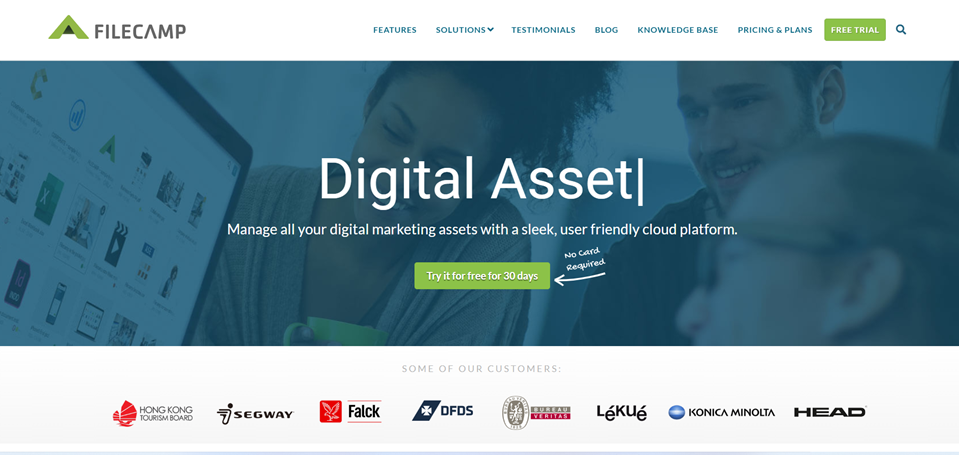
Filecamp is a digital asset management tool for marketers that is hosted in the cloud. It is made to maximize how photographs, movies, and documents are categorized, shared, and distributed. Users may organize and exchange digital assets into a searchable library with partners or other stakeholders, either internally or outside.
Unlimited users and sophisticated, flexible sharing permissions are included with Filecamp. Secure file sharing, an integrated media library, and online proofing allow businesses and clients to collaborate on creative projects.
Key Features:
Approval Process Control
Asset Categorization
Brand Guidelines
Client Management
Customizable Branding
Social Sharing
Cost:
$29 per month
4. Tizra
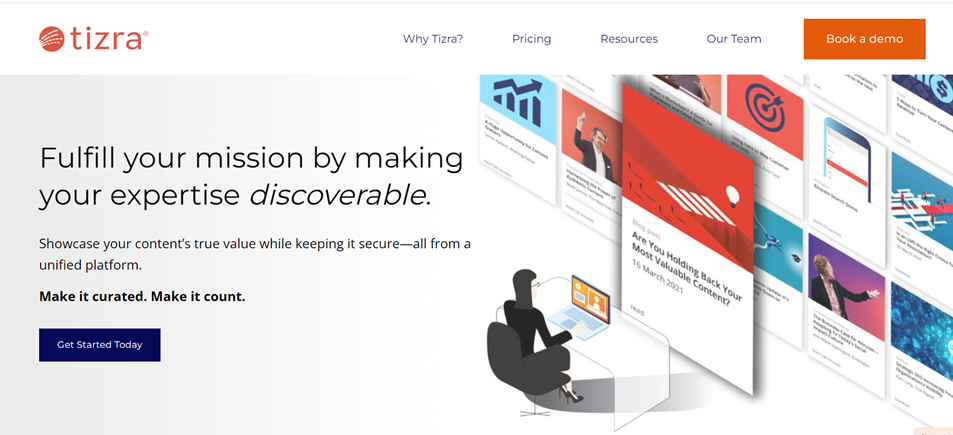
Tizra is one of the top digital rights management tools that aid in the planning, developing, and implementing digital resource hubs and content stores for organizations. Administrators may use the platform to arrange various materials, such as movies and documents, in a single repository.
Website navigation may be personalized by managers by adding unique logos and welcome messages. Tizra provides faceted search capabilities that enable users to filter and sort material to see results that are specific to them. To secure digital assets, operators can create session restrictions and add custom watermarks.
Key Features:
Digital Asset Management
Cataloging/Categorization
License Management
Indexing
PDF Protection
SEO Management
Cost:
$499 per month
5. Digify
Digify offers secure virtualized data spaces that are quick and simple to set up. When distributing and tracking important business papers to partners, clients, and investors, thousands of businesses use Digify to save time.
This system combines automatic watermarking, document security, and file tracking features for a set low cost. Digify has been highlighted in more than 60 international news media and is the recipient of several international prizes, including the top security competition RSA Innovation Sandbox.
Additionally, Digify has built-in file tracking and analytics that let users read an overview of file or document activity.
Key Features:
Approval Process Control
Audit Trail
Digital Watermarking
SSL Security
Secure File Viewer
Licence Management
Cost:
$165 per month
6. Red Points
Red Points is a brand intelligence platform that helps companies remove counterfeit goods, stop online piracy, claim and monetize content rights, and automatically monitor merchants to protect the future of any brand.
Red Points provides you with complete insight into a company’s online existence by integrating features for copyright enforcement, online brand protection, and distributor monitoring. Users may track and delete pirated content from any source using Red Point’s controlled source identification, automatic removal and deindex requests, and violation follow-ups with the help of anti-piracy professionals.
Red Points helps over 900 businesses battle counterfeiting, online piracy, and distribution abuse to keep control, boost their brand’s value, and boost sales.
Key Features:
Video Management
Trademark Tracking
Monitoring
Image Protection
Content Management
Cost:
No price info
7. Cortex
Cortex gives administrators the ability to create role-based restrictions for users and disable access when an LDAP account is disabled.
Due to Orange Logic’s commitment to flexibility and usability, a highly intuitive experience that meets and exceeds every departmental need has been developed. This has increased user adoption across the entire organisation and unlocked document management improved efficiency at scale.
Users of the platform can ingest, embed, extract, and display technical details, such as bitrate, colour space, and encoding types. Managers have the ability to set up numerous ingest procedures, batch ingest metadata from outside sources, monitor their status, and email updates on their progress.
Key Features:
Archiving & Retention
Asset Library
Automatic Backup
Catalog Creation
Content Publishing Options
Fulfillment Distribution
Cost:
$5000 per month
8. Imatag
Imatag is a platform for digital rights management (DRM) and data leak protection (DLP) for companies, media outlets, brands, and other organizations that use visual material. It provides solutions to track trademark leaks and copyright violations, and protect and monitor NDAs and secret data.
The digital watermark from Imatag Leaks tucks identifiers into an image’s pixels at random intervals. This enables precise identification and visual ownership recognition of digital assets.
Key Features:
Intellectual Property Protection
Monitoring
PDF Protection
Product Search
Reverse Image Search
Secure Data Storage
Social Media Monitoring
Usage Tracking/Analytics
Watermarking
Cost:
$250 per month
9. DRMtoday
DRMtoday is a cloud-based digital rights management and system for access control created to make it easier to distribute secured premium content across various platforms and devices. Users may restrict stream behavior, safeguard live and recorded content, and monitor licensing activities.
Users may manage and keep track of all licensing activities and customize distribution and authentication behavior with the help of DRMtoday’s web dashboard. According on the security levels of playback devices, stream behavior may be selectively enforced. Content can be made available through live playback, on-demand, offline, continuous sessions, and purchase, renting, or subscription.
Key Features:
Access Controls/Permissions
Access Revocation
Audio/Video Protection
Authentication
Digital Distribution Management
License Management
Monitoring
Cost:
No price info
10. MagicBox
MagicBox is a content creation and learning management system (LMS) that enables K–12 and higher education institutions to use the built–in themes, interactions, and templates to build and administer online courses.
By controlling digital rights and establishing role-based permissions, the digital content publication module enables staff members to guarantee the security of their work. It is intended for publishing services in higher education, scientific research, and CTE. A custom-branded eCommerce shop is also available to enhance content monetization.
Key Features:
Blended Learning
Course Management
Storyboarding
Student Information/Records
Student Portal
Synchronous Learning
Tests/Assessments
Third-Party Integrations
Training Companies
Video Conferencing
Virtual Classroom
eCommerce Management
Cost:
5000$ per month
11. Smart Protection
Smart Protection is a multinational brand, product, and content protection firm with a strong global presence. With the aid of its automated SaaS security platform, companies of all sizes may reduce the risks related to the online appropriation and exploitation of their trademarks, goods, and material.
The goal of Smart Protection is to educate people about the threats that are present and developing across digital platforms.
With the help of Smart Protection, brand owners, distributors, and content providers can see the whole digital ecosystem while also receiving insightful data that enables them to make more informed business choices.
Key Features:
Application Control
Data Loss Prevention
Advanced Threat Protection
HTTP Inspection
Traffic Monitoring
Cost:
No price info
12. Terentia
Terentia equips organizations working in the field of cultural heritage with the tools they need to manage data, generate insights, and create engaging digital narratives.
In order to create cutting-edge, user-friendly, enterprise-level digital solutions and services, Terentia works continually with cultural organizations to rethink, construct, integrate, and host them.
Terentia’s fully integrated, scalable, best-in-class technologies and services enable flexible workflows, dynamic operations, and more effective work from organizations.
Key Features:
License Management
Software Application Protection
Video Streaming
watermarking
Cost:
No price info
13. Caplinked
CapLinked is a web-based integrated file-sharing and document management system that enables companies to work with their partners and exchange crucial corporate data. Workspace Manager, Deal Tracker, Document Manager, File Protection Manager, and Integration Manager are the five integrated applications that make up the system. The primary target market for the solution is midrange and large businesses in various industries, including, among others, the legal, finance, energy, aerospace, and real estate sectors.
A customizable platform is offered by CapLinked Workspace Manager to handle company papers and keep them in one place. By assigning several document access modes to various user sets, businesses may customize their document security. Users may set up rules to access, edit, download, and upload documents as well as build custom groups and subgroups. Direct contact import from a SalesForce account into CapLinked is an option for businesses.
Key Features:
Audit Management
Bulk Uploading
Automatic Backup
Data Security
Indexing
Mobile Acess
Offline DRM
Cost:
$299 per month
14. PallyCon
PallyCon is a top-tier content protection service offered by INKA ENTWORKS that is relied upon by more than 200 customers worldwide. It offers OTT platforms 360-degree, cloud-based end-to-end content security, including features like Multi DRM, Forensic Watermarking, Visible Watermarking, Distributor Watermarking, Anti-Piracy services, and App Security with Quick and Simple integration. For OTT owners, it offers an all-inclusive solution.
All workers at INKA Entworks are encouraged to focus on their growth as well as research and development in order to create a stronger business and workforce.
Key Features:
Analyze and follow up on content use
Watermark shared documents and provide
Cost:
No price info
15. Primetime DRM
Primetime DRM may secure content and offer various business models such as anonymous, subscription, renting, and download-to-own content for desktop, iOS, Android, Roku, Xbox, and embedded device devices. Tailored experiences for each and every consumer.
Using data insights to get to know each person in-depth. To content development created specifically for them. Delivering such experiences on any platform, and eventually.
Key Features:
HLS Streaming Support
Persistent content protection
Remote iOS key delivery
Output protection
Cost:
No price info
Things to consider
Think about sophisticated DRM functionality
You must use advanced DRM policies if you want to make sure your work is completely secured. Select options that always give you full control over your material and are compatible with your demands for distribution.
Look into dynamic watermarks
Never ignore the need for watermarking while securing digital assets. One of the most crucial DRM settings in your DRM software is this one. Users are discouraged from sharing and reproducing material, and watermarks may be vital in the fight against screenshotting.
Don’t overlook user experience
Although protecting material is important, you don’t want to sacrifice the user experience for security. Finding DRM software that enables you to apply rules to keep your material unique while still delivering a positive user experience is crucial.
Purchase high-quality DRM software
Organizations may fail to understand the necessity of digital rights management software, despite the fact that it can seem clear. You need to appreciate the worth of your work and spend money on the top DRM programs available. Many different policies and permissions will be present in a comprehensive content protection solution.
Conclusion
The term digital rights management tools refer to a program that forbids material from being shared, disseminated, or duplicated without the content provider’s express consent. The DRM software industry is expected to reach a value of $6+ billion by 2025 as a result. To make information access as simple and convenient as feasible without compromising ethics or security, the software solutions we explored cover both corporate and consumer use cases across many platforms.
Businesses and content creators want to protect their valuable assets, DRM is the best solution, and the question is often asked: How much does DRM cost?
In this article, we’ll dive into the factors that influence DRM pricing and help you understand the various cost considerations.
DRM Service Models
The cost of DRM can vary widely depending on the service model you choose. Some DRM providers offer hosted services with monthly subscription fees, which can start from as low as $70 per month for basic DRM functionalities. Others may offer on-premises solutions with more substantial upfront costs.
Scale and Usage
The size and scope of your digital content distribution significantly impact DRM costs.
Extensive content libraries and global reach can increase costs for large enterprises, driven by usage and scalability needs. Evaluating these expenses is crucial for such organizations.
Customization and Features
Additional features and customization may incur extra charges. Tailored solutions with advanced analytics, third-party integration, or mobile app support typically lead to higher expenses in your DRM implementation.
Content Encoding
To protect digital content effectively, DRM often requires content encoding and packaging. Costs associated with encoding can vary based on factors such as the volume of content and the complexity of the encoding process.
Support and Maintenance
Ongoing support and maintenance are essential for keeping DRM systems up and running smoothly. Be prepared to factor in these costs, which may vary depending on the level of support and service agreements offered by your DRM provider.
Licensing and Compliance
Some DRM solutions may require licensing fees for certain codecs or technologies. Additionally, compliance with regional laws and regulations may involve additional costs, especially for organizations operating globally.
Turnkey Solutions
For those seeking a hassle-free DRM solution, turnkey providers like Thudo Multimedia with Sigma DRM offer a quick setup that doesn’t require extensive coding. While these solutions may seem costlier upfront, they can save you time and resources in the long run.
Using a hosted DRM service can begin at $70 per month, covering core functionalities, but it requires infrastructure development, including front-end, back-end, and API integration. Additionally, content encoding for packaging with DRM is a crucial consideration, and the overall cost is contingent upon your specific use case.
Thudo Multimedia: A DRM solution minimizes DRM costs
Costs can fluctuate based on factors like usage scale, customization, and added features. It’s important for organizations to carefully evaluate their needs and budget to choose the most suitable DRM solution for their requirements.
Hosted services like Thudo Multimedia’s Sigma DRM offer a convenient turnkey solution, reducing the need for extensive coding and simplifying setup. Opting for Thudo Multimedia can often provide a more cost-effective choice compared to other market suppliers.
When watching movies on Netflix, Hulu, HBO Max, or other popular services, media is streamed using DRM protection rather than stored locally. This prevents the content from being downloaded and copied, then spread indefinitely on pirate websites. DRM helps protect content creators’ copyrighted works and allows them to make their service available together with pre-defined usage policies per content.
The only problem here is that this requires a constant internet connection. In most cases, this is fine. However, there are times and places when the internet is unavailable, yet customers still want to access content for entertainment or educational purposes.
This is where offline DRM steps in. Digital rights management, or DRM, protects digital content from malicious activity during distribution, storage, and playback. It allows the content to be distributed and viewed in a controlled manner.
Setting up a system that allows for the streaming of offline DRM-protected content creates an avenue for entertainment in situations without internet access. With this system, customers can watch movies or TV shows when they otherwise would be unable to.
Setting Up An Offline DRM System
So, what is the process of setting up a system that enables offline DRM streaming? Streaming content in an offline environment can be a key service for a business to offer, so understanding it is vital.
First, the business needs to look into acquiring content, either directly from the studios or from a media distribution service. This gives them the license to stream the content in the first place. In this way, the business is somewhat similar to a theater, in that they have the right to exhibit various films and TV shows to others.
Next, the business needs to set up a multi-DRM service that will allow users to play offline DRM content on any portable device regardless of operating system (OS). Setting up this service will give them the ability to stream the content they have licensed to any device type and OS, whether tablets, mobile phones, or laptops running Android, iOS, Windows, or Mac OS.
It is important to choose a service that is proven and secure. It should meet all security requirements for your environment as defined by the studios you license from or the media distribution service you choose. Content from U.S. studios must be protected using guidelines from MovieLabs, a studio-owned entity that publishes the Enhanced Content Protection specification.
Who Should Use Offline DRM Streaming Services?
Who Should Use Offline DRM Streaming Services?
Offering a robust streaming service can be a key advantage for many different businesses. It can set you apart from your competition, especially if your service comes with additional features.
In-flight entertainment (IFE) and in-vehicle streaming are two of the most common use cases. Streaming DRM-protected content gives your customers something to do during their trip. It is a perk that will entertain and that most will appreciate.
Offline content is particularly important on airplanes. In these situations, customers are cut off from land-based content sources. Being able to stream DRM-protected content will eliminate this problem and make compelling IFE services possible.
It can also be helpful on buses, trains, or even cruise ships where internet access may be interrupted or plain unavailable. Long journeys, especially international travel, may take customers outside the range of their data coverage. Travel crossing country lines may force customers to use expensive roaming, which many may be unwilling to accept.
A streaming service can also be an advantage for remote hospitality businesses where internet access is either spotty or unavailable. In these cases, you can still provide entertainment for guests without having to count on reliable internet.
Examples of use cases in this category include hotels, hospitals, camping sites, oil platforms, military bases, or other lodging facilities. Basically, any place where customers are staying, sometimes for longer periods of time.
Choosing An Offline DRM Streaming Service
Businesses interested in a DRM service provider should consider a couple of options before making their decision. Doing so can help them choose a service that will help them and their customers the most.
As mentioned above, one of the most important things to consider is content security. Make sure you are dealing with a reliable provider whose service will keep content secure.
While choosing this service, it is also important to consider what type of user devices your business will allow. In some cases, this streaming will only extend to screens owned by the business. This can be seen on some airplanes, where content is only available on the seatback displays.
It can also be an option in other cases. Hotels provide TVs in each room anyway and may choose to have these be their go-to option for streaming.
However, it is becoming more and more popular to provide DRM-protected content over WiFi and simply allow anyone connected to access the streaming service. This would allow customers to bring their own devices referred to as BYOD (bring your own device). This provides advantages for both the customer in terms of convenience and the business by lowering upfront investments (CAPEX) in expensive seatback systems and wired cabin distribution infrastructure.
Customers may end up feeling more comfortable with the BYOD option. For many, this is their preferred way of watching video in any situation, especially when traveling. Providing this ensures that the customer’s habits do not have to change, and because of this, they will be happier.
The Advantage
In the end, there are plenty of advantages to offline DRM streaming. As long as a business carefully picks its multi-DRM service provider and chooses services that will suit its needs, it will help the business while also helping its customers. In this situation, everyone wins.
When choosing a digital rights management vendors, another important deciding factor is what the major film industry players think. The big Hollywood studios demand enhanced security to guarantee the protection of premium UHD/4K content. The compliance with these specifications, advanced copy protection and ability to encrypt content along with our forensic video watermarking are among the reasons why all major Hollywood studios have accepted our DRM system for their digital content. Moreover, operators using our DRM are in a favorable position to negotiate content licensing agreements with these studios, since all content rights will be preserved and protected.
Selecting the Ideal Digital Rights Management Vendor
To meet the substantial requirements of copyright holders and to uphold content licensing agreements, numerous DRM vendors have emerged. Just like any crucial partnership decision, content providers and OTT streaming operators face the significant task of determining which digital rights management vendor can offer the most suitable DRM solution for their specific needs.
If you’re wondering about the factors to consider during this decision-making process, here are some guidelines for evaluating DRM vendors.
Vendor Experience and Stability
While innovative tech startups have made waves in recent years, when it comes to safeguarding your business’s vital assets, there’s a certain comfort in the stability of a DRM vendor that has been in the industry since its inception. Intertrust, for instance, pioneered copy protection and digital rights management products in the 1990s and played a pivotal role in establishing the open-standard Marlin DRM in 2005. This track record ensures that Intertrust is a dependable, long-term partner rather than a short-lived company, instilling confidence in our DRM system as a foundation for building a protected business model.
Compatibility with All Content Formats
The complexities of dealing with various content formats and codecs can be a nightmare for digital content providers. An effective DRM system must offer seamless interoperability and functionality across iOS, Mac OS, Android, and Windows, allowing for effortless dynamic content conversion. If a DRM vendor cannot provide this level of accessibility to different content types, it risks alienating consumers and poses a significant business hazard for pay-TV operators. Prospective DRM vendors should guarantee access and interoperability across all platforms and OTT devices.
Proven Track Record of Large Deployments
When assessing DRM vendors, one of the first aspects to investigate is how they have handled similar clients. This not only provides insight into their business practices but also demonstrates their ability to adapt to various enterprise sizes. Scalability, often discussed but challenging to execute, is vital. A DRM vendor with a proven track record of rapidly scaling up to accommodate large user bases during live events is crucial. Thudo Multimedia‘s experience with major clients like FPT, Viettel,.. demonstrates our DRM platform’s capability to manage subscriber bases in the millions and beyond.
Full Multi-DRM Support
In addition to the Sigma DRM system, there are three other prominent DRMs developed by tech giants: Google’s Widevine, Microsoft’s PlayReady, Apple’s FairPlay Streaming,… To offer a comprehensive DRM solution, vendors must support all major systems; otherwise, clients will encounter compatibility and operational challenges in the future. Sigma DRMplatform has thrived due to its open-standards, non-proprietary nature, making it a “neutral” DRM system favored by major device and content producers.
Application Flexibility
The advantages of a cloud-based DRM solution over on-premises systems are evident for most organizations. Eliminating the capital and operational expenses associated with hardware maintenance is a significant benefit. Having to rush support engineers to fix hardware issues is an inefficient use of resources. Therefore, it’s essential that the DRM vendor you choose offers a flexible, cost-effective service that seamlessly integrates between your storefront and your content. Thudo Multimedia has taken steps to provide exactly what our clients need by becoming the first cloud-based multi-DRM platform supporting all major DRMs.
Compliance with MovieLabs Enhanced Content Protection Specification
When selecting a DRM vendor, consider what the major players in the film industry require. Hollywood studios demand heightened security to protect premium UHD/4K content. Compliance with these specifications, advanced copy protection, and content encryption capabilities, along with forensic video watermarking, are why major Hollywood studios have embraced our DRM system for their digital content. Operators using our DRM are in a favorable position to negotiate content licensing agreements with these studios, as all content rights remain preserved and protected.
Streamlining Processes
Digital content providers vary in size, but one factor that significantly impacts their bottom line, regardless of size, is developer hours. SigmaDRM simplifies matters by providing the necessary licenses for all devices, eliminating the need for developers to create custom logic for different devices and operating systems, including their various versions.
Finding the right DRM vendor is pivotal, regardless of your platform’s size or aspirations. Intertrust’s suite of DRM solutions fulfills all the criteria for an ideal DRM system, which is why we have been at the forefront of global digital rights management product development for so long. Visit our website to learn more about how our DRM platform can assist you in safeguarding and monetizing your content.
Digital rights management (DRM) is a technology used to protect digital content, including songs, from unauthorized copying and distribution. Here are some ways to determine if a song is protected by DRM:
Check the File Format:
DRM-protected songs are often distributed in specific file formats that support DRM. Common DRM-protected audio file formats include AAC (Advanced Audio Coding) with Apple’s FairPlay DRM, WMA (Windows Media Audio) with Microsoft’s PlayReady DRM, and others. If the song is in one of these formats, it might be DRM-protected.
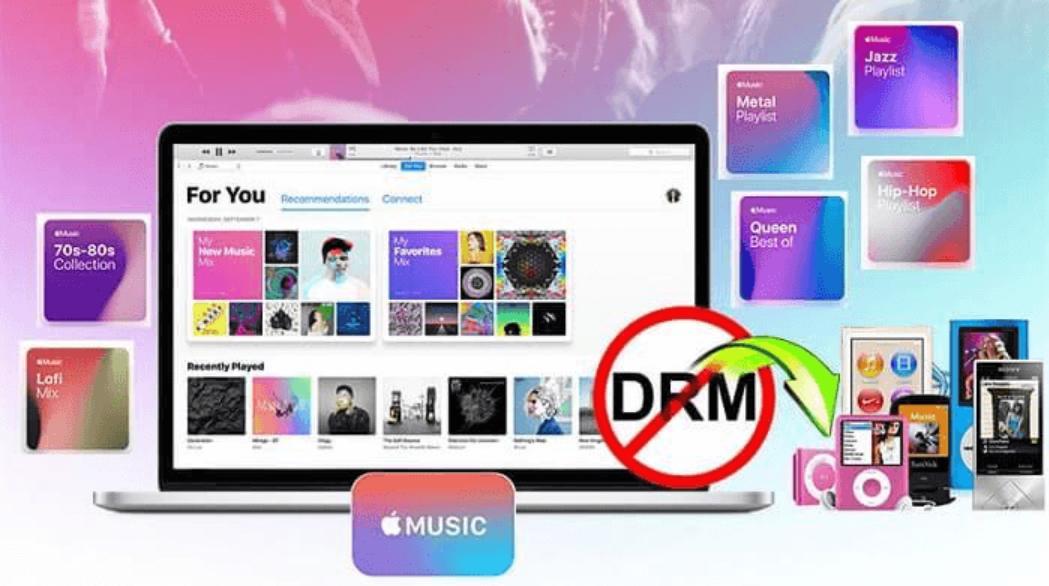
Check Which Songs Are DRM Protected
Read the Metadata:
DRM-protected songs may contain metadata information that indicates the presence of DRM. Check the song’s metadata using media player software or metadata editors. Look for terms like “protected,” “DRM,” or the specific DRM technology used (e.g., “FairPlay” or “PlayReady”).
Attempt to Copy or Share:
DRM restricts users from making unauthorized copies or sharing protected content. If you try to copy the song to another device, burn it to a CD, or share it with others, you may encounter restrictions or error messages indicating DRM protection.
Check the Source:
Consider where you obtained the song. Legitimate digital music stores like iTunes, Microsoft Store, and others used to sell DRM-protected songs. If you purchased the song from such a store, it may have DRM. However, many stores have transitioned to selling DRM-free music in recent years.
Online Streaming Services:
Songs streamed from subscription-based online music services like Spotify, Apple Music, and Amazon Music are generally not DRM-protected for offline listening within the app. However, they may use encryption to protect the downloaded files, but this is different from traditional DRM.
Licensing Terms:
Review the licensing terms and terms of use associated with the song or the service from which you acquired it. These documents may mention DRM protection and usage restrictions.
Please note that the landscape of DRM and digital media has evolved, and the prevalence of DRM protection has decreased for music files due to consumer demand for DRM-free content. Major music platforms like iTunes have removed DRM from their music offerings.











Recent Comments