
The Definitive Guide to DAI for FAST channels Today

Key Takeaways

  • Massive Market Expansion: The FAST ecosystem has exploded to over 1,900 channels globally, driven by an incredible 1.8 billion hours of streaming consumption by U.S. viewers in 2025 alone.
  • Seamless Viewer Experience: Server-Side Ad Insertion (SSAI) is the backbone of modern streaming, stitching ads directly into the broadcast to prevent buffering, bypass ad blockers, and deliver a traditional TV-like feel.
  • Technical Workflow Mastery: Profitable monetization relies heavily on precision signaling using SCTE-35/104 markers and secure manifest manipulation backed by JWT stitcher tokens.
  • Maximized Yield Generation: Combining direct ad sales with real-time programmatic bidding ensures a 100% fill rate, allowing premium platforms to command highly competitive CPMs of around $15.

The streaming landscape has shifted irrevocably beneath our feet. If you are a broadcaster, a content distributor, or a media network owner trying to capture modern viewership without a robust strategy involving DAI for FAST channels, you are actively leaving massive amounts of revenue on the table. In our experience working on the frontlines of broadcast technology, relying on outdated ad-insertion methods or treating linear streaming like legacy cable simply no longer works. Viewers demand premium, uninterrupted experiences, while advertisers demand hyper-targeted, measurable returns on their spend. Bridging that gap requires a flawless technological foundation.

An Introduction to Digital Advertising Insertion for FAST channels

Understanding the sheer power of *Digital Advertising Insertion for FAST channels* requires looking past the surface-level marketing you often see in the industry. At its core, Dynamic Ad Insertion (DAI) is the sophisticated backend technology that allows broadcasters to swap out generic, baked-in commercial breaks for highly targeted, user-specific advertisements within a live or linear streaming feed. When a viewer watches a FAST (Free Ad-Supported Streaming TV) channel, they aren’t just receiving a one-to-many broadcast. Instead, the DAI system evaluates the viewer’s location, demographic profile, and behavioral data in milliseconds, replacing the default ad slate with a custom commercial that resonates specifically with that individual.

The shift from traditional broadcast advertising to modern DAI represents a monumental leap in how we monetize media. In legacy linear television, advertisers pay a premium for broad, untargeted demographics—hoping that their commercial for luxury cars hits the right household during a prime-time slot. Today, DAI turns dormant Video on Demand (VOD) libraries and incredibly niche archival content into highly profitable, continuously running ad-supported networks. By leveraging precision targeting, content owners can extract maximum value from every single ad impression, transforming what used to be a scattergun approach into a laser-focused revenue engine.

For our engineering team, the most critical metric of success has always been the viewer experience. Modern DAI ensures a broadcast-grade, buffer-free transition between the core programming and the commercial break. I vividly remember the early days of digital video ads, where users were forced to endure jarring loading screens, spinning buffer wheels, and mismatched audio levels. Today, true DAI seamlessly stitches the advertisement into the stream natively. The viewer cannot distinguish between the television show and the targeted commercial, maintaining the lean-back, passive viewing experience that makes traditional TV so comforting, while delivering the technological sophistication of digital marketing.

The Explosive Growth of ad-supported streaming TV monetization

We cannot discuss *ad-supported streaming TV monetization* without looking at the staggering, concrete data driving this industry boom. As of March 2025, our industry research confirms there are over 1,900 FAST channels operating globally. This isn’t just a slow, incremental rise; the FAST channel landscape experienced a massive 21% growth in 2025 alone. Viewership consumption has reached unprecedented heights, with U.S. viewers streaming an astonishing 1.8 billion hours of FAST content through August 2025—a 43% year-over-year increase. These numbers validate what we’ve been telling content owners for years: the audience has firmly migrated to free, ad-supported linear models.

This migration reflects a fundamental change in consumer habits that cannot be ignored. Currently, 45% of U.S. internet households actively watch FAST services, integrating these platforms into their daily routines alongside paid subscription tiers. Even more critically for media buyers, ad-supported viewing now accounts for approximately 73% of all TV time across both traditional and streaming platforms. Furthermore, the persistent myth that FAST channels are merely dumping grounds for old, low-quality archival content has been completely shattered. Our data shows that out of the more than 178,000 unique programs, episodes, and movies available, 70% of the programming was produced since 2010. This modernization of content yields premium ad inventory that attracts high-value, top-tier advertisers.

We are also seeing incredible targeting opportunities arise from the hyper-niche segmentation of these channels. Reality programming has become the fastest-growing genre in the ecosystem, jumping an incredible 626% to encompass 138 dedicated channels. Similarly, sports FAST channels have doubled year-over-year, reaching over 220 unique channels tailored to rabid fan bases. When you combine this genre specificity with the massive scale of major platforms—such as Pluto TV, The Roku Channel, and Tubi, which each exceed 50 million active viewers—you create an environment where brands can execute highly contextual, hyper-relevant ad targeting at an unprecedented scale.

How server-side ad insertion for streaming TV Works (SSAI vs. CSAI)

When evaluating the infrastructure required for success, mastering *server-side ad insertion for streaming TV* is non-negotiable. Server-Side Ad Insertion (SSAI), commonly referred to in the broadcast world as ad stitching, is the process where advertisements are seamlessly injected directly into the video stream at the server level, long before the data ever reaches the viewer’s device. Instead of asking the viewer’s smart TV to pause the movie and fetch an ad, the server prepares a continuous, unbroken video file that contains both the show and the commercial. This eliminates the latency, buffering, and frustrating black screens that plague older Client-Side Ad Insertion (CSAI) methods.

One of the most powerful advantages of SSAI is its ability to ruthlessly defeat ad blockers. In our deployments, we’ve seen CSAI architectures lose up to 30% of their ad revenue simply because browser extensions or network-level blockers recognize the third-party ad request and intercept it. Because SSAI stitches the advertisement directly into the primary video stream on the server side, the ad content originates from the exact same server and delivery domain as the primary movie or TV show. To an ad blocker, the commercial looks indistinguishable from the actual programming, ensuring your ad impressions are successfully delivered and accurately billed.

Beyond revenue protection, server-side stitching guarantees flawless cross-device compatibility. The modern viewer does not just watch TV in their living room; they transition from Smart TVs and Roku devices to mobile phones, tablets, and desktop browsers on the commute. Because the heavy lifting of transcoding and stitching happens in the cloud, the end-user’s device doesn’t need high processing power or specialized player SDKs to render the commercial break. The stream simply arrives as standard video, ensuring that whether a user is on a premium $2,000 OLED screen or a five-year-old smartphone, the advertising plays back perfectly.

Decoding the dynamic ad insertion workflow for FAST

If you want to truly understand how this ecosystem operates, we have to pop the hood and decode the *dynamic ad insertion workflow for FAST*. The entire process hinges on precise broadcast signaling, specifically SCTE-35 or SCTE-104 markers. These markers are invisible, time-coded digital cues embedded deep within the video feed. As the linear stream progresses, these markers signal to the backend system exactly when an ad break (known in the industry as an “avail”) is approaching, how long the break will last, and whether local or dynamic ad insertion is permitted. Without frame-accurate SCTE markers, the entire DAI ecosystem falls apart, resulting in ads cutting off dialogue or dead air playing on screen.

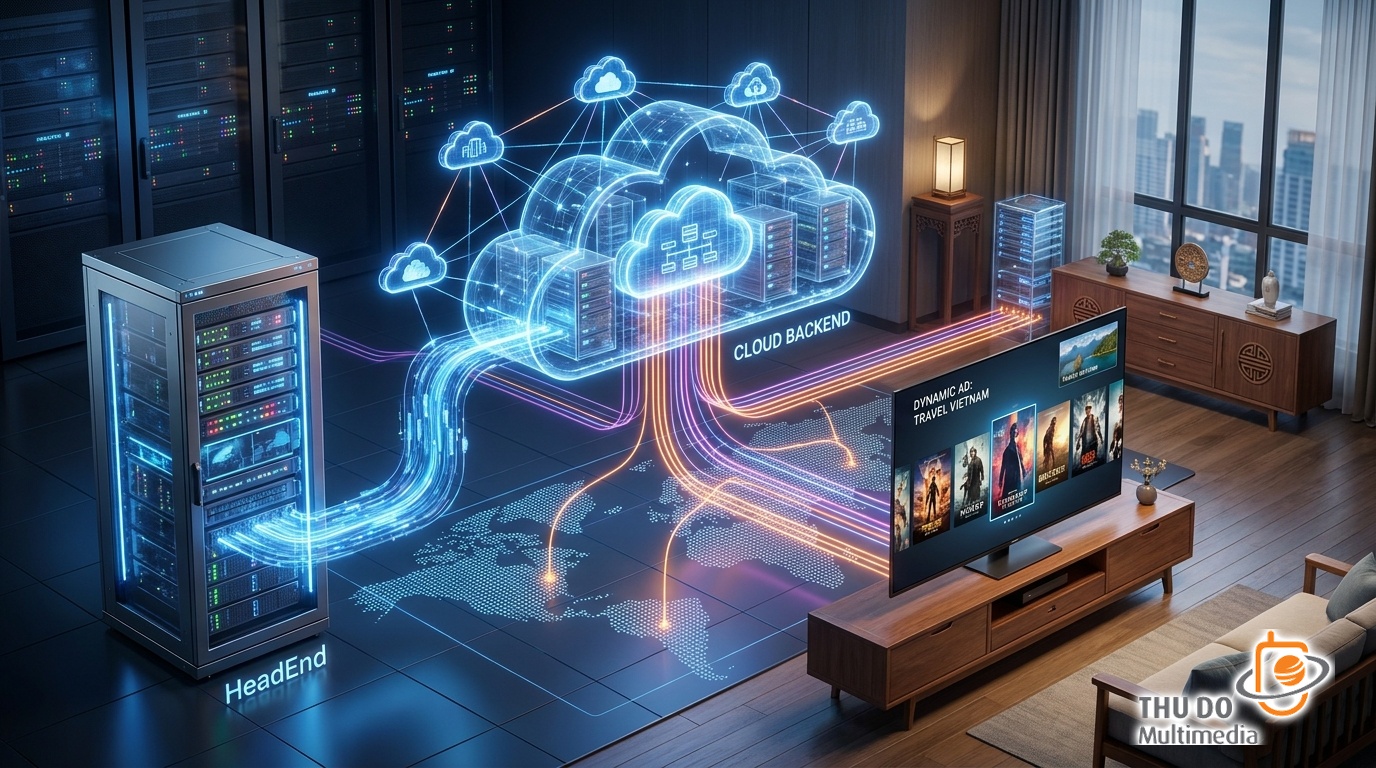
Once the marker is detected, the system executes real-time manifest manipulation. Streaming video is delivered using manifest files (typically .m3u8 for HLS or .mpd for DASH), which act as a playlist telling the video player which short video segments to download and play next. During an ad avail, the server dynamically rewrites this manifest file in milliseconds. Instead of pointing the video player to the default placeholder slate (e.g., “We’ll be right back”), the manifest is manipulated to point directly to targeted ad segments. This allows the system to serve completely different video files to two viewers watching the exact same channel at the exact same time.

In that split second before the ad plays, a complex communication sequence occurs. The playout system pings the ad server with rich audience metadata, triggering a request for a relevant commercial. The ad server responds with VAST or VMAP tags detailing which ad won the bid. Crucially, this backend delivery often relies on JWT (JSON Web Token) stitcher tokens—a security standard we frequently see deployed on premium platforms like Pluto TV—to authenticate the transaction, validate ad delivery, and prevent widespread ad fraud. The system then transcodes the winning ad to perfectly match the bitrate and resolution of the primary stream, stitching it in seamlessly.

Integrating programmatic advertising in Free Ad-supported Streaming TV

To unlock the true financial potential of your inventory, mastering the art of *programmatic advertising in Free Ad-supported Streaming TV* is critical. For content owners, this involves strategically connecting their channel’s ad inventory to multiple Supply-Side Platforms (SSPs) and digital ad exchanges. Instead of relying solely on a massive team of human salespeople making phone calls to media buyers, programmatic integration opens your ad breaks up to automated, real-time algorithmic bidding. The moment a SCTE-35 marker fires, the SSP broadcasts the available impression to Demand-Side Platforms (DSPs), inviting hundreds of brands to instantly bid on the right to show their commercial to that specific viewer.

Real-Time Bidding (RTB) is the engine that maximizes your channel’s yield. The programmatic auction ensures that the highest-paying advertiser wins the impression slot in mere milliseconds. This competitive pressure is what drives up the Cost Per Mille (CPM). Our latest market analysis shows that the average CPM for premium FAST platforms like Pluto TV sits comfortably around $15. While this is lower than subscription-hybrid platforms like Hulu (~$24) or Netflix (~$37), the sheer volume and completely free nature of FAST channels make that $15 CPM an absolute goldmine for broadcasters operating highly scaled networks.

The secret weapon driving these programmatic bids is robust audience segmentation powered by Automatic Content Recognition (ACR) and AI-driven data. Advertisers do not want to buy generic impressions; they want hyper-targeted audiences. By leveraging smart TV data, platforms can segment audiences by incredibly granular metrics: precise geolocation, household income brackets, past purchasing behavior, and specific viewing habits. When an SSP can guarantee an advertiser that their commercial will only be shown to high-income homeowners currently watching home improvement content, brands are willing to pay a massive premium, driving your overall channel revenue through the roof.

Top FAST channel monetization strategies

I have consulted with numerous media networks, and the most successful *FAST channel monetization strategies* always utilize a sophisticated hybrid approach to filling ad inventory. Relying purely on one method is a recipe for lost revenue. The most lucrative strategy involves deploying a direct sales team to sell your most premium, high-CPM inventory (such as prime-time slots or massive live events) directly to major brands. However, because a 24/7 channel generates millions of impressions, human sales teams will never sell out 100% of the breaks. That is where programmatic backfill comes in, automatically sweeping up any unsold slots to guarantee a 100% fill rate, ensuring there are absolutely zero wasted ad impressions.

Contextual ad alignment is another immensely powerful strategy that savvy channel operators use to command higher prices. Advertisers are deeply concerned with brand safety and relevancy. If you operate a dedicated DIY and home improvement FAST channel, integrating contextual targeting ensures that viewers see commercials for power tools, lumber yards, and mortgage rates. This hyper-relevancy drastically increases viewer engagement and click-through rates. When media buyers see the conversion data from contextually aligned campaigns, they invariably increase their bid limits for your specific channel’s inventory.

None of this is possible without severe dedication to metadata enrichment. In programmatic exchanges, your ad inventory is completely blind to buyers unless you tell them what it is. Passing rich, accurate metadata—including detailed episode synopses, specific genre tags, age ratings, and cast information—to the ad exchanges is vital. When we look at why some channels struggle to monetize despite high viewership, it is almost always because their metadata is poor. Rich metadata gives advertisers the confidence that their brand is placed in a safe, relevant context, instantly increasing the perceived value of your ad avails.

Choosing the Right DAI technology for connected TV

Selecting the correct *DAI technology for connected TV* is the most critical infrastructure decision your engineering team will make. We often see broadcasters seduced by heavily promotional platforms like Planetcast or Vector3, which act as excellent product landing pages but fail to educate content owners on the complex underlying mechanics of manifest manipulation and VAST/VMAP tagging. Similarly, while tools like Adwave offer phenomenal industry data for local SMB advertisers, they fundamentally lack the deep technical workflows required by enterprise-level broadcasters. At StreamWorks, our StreamWorks Playout and DAI Engine was explicitly built to bridge this gap, offering a cloud-native ecosystem that integrates advanced scheduling, seamless playout, and vendor-neutral ad insertion into a single, cohesive workflow.

When evaluating these systems, broadcast-grade reliability must be your guiding star. Linear television does not pause for server reboots. The technology stack you choose must feature smart redundancy and seamless, sub-second failovers. If an ad server times out or fails to return a valid VMAP response, your DAI engine must instantly fall back to a direct-sold house ad or a branded slate rather than crashing the stream or showing a black screen. Furthermore, operators require real-time analytics dashboards that meticulously track delivered impressions, precise fill rates, and viewer drop-off metrics to continuously optimize their ad load.

Finally, true scale requires global distribution capabilities. Building a great FAST channel is meaningless if you cannot deliver it formatted perfectly for the myriad of endpoints dominating the market. Your chosen technology stack must seamlessly handle the distinct formatting, security token, and delivery requirements of platforms like Pluto TV, The Roku Channel, Tubi, and Samsung TV Plus. Each of these aggregators has incredibly strict, unique ingestion specs. A robust DAI engine normalizes these complexities, allowing broadcasters to push a single, monetized stream across dozens of global platforms simultaneously without re-engineering the wheel for each one.

Overcoming Common FAST Channel Ad Tech Challenges

Despite the maturity of the technology, operators still face significant hurdles, the most prominent being managing fragmented delivery. Because the connected TV landscape is a chaotic mix of operating systems—from Tizen and WebOS to Roku and tvOS—delivering a consistent user experience is notoriously difficult. A poorly integrated ad stitcher will cause audio desyncs on a Samsung TV while playing perfectly on an Apple TV. Robust, server-side manifest manipulation solves this by unifying the video and ad chunks at the origin server, ensuring that the fragmented array of downstream devices only has to decode standard, unbroken video frames.

Curing low fill rates is the next major challenge that keeps channel managers awake at night. If you are experiencing a 40% fill rate, it means 60% of your commercial breaks are playing unmonetized slates, bleeding potential revenue. In my experience, fixing this requires a two-pronged attack: first, widening your demand by improving ad tech integrations with multiple SSPs simultaneously to increase bid density. Second, aggressively optimizing the timeout thresholds during the ad request process. If your DAI engine only waits 500 milliseconds for a bid response, you are likely cutting off lucrative programmatic bids. Tweaking these latency tolerances can instantly yield double-digit increases in fill rate.

Lastly, handling the technical transitions between Live and VOD content presents massive complexities. Inserting ads into a pre-scheduled VOD loop is highly predictable, as all SCTE-35 markers are plotted days in advance. However, inserting ads into live sports or breaking news broadcasts requires a completely different operational workflow. Directors must have the ability to execute manual ad triggering, firing SCTE-104 signals via a production switcher in real-time based on live game flow (like an unexpected time-out). Your ad tech stack must possess the agility to instantly interpret these impromptu cues, compress the ad request timeline, and stitch the commercial flawlessly without interrupting live gameplay.

Câu hỏi thường gặp

1. What is Dynamic Ad Insertion (DAI) in FAST channels?
Dynamic Ad Insertion (DAI) is the sophisticated backend technology used to seamlessly insert targeted video advertisements into a live or linear streaming broadcast. In the FAST (Free Ad-Supported Streaming TV) ecosystem, DAI replaces generic, pre-baked commercial breaks with highly personalized ads tailored to the viewer’s demographics, geographic location, and behavioral data.

2. What is the difference between SSAI and CSAI?
Server-Side Ad Insertion (SSAI) stitches the commercial directly into the video stream on the cloud server before it ever reaches the viewer’s screen. This results in a smooth, buffer-free, traditional TV-like experience that successfully bypasses ad blockers. Client-Side Ad Insertion (CSAI), conversely, relies on the user’s local video player to pause the primary content, request the ad, and play it, which frequently leads to heavy buffering, black screens, and extreme vulnerability to ad-blocking software.

3. How do FAST channels trigger ad breaks?
FAST channels trigger ad breaks using industry-standard broadcast signaling, primarily SCTE-35 or SCTE-104 markers, which are embedded directly within the video feed. When the streaming server detects these invisible time-coded markers, it knows precisely when to manipulate the video manifest file, ensuring the dynamic ad content is inserted with frame-accurate precision.

4. How do content owners monetize FAST channels?
Content owners achieve maximum monetization by connecting their channel’s ad inventory to Supply-Side Platforms (SSPs) and digital ad exchanges. This opens the door to programmatic advertising, where multiple brands bid in real-time for specific ad slots based on viewer data, working alongside direct ad sales teams. Success is ultimately measured by maintaining high fill rates and securing competitive CPMs (which currently average around $15 for top-tier platforms).

By mastering the intricacies of DAI for FAST channels, content owners can transform idle video assets into dynamic, revenue-generating engines that rival traditional broadcast networks. Leveraging the right mix of technology, programmatic strategy, and server-side stitching is no longer a luxury—it is the baseline requirement for success in modern streaming.

The Definitive Guide to DRM for Live Sports Content

Key Takeaways

  • Massive Financial Stakes: Illegal live sports streaming drains over $28.3 billion annually from the global sports industry, demanding immediate, aggressive technological intervention.
  • The “Thundering Herd” Problem: Live events generate explosive traffic spikes at kickoff or stream resets; robust DRM infrastructure must dynamically scale to handle up to 45,000 license requests per second without buffering.
  • Layered Security is Mandatory: Multi-DRM (Widevine, FairPlay, PlayReady) forms the critical baseline, but it must be seamlessly integrated with dynamic watermarking, token-based authentication, and AI-driven takedowns.
  • The “Live” Value Window: Unlike VOD, sports content loses its premium monetization value hours after the final whistle. Protecting the stream in real-time is the only way to preserve revenue and honor exclusive broadcasting agreements.

The roar of a crowded stadium, the tension of a penalty shootout, and the shared global experience of a championship match represent the pinnacle of digital entertainment. Yet, running parallel to this legitimate broadcast is a highly organized, shadow industry actively stealing your high-value streams. Implementing DRM for live sports content is no longer just a technical checkbox for IT departments; it is an urgent, existential requirement for the survival of broadcasting networks. In our experience working with top-tier broadcasters, we have seen firsthand how sophisticated piracy syndicates can clone a live stream, strip its protections, and distribute it to millions within seconds. We are not dealing with casual fans sharing passwords; we are fighting multi-million dollar piracy enterprises. To win this war, media companies must deploy aggressive, scalable, and ultra-secure defense mechanisms.

The Urgency of protecting live streaming video rights

Understanding the fundamental shift from traditional Video-On-Demand (VOD) to real-time broadcasting is the first step in recognizing why standard security measures fail. Unlike movies or television series that generate revenue over months or years, the value of a live sporting event is overwhelmingly concentrated into a frantic two-to-three-hour window. Once the final whistle blows, the commercial value of that broadcast plummets instantly to near zero. If a pirate cracks your encryption during the first quarter of the game, the financial damage is already done. Therefore, the strategy behind protecting live streaming video rights must center on immediate deterrence and real-time intervention, ensuring that any unauthorized access is blocked before the game reaches halftime.

The financial devastation caused by these illegal broadcasts is staggering. Data from Oxagile reveals that illegal live sports streaming accounts for global piracy losses exceeding $28.3 billion annually. Zooming into specific regional markets paints an even bleaker picture; Spanish football clubs in La Liga suffer an estimated €600 to €700 million in losses every single year due to localized illegal broadcasts. Recognizing the existential threat this poses to their revenue model, La Liga aggressively targeted a 60% reduction in piracy for the 2024-2025 season. Meanwhile, the U.S. Chamber of Commerce estimates overall digital piracy drains up to $71 billion from the U.S. economy annually. These numbers prove that treating sports stream security as an afterthought is a catastrophic financial miscalculation.

Consider a recent study on digital rights management from Denuvo, which highlighted the crucial “revenue impact window.” Their 2025 research indicated that if a digital protection mechanism is cracked within the first week, copyright holders suffer an immediate 20% revenue drop. For live sports, that window is compressed from a week to mere minutes. Furthermore, regional blackouts and exclusive licensing agreements mandate incredibly strict geographical and digital protections. If a broadcaster fails to secure their feed, they not only lose subscription revenue but also face massive lawsuits for breach of contract from the sporting leagues themselves. The urgency is undeniable: protect the live window, or lose the entire investment.

How digital rights management for sports broadcasters Works

At its core, the technology driving content protection operates on a sophisticated, invisible dance between encryption algorithms and secure key exchanges. When a camera captures a live goal, the raw video feed is immediately encoded and scrambled into an unreadable format during its transit across the internet, typically utilizing Advanced Encryption Standard (AES-128 or AES-256). For a viewer to decipher this scrambled feed and watch the game, their video player must securely request a specific “key” or license from a dedicated server. This process happens in milliseconds. Digital rights management for sports broadcasters governs exactly how, when, and to whom this decryption key is handed out, ensuring that only authenticated devices belonging to legitimate subscribers can process the video.

Beneath the encryption layer lies a rigorous authentication and authorization protocol. Before the DRM license server hands over the decryption key, it actively cross-references the user’s identity against the broadcaster’s subscriber database. The system instantly asks: Is this user’s subscription currently active? Have they paid for the premium sports package, or just the basic tier? Are they attempting to log in from a permitted geographical location? By weaving these authorization checks directly into the license delivery workflow, broadcasters build an impenetrable wall that separates paying fans from opportunistic freeloaders trying to scrape the feed.

Beyond simply allowing or denying access, these systems enforce granular, real-time usage policies that protect the content even after it reaches the viewer’s screen. Broadcasters utilize these policies to strictly enforce concurrent device limits—instantly blocking a user who attempts to share their login with ten friends across the country. Additionally, stringent output rules are mandated directly to the device’s hardware. For instance, the software can command a smart TV or smartphone to disable screen recording applications, or enforce High-bandwidth Digital Content Protection (HDCP) to prevent a pirate from using a physical HDMI capture card to rip the live feed and broadcast it on an illegal streaming site.

Key broadcaster video encryption technology and Multi-DRM for live sports content

One of the most complex hurdles in modern broadcasting is the severe fragmentation of consumer viewing devices. A fan might start watching the pre-game show on an iOS smartphone on their commute, switch to a Windows PC browser at their desk, and ultimately stream the final quarter on a Roku Smart TV in their living room. Because no single encryption standard is universally supported by every hardware manufacturer, relying on a solitary DRM solution leaves massive gaps in your audience reach. To solve this, broadcaster video encryption technology must deploy a Multi-DRM strategy—a unified infrastructure that simultaneously packages the live feed into multiple encryption formats to satisfy the unique requirements of every operating system and device in the market.

This universal coverage relies entirely on the integration of the “Big Three” Multi-DRM frameworks. Google Widevine acts as the primary shield for the Android ecosystem, Chrome browsers, and the majority of Smart TVs. Apple FairPlay exclusively governs the secure delivery of video to iOS devices, MacBooks, and Apple TVs. Finally, Microsoft PlayReady handles Windows environments, Edge browsers, and Xbox consoles. By utilizing a robust platform like Axinom DRM, broadcasters can seamlessly unify these three distinct technologies into a single, automated workflow. The Axinom Multi-DRM platform generates the appropriate license for the exact device requesting the stream in real-time, completely invisible to the end user, ensuring zero friction while maintaining military-grade security.

The true test of this technology, however, lies in infrastructure scaling. Live sports events are notorious for creating massive, localized traffic spikes—often referred to as the “thundering herd” problem. When a highly anticipated match kicks off, or when a streaming application forces a mid-game refresh, millions of users may request decryption licenses at the exact same millisecond. In a recent Axinom Case Study, live event scaling requirements peaked at an astonishing 15,000 to 45,000 DRM license requests per second. Standard servers will instantly buckle under this pressure, resulting in endless buffering and furious fans taking to social media. To survive this, Axinom provides pre-provisioned, globally distributed, auto-scaling license servers specifically engineered to absorb explosive traffic without breaking a sweat.

Comprehensive anti piracy solutions for live events

While robust encryption forms the bedrock of content security, treating DRM as a standalone silver bullet is a critical mistake. Sophisticated piracy networks operate like modern tech companies; if they encounter a locked door, they will search for an open window. They might use specialized hardware to bypass device-level protections or exploit compromised subscriber accounts to restream the feed. To establish a truly impenetrable defense, broadcasters must adopt a layered security approach. This means stacking multiple anti piracy solutions for live events on top of one another, creating an interconnected web of defenses where the failure of one mechanism triggers the activation of another.

A vital component of this layered stack is dynamic forensic watermarking. While encryption protects the stream during delivery, watermarking protects it while it is actively playing on the screen. The technology embeds an invisible, unique identifier directly into the video frames of every individual viewer. If a subscriber decides to illegally restream the boxing match to a Twitch channel or an offshore pirate site, the broadcaster’s security team can instantly extract the invisible watermark from the pirated feed. Within minutes, they can trace the leak back to the exact compromised user account and revoke their DRM license mid-stream, permanently cutting the head off the snake in real-time.

Complementing watermarking is token-based authentication, which actively prevents the rampant sharing of direct video links on forums like Reddit or Discord. When a legitimate user clicks “Play,” the system generates a highly customized, time-limited URL bound specifically to their IP address and session ID. Even if that user copies the stream link and pastes it into a public chat, anyone else who clicks it will be met with an immediate “Access Denied” error, because their parameters do not match the single-use token. Combined with aggressive Geoblocking to enforce territorial broadcasting rights and dynamic IP Blacklisting to block known data centers used by pirate syndicates, this comprehensive architecture ensures your content remains locked within your controlled ecosystem.

Overcoming Challenges: secure streaming protocols for sports

Implementing military-grade security inevitably introduces technical friction, and the greatest enemy of the live sports viewer is latency. Modern fans demand ultra-low latency—ideally 20 to 30 seconds or less behind the actual live action. If the encryption process adds too much delay, a viewer might hear their neighbor cheering, or receive a goal notification on X (formerly Twitter), long before they actually see the ball hit the net on their own screen. This completely destroys the magic of live sports. Consequently, engineering teams must highly optimize their secure streaming protocols for sports, utilizing advanced packaging standards like CMAF (Common Media Application Format) that allow DRM processes to occur concurrently with video chunking, virtually eliminating encryption-induced delays.

Balancing a flawless user experience with aggressive security is a razor’s edge that broadcasters must carefully walk. If anti-piracy algorithms are tuned too aggressively, the system risks generating false positives—accidentally blocking legitimate, paying subscribers due to minor network fluctuations or outdated device firmware. Nothing causes a wider consumer backlash than a paying fan staring at a “DRM Compatibility Error” right before a championship kickoff. Broadcasters must meticulously configure their Multi-DRM parameters to fail gracefully, providing clear, actionable error messages to users rather than opaque technical codes, and ensuring that legitimate device transitions (like casting from a phone to a TV) are handled smoothly without triggering a security lockdown.

To guarantee this seamless experience during extreme traffic spikes, integrating security protocols with high-availability Content Delivery Networks (CDNs) is non-negotiable. Distributing DRM-protected streams through multi-layered CDN architectures prevents single points of failure. If one edge server goes down under the weight of a regional pirate attack or a massive surge in legitimate viewership, the traffic is instantly rerouted to healthy nodes. By strategically positioning DRM license servers at the “edge” of the network, closer to the physical location of the viewers, broadcasters significantly reduce the round-trip time for authentication requests, keeping the stream blazing fast, entirely secure, and deeply resilient.

content protection for live pay per view events vs. Standard Broadcasts

The stakes multiply exponentially when transitioning from standard subscription models to premium, high-value broadcasts. Analyzing the difference between weekly league games and major Pay-Per-View (PPV) events—such as heavyweight Boxing championships or blockbuster MMA fights—reveals an entirely different threat landscape. In standard broadcasting, a pirated stream causes a slow, systemic bleed of subscription revenue. However, with PPV, a single pirated stream can cost promoters millions of dollars in lost impulse buys within a matter of minutes. Because consumers pay $50 to $100 for a singular, three-hour event, the incentive to seek out illegal alternatives is massive. Therefore, content protection for live pay per view events demands a highly specialized, militarized approach to real-time monitoring.

To combat this intense threat, broadcasters are increasingly turning to integration with AI-driven video recognition systems. Human monitoring alone is far too slow to police the global internet during a marquee fight. Instead, AI web crawlers actively scan thousands of social media platforms, rogue IPTV services, and known pirate websites in real-time. When the AI detects a copyrighted broadcast—even if the pirates have slightly altered the pitch of the audio or flipped the video horizontally to evade detection—it automatically issues Digital Millennium Copyright Act (DMCA) takedown notices. This aggressive, automated policing ensures that the highest visibility pirate streams are killed exactly when they are causing the most financial damage: right before the main event begins.

Interestingly, the most effective defense mechanism against piracy is often the undeniable quality of the legitimate broadcast itself. Pirates rely on heavy video compression, resulting in pixelated, buffering, and delayed feeds. By offering a vastly superior, legally protected product—such as stunning 4K resolution, HDR colors, multi-camera angle selections, and rich, interactive real-time metadata—broadcasters naturally funnel frustrated users away from the dark web and toward the official platform. When the legitimate viewing experience is flawless and immersive, the friction and unreliability of stealing the feed simply stops being worth the effort for the average consumer.

Best Practices for preventing unauthorized redistribution of live sports

Securing a live broadcasting pipeline is a monumental engineering task, and success begins entirely with selecting the right technological partner. Broadcasters must rigorously vet potential DRM vendors, looking far beyond basic encryption capabilities. A premier vendor must offer native support for the Big Three DRMs, seamless compatibility with ultra-low latency protocols, and a proven track record of handling massive, concurrent license requests without server degradation. We strongly advocate partnering with platforms like Axinom, whose Axinom DRM solution provides the exact scalability, robust API integrations, and enterprise-grade reliability required to keep a global broadcast online and secure under the heaviest of conditions.

Deployment is only half the battle; the reality of live broadcasting requires active, human-led vigilance. We refer to this as “Hypercare”—the practice of assembling a dedicated war room of cybersecurity and streaming engineers to actively monitor the network infrastructure during major sporting events. This team watches live analytics dashboards for sudden spikes in DRM errors, memory leaks in the player applications, or coordinated DDoS attacks originating from pirate syndicates. By maintaining real-time Hypercare, broadcasters can instantly mitigate catastrophic server crashes, rotate compromised encryption keys on the fly, and ensure that the preventing unauthorized redistribution of live sports happens seamlessly without interrupting the legitimate fan experience.

Finally, the fight against piracy is a continuous, evolving arms race. What works today will inevitably be reverse-engineered by hackers tomorrow. Future-proofing your security architecture requires a commitment to constant evolution. This includes patching the “analog hole” (such as using AI to detect when someone is literally pointing a smartphone camera at their television screen) and regularly updating player SDKs to defend against newly discovered vulnerabilities. Broadcasters who view content security as a static, one-time installation are destined to be breached; those who view it as a dynamic, ongoing operational strategy will dominate the future of digital sports entertainment.

People Also Ask (FAQs)

Q: What is DRM in sports streaming?
A: Digital Rights Management (DRM) in sports streaming is a sophisticated set of cybersecurity technologies used by broadcasters to encrypt live video feeds as they travel across the internet. It ensures that only authorized, paying subscribers utilizing approved devices can fetch the digital key required to decrypt and watch the game. This serves as the foundational barrier preventing unauthorized copying, illegal restreaming, and widespread digital piracy.

Q: How does multi-DRM protect live sports?
A: Because fans consume live sports on an incredibly fragmented array of devices, no single encryption method covers the entire market. Multi-DRM combines Google Widevine, Apple FairPlay, and Microsoft PlayReady into a single, automated workflow. By utilizing systems like the Axinom Multi-DRM platform, broadcasters ensure the live stream remains heavily encrypted and secure regardless of whether the user is watching on a brand new iPhone, a legacy Windows PC, or an Android-powered Smart TV.

Q: Does DRM increase latency in live sports streams?
A: If improperly implemented by inexperienced engineering teams, the encryption and decryption processes can cause buffering and unacceptable latency, entirely ruining the real-time sports experience. However, by leveraging optimized DRM vendors, auto-scaling license servers, modern CMAF packaging, and multi-layered CDNs, broadcasters can completely mask these technical processes, maintaining ultra-low latency while keeping the encryption military-grade.

Q: Can DRM completely stop live sports piracy?
A: While DRM is highly effective and absolutely a mandatory baseline for content protection, it cannot stop 100% of piracy completely on its own. Sophisticated hackers constantly probe for vulnerabilities. To be truly effective, DRM must serve as the foundation of a layered defense strategy, combined tightly with other advanced technologies like dynamic forensic watermarking, token-based authentication, and AI-driven real-time stream takedowns.

Q: Why are geoblocking and watermarking used alongside DRM?
A: Geoblocking strictly ensures that a live stream is only accessible to IP addresses located in regions where the broadcaster legally holds the broadcast rights, preventing multi-million dollar blackout violations. Meanwhile, forensic watermarking embeds invisible, trackable codes directly into the video feed. This allows broadcasters to track down exactly which specific subscriber account is illegally restreaming the event so their access can be instantly and permanently revoked.

Protecting the immense value of athletic entertainment is the defining challenge for the modern media industry. By investing in resilient, scalable, and intelligent security architectures today, you guarantee the profitability of your network tomorrow. Implementing aggressive, multi-layered DRM for live sports content is the ultimate strategy to respect the fans, protect the revenue, and keep the beautiful game exactly where it belongs: on your platform.

Best Dynamic Ad Insertion OTT Platforms for Small Publishers

Best Dynamic Ad Insertion OTT Platforms for Small Publishers

Key Takeaways
* The OTT ad market is projected to cross $30 billion globally in 2026; capturing this revenue requires accessible tech tailored specifically for non-enterprise, independent publishers.
* Server-Side Ad Insertion (SSAI) is essential for bypassing ad blockers and providing a seamless, TV-like viewing experience without the lag associated with Client-Side Ad Insertion (CSAI).
* Entry-level ad networks like Ezoic, Sovrn, and Google AdSense for Video offer small publishers premium programmatic demand without the massive traffic thresholds of enterprise platforms.
* Differentiating your foundational technology stack (video hosting like Mux or Brightcove) from your monetization partners (networks like Teads or Raptive) is crucial to minimizing operational costs while maximizing ad yield.

Over the past few years, we have witnessed a monumental shift in how video content is consumed and monetized across the internet. If you operate an independent media site or a boutique streaming app, finding the best dynamic ad insertion OTT platforms for small publishers is no longer just a technical upgrade; it is a financial necessity. In our experience working with independent creators, the biggest hurdle isn’t producing great content—it’s navigating a complex programmatic advertising ecosystem built almost exclusively for giants like Netflix and Disney. With the OTT advertising market surging past $30 billion globally in 2026 and capturing 45% of total video ad spend, independent publishers deserve a lucrative slice of the pie. We will walk you through the exact tools, networks, and infrastructure required to monetize your video inventory efficiently, bypassing heavy development costs.

Understanding server-side ad insertion for boutique broadcasters

Mastering video monetization starts with grasping the fundamental technology that delivers commercials to your audience, which is why understanding server-side ad insertion for boutique broadcasters is absolutely critical. Server-Side Ad Insertion (SSAI) is the sophisticated process of stitching video commercials directly into the primary content stream at the Content Management System (CMS) or Content Delivery Network (CDN) level. Unlike traditional methods, this unified stream makes the ad and the video indistinguishable to the end-user’s device or browser. For independent creators, this means your advertisements become highly resistant to ad blockers, ensuring that every monetizable impression is successfully served and accurately counted by your monetization partners.

We must contrast this modern approach with Client-Side Ad Insertion (CSAI), a legacy method that forces the viewer’s browser or app to request, load, and play the advertisement separately from the main video file. CSAI is notorious for causing extreme latency, infinite buffering loops, and jarring transitions that ruin the viewer experience. Connected TV (CTV) ad revenue is currently growing at a rapid pace of 25% year-over-year, and capturing that revenue requires a flawless, TV-like experience. When small publishers rely on CSAI, they suffer notoriously high abandonment rates. By moving to SSAI, you eliminate the spinning wheel of death, ensuring your content plays seamlessly across CTV, mobile devices, and desktop environments.

Consider the operational reality of an independent indie-film streaming site we recently analyzed. They initially used basic CSAI to serve preroll video ads, resulting in a staggering 40% drop-off rate before the main feature even began due to browser-based ad blockers and mobile network latency. After migrating to an SSAI architecture, they replicated the flawless commercial breaks seen on major broadcast networks. Furthermore, they utilized standard IAB protocols like VAST (Video Ad Serving Template) and VPAID to seamlessly connect their unified video player to programmatic Demand Side Platforms (DSPs). This standardization allowed their boutique inventory to compete in automated auctions without technical errors, instantly lifting their fill rates and rescuing thousands of dollars in lost revenue.

OTT ad insertion solutions for independent publishers: Top Networks

When building your monetization strategy, it is vital to distinguish between your core technology infrastructure and your demand sources. The market is flooded with OTT ad insertion solutions for independent publishers that act primarily as video ad networks, bringing lucrative brand campaigns directly to your player. Unlike enterprise behemoths such as FreeWheel or Magnite—which routinely demand millions of monthly impressions and charge hefty integration fees—these accessible networks cater specifically to the operational realities of smaller sites. They democratize access to premium video yields, allowing boutique content creators to plug into vast programmatic ecosystems without needing an expensive, dedicated ad operations team.

The data surrounding ad-supported streaming cannot be ignored by anyone in the publishing space: today, 68% of US streaming subscribers are on an ad-supported plan, and a staggering 71% of new subscriber growth over the past two years came via ad tiers. To capture this surging audience, publishers are turning to automated platforms like Ezoic. Ezoic’s Humix network represents a phenomenal entry point for small operators, offering a remarkably low $20 minimum payout threshold. Through proprietary machine-learning algorithms, Humix automates ad frequency and player positioning, continuously optimizing the yield without manual intervention. This removes the guesswork from ad load management, allowing small publishers to focus entirely on content creation and audience acquisition.

We regularly see specialized gaming and niche entertainment sites thrive by deploying these tailored networks rather than attempting to build demand direct-sales teams from scratch. For example, Playwire’s Revenue Amplification Engine (RAMP) offers a complimentary video player and robust cloud hosting for publishers generating over 100,000 pageviews, uniquely packaging sticky video sliders and rewarded video formats that resonate with highly engaged audiences. Alternatively, tools like VDO.AI and Sovrn provide seamless plug-and-play placements for independent bloggers. VDO.AI offers contextual floating HTML5 players that don’t even require the publisher to host their own video assets, while Sovrn leverages Prebid.js video header bidding modules to eliminate enterprise technical barriers completely.

Affordable dynamic ad insertion software for streaming Ecosystems

Separating your ad network from your foundational technology is a defining characteristic of a mature, scalable media business. To actually execute SSAI properly, you must invest in affordable dynamic ad insertion software for streaming rather than assuming your ad network will magically handle the backend encoding. This specialized software handles the heavy backend lifting: high-speed video hosting, live transcoding, Digital Rights Management (DRM) protection, and the intricate server-side ad stitching required to unify the final stream. Choosing the right tech stack dictates whether you spend your monthly budget on aggressive content marketing or waste it on fixing broken video feeds and managing server crashes.

A common pitfall we observe in the industry is small publishers confusing media buying platforms with dedicated OTT infrastructure. Building a standalone streaming service requires robust, dedicated architecture. Tech providers like Brightcove, JW Player, Kaltura, Vimeo OTT, and Mux currently represent the gold standard for independent streaming operations. They offer scalable, usage-based pricing models that allow you to pay based on actual bandwidth and storage consumed, carefully avoiding the exorbitant fixed licensing fees of tier-one broadcast software. By leveraging these versatile platforms, a boutique VOD service can stitch targeted commercials into their content at a mere fraction of enterprise costs, maintaining broadcast-quality 4K resolution even during unexpected traffic spikes.

Take the case of a mid-sized regional sports broadcaster attempting to launch a direct-to-consumer app for their passionate local fanbase. Initially, they tried to build custom stitching logic from scratch on AWS, which quickly drained their entire quarterly development budget and resulted in buggy ad loads. We advised them to pivot immediately to Mux for raw video delivery combined with JW Player’s native ad integration wrapper. This strategic “buy instead of build” mentality allowed them to deploy broadcast-grade DAI within three weeks. They securely managed their DRM while effortlessly stitching in local, direct-sold sponsorship spots, proving that enterprise-grade streaming ecosystems are entirely accessible to independent operators when they leverage the right software partners.

Cost-effective DAI tools for linear OTT and VOD

Balancing maximum monetization with long-term viewer retention is the most delicate dance any independent streaming operator will perform. Utilizing cost-effective DAI tools for linear OTT and Advertising-Based Video on Demand (AVOD) empowers publishers to maximize their ad revenue without alienating their hard-earned audience. These modern tools allow publishers to intelligently manage ad pods, dynamically inserting commercials based on real-time user engagement metrics and contextual breakpoints rather than arbitrary timecodes. This dynamic flexibility ensures that a viewer is served an ad only when they are most receptive—like a natural scene transition—preserving the overarching viewing experience while satisfying rigorous advertiser demands.

The industry benchmarks for acceptable commercial loads have shifted dramatically in favor of the publisher. Ad breaks on streaming platforms are quickly normalizing; roughly a third of ad pods can now reach 2–3 minutes, completely comparable to traditional linear TV breaks. Viewers have demonstrated a strong willingness to accept these longer breaks—provided the ad delivery is flawless and doesn’t cause frustrating buffering or app crashes. Unified auction-based bidding and intelligent server-side logic are critical to achieving this balance. By consolidating multiple demand paths, these cost-effective tools prevent duplicated supply requests, drastically reducing latency and maximizing the yield of every available ad slot without requiring publishers to inflate their technical overhead.

We closely monitored a small Free Ad-Supported Streaming TV (FAST) channel focused strictly on classic, public-domain cinema. They utilized affordable DAI logic to structure their commercial breaks highly dynamically. During a two-hour classic film, their system mapped out 3-minute ad pods that triggered exclusively during natural scene fades. By employing unified bidding directly within their DAI tool, they accessed multiple programmatic demand sources simultaneously in a single auction. This strategy successfully filled 100% of their ad breaks at premium CPMs, completely avoiding the repetitive, revenue-draining “we’ll be right back” slates that plague so many poorly monetized independent FAST channels.

Best video monetization platforms for small streaming sites

For publishers who already have their hosting infrastructure securely in place, securing high-paying advertisers is the ultimate final piece of the puzzle. Identifying the best video monetization platforms for small streaming sites requires looking for transparent partners that offer massive global reach and highly favorable revenue shares. These platforms act as the vital bridge between your localized video content and massive global brand budgets. For independent creators, the ideal monetization platform requires minimal ongoing technical integration while opening the floodgates to vast, diverse pools of programmatic buyers that would otherwise be completely inaccessible to a boutique operation.

Google AdSense for Video remains an absolute, undisputed powerhouse in this specific space. By integrating the widely supported Google IMA SDK, publishers instantly unlock the immense demand generated by the Google Display Network and Google Ads buyers. What truly sets Google apart for smaller sites scaling internationally is its total transparency: it offers a standard, publicly stated 68% publisher revenue share. When you consider that YouTube accounts for around 12.5% of all US television viewing, aligning your independent site with Google’s robust video demand infrastructure guarantees industry-leading fill rates, regardless of where your niche audience is geographically located.

Text-heavy editorial platforms also desperately need video monetization, even if they don’t operate a traditional streaming app or produce original films. Teads is a phenomenal, elegant solution for these publishers, allowing them to monetize via In-Read outstream video. Teads provides both the high-quality video content and the accompanying ads, delivering massive CPMs without requiring the publisher to produce a single video file. Similarly, Raptive (formerly AdThrive) offers specialized yield optimization for lifestyle publishers generating over 100,000 pageviews, frequently delivering phenomenal 75%+ revenue shares. We’ve seen independent recipe and travel blogs double their overall ad revenue simply by implementing Raptive’s bespoke outstream video players alongside their traditional, standard display banner units.

Một nhóm các nhà xuất bản nội dung trẻ tuổi đang xem phân tích trên máy tính bảng trong một quán cà phê hiện đại, trông rất hào hứng với sự tăng trưởng doanh thu.

Programmatic ad insertion for small video platforms: Maximizing Yield

Shifting away from manual, time-consuming direct ad sales to a fully automated ecosystem is exactly how independent creators successfully scale their media operations. Implementing programmatic ad insertion for small video platforms connects your valuable video inventory to a multitude of automated auctions occurring in mere milliseconds. This programmatic approach ensures that every single ad impression is sold to the absolute highest bidder in real-time, completely maximizing your yield. By utilizing advanced header bidding technologies and connecting to top-tier Supply-Side Platforms (SSPs), boutique publishers can force advertisers to compete fiercely for their audience, driving up the average CPM exponentially.

Navigating the complexities of header bidding requires strategic, precise execution. Small platforms can seamlessly utilize open-source wrappers like Prebid.js or Prebid OpenWrap (facilitated via PubMatic) to unify demand from multiple sources into a single, low-latency auction environment. It is imperative to connect your inventory to premium SSPs such as Magnite or OpenX to access high-end brand budgets previously reserved exclusively for major broadcast networks. Simultaneously, ensuring brand safety is entirely non-negotiable. Advertisers will not buy your inventory if they suspect ad fraud. Maintaining meticulously updated ads.txt and sellers.json records is absolutely mandatory to attract programmatic buyers, alongside automated fraud detection to prevent revenue leakage and maintain a pristine, trustworthy domain reputation.

I recall consulting with an independent documentary streaming service that was severely struggling to sell its inventory directly to agencies. They integrated a Prebid video wrapper and connected their proprietary player to three major SSPs. Almost overnight, their overall programmatic yield increased by 65%. Premium buyers from the automotive and financial sectors began aggressively bidding on their inventory because the publisher took the time to validate their domain with a perfectly clean ads.txt file. This robust programmatic infrastructure allowed a small, dedicated team of three people to generate enterprise-level advertising revenues without ever hiring a single dedicated sales representative.

Setting Up Targeted advertising for small OTT publishers

The ultimate, undisputed value of digital video over traditional linear broadcast lies in the extreme precision of its audience targeting. Deploying targeted advertising for small OTT publishers is the great digital equalizer, allowing agile indie apps to compete directly with massive walled gardens. Advertisers are highly willing to pay massive CPM premiums when they know with absolute certainty that their commercial is hitting the exact right demographic. By leveraging deep audience data and sophisticated targeting tools, independent platforms can transition from selling cheap run-of-network impressions to commanding premium rates for highly specific, intent-driven audience segments.

To achieve this level of sophistication, small publishers must aggressively leverage their first-party data. Granular information regarding viewing behavior, device type, time of day, and precise geographic location is incredibly valuable to modern media buyers. As third-party cookies inevitably phase out across the web, your proprietary data becomes your absolute strongest asset. Furthermore, platforms utilizing predictive algorithms and machine learning to match ads with viewer intent are seeing extraordinary click-through rate (CTR) boosts of up to 40%. Contextual AI—which meticulously analyzes the actual scene-level content of a video to serve a highly relevant ad—ensures strict privacy compliance while simultaneously delivering the astonishing engagement metrics that brand advertisers deeply crave.

Consider exactly how top-tier platforms operate; Netflix’s highly publicized ad tier reached over 250 million global monthly active viewers by May 2026, a milestone driven heavily by their ability to offer hyper-targeted advertising safely. Small publishers can actively emulate this success by utilizing advanced contextual AI tools. We partnered with a boutique streaming app dedicated exclusively to outdoor and extreme sports. By implementing AI-driven contextual targeting, they were able to automatically serve ads for premium camping gear exclusively during rock-climbing documentaries, and surfboard advertisements during ocean sports content. This incredible relevance drove their overall CTR up by almost 40%, allowing them to charge a massive premium CPM to niche sports brands who intensely valued the hyper-specific, brand-safe alignment.

Evaluating and Choosing the best dynamic ad insertion OTT platforms for small publishers

After breaking down the intricate layers of ad networks, technical software, and programmatic infrastructure, the final, crucial step is strategic consolidation. Evaluating and choosing the best dynamic ad insertion OTT platforms for small publishers requires a deeply holistic view of your specific business model and content strategy. There is absolutely no one-size-fits-all answer; a text-heavy editorial blog requires a vastly different technological stack than a 24/7 FAST channel streaming vintage movies. The secret to long-term success lies in conducting a rigorous, honest audit of your monthly traffic, your internal technical capabilities, and your ultimate user experience goals before signing any long-term vendor contracts.

You must ruthlessly assess the minimum traffic requirements and exact revenue share agreements of all potential partners. A platform might offer groundbreaking AI targeting and beautiful reporting dashboards, but if they strictly demand 5 million monthly impressions and take a greedy 50% cut of your hard-earned revenue, they are entirely useless to a boutique publisher. Contrast this with highly accessible giants like Google AdSense for Video, which boldly offers an equitable 68% share, or Raptive’s 75%+ share for mid-sized lifestyle publishers. Your entire profitability hinges on this exact math. Never commit to a complex enterprise tool like FreeWheel if an agile, lightweight setup with Ezoic, Sovrn, and Mux will ultimately yield a higher net profit with significantly less operational friction.

The most successful independent media companies we consult for treat their ad-tech stack like a living, breathing ecosystem. They might smartly start with a tool like VDO.AI to capture immediate outstream revenue while they meticulously build their original video library. As their audience heavily scales, they systematically migrate their core hosting to Brightcove, successfully implementing SSAI to launch their own highly polished Roku and Apple TV apps. By constantly iterating and intentionally leaning on platforms explicitly built for their specific growth stage, they maintain high viewer retention and stellar programmatic ad yields, definitively proving that with the right knowledge, small publishers can absolutely dominate in the modern OTT landscape.

Frequently Asked Questions (FAQs)

Q: What is the difference between SSAI and CSAI in OTT advertising?
A: Server-Side Ad Insertion (SSAI) stitches video ads directly into the main content stream at the server level before it ever reaches the viewer. This process creates a seamless, high-quality TV-like experience that successfully bypasses most traditional ad blockers. Client-Side Ad Insertion (CSAI), conversely, relies entirely on the user’s browser or app to request and load the ad separately, which frequently results in endless buffering, high latency, and extreme susceptibility to ad-blocking software.

Q: Can small independent publishers access programmatic video demand?
A: Absolutely. While enterprise ad platforms like FreeWheel have extremely high traffic minimums that lock out indie creators, smaller publishers can access premium programmatic demand through accessible, publisher-friendly networks like Ezoic, Sovrn, and Google AdSense for Video. Additionally, implementing open-source header bidding wrappers like Prebid.js enables independent sites to participate directly in real-time programmatic auctions alongside top-tier advertisers.

Q: How do text-heavy publishers monetize with video ads if they don’t produce videos?
A: Publishers without original video content can seamlessly utilize outstream video networks such as Teads, VDO.AI, or Taboola Video. These innovative platforms provide proprietary HTML5 floating or in-read players that automatically serve contextually relevant, highly engaging third-party video content paired with high-paying video commercials. This allows editorial-focused publishers to earn lucrative video-level CPMs without producing a single piece of video media.

Q: What is a good revenue share for a video ad network?
A: A standard, highly fair publisher revenue share for video ad networks typically ranges from 68% (offered by fully transparent platforms like Google AdSense for Video) up to 85% (from premium, invite-only optimization partners like Raptive). The exact percentage often depends on the platform’s exclusivity requirements, the underlying technology or video hosting provided, and the publisher’s overall monthly traffic volume.

The radical transformation of the digital video landscape presents an unprecedented, lucrative opportunity for independent media creators worldwide. By deeply understanding the critical differences in ad delivery technology and strategically partnering with accessible, high-yield monetization networks, you can build a highly profitable media business without requiring enterprise-level venture funding. Whether you are leveraging outstream players for a bustling editorial blog or seamlessly deploying server-side stitching for a boutique FAST channel, taking complete control of your technical infrastructure is paramount to your success. Empower yourself with the right programmatic tools, fiercely protect your viewer experience, and confidently integrate the best dynamic ad insertion OTT platforms for small publishers into your overarching digital media strategy.

AI in OTT Streaming 2026: The Ultimate Guide

Key Takeaways

  • Cost-Slicing Infrastructure: Implementing neural-network-driven transcoding reduces video file sizes by 20% to 40%, drastically lowering CDN bandwidth and storage expenses without sacrificing perceived quality.
  • Proactive Churn Prevention: Predictive algorithms can now identify at-risk subscribers 2 to 3 weeks before their billing cycle renews, allowing operators to deploy targeted retention strategies.
  • Lightning-Fast Content Delivery: Automated machine learning pipelines have slashed sports highlight processing times by 72%, accelerating time-to-market by 3.2x.
  • Accessible Modern Architecture: Transitioning from monolithic systems to modular, API-first ecosystems enables independent operators to launch enterprise-grade streaming platforms in as few as 2 days.

The landscape of digital broadcasting is undergoing a seismic architectural shift, and if you are still relying on static algorithms to run your media platform, you are already falling behind. In our experience working intimately with media architectures, the integration of AI in OTT streaming 2026 represents the absolute baseline for survival in an increasingly saturated market. We are witnessing a fundamental transition away from manual curation and rigid video encoding toward entirely autonomous, self-optimizing media ecosystems. This is no longer about adding a shiny new feature to your software stack; it is about fundamentally re-engineering how video data is processed, analyzed, and delivered to end-users.

Exploring artificial intelligence trends in video streaming 2026

From Add-on to Core Operational Layer

For years, artificial intelligence was treated as a futuristic luxury—a glossy marketing talking point that platforms bolted onto their existing infrastructure to impress stakeholders. Today, that paradigm has completely flipped. When I audit modern streaming architectures, the most successful platforms have repositioned AI as their central nervous system. It is no longer just powering the frontend user interface; it operates deep within the backend, managing complex content supply chains, autonomous production workflows, and real-time delivery optimization. This operational shift is driven by necessity. The sheer volume of digital media being produced daily is staggering, leading to an industry-wide crisis we call “content clutter.” Platforms are literally drowning in their own massive libraries, rendering incredible films and series completely invisible to the end-user without an intelligent mechanism to surface them.

The battle against this content clutter requires a fundamentally new approach to how we structure media platforms. You cannot simply apply a machine learning model to a messy, monolithic database and expect miraculous results. True AI readiness demands an incredibly solid data foundation. In our daily operations, we constantly emphasize that AI thrives exclusively on scalable compute capacity, modular microservices architecture, and deeply structured metadata. If your legacy system relies on hard-coded categories and rigid content delivery networks, your new AI tools will suffocate. The transition requires operators to audit their current data pipelines comprehensively, break apart those archaic monolithic structures, and build open, API-driven ecosystems where data can flow freely between recommendation engines, encoding servers, and user interfaces.

We see this beautifully illustrated in the rapid evolution of interactive viewing experiences, particularly within live sports broadcasting. Broadcasters are no longer just sending a flat video feed to subscribers; they are deploying advanced computer vision models that “watch” the game in real-time. These models track player movements, calculate ball speeds, and instantly overlay dynamic statistical graphics directly onto the user’s screen. By combining a clean, modular backend with high-speed compute, platforms can generate a highly interactive, lean-forward viewing experience that keeps audiences glued to their screens far longer than traditional passive broadcasts.

The Core of Engagement: personalized content recommendation algorithms OTT

Moving Beyond Basic “Recommended For You” Rows

I remember when displaying a simple “Recommended For You” carousel—based entirely on broad genres like “Action” or “Comedy”—was considered the pinnacle of platform personalization. That era is definitively over. Today’s sophisticated engines do not just look at what a user clicked; they construct a highly complex, multi-dimensional “content DNA” for every individual viewer. By analyzing incredibly subtle behavioral signals—such as the exact second a viewer skipped an intro, how often they rewind a specific dialogue scene, the time of day they prefer short-form versus long-form content, and their hyper-specific sub-genre affinities—the platform begins to understand the psychological drivers behind a user’s viewing habits. It is a transition from guessing what a user might like to mathematically predicting what they need to watch next to stay engaged.

To execute this level of prediction, platforms are embracing the strategy of granular content personalization. Rather than treating a two-hour movie as a single block of data, AI neural networks segment that long-form video into hundreds of micro-moments. A single film might contain a high-octane car chase, a romantic subplot, and a dramatic monologue. By breaking the content down into these microscopic scenes and tagging them individually, platforms can target users with unprecedented precision. However, this entire system collapses without pristine data hygiene. Even the most advanced neural network on the planet will fail spectacularly if the underlying metadata—such as language labels, cast tags, and accurate mood descriptors—is fragmented, misspelled, or incomplete.

The business impact of getting this right is massive. When a user logs into an OTT application after a long workday, they have an incredibly short patience window—often less than 60 seconds—before “browse fatigue” sets in. If they are forced to scroll endlessly through irrelevant titles, they will close the app and move to a competitor. By leveraging deep content DNA and granular scene-level tagging, platforms serve hyper-relevant content the absolute second the app launches. This drastically reduces browse time, directly correlating with a massive increase in average session length and long-term subscriber retention.

Reducing Churn with predictive analytics for streaming services

Shifting from Reactive Dashboards to Proactive Retention

Historically, streaming operators managed subscriber retention by looking in the rearview mirror. They relied on reactive analytics dashboards that simply reported “what happened”—telling executives how many users canceled their subscriptions last month. By the time that data was compiled, the revenue was already lost. The introduction of deep machine learning flips this script entirely, allowing platforms to transition toward proactive, predictive retention. Rather than waiting for the cancellation notification, AI models continuously monitor the microscopic behavioral signals that indicate a user is losing interest long before they consciously decide to hit the unsubscribe button.

When our teams evaluate churn intervention strategies, the data is staggering. Modern predictive churn models can accurately flag at-risk subscribers 2 to 3 weeks before their next billing cycle even occurs. They achieve this by analyzing complex patterns: a gradual decline in weekly viewing frequency, an uptick in erratic payment behavior, or a sudden, sharp drop in average session length. For example, if a user who typically watches four hours of content every weekend suddenly drops to twenty minutes of aimless scrolling before logging off, the AI identifies this interaction anomaly immediately. This 14-to-21-day intervention window is the holy grail for customer success teams, providing ample time to deploy targeted, automated campaigns to save the account.

With this predictive data in hand, operators can execute highly actionable intervention strategies rather than sending out generic, desperate email blasts. If the AI detects a user is churning due to perceived lack of content, the system can autonomously trigger targeted push notifications highlighting a new series that perfectly matches their unique content DNA. If the algorithm determines the user is churning due to price sensitivity, it can instantly deliver a customized retention offer—like a temporary subscription discount or a free tier upgrade—directly to their inbox. By intercepting these users before they officially uninstall the application, OTT platforms transform their analytics from a simple reporting tool into an active, automated revenue-saving engine.

Infrastructure Optimization and AI driven video compression technologies

Ensuring Flawless Playback at Lower Costs

Behind the glossy user interface of any premium streaming platform lies the brutally expensive reality of video delivery infrastructure. Transcoding raw video files into multiple resolutions and delivering them across global content networks has traditionally eaten into profit margins. For years, the industry relied on fixed-bitrate ladders, applying a static level of compression across an entire video regardless of what was happening on screen. Today, we are seeing a massive shift toward content-aware encoding. In this model, AI neural networks analyze the video feed frame-by-frame, continuously adjusting the compression parameters based on scene complexity. An explosive, fast-moving action sequence receives higher bitrates to preserve crisp details, while a quiet, static shot of a dark room is heavily compressed.

The financial implications of this technological leap are profound. Our research shows that implementing AI-based transcoding reduces output video file sizes by 20% to 40% while maintaining the exact same level of perceived human visual quality. When you are operating an OTT platform that streams petabytes of data globally, slicing your file sizes by nearly half results in a colossal reduction in CDN bandwidth and cloud storage costs. Furthermore, this dynamic compression works in tandem with predictive traffic routing. During high-demand live events—like a global sports finale—AI continuously monitors server loads, anticipates peak viewer surges before they happen, and autonomously reroutes CDN traffic to prevent network bottlenecks and catastrophic server crashes.

Beyond just compression, these neural networks are revolutionizing quality assurance through Automated Stream Quality Monitoring. In legacy systems, platforms literally hired rooms full of human operators to stare at screens, waiting for a feed to drop or buffer. This manual approach is fundamentally unsustainable at scale. Modern AI infrastructure autonomously scans thousands of concurrent live streams in real-time, instantly detecting black screens, frozen frames, audio desynchronization, and macroblocking. By identifying and resolving these micro-interruptions milliseconds before the human eye can even register them, platforms guarantee a flawless playback experience while completely eliminating the overhead of manual monitoring centers.

Automated video metadata tagging AI and Searchability

Turning Raw Video into Searchable Assets

One of the most physically exhausting and resource-draining tasks in media management is the manual logging of video assets. Historically, interns and metadata specialists would spend thousands of hours watching content just to write down timestamps, cast members, and basic plot tags. That manual bottleneck is entirely eliminated through computer vision and deep learning. Today, AI algorithms can ingest a raw video file and instantly scan every single frame, turning a massive block of unsearchable pixels into a highly structured, queryable database. These systems auto-generate granular categories, identify specific actors’ faces, recognize background objects (like specific car brands or landmarks), and even detect the emotional tone of a scene based on lighting and musical cues.

This automated metadata enrichment does not just save hundreds of hours of manual labor; it radically transforms the end-user experience by making massive libraries infinitely more searchable. When a user searches for “uplifting romantic scenes in Paris,” the platform no longer relies on a broad movie title description. Instead, it queries the deep, AI-generated metadata tags to instantly pull up the exact timestamped scenes that match that specific mood and location. This turns an OTT platform’s massive, dormant back-catalog into highly active, highly monetizable inventory, surfacing niche content to users exactly when they want it.

Furthermore, this raw asset processing extends brilliantly into global localization via AI Voice Translation and Dynamic Subtitle Generation. We are now deploying algorithms that automatically detect spoken dialogue, generate hyper-accurate text transcripts, and sync captions perfectly to the lip movements on screen. Going a step further, AI can now translate that audio into dozens of natural-sounding localized languages, complete with emotional inflection. These automated linguistic workflows allow content creators and OTT owners to push a single piece of content to a global market instantly, completely bypassing the massive delays and costs associated with traditional manual dubbing studios.

Maximizing Revenue and machine learning in subscription video on demand

Smarter Ads and Fraud Protection

The financial architecture of modern media requires extreme agility, and static monetization models simply cannot keep pace with changing consumer habits. Artificial intelligence fundamentally transforms how platforms generate revenue across all tiers, dynamically optimizing SVOD (Subscription), AVOD (Advertising), and TVOD (Transactional) models in real-time. Instead of blindly forcing commercial breaks at standard 10-minute intervals, AI models analyze the emotional arc and pacing of a specific show to decide the exact right moment to serve an ad—ensuring it occurs during a natural scene transition rather than cutting off a crucial piece of dialogue. This deeply reduces viewer frustration and prevents user drop-off during commercial breaks.

Simultaneously, we are seeing a massive evolution in targeted advertising. The AI curates specific ad inventory based on a user’s current mood, their geographical location, and their real-time engagement behavior. By ensuring that a viewer who exclusively watches premium automotive content receives high-end car advertisements rather than generic fast-food commercials, platforms eliminate “ad fatigue.” This hyper-targeting not only vastly improves the user viewing experience but drives exponentially higher ROI for advertisers, allowing OTT operators to command premium rates for their ad slots.

Protecting this bottom line is equally crucial, and AI is playing a relentless defensive role. Premium AI fraud detection layers continuously monitor the platform for suspicious bot traffic, unauthorized password sharing, and real-time piracy streams. Working seamlessly in tandem with advanced security protocols like AES 256 encryption and multi-DRM integrations (such as Widevine, FairPlay, and PlayReady), these machine learning models immediately throttle or block bad actors without impacting legitimate subscribers. Additionally, by utilizing AI in content production—such as auto-generating sports highlights which leads to a 72% reduction in video processing time and allows platforms to push clips 3.2x faster—operators dramatically lower their operational costs, freeing up massive amounts of budget to reinvest directly into premium content acquisition.

Preparing for the future of over the top media platforms 2026

Building an AI-Ready Streaming Architecture

The blueprint for independent operators looking to thrive in the next decade is incredibly clear: flexibility is your greatest asset. At NovaStream, when we architect our premium white-label OTT streaming platforms, we mandate a strict departure from locked-down, proprietary SaaS ecosystems that trap your data. To truly leverage machine learning, you must build upon unified subscriber databases and open REST APIs. This allows independent operators to plug-and-play the absolute best-in-class AI microservices—whether that is a third-party churn prediction engine or an advanced transcoding tool—without having to tear down their entire infrastructure every time the technology evolves.

It is also important to bridge the disconnect between enterprise hype and mid-market reality. While massive corporations like Netflix are spending hundreds of millions on autonomous generative AI content production, independent platforms do not need Hollywood-sized budgets to win. By breaking down rigid monolithic architectures and organizing their metadata cleanly, mid-market OTT platforms can leverage enterprise-level concepts like granular content segmentation, automated metadata tagging, and predictive churn modeling using highly accessible, cost-effective cloud services. The technology has democratized; what matters now is how cleanly your platform is structured to receive it.

The speed at which operators can now move is unprecedented. By utilizing modern AI-driven architectures, comprehensive white-label OTT platforms can now be launched in as few as 2 days, complete with core features, advanced DRM security, and predictive recommendation engines fully operational from minute one. As we look ahead, the mandate is absolute. Integrating deeply woven artificial intelligence is no longer an optional luxury for the elite few; it is the fundamental baseline requirement for maintaining profitability, drastically scaling global operations, and surviving the fiercely competitive streaming wars.


FAQs: People Also Ask

Q: What is the most common use of AI in OTT platforms?
A: The most common application of AI in OTT is content personalization. Streaming platforms utilize machine learning to analyze user viewing patterns, engagement times, and skips to dynamically adjust content recommendations, increasing overall session length and viewer retention.

Q: How does AI improve video streaming quality and reduce buffering?
A: AI optimizes streaming through adaptive bitrate technology and content-aware encoding. By analyzing video frame-by-frame, AI neural networks adjust compression levels based on scene complexity, reducing video file sizes by 20-40% without losing quality, which heavily mitigates buffering on weak networks.

Q: How do streaming services use AI to reduce subscriber churn?
A: Streaming services use predictive analytics to analyze user interaction signals—such as drops in viewing frequency or session length. These AI models can identify subscribers who are likely to cancel up to 2-3 weeks in advance, allowing platforms to automatically deploy targeted retention offers or personalized content emails.

Q: Can independent OTT operators afford to implement AI technology?
A: Yes. While massive generative AI tasks are currently reserved for enterprise budgets, independent operators can leverage highly accessible AI tools for automated metadata tagging, churn prediction, and AI-assisted video transcoding, provided they have a modern infrastructure with open APIs and clean data.

Q: How do OTT platforms balance AI personalization with user data privacy?
A: OTT platforms achieve this by relying on anonymized data and aggregated behavioral signals rather than personally identifiable information (PII). By adhering to strict data handling practices and utilizing secure on-premise or cloud environments, platforms can personalize feeds while maintaining legal compliance and user trust.

Ultimately, the successful deployment of AI in OTT streaming 2026 will not be measured by how many flashy algorithms a platform boasts, but by how invisibly and effectively those tools work together to create an undeniably superior, frictionless experience for every single viewer.

AI in OTT Streaming 2026: Redefining the Media Era

Key Takeaways:
* The Rise of Agentic AI: OTT platforms are shifting from single-function features to autonomous AI agents capable of orchestrating complex, multi-step broadcasting workflows without human intervention.
* Exponential ROI and Efficiency: Implementing AI for real-time video processing reduces manual operational time by 72% and accelerates dynamic highlight generation by up to 3.2x, saving millions in compute and labor costs.
* Hyper-Personalization Meets Privacy: Deep behavioral tracking is evolving into individual “content DNA,” balanced carefully against stringent GDPR and CCPA regulations through anonymized data processing.
* Global Reach at Zero Marginal Cost: Generative AI now enables real-time dubbing and perfectly synced subtitle generation across over 150 languages, eliminating the need for expensive traditional localization studios.

In our experience engineering enterprise-grade broadcasting systems, we have watched the streaming landscape undergo a monumental technological metamorphosis. As we look at the role of AI in OTT streaming 2026, it is no longer just a futuristic buzzword used to impress investors; it is the fundamental architectural pillar dictating which media companies survive and which perish. The days of relying on static, monolithic algorithms are over. Today, we are designing ecosystems where artificial intelligence actively watches, learns, adapts, and manages video delivery in real time, dramatically altering how audiences consume entertainment. This evolution demands a strategic overhaul of backend infrastructure, content delivery networks, and monetization engines, pushing platforms to adopt highly autonomous, self-healing systems.

The future of AI in OTT platforms 2026: From Static Features to Agentic Workflows

The most profound shift we are witnessing in the OTT space is the rapid evolution from isolated, single-task tools to “Agentic AI.” For years, streaming architectures relied on fragmented artificial intelligence features—such as a localized recommendation engine or a basic metadata tagger. However, Agentic AI fundamentally changes this dynamic by operating as an autonomous project manager. Instead of waiting for a human operator to click a button to “generate a description,” an AI agent executes massive, complex workflows independently. It can scan an incoming video file, check the metadata against compliance databases, flag any missing maturity ratings, autonomously generate localized descriptions, format promotional artwork for different screen sizes, and seamlessly route the finalized package to a human executive solely for final approval.

To contextualize this shift, the streaming industry has globally adopted a rigorous 4-tier AI framework to maintain operational control while maximizing efficiency: Assist, Approve, Automate, and Orchestrate. At the “Assist” level, algorithms merely recommend actions to human operators. The “Approve” tier drafts complex tasks—like compiling promotional trailers—and pauses for human sign-off. “Automate” allows the system to autonomously execute high-volume, low-risk actions, such as dynamically adjusting thumbnail brightness based on user devices. Finally, the “Orchestrate” level represents true Agentic AI, where the system coordinates multiple sprawling workflows simultaneously, managing everything from server load balancing to global content publishing without human initiation.

In real-world applications, this transition to Agentic AI has birthed entirely new operational interfaces, such as conversational operations. We are now integrating natural language processing directly into backend OTT management systems. A broadcasting operator can simply send a message via Slack or a WhatsApp integration stating, “Prepare the new sci-fi series for our European launch tomorrow,” and the Agentic AI immediately orchestrates the entire pipeline. It triggers subtitle generation for European languages, allocates CDN resources for anticipated regional traffic spikes, and builds customized email marketing segments, transforming what used to be a week-long multi-departmental slog into a three-minute automated process.

Top artificial intelligence video streaming trends 2026

As the technology matures, the separation between premium streaming services and legacy broadcasters is becoming heavily defined by their adoption of advanced algorithmic trends.

Hyper-personalized content recommendations OTT AI

The traditional “Recommended for You” carousel, built on broad genre matching and generalized collaborative filtering, is officially obsolete. To deploy truly personalized content recommendations OTT AI systems must now analyze viewing habits at a granular, micro-moment level. Modern algorithms dissect individual scenes, color palettes, pacing, and even the emotional tone of the content a user interacts with. By tracking specific behavioral cues—such as a user consistently rewinding highly choreographed fight scenes or skipping through romantic subplots—the AI builds a highly complex, multi-dimensional “content DNA” unique to every single subscriber on the platform.

When we analyze the data behind these deep-learning recommendation engines, the impact on retention is staggering. By moving away from manual curation and relying on self-learning algorithms, OTT platforms can adapt to viewer mood swings and geographic preferences in real-time. If a user’s viewing history indicates they prefer shorter, comedic content on weekday mornings but lean towards long-form, intense dramas on Sunday evenings, the UI dynamically restructures itself to match that exact psychological state. This level of hyper-personalization directly correlates to increased average watch time and drastically reduced bounce rates.

A prominent real-world example of this is how major platforms now A/B test localized thumbnails dynamically. If the AI detects that a user engages more with artwork featuring secondary characters rather than the main protagonist, it will retroactively swap the thumbnails of the user’s entire suggested library to match that psychological preference, drastically improving click-through rates.

Machine learning in streaming media 2026 for Interactive Viewing

Computer vision and machine learning are rapidly transforming video consumption from a passive, lean-back experience into an intensely interactive, lean-forward engagement. Utilizing machine learning in streaming media 2026 means that the video player itself is “aware” of what is happening inside the frame. Neural networks continuously process visual data in milliseconds, identifying objects, actors, locations, and even specific branded products within the video stream, turning static pixels into clickable, interactive metadata layers.

The deep analytical power of this technology becomes overwhelmingly evident when we examine live sports broadcasting. We have seen live sports highlight generation completely revolutionized by these models. According to recent industry benchmarks, utilizing AI for real-time video processing reduces manual operational time by a massive 72% and accelerates dynamic highlight creation by 3.2x. For an enterprise sports network, this means saving millions of dollars in compute power and human editing hours. Instead of a team of editors scrubbing through footage, the AI tracks player movements, crowd cheering volumes, and referee whistles to stitch together a perfect highlight reel before the game has even concluded.

In practice, this opens up unprecedented avenues for “second-screen” interaction and fan engagement. Viewers can now point their mobile devices at their smart TV during a live football match, and the machine learning model will instantly overlay real-time player statistics, running speeds, and historical analytics directly onto their phone screen. This not only gamifies the viewing experience but also provides broadcasters with entirely new, highly lucrative interactive ad inventory.

Backend Infrastructure & Delivery: AI driven video compression OTT

While front-end features capture user attention, the true battlefield for OTT dominance lies in backend delivery efficiency and cost reduction.

Content-Aware Encoding and Adaptive Bitrate

Delivering high-definition 4K video across fragmented global networks without buffering is an infrastructural nightmare, which is why AI driven video compression OTT technologies have become indispensable. Traditional encoding applies a uniform compression rate across an entire video file, which wastes immense bandwidth on visually simple scenes (like a black screen or a static sky) and starves complex scenes (like a fast-paced explosion) of necessary data. Content-aware encoding solves this by using AI to analyze the visual complexity of every single frame, dynamically adjusting the compression ratio on the fly. This allows platforms to save massive amounts of Content Delivery Network (CDN) bandwidth costs without sacrificing a single pixel of visual quality.

The analytical depth of this AI-driven approach extends far beyond the video file itself; it actively monitors the viewer’s real-time environment. Advanced adaptive bitrate streaming algorithms utilize predictive modeling to assess the exact health of a user’s network connection, seamlessly shifting data loads whether the user is commuting on a volatile 5G cellular network or streaming from a weak rural Wi-Fi connection. By anticipating packet loss before it happens, the AI proactively downgrades the bitrate in undetectable increments, effectively eradicating the buffering wheel.

We have witnessed the profound impact of anomaly detection during major live events, such as the World Cup or global music premieres. Predictive AI models continuously scan the network architecture, anticipating peak traffic loads and geographically routing data across different server clusters before a bottleneck occurs. This prevents the catastrophic black screens and stream crashes that have historically plagued massive live broadcasts, ensuring seamless delivery at scale.

Driving Revenue: predictive analytics in streaming services

In an era of intense subscriber churn and fragmented viewership, relying on historical data to drive revenue is no longer viable; platforms must anticipate user actions before they happen.

Smarter Targeted Advertising & Dynamic Decisioning

The integration of predictive analytics in streaming services has fundamentally cured “ad fatigue,” transforming advertising from a nuisance into a highly contextualized experience. AI now acts as an intelligent matchmaker between brands and viewers. Instead of relying on demographic stereotypes, the AI leverages deep behavioral segmentation and real-time mood tracking to serve ads that resonate with the viewer’s current psychological state.

This deep analytical capability is supercharged when combined with Server-Side Ad Insertion (SSAI). The AI does not merely decide which ad to show; it dynamically calculates the precise optimal timing, pacing, and frequency of the ad break to maximize return on investment (ROI) without triggering user abandonment. By placing the ad perfectly between scene transitions rather than abruptly cutting off dialogue, the AI preserves the narrative flow, drastically improving brand perception and ad-completion rates.

In real-world applications, this means a user watching an intense fitness documentary on a Saturday morning will receive an interactive, shoppable ad for running shoes precisely when their engagement peaks, whereas the same user watching a relaxing comedy on a Tuesday evening will be served ads for local food delivery. This level of dynamic decisioning maximizes Cost Per Mille (CPM) rates for broadcasters while keeping audiences engaged.

Churn Prediction and Fraud Protection

Beyond generating new revenue, predictive analytics is the ultimate defense mechanism for preserving existing subscriber bases. Advanced AI models constantly monitor millions of data points for early indicators of disengagement—such as a gradual decrease in login frequency, shorter viewing sessions, or a sudden lack of interaction with recommended content. By identifying users who are statistically likely to unsubscribe before they actually click “cancel,” the system can automatically trigger customized retention workflows, such as sending highly personalized push notifications or offering a dynamically calculated subscription discount.

Equally critical is the role of AI as a relentless digital watchdog against revenue leakage. Modern OTT platforms utilize multi-layered security algorithms to detect complex fraud and piracy in real time. The AI continuously analyzes login patterns, instantly flagging unusual geographic jumps that indicate account sharing or identifying the behavioral signatures of bot traffic attempting to scrape content.

For example, if an AI detects that a premium live stream is being illegally rebroadcast, it can execute dynamic watermarking and targeted geo-blocking within seconds, neutralizing the threat without requiring human intervention. This proactive defense is vital for protecting exclusive licensing agreements and maintaining platform integrity.

The Expanding Role of generative AI in media and entertainment 2026

While early AI models focused purely on distribution and metadata, generative algorithms are now actively participating in the creation and localization of the media itself.

Automated Metadata, Tagging, and Content Discovery

The days of human editors manually filling out endless spreadsheets with video tags are entirely over. The application of generative AI in media and entertainment 2026 has fully automated the ingestion process. AI vision models now scan thousands of hours of video frames per minute, auto-generating incredibly rich metadata architectures. They recognize faces, identify specific emotional tones (e.g., “melancholic,” “uplifting”), flag explicit content for maturity ratings, and generate hyper-accurate, SEO-friendly synopses.

This robust metadata generation is the foundational bedrock for natural language search capabilities. Because the generative AI has tagged the content with such immense depth, users can bypass rigid genre menus and simply use voice search to say, “Find me a 90-minute action movie set in space,” or “Show me family-friendly Tamil content with strong female leads.” The AI comprehends the conversational intent and instantly curates a custom playlist, radically reducing user scroll time and friction.

From an operational standpoint, this automation solves the massive “Content Creation Gap.” Generative AI is now actively used to assemble dynamic promotional trailers by analyzing the most emotionally resonant clips from a film and stitching them together, fully scored with AI-generated background music. This allows OTT platforms to continuously A/B test fresh marketing materials without incurring additional editing costs.

Dynamic Localization: Smart Voice Translation & Subtitles

Perhaps the most economically disruptive force of Generative AI is its ability to instantly globalize localized content. As showcased heavily at recent industry summits like IBC 2026, AI tools are now capable of executing live dubbing and real-time subtitle generation across over 150 languages. This completely bypasses the traditional, painfully slow, and highly expensive localization pipeline of hiring voice actors and recording studios.

Delving into the data, these generative models do not simply provide robotic, one-to-one literal translations. They understand colloquialisms, cultural nuances, and pacing. The AI generates natural-sounding synthetic voices that clone the original actor’s emotional cadence and perfectly syncs the dynamic subtitles to match the exact timing of the dialogue.

In practice, a production house can upload a Spanish-language drama on Friday and have it seamlessly dubbed and subtitled in Japanese, Arabic, and Hindi by Saturday morning. This enables platforms to push localized content to global audiences instantly, expanding market reach with zero manual localization effort and exponentially increasing international revenue potential.

Overcoming Architecture Hurdles: Migrating to an AI-Native OTT Stack

Integrating these transformative technologies is impossible if your platform is built on outdated foundations; modern AI requires a modernized, native architectural stack to function.

Data silos represent the single largest hurdle for legacy streaming platforms. Artificial intelligence is entirely useless without clean, structured, and properly labeled data layers. When user behavioral data, video metadata, and billing information are locked in separate, fragmented databases, AI models cannot establish the necessary correlations to drive Agentic workflows. Modernizing monolithic backends means migrating to highly modular microservices, where machine learning models can actively integrate, communicate, and operate across the entire technology stack seamlessly.

At OmniStream, we designed the OmniStream AI Orchestrator precisely to solve this migration roadmap. We guide enterprise broadcasters through a step-by-step transformation: first, unifying and cleansing legacy data lakes; second, deploying API-driven microservices to replace rigid monolithic architectures; and finally, layering Agentic AI protocols over the new infrastructure. This ensures a frictionless transition where AI serves as the core nervous system of the platform, launching complex streaming architectures in a matter of days rather than months.

Crucially, this architectural shift must deeply integrate AI ethics and privacy compliance. As platforms harvest massive amounts of behavioral data to feed hyper-personalization engines, they must navigate strict regulations like GDPR and CCPA. We implement stringent data anonymization protocols and aggregated signal processing, ensuring that the AI learns from vast demographic trends without compromising individual user privacy. Balancing hyper-personalization with transparent, ethical data handling is not just a legal requirement; it is the ultimate foundation for maintaining long-term subscriber trust.


Frequently Asked Questions (FAQs)

What is Agentic AI in the context of streaming media?
Unlike basic AI features that perform a single, isolated task (like generating a video description), Agentic AI orchestrates complex, multi-step workflows autonomously. For example, an AI agent can automatically scan a video file, check metadata compliance, flag missing fields, generate multi-language translations, format promotional artwork, and prepare the video for global publishing, routing it to a human executive only for final approval.

How does AI improve OTT content recommendations?
AI moves far beyond simple genre tags by analyzing granular viewing habits—such as pause, rewind, skip patterns, and even scene preferences—to build a unique, multi-dimensional “content DNA” for every individual user. This allows the platform to suggest highly personalized content that matches the viewer’s current mood and behavioral context, drastically reducing scroll time and increasing subscriber retention.

How is AI used to reduce buffering in video streaming?
AI utilizes content-aware encoding and adaptive bitrate technology to monitor a user’s network connection and hardware in real time. It analyzes the visual complexity of every single frame and adjusts data compression instantly. This ensures a smooth, high-quality stream without buffering, regardless of whether the user is connected to a volatile 5G network or a weak rural Wi-Fi signal.

How does AI reduce subscriber churn in OTT?
By leveraging predictive analytics, AI continuously monitors user behavior for early signs of disengagement, such as shorter watch sessions, skipping content, or decreased login frequency. Once a user is statistically flagged as likely to churn, the system automatically triggers automated retention strategies, such as sending personalized content recommendations or offering custom subscription discounts before the user actually cancels.

How is Generative AI changing video localization?
Generative AI allows OTT platforms to automatically translate, subtitle, and dub video content into over 150 languages in near real-time. Moving beyond robotic translations, it uses natural-sounding, emotionally accurate synthetic voices and perfectly syncs captions to the dialogue. This enables streaming services to reach massive global audiences instantly, bypassing the extensive costs and delays of traditional manual dubbing studios.


The integration of AI in OTT streaming 2026 represents an undeniable paradigm shift in digital broadcasting. By migrating from legacy systems to fully autonomous, Agentic AI architectures, media companies are not just upgrading their software—they are fundamentally redefining how the world experiences entertainment.