After the seminar on the morning of September 26, with the topic “Solving the problem of copyright protection for the music – cinema – digital television industry”, organized by the Vietnam Digital Communications Association (VDCA) in collaboration with the Prime Minister Co-organized by Do Multimedia, the government electronic newspaper baochinhphu.vn also had an article agreeing with the view: Besides outstanding advantages, the digital revolution in the field of cinema and television has been bringing Challenges in protecting content copyright.
At the seminar “Solving the problem of copyright protection for the music-cinema-digital television industry”, organized by the Vietnam Digital Content Creation Alliance (DCCA) in collaboration with a number of organizations today, on September 26, delegates emphasized that famous online movie distribution companies have now become important factors in the internet entertainment ecosystem when meeting the demand for unlimited content.
However, ensuring the integrity and exclusivity of released content has become an important issue and a problem that content owners and publishers must take seriously.
According to delegates, in addition to outstanding advantages, the digital revolution in the fields of music and television has brought challenges in security and copyright protection of content, thereby requiring There must be solutions to protect content from risks of copyright infringement.
A representative of the Vietnam Digital Communications Association (VDCA) said that although measures to block domain names have also begun to be implemented in Vietnam; Digital rights management (DRM) solutions such as Widevine, FairPlay and PlayReady have also been deployed to prevent unauthorized access and distribution… but current copyright protection solutions are still insufficient protection and need a multi-dimensional approach to address existing risks.
The technological shield of the digital film and television industry
In particular, the primary challenge content providers face with DRM vulnerabilities involves exploiting packet spoofing to deceive the license server and bypass authorization authentication, granting access to content for accounts that may not be trustworthy enough.
In addition, OTT television providers and online publishers are also facing other risks, requiring comprehensive copyright protection solutions, such as: The issue of using screen recording devices video for playback, the issue of exploiting virtual private networks (VPNs) to circumvent geo-restrictions, allowing access to content from one country to distribute illegal content in another…
Mr. Vu Kiem Van, General Secretary of VDCA, said that the issue of content copyright protection, especially in the current context of digital transformation, is facing many challenges. This is an issue of great concern to creative businesses and digital content businesses.
To deal with these threats, delegates at the discussion agreed that in addition to operating and management policies, technological factors also play a very important role.
One of the technology solutions that delegates were interested in at the seminar was the Sigma Active Observer (SAO) solution.
This solution not only has a security layer of Sigma Multi-DRM, but also provides operational monitoring of every aspect of content delivery and streaming.
In particular, with the application of artificial intelligence (AI) algorithms, this solution can identify abnormalities and potential threats at every step, including detecting cross-border distribution violations and packet spoofing. Simultaneously, it can delve into user behavior patterns, instantly identifying suspicious activities and providing protection against interference.
After the conference took place on the morning of September 26 with the topic “Protecting intellectual property rights in the music, film and digital television industry”, organized by the Vietnam Digital Media Association ( VDCA) and Thu Do Multimedia, website vtv.vn has an article sharing:
On September 26, in Hanoi, a seminar “Solving the problem of copyright protection for the music – cinema – digital television industry” took place.
The discussion shared information about the current situation of copyright infringement of digital content in general, as well as the music, film, and digital television industry in particular, and discussed difficulties in applying prevention solutions and stopping copyright infringements.
In the context of extremely vibrant digital content distribution, the rapid development of OTT (Over-The-Top) television platforms and online movie publishers has brought users to a completely new era of entertainment content consumption. The convenience of accessing movies, TV shows, and music events directly on devices has transformed the way audiences interact with content. However, this digital revolution also brings unprecedented challenges in content security and copyright protection, requiring the creation of new solutions to protect content from a variety of risks. copyright infringement.
OTT television service providers and online movie publishers have become important players in the Internet entertainment ecosystem when meeting the demand for unlimited content. Therefore, ensuring the integrity and exclusivity of released content has become an important issue and a problem that content owners and publishers increasingly attach importance to.
Although domain name blocking measures have also begun to be implemented in Vietnam; Digital rights management (DRM) solutions such as Widevine, FairPlay and PlayReady have been deployed to prevent unauthorized access and distribution, but current copyright protection solutions are still insufficient to protect and needs a multi-dimensional approach to address existing risks. In particular, the problem that content providers face in DRM vulnerabilities is first of all taking advantage of packet spoofing to deceive the authorization server (License Server) and bypass authentication to grant permission to retrieve content. for accounts that are not trustworthy enough.
Besides DRM vulnerabilities, OTT television providers and online publishers face a series of other risks that require comprehensive copyright protection solutions such as: Device usage issues screen recording for playback or the problem of exploiting Virtual Private Networks (VPNs) to circumvent geo-restrictions, allowing access to content from one country to distribute illegal content in another…
At the event, Thu Do Multimedia introduced the Sigma Multi-DRM solution, with a notable feature of integrating artificial intelligence (AI) into copyright protection (marketed as Sigma Active Observer – SAO). This solution aims to assist content owners and online content publishing platforms in protecting the copyright of their content products on the internet.
Mr. Nguyen Ngoc Han, General Director of Thu Do Multimedia presented at the seminar
In response to these diverse threats, Sigma Multi-DRM introduces a groundbreaking protection measure – Sigma Active Observer (SAO). This is an innovative solution that goes beyond the limitations of traditional DRM solutions, providing a flexible and aggressive defense mechanism that proactively detects and reports copyright infringement risks.
The “heart” of Sigma Multi-DRM is SAO, a powerful software toolset that redefines content security. SAO is not simply a security layer of Sigma Multi-DRM but also oversees the monitoring of every aspect of content delivery and streaming. Using advanced Artificial Intelligence (AI) algorithms, SAO goes further in detecting and reviewing all data exchange activities during content distribution on the Internet.
For OTT television service providers and online music and movie publishers, embracing Sigma Multi-DRM with SAO integration constitutes a comprehensive protection strategy. By adopting this dynamic solution, content providers can address important risks.
With the content distribution environment growing increasingly vast and the issue of digital content piracy becoming more complex, the challenge of facing diverse digital threats is one that will persist in the digital landscape. Sigma Multi-DRM with SAO integration offers a dynamic and comprehensive solution that not only ensures content security but also fosters the sustainable development of the digital media industry. By choosing Sigma Multi-DRM with SAO, OTT TV service providers and online movie publishers demonstrate a long-term vision and a commitment to maintaining quality and content security in the digital future.
The discussion on September 26 on “Solving the problem of copyright protection for the music-cinema-digital television industry” attracted the attention of many newspapers, in which the famous newspaper vietnamnet.vn wrote:
Along with the strong development of digital content, copyright infringement is also increasingly painful. Solutions integrating artificial intelligence (AI) will contribute to copyright protection of digital content on the Internet.
Over the past 70 years, the entertainment industry has grown dramatically with the growth of television, YouTube, social networks… Users can access content anytime, anywhere. Forms such as listening to music and watching movies online are growing strongly, while traditional forms are declining or moving sideways.
Sharing at the seminar “Solving the problem of copyright protection for the music – cinema – digital television industry”, Mr. Nguyen Ngoc Han, General Director of Multimedia Capital shared that Vietnam currently has about 50 million OTT users.
Mr. Nguyen Ngoc Han, General Director of Multimedia Capital presented at the seminar. Photo: Du Lam
Since the 1990s, the concept of copyright infringement also appeared thanks to the popularity of the Internet. The digital revolution poses unprecedented challenges in content security and copyright protection, requiring new solutions to protect content against a series of risks of copyright infringement.
Although Vietnam has implemented measures to block domain names, or deployed digital rights management (DRM) solutions to prevent unauthorized access and distribution, it is still not enough and requires a multi-dimensional solution. In particular, DRM has a vulnerability that allows packet forgery to be taken advantage of to deceive the authorization server (License Server) and bypass authentication to grant permission to retrieve content for accounts that are not trustworthy enough.
In addition, OTT television providers and online publishers face other risks such as: cross-border violations using VPN, violations on multiple platforms (mobile, receiver, web), infringement by re-streaming.
Copyright violators are willing to use cameras to record live and then play back on other platforms, or plug in an HDMI connector to record content and then distribute it on the Internet.
Toàn cảnh tọa đàm. Ảnh: Du Lam
Mr. Nguyen Ngoc Han informed that 80% of violations take place on digital platforms, of which the most violated content are television shows (49.4%), movies (17.1%), music (16%), books (11.2%), and software (6.2%).
In Vietnam, 348 million USD will be lost due to copyright infringement in 2022 alone. Globally, the figure is up to 65 billion USD for the three industries of music, film and television. If copyright cannot be protected, content producers will not have investment budgets for new projects to serve users.
Faced with this situation, device companies have applied measures such as deleting infringing device lines and upgrading software, but have not been able to provide comprehensive protection.
There is a need for a multi-dimensional solution with an additional observation layer that actively observes and reports all interventions from the operating system and interfering software before granting viewing rights; Flexibly grant permissions to each device according to each content and self-analyze and intelligently report on copyright infringement trends and methods of copyright infringement, thereby proposing appropriate copyright protection solutions.
Multimedia Capital has developed the Sigma Multi-DRM solution including three layers of protection tested by Catersian, applying artificial intelligence (AI) to solve complex problems of copyright infringement.
Active Observation (SAO) solution includes 5 main features: Multi-dimensional threat detection, VPN detection and removal, packet tampering resistance, user behavior analysis, and real-time information.
When using Sigma Multi-DRM with SAO integration, OTT television service providers and online music and movie publishers can protect exclusive content, enhance brand reputation, optimize revenue, and Be proactive in security.
According to Mr. Nguyen Ngoc Han, regarding the issue of copyright infringement, part of the fault comes from the rights holder itself for not protecting the content from the beginning. At the studios, as soon as they record, they attach a code to confirm that the recording was produced at the studio. When broadcasting on the Internet, you can know which studio they recorded at.
For Sigma Multi-DRM solution, Multimedia Capital is ready to accompany state management agencies and rights-owning businesses to create a content protection environment. This is also the way for the country’s economy and the content entertainment industry to develop.
After the seminar on the morning of September 26, which focused on the topic ‘Solving the problem of copyright protection for the music, cinema, and digital television industry,’ organized by the Vietnam Digital Communications Association (VDCA) in collaboration with Thu Do Multimedia, the website vnmedia.vn emphasized that: In addition to its advantages, the digital revolution in the television sector has brought unprecedented challenges in terms of security and content copyright protection. These challenges necessitate the creation of new solutions to safeguard content against a range of copyright infringement risks.
Speaking at the seminar “Solving the problem of copyright protection for the music – cinema – digital television industry” taking place on September 26, Mr. Vu Kiem Van, Vice President – General Secretary of the Digital Media Association Vietnam (VDCA) said that the issue of content copyright protection, especially in the current context of digital transformation, is facing many challenges. There have been many conferences and seminars discussing this issue, thereby showing that this is an issue of great concern to creative businesses and digital content businesses.
Recognizing that trend, more than 3 years ago, VDCA established and launched the Digital Copyright Center. The Center has an important mission to contribute to solving this painful problem. Many social-professional organizations and businesses specializing in copyright exploitation and protection have also been born, focusing on movies, music, games… Forming an increasingly large force joining hands to contribute to the cause. digital copyright protection.
With the Vietnam Digital Content Creation Alliance (DCCA) in collaboration with Thu Do Multimedia to organize the seminar “Solving the problem of copyright protection for the music – cinema – digital television industry”, information about the current situation of copyright infringement of digital content in general, as well as the music, cinema and digital television industry in particular, and discuss the difficulties in applying solutions to prevent and stop acts of infringement. copyright infringement has been shared.
According to Mr. Vu Kiem Van, the discussion was held once again to contribute voice and experience to the community on this very topical issue. Today’s discussion focuses on quite specific fields: music, cinema and digital television – the fields with the most copyright infringement cases in recent times and also the most difficult to handle.
Vulnerabilities of digital copyright protection solutions
In the context of extremely vibrant digital content distribution, the rapid development of OTT (Over-The-Top) television platforms and online movie publishers has brought users to a completely new era of entertainment content consumption. The convenience of accessing movies, TV shows and music events directly on devices has transformed the way audiences interact with content.
However, this digital revolution also brings unprecedented challenges in content security and copyright protection, necessitating the development of new solutions to safeguard content from various copyright infringement risks.
A lot of information about the current situation of digital content copyright infringement and difficulties in preventing copyright infringement was provided by Mr. Pham Hoang Hai – Director of the Digital Content Copyright Center, Department of Promotion and Electronic Information, Ministry of Information and Communications. shared at the discussion.
OTT television service providers in Vietnam and online movie publishers like Netflix, Hulu, and Hotstar have become pivotal players in the Internet entertainment ecosystem, catering to the insatiable demand for boundless content. Consequently, ensuring the integrity and exclusivity of released content has emerged as a significant issue, one that content owners and publishers are increasingly prioritizing.
Although domain name blocking measures have also begun to be implemented in Vietnam; Digital rights management (DRM) solutions such as Widevine, FairPlay, and PlayReady have been deployed to prevent unauthorized access and distribution, but current copyright protection solutions are still insufficient to protect and needs a multi-dimensional approach to address existing risks. In particular, the problem that content providers face in DRM vulnerabilities is first of all taking advantage of packet spoofing to deceive the authorization server (License Server) and bypass authentication to grant permission to retrieve content. for accounts that are not trustworthy enough.
Besides DRM vulnerabilities, OTT television providers and online publishers face a series of other risks that require comprehensive copyright protection solutions such as: Device usage issues screen recording for playback or the problem of exploiting Virtual Private Networks (VPNs) to circumvent geo-restrictions, allowing access to content from one country to distribute illegal content in another…
AI application in copyright protection: The new shield is more comprehensive
To deal with these diverse threats, in addition to operating and management policies, technological factors will also play a very important role. Faced with this reality, Sigma Multi-DRM introduces a groundbreaking protection measure – Sigma Active Observer (SAO). This is an innovative solution that goes beyond the limitations of traditional DRM solutions, providing a flexible and aggressive defense mechanism that proactively detects and reports copyright infringement risks.
Mr. Nguyen Ngoc Han, General Director of Thu Do Multimedia presented at the seminar
The “heart” of Sigma Multi-DRM is SAO, a powerful software toolset that redefines content security. SAO is not simply a security layer of Sigma Multi-DRM but also oversees the monitoring of every aspect of content delivery and streaming. Using advanced Artificial Intelligence (AI) algorithms, SAO goes further in detecting and reviewing all data exchange activities during content distribution on the Internet.
For OTT television service providers and online music and movie publishers, embracing Sigma Multi-DRM with SAO integration constitutes a comprehensive protection strategy. By adopting this dynamic solution, content providers can address important risks such as:
1. Multidimensional Threat Protection:
SAO’s AI-powered vigilance destroys threats beyond DRM vulnerabilities, ensuring content is protected from border breaches, VPN exploits, and packet tampering believe.
2. Protect exclusive content:
Subscribers can confidently enjoy premium content, secure in exclusive access and compliant with geo-restrictions.
3. Enhance Brand Reputation:
By proactively preventing diverse threats, TV service providers and content publishers will strengthen brand reputation and build audience trust.
4. Optimize revenue:
Defense mechanism through SAO helps prevent unauthorized access, and minimizes loss of revenue when content is compromised and distributed for free on the internet.
5. Proactivity in Security:
SAO not only protects but also monitors and provides warnings against threats, bringing proactivity to content providers.
With the content distribution environment increasingly vast and the issue of digital content piracy increasingly complex, facing diverse digital threats is a problem that will persist in the digital environment.
Sigma Multi-DRM with SAO integration offers a dynamic and comprehensive solution that not only upholds content security but also fosters the sustainable growth of the digital media industry. By opting for Sigma Multi-DRM with SAO, OTT TV service providers and online movie publishers demonstrate a forward-looking vision and a commitment to maintaining quality and content security in the ever-evolving technical landscape.
Digital Rights Management (DRM) software is vital in today’s digital landscape where businesses frequently share files, host media assets, and distribute branded content.
The significance of protecting your digital assets cannot be overstated, making the selection of reliable DRM software essential. DRM solutions come equipped with a diverse range of features meticulously designed to safeguard digital content and enforce stringent usage parameters, ensuring the utmost security and controlled access for your valuable assets.
In this article, we’ll delve into some top DRM solutions that empower businesses to safeguard their digital assets effectively.
1. Sigma DRM
Best Digital Rights Management (DRM) Software in 2023
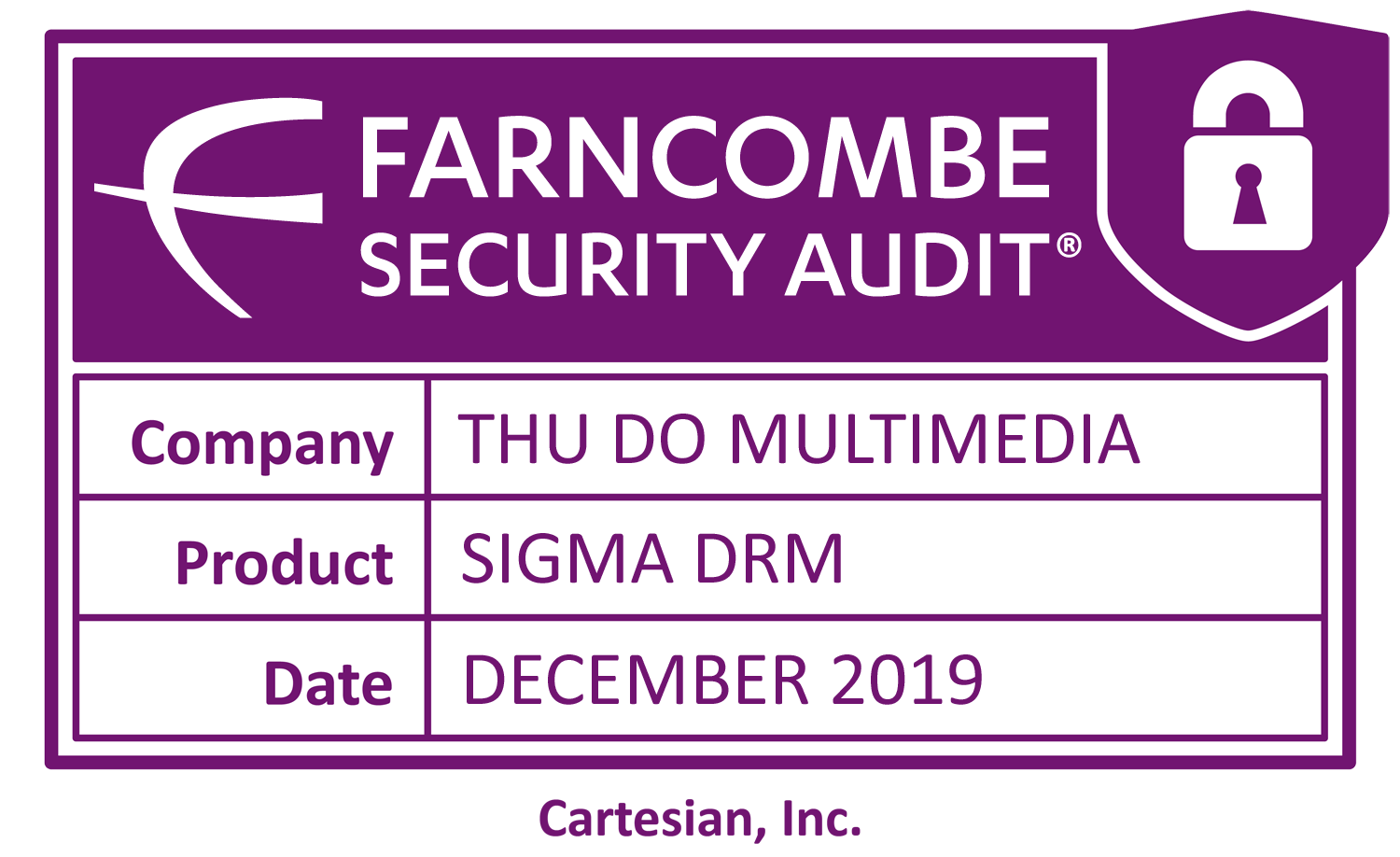
Sigma DRM, thoroughly evaluated by Cartesian, proudly stands as a Vietnamese product that competes effectively with Sigma DRM solutions from global organizations. It’s designed to offer content providers closer copyright protection, both in terms of quality and cost. Currently, Sigma DRM is instrumental in safeguarding TV content for groups like K+, Box, VTVcab, as well as Hollywood movie content on the VTVcab ON TV application.
Key Benefits:
Issuing licenses per content and individual user, ensuring unique access.
Suited for both LIVE and VOD digital content.
Cloud-based server deployment for high availability.
Support for HDCP and Rotation Key.
Compatibility with popular platforms like Android, iOS, Web, WebOS, and Tizen.
Seamless integration with pre-built SDK systems.
Integration with popular transcode systems like Wowza and ffmpeg.
Robust user security and user-friendly CMS system.
2. Digify
Digify empowers users to set and enforce copyright protection for intellectual property, including market research, eBooks, training materials, reports, and confidential documents. With Digify, you can control distribution, restrict and revoke access, and gain insights through analytics.
Key Benefits:
Control over document distribution with download/print restrictions and automatic watermarking.
Revocable access and time-bound permissions.
Detailed analytics for user activity tracking.
3. Vitrium
Vitrium offers features like encryption, access control, and usage tracking to ensure businesses’ digital content remains secure. It provides in-depth insights through reporting, making content management a breeze.
Key Benefits:
Military-grade encryption for various file formats.
Access control for users and user groups, compatible with credentialing systems.
Distribution controls, including browser limits, time-bound access, and watermarks.
4. Caplinked
CapLinked is a user-friendly platform for secure file sharing and collaboration, ideal for tracking digital assets such as contracts and sensitive information. It boasts encryption and access controls, making it a reliable choice for content management.
Key Benefits:
Complete access control for document sharing.
No need for plugins or frequent updates.
Comprehensive activity tracking with real-time analytics.
5. Widevine DRM
Widevine DRM is known for its adaptability and scalability, catering to enterprises of all sizes and industries. It works across devices and platforms, tracking content usage to help content owners make informed distribution decisions.
Key Benefits:
Universal device coverage and content protection.
Standardized video playback and industry-adopted media containers.
Robust device security with hardware-backed encryption.
6. MemberSpace
MemberSpace simplifies subscription and membership management, offering restricted access levels and benefits. It ensures the security of members-only content and provides reporting and analytics for insights.
Key Benefits:
Quick access control setup for web pages.
Monetization and protection of web content.
7. Brandfolder
Brandfolder is a centralized platform for storing, organizing, and sharing digital assets. It enhances creative and marketing teams’ efficiency with collaboration, workflow management, and reporting tools.
Key Benefits:
Improved engagement with high-quality, fast-loading creative.
Streamlined collaboration between design and development teams.
In a world where digital content security is paramount, these DRM solutions empower businesses to protect their valuable assets, monitor usage, and ensure content is used as intended. You can check DRM pricing and cost here.
Choosing competitive DRM software that suits your needs and budget is vital to protect your digital assets effectively in today’s digital landscape. These DRM solutions offer a wide array of features to ensure your content is secure and used as intended.
Copyright is always an important issue that any individual or business is interested in when exchanging or purchasing. Especially when the digital revolution gives users the right to use content in their own way, the control over copyright ownership or the author’s intellectual property is gradually becoming severely distributed.
DRM is the most effective solution that can prevent these problems. Read the article below to help you better understand what DRM is as well as useful information related to this digital content rights management technology.
What is DRM?
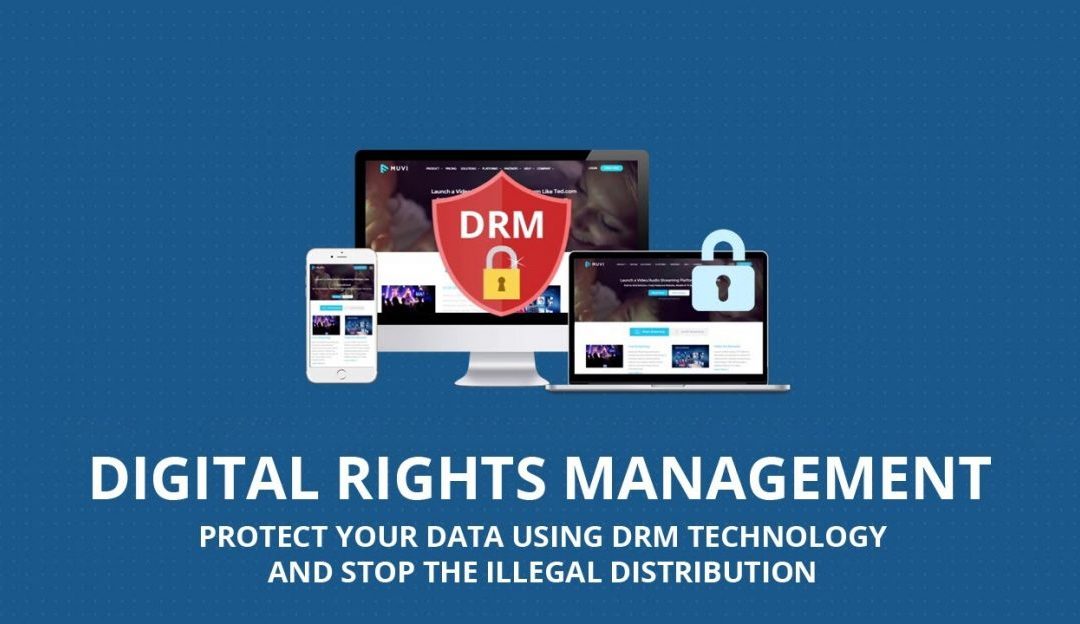
DRM (Digital rights management) or digital content rights management is a series of technologies capable of controlling all access to copyrighted material based on encryption to limit actions with signs of copyright infringement on digital content rights. To put it more simply, DRM was born with the purpose of controlling user actions in accessing and using digital content.
In essence, DRM is an alternative to the inherently inefficient and passive copyright control of digital content owners and uses computer programs to exercise complete control. content set.
By using DRM, copyright owners can easily control how product buyers (users) use their own products.
A DRM system is considered ideal when it ensures transparency, flexibility for users, and the ability to create complex barriers to prevent unauthorized users from using copyright.
DRM was born with the purpose of controlling user actions in accessing
DRM’s Structure
DRM provides users with a standard means of describing, classifying, and sharing data. These are all reflected in the structure of the DRM as follows:
Data Description: This will provide a means for you to conduct a uniform description of data so that data discovery and sharing are supported.
Data context: Through an approach to classifying data by taxon, this department will facilitate users in data exploration.
Data sharing: Supports access rights (including special requests) and data exchange (including fixed and recurrent transactions between parties), data sharing is enabled by both standardization areas for data description and data context.
A DRM program will operate on three levels including:
Build a copyright for a piece of content.
Manage the distribution of copyrighted content.
Control all consumer behavior and activities for distributed copyrighted content.
To achieve all these three levels of control, a DRM digital content rights management program needs to identify and describe three entities including users, content, usage rights, and relationships. relationship between these three entities in the most efficient way.
DRM uses a standard means of describing, classifying, and sharing data
DRM’s Operation
DRM will basically work by encrypting the file content through a secret key. Users who need to use a file or separate applications to read that file will need to decrypt the file to be able to use it. Specifically, DRM will work according to the following process:
– Encoding (red):
The user will proceed to pack the file and send a request to the DRM system to receive the key.
Next, using ekey, the user can proceed to encrypt the file.
Encrypted will be shared when users have a need to use it.
In many cases, the Encrypted key is generated by the person who packaged the file and then the key is stored on the DRM.
– Decoding (blue):
Users will use specialized applications to open files and download encrypted content as soon as they need to use it.
After having the Encrypted key, the application will continue to request to receive from the DRM Decryption key system.
As soon as the authentication information is accepted by DRM, this system will send back the dKey so that the application can decrypt the file quickly and meet the user’s needs.




Recent Comments